DbcultAccessing Vault...
8/10
Senior Film Conservator
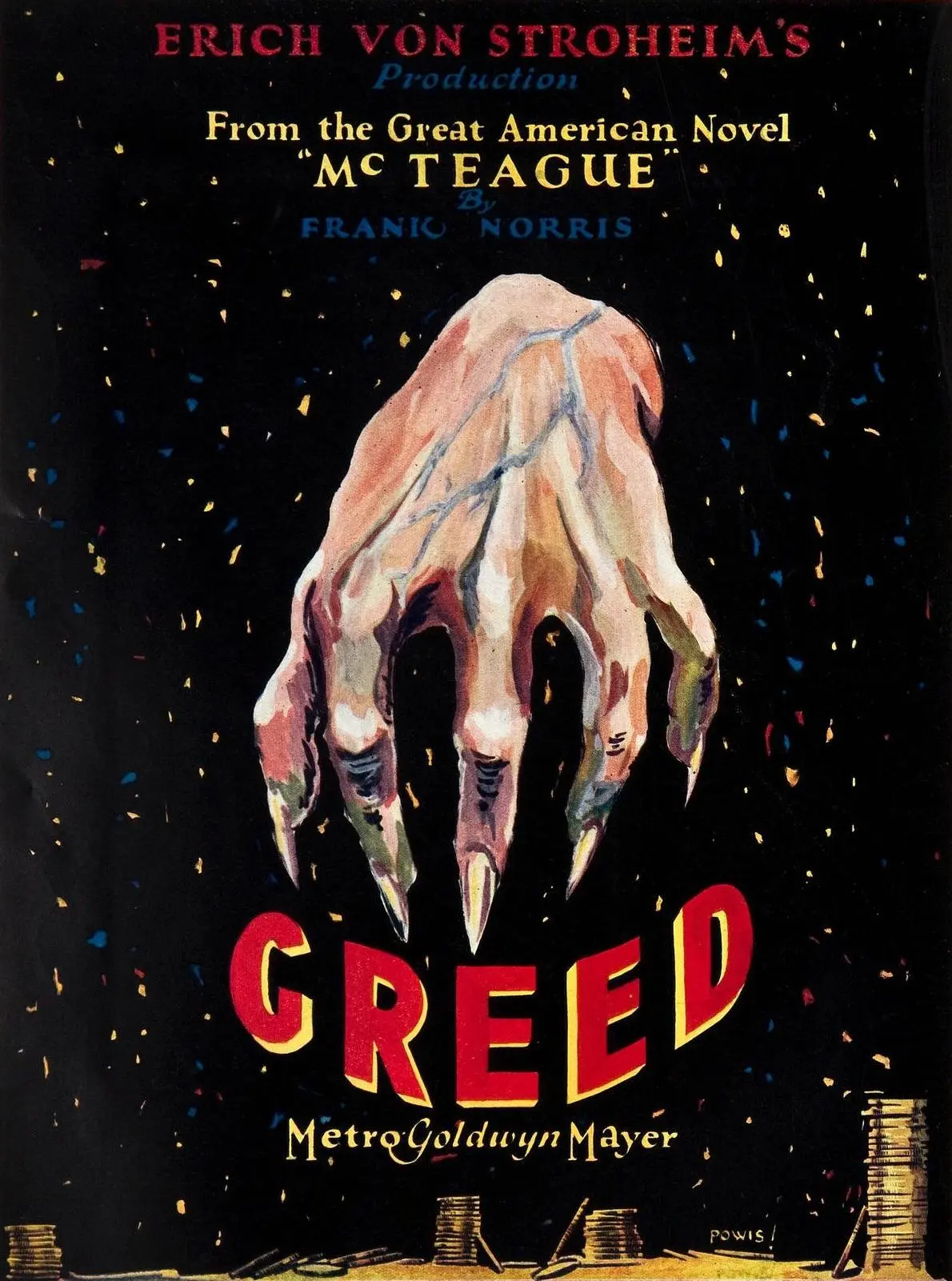
A definitive 8/10 rating for a film that redefined the boundaries of cult cinema. Greed remains a cornerstone of transgressive art.
Erich von Stroheim did not merely direct Greed; he exhumed it from the very soil of human depravity. Released in 1924, this titan of silent cinema stands as a monolith of uncompromising naturalism, a film so visceral and relentlessly bleak that it remains shocking a century later. To watch Greed is to witness the systematic dismantling of the American Dream, replaced by a Malthusian struggle where the 'beast within' eventually consumes the veneer of civilization. Unlike the more escapist fare of its era, such as Nobleza gaucha, which navigated social strata with a different rhythmic pulse, Von Stroheim’s work is a claustrophobic descent into the atavistic.
The production of Greed is legendary, a cautionary tale of artistic hubris and studio interference. Originally clocking in at an unthinkable nine hours, Von Stroheim sought to capture every nuance of Frank Norris’s 'McTeague'. He insisted on filming in actual San Francisco apartments and the blistering heat of Death Valley, eschewing the comforts of the backlot for a verisimilitude that felt almost documentary-like. This commitment to realism creates a tangible sense of place. When we see McTeague’s dental parlor on Polk Street, we can almost smell the carbolic acid and the stale air of the lower-middle class. The film rejects the soft focus of the 1920s, opting instead for a harsh, deep-focus aesthetic that forces the viewer to confront every grime-streaked window and every twitch of Zasu Pitts’ increasingly frantic hands.
In comparison to the melodramatic structures of The Darkest Hour, which utilizes shadow to evoke mood, Greed utilizes light as a weapon. The sun in the final sequences is not a source of life but a bleaching, oppressive force that exposes the hollowness of the characters' pursuits. Von Stroheim’s meticulousness extends to the symbolic use of the color gold. In original screenings, specific items—gold coins, brass beds, dental fillings—were hand-tinted yellow, a persistent visual reminder of the 'filthy lucre' that poisons the protagonists' souls.
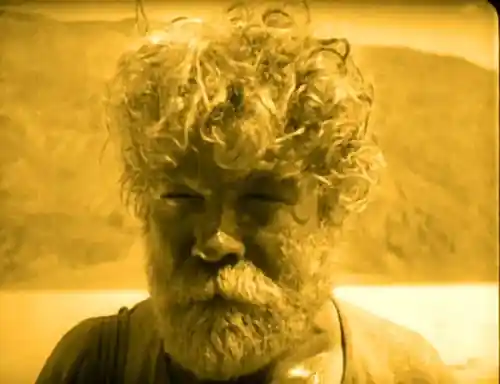
The performances in Greed are nothing short of transformative. Gibson Gowland’s McTeague is a masterpiece of slow-witted physicality. He is a man of massive strength and minimal intellect, a gentle giant whose capacity for violence is triggered only when his basic comforts are stripped away. Gowland portrays this devolution with a terrifying lack of vanity. We see him go from a proud, if unlicensed, professional to a cornered animal, his movements becoming more erratic and his eyes reflecting a profound, uncomprehending despair.
Zasu Pitts, primarily known as a comedienne, delivers a performance as Trina that is harrowing in its intensity. Her transition from a shy, vibrant young woman into a withered, obsessive miser is one of the greatest character arcs in cinematic history. The scene where she lies in bed, literally rolling in her gold coins, her fingers clawing at the metal, is a haunting depiction of fetishistic obsession. She doesn't just want the money for what it can buy; she loves the cold, hard weight of it. It becomes her surrogate lover, her god, and ultimately her shroud. This psychological complexity rivals the thematic depth found in works like The Treasure of the Sea, though Von Stroheim pushes the pathology much further into the realm of the grotesque.
Jean Hersholt as Marcus Schouler provides the necessary friction. His Marcus is a man defined by a perceived injustice. He believes he 'gave' Trina to McTeague, and thus, he feels entitled to a portion of her lottery winnings. Hersholt plays Marcus with a oily, manipulative charm that gradually curdles into a sharp-edged malice. The chemistry—or rather, the toxic lack thereof—between these three leads is the engine that drives the film toward its inevitable, scorched-earth conclusion.
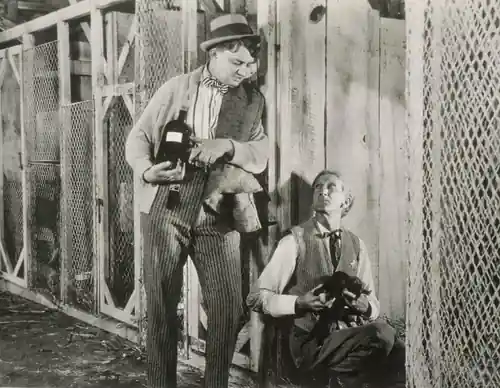
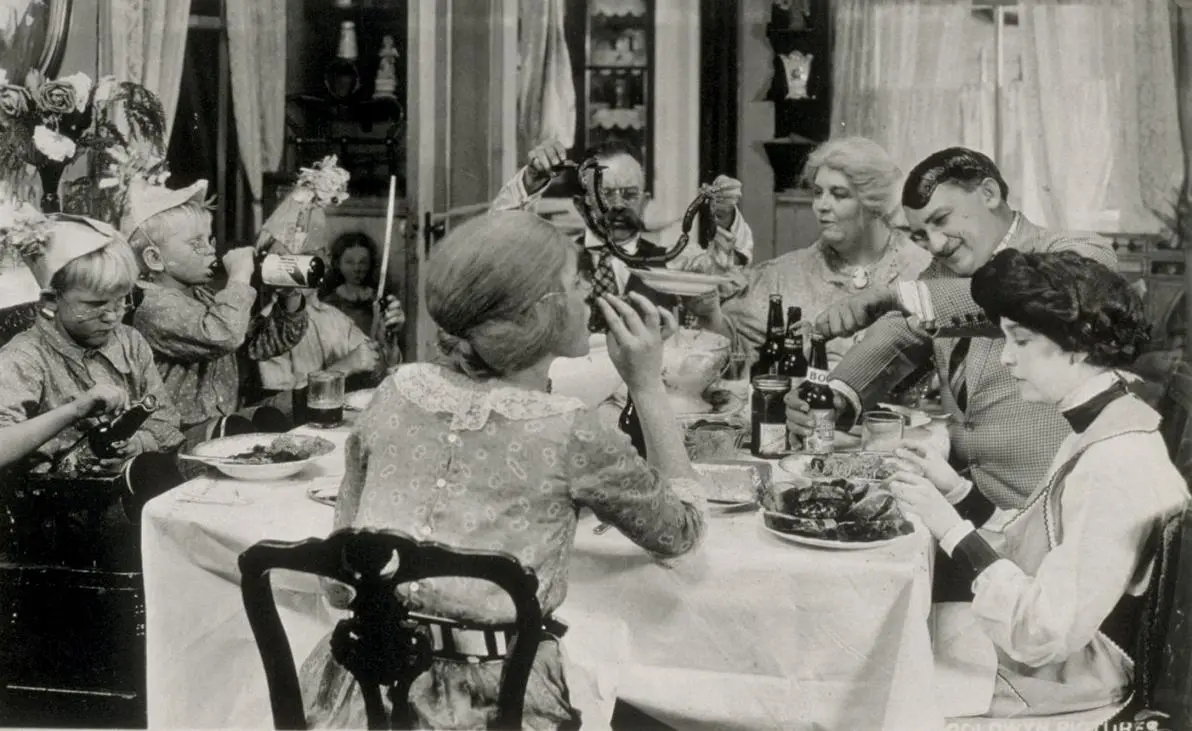
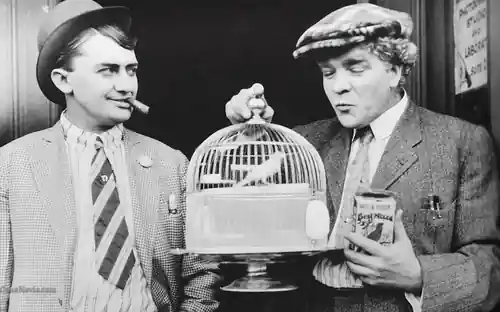
Von Stroheim utilizes recurring motifs to reinforce the theme of entrapment. The recurring image of the two caged birds, which McTeague keeps as his only companions, serves as a poignant metaphor for the characters' own domestic and psychological prisons. As the marriage between McTeague and Trina dissolves into a cycle of abuse and hoarding, the apartment itself seems to shrink. The clutter of Trina’s various 'economies'—the half-eaten meals, the unwashed laundry—creates a visual representation of their moral stagnation. This is a far cry from the more structured societal critiques in Palicova dcera; here, the rot is internal, a biological imperative that cannot be escaped through mere social reform.
The film’s subplots, often trimmed in shorter versions, add layers of thematic resonance. The story of Maria Macapa, the cleaning woman who sells the imaginary story of a gold service to the junk dealer Zerkow, mirrors the central plot’s obsession. Zerkow’s eventual murder of Maria is a dark foreshadowing of McTeague’s own path. These parallel narratives suggest that greed is not an isolated incident but a pervasive contagion, infecting everyone from the destitute to the upwardly mobile, much like the disparate lives touched by fortune in Dukes and Dollars.
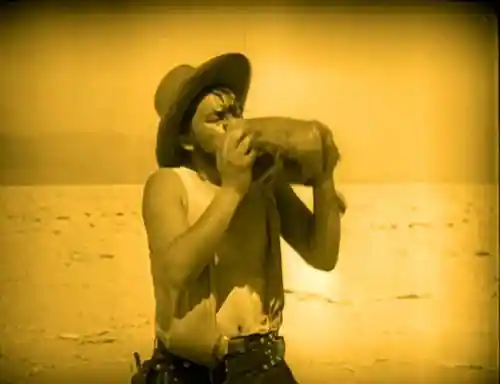
The final act of Greed is perhaps the most famous sequence in silent film. Having murdered Trina and fled with the gold, McTeague is pursued by Marcus into the heart of Death Valley. The shift from the urban claustrophobia of San Francisco to the infinite, lethal emptiness of the desert is jarring and brilliant. Here, the characters are stripped of everything—water, shade, hope—leaving only their hatred and their gold. The irony is heavy: they are surrounded by a landscape that looks like gold but is actually salt and death.
The technical achievement of this sequence is staggering. Filmed on location in temperatures exceeding 120 degrees, the physical exhaustion on the actors' faces is real. When McTeague finally kills Marcus, only to realize he is handcuffed to the corpse and his water canteen has been shot, the film reaches a pinnacle of nihilistic irony. The image of McTeague sitting in the middle of the desert, clutching a bag of gold he cannot spend, shackled to a dead man, is the ultimate indictment of the avaricious impulse. It is a moment of pure cinematic poetry that makes contemporary efforts like A Rough Passage or The Man Who Came Back seem almost quaint by comparison.
It is impossible to discuss Greed without lamenting the loss of Von Stroheim’s original vision. The version we have today, roughly 140 minutes long, is a fraction of the intended work. However, even in its truncated form, the film possesses a power that few 'complete' movies can match. The editing, though forced by the studio, maintains a jagged, percussive energy that suits the subject matter. The 1999 restoration, which used production stills to fill in the gaps of the missing subplots, offers a glimpse into the sprawling epic Von Stroheim intended—a film that was not just a story, but a comprehensive study of a civilization’s underbelly.
The legacy of Greed can be seen in the works of directors from Orson Welles to Werner Herzog. Its refusal to offer a redemptive ending or a likable protagonist was revolutionary. In an era where many films, such as When Love Is King or Rytterstatuen, sought to uphold moral certainties or romantic ideals, Greed tore them down. It suggested that under the right (or wrong) circumstances, the thin veneer of humanity would peel away, revealing a creature driven by the most basic and destructive of instincts.
Watching Greed today requires a certain fortitude. It is not an easy experience. It is a long, grueling journey into the dark night of the soul. Yet, it is essential viewing for anyone who wishes to understand the potential of cinema as an art form. It proves that film can be more than entertainment; it can be a mirror, however cracked and dirty, held up to the most uncomfortable truths of our existence. Whether compared to the atmospheric dread of Kinder der Finsternis or the adventurous spirit of Mästerkatten i stövlar, Greed remains in a category of its own—a monumental, flawed, and utterly brilliant testament to the destructive power of the human heart.
In the end, the film’s greatest triumph is its refusal to blink. Von Stroheim stares directly into the sun of human avarice until his eyes burn, and he demands that we do the same. The tragedy of the lost footage only adds to the film’s mystique, making it a ghost of a masterpiece that still haunts the medium. It is a film that, like the gold at its center, is both beautiful and hideous, enduring and ephemeral. It is the definitive word on the cost of wanting too much and the price of having nothing left to lose.
IMDb —
1928
Community
Log in to comment.