DbcultAccessing Vault...
5.3/10
Senior Film Conservator
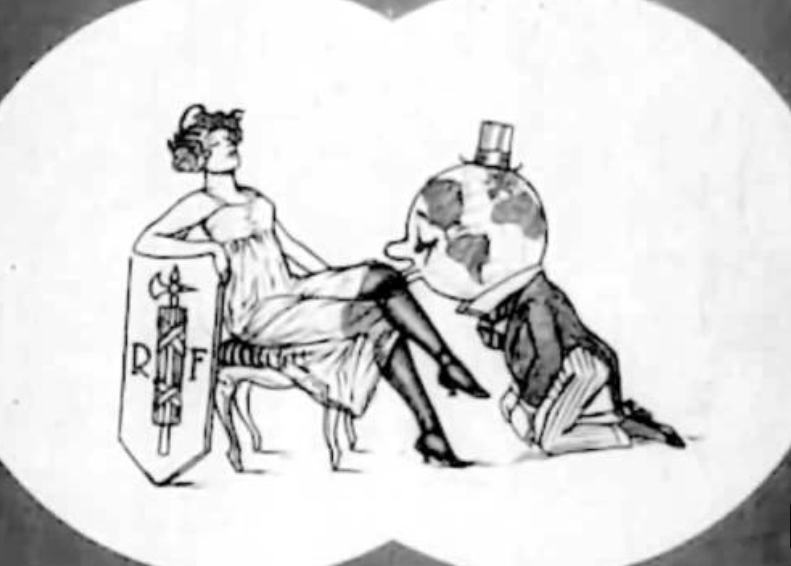
A definitive 5.3/10 rating for a film that redefined the boundaries of cult cinema. Los que ligan remains a cornerstone of transgressive art.
In the annals of cinematic history, certain works, whether lost to time or merely overlooked by conventional scholarship, possess an ethereal quality, promising profound insights into the human condition and the evolving artistry of the moving image. Quirino Cristiani's 1919 animated marvel, Los que ligan, stands as such a phantom masterpiece, a vibrant testament to the pioneering spirit of early animation and a trenchant social commentary that feels remarkably contemporary even a century hence. Though its celluloid reels may now exist primarily in the collective imagination of critics and historians, the film's conceptual brilliance and historical significance resonate with an undeniable force, beckoning us to consider its place not merely as an Argentine curio, but as a foundational pillar in the global edifice of animated storytelling.
Cristiani, a name synonymous with innovation in the nascent days of animated cinema, particularly in his native Argentina, carved out a unique niche through his satirical and politically charged caricatures. With Los que ligan, however, he ventured into a more universally relatable, yet equally incisive, domain: the intricate, often absurd, dance of courtship in a rapidly modernizing urban landscape. The film's protagonist, Don Feliciano, is an archetypal figure – a portly, middle-aged bachelor, burdened by an earnest heart and an unfortunate propensity for social ineptitude. His quest for a romantic partner in the bustling, increasingly cosmopolitan Buenos Aires of 1919 forms the narrative spine of this animated epic, a journey fraught with comedic missteps and poignant moments of self-realization.
Cristiani's rendition of Buenos Aires is far more than a mere backdrop; it is a pulsating, living entity, a character in its own right whose rapid development mirrors the internal turmoil of its inhabitants. The animation, even in its early, rudimentary form, imbues the city's cafes, boulevards, and dance halls with a kinetic energy that captures the zeitgeist of a metropolis on the cusp of a new era. We see the emergence of flapper-esque fashion, the advent of new social rituals, and the palpable tension between traditional values and burgeoning modernity. This dynamic urban tapestry provides a fertile ground for Feliciano's romantic travails, emphasizing the disorienting pace of change that often leaves individuals like him feeling adrift. The meticulous detail Cristiani likely poured into depicting the city's architecture and street life would have served not only as visual spectacle but as a subtle commentary on Argentina's place in the global cultural exchange, a vibrant hub attracting both European sophistication and its own unique creole identity.
Don Feliciano embodies the universal struggle for connection in an increasingly superficial world. His animated form, though exaggerated for comedic effect, resonates with a profound humanity. We witness his clumsy attempts at café courtship, where a spilled coffee becomes a metaphor for his inability to grasp the delicate nuances of social interaction. His reliance on a dubious 'love guru,' a sequence undoubtedly rife with slapstick humor, highlights his desperation and the susceptibility of the lovelorn to charlatanism. Cristiani masterfully uses visual gags – Feliciano's attempts at suave dancing devolving into a symphony of stepped toes, his grand floral gestures invariably overshadowed by a younger, more flamboyant rival's flashy car – to underscore the absurdity of performative romance. This isn't just simple comedy; it's a poignant exploration of the gap between genuine desire and societal expectation, a theme that echoes in other silent era explorations of social mores, such as Midnight at Maxim's, which similarly dissected the intricate dance of Parisian high society, or the more dramatic societal critiques found in films like Society's Driftwood, where individuals often found themselves marginalized by rigid social structures.
The true genius of Los que ligan lies not only in its narrative and thematic depth but in its groundbreaking technical execution. Quirino Cristiani was a trailblazer, responsible for the world's first animated feature film, El Apóstol (1917), and his subsequent works continued to push the boundaries of the medium. Los que ligan, as a silent animated film, relied entirely on visual storytelling, a challenge Cristiani met with remarkable ingenuity. The exaggerated movements, the expressive caricatures, and the dynamic use of perspective would have been crucial in conveying Feliciano's internal state and the chaotic external world. One can imagine sequences where Feliciano's heart literally sinks into his stomach, or where potential romantic partners appear as unattainable, shimmering mirages. This innovative approach to visual narrative, predating much of what would become standard animation language, places Cristiani in the same league as other early cinematic pioneers who experimented with visual storytelling, such as the creators behind Miraklet: Tavlor ur det katolska samfundslivet, which used stark imagery to convey spiritual narratives, or the early visual effects seen in films like Destruction, demonstrating a shared ambition to transcend the limitations of the medium.
The film's satirical edge is honed through this visual language. Cristiani’s animation style, often characterized by its fluid yet distinctive caricatures, would have perfectly captured the foibles of society. The 'ligar' culture itself, the art of flirtation and romantic pursuit, is dissected with a keen, often cynical, eye. The film likely lampooned the superficiality of appearances, the performative aspects of gender roles, and the desperate attempts to conform to prevailing social norms. Comparisons could be drawn to the sharp social observations in films like The Red-Haired Cupid, which also explored romantic entanglements through a comedic lens, albeit in a live-action format. Cristiani's animation offered a unique avenue for exaggeration, allowing him to push the boundaries of visual humor and social critique far beyond what live-action might have comfortably achieved in that era.
What truly elevates Los que ligan beyond mere slapstick is its underlying pathos. Don Feliciano isn't simply a figure of fun; he is a sympathetic character, his earnest desire for companionship palpable through his every awkward gesture. The film, in its subtle brilliance, likely steers clear of a conventional 'happy ending' predicated on superficial romantic success. Instead, it seems to suggest a more profound resolution: Feliciano's journey culminates not in the acquisition of a dazzling partner, but in a quiet, perhaps unexpected, connection with someone who sees beyond the superficial trappings of society. This subversion of romantic tropes aligns it with films that dared to explore the complexities of human relationships outside of idealized narratives, much like the nuanced character studies in The Mysterious Miss Terry, which delves into the inner life of its protagonist, or the introspective journeys seen in Le chemineau, where characters find solace in unexpected places. The film, therefore, becomes a quiet ode to authenticity, a gentle reminder that genuine connection often blossoms in the most unassuming of circumstances, far removed from the performative stages of societal courtship.
The film’s exploration of identity and belonging, particularly in the context of Feliciano's struggle to 'fit in' with the fashionable set, could also draw parallels with Hashimura Togo, where cultural identity and assimilation form central themes, or even the more universal quest for acceptance seen in The Forbidden Path. Cristiani, through Feliciano, presents a character grappling with societal expectations versus his inherent nature, a struggle that resonates deeply, regardless of the era or medium. The animation, with its capacity for visual metaphor, would have made these internal conflicts externally manifest and profoundly impactful.
While the physical existence of Los que ligan remains a tantalizing mystery, its theoretical presence in cinematic history is undeniable. It represents a crucial waypoint in the evolution of animated storytelling, showcasing Cristiani’s early mastery of satire and character development through movement. His ability to craft a compelling narrative, infused with both biting humor and tender empathy, using only the nascent tools of animation, speaks volumes about his visionary talent. The film, if ever rediscovered, would undoubtedly offer invaluable insights into the social fabric of early 20th-century Argentina, the burgeoning art form of animation, and the timeless human pursuit of love and acceptance. It serves as a powerful reminder that innovation often springs from unexpected corners of the globe, challenging the Eurocentric and Anglocentric narratives that sometimes dominate film history.
The themes explored within Los que ligan – the awkwardness of courtship, the pressure to conform, the search for authentic connection – are evergreen. The film's comedic sequences, from Feliciano's disastrous dance floor escapades to his unfortunate encounters with the 'love guru,' evoke the timeless humor found in physical comedy and situational irony. One might even draw parallels to the spirited antics of characters in films like Spooks or the more direct romantic comedies of the era, but Cristiani's animated lens provides a unique, often more exaggerated, platform for these observations. The subtle social critiques embedded within the narrative could also be compared to the nuanced character developments in Gelöste Ketten, which explored personal liberation, or the struggles of self-made individuals in All Man, where protagonists navigate societal expectations to forge their own paths.
Furthermore, the film's potential to showcase early Argentine culture and societal norms positions it alongside other culturally significant films like Betsy Ross or The Actress' Redemption, which provided windows into American and European social contexts, respectively. Cristiani's work, through its local flavor and universal themes, would have served as a vibrant cultural ambassador for Argentina, demonstrating that cinematic artistry was flourishing far beyond the traditional centers of film production. The delicate balance between humor and heartfelt emotion, a hallmark of enduring cinema, would have been skillfully managed through Cristiani’s unique blend of caricature and poignant observation.
Ultimately, Los que ligan, even in its spectral form, serves as a powerful reminder of the boundless potential of animation and the timeless nature of human stories. It challenges us to look beyond the easily accessible and to appreciate the profound contributions of early filmmakers like Quirino Cristiani, whose audacious vision helped shape the very language of cinema. It is a film that, despite its potential absence from physical archives, lives vividly in the critical discourse, a spectral yet significant monument to the art of early animated satire. Its lost reels represent not a void, but a potent invitation to imagine the vibrant, witty, and deeply empathetic world that Cristiani brought to life, a world where the clumsy dance of love and societal expectation continues to captivate and amuse.
IMDb 6.7
1935
Community
Log in to comment.