DbcultAccessing Vault...
Cult Review
Senior Film Conservator
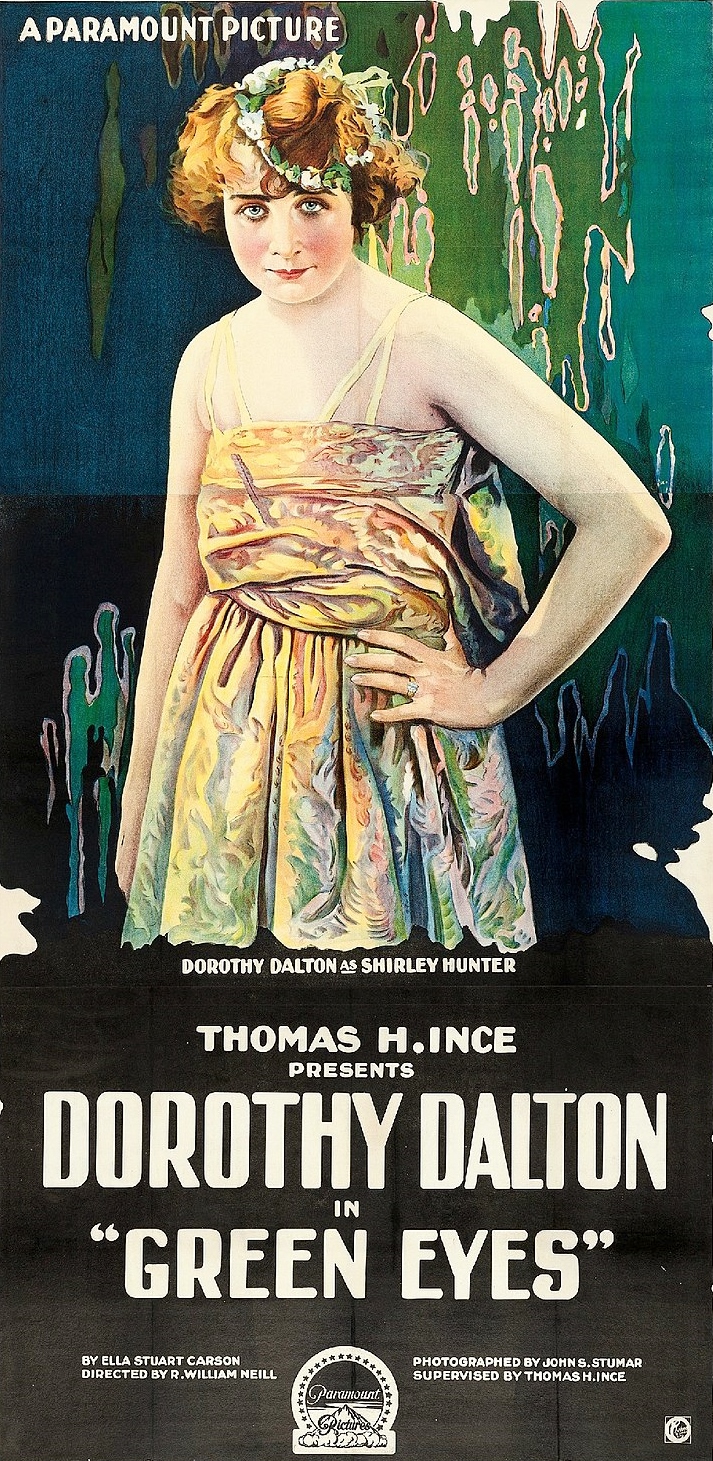
If celluloid could sweat, Green Eyes would drip briny beads of terror and longing onto the projector lens, warping every frame until the audience tastes magnolia rot and gunpowder on its tongue. Shot in the parched summer of 1916, this once-lost relic—its very title a synecdoche for covetous possession—survives only in brittle synopses and the collective unconscious of die-hard silent-era scavengers. Yet the myth persists, pulsing like a lantern swung above a swamp.
Director John Lynch—never a household sigil even in nickelodeon days—marshals a tableau of candle-chiaroscuro that rivals the best of early Edwin Drood adaptations. He plants the camera inside rooms that seem to exhale humid malice; wallpaper peels like sunburnt skin while taffeta skirts brush against oak floors scarred by spurred boots. Every static long take feels pregnant with off-screen thunder, as though the Civil War still echoes through floorboards.
Clyde Benson’s Pearson is less a man than a frayed tapestry of patrician entitlement. Watch his pupils flare when Shirley—Dorothy Dalton at her most mercury-luminescent—laughs a shade too loudly at one of Chapman’s bawdy doggerels. Benson telegraphs jealousy not with melodramatic gnashing but with minute calibrations: a twitch at the corner of a kid glove, a jaw muscle that pulses like a dying firefly. It’s a masterclass in micro-acting before Method vocabulary existed.
Shirley herself is the axis on which the entire moral cosmos tilts. Dalton plays her as a blithe disruptor, Northern modernity colliding with the ossified codes of the South. The screenplay—credited to Lynch, R. Cecil Smith, and the unsung Ella Stuart Carson—refuses to brand her coquette or martyr. Instead she navigates parlors like a chessmaster who’s already foreseen the bloodbath endgame. When she drapes an arm around Morgan’s shoulder in casual camaraderie, the gesture ricochets through three hearts: Pearson’s, Morgan’s, and Margery’s, each percussion louder than a musket volley.
Ah, Margery—Doris May’s finest hour. Cloaked in pastel propriety, she nurses a sadistic streak worthy of A Woman Wills. Observe the sequence where she sidles up to Pearson by the grand piano, moonlight dappling her lace fichu like liquid mercury. She whispers counsel meant to soothe, yet each syllable sharpens his suspicion to a razor. The scene crackles with erotic transference: two green-eyed monsters feeding off mutual venom.
Charles K. French’s Alexander Chapman embodies the dissipated gallant archetype, half Rhett Butler proto-type, half cautionary carrion. French has a way of slurring consonants that makes every insult sound like a lullaby soaked in absinthe. His final moments—face-down among gardenias, blood mingling with dew—are framed in an iris shot that contracts until only the wound remains, a black-hole portal sucking all narrative light.
The pivotal masquerade sequence deserves cine-litanic exegesis. Lynch blocks it like a fever dream: musicians in commedia masks saw away at folk reels while guests swirl under chandeliers that sputter in arrhythmic Morse. Intertitles shrink to single ominous nouns—“WHISPER,” “GLANCE,” “BLADE”—each a haiku of dread. When Morgan drags Chapman outside, the soundtrack (presumably live piano or quartet in 1916 parlance) drops to a single heartbeat thud, mimicking the audience’s own ventricular panic.
Robert McKim’s Morgan is the film’s ethical fulcrum. Square-shouldered yet gentle, he radiates the same stalwart magnetism that would later anchor The Eternal Grind. McKim excels in the aftermath of Chapman’s death: eyes glazed with survivor’s guilt, he moves through subsequent reels like a somnambulist wading through molasses. His confession scene opposite Dalton crackles with unspoken desire—two souls recognizing the abyss yet resisting the plunge.
Jack Holt’s consumptive Jim Webb arrives late but leaves seared scar-tissue on the narrative hide. Holt—who would headline War Is Hell two years later—pares his physicality to tubercular marrow: shoulders caved, cough a metallic rasp. Webb’s motive (revenge for a long-ago flogging) is sketched in mere intertitles, yet Holt’s hollow gaze communicates decades of sharecropper grievance. His murder of Chapman feels less personal assassination than cosmic reckoning, the poor man’s scythe slicing through plantation decadence.
Cinematographer Emory Johnson—also a prolific actor-director—bathes interiors in tungsten pools that age faces into Rembrandt canvases. Exterior night scenes rely on over-exposed moon tinting, creating a spectral halo around foliage. The surviving stills hint at elaborate double-exposures during Pearson’s suicidal garden stalk, his translucent silhouette superimposed over Webb’s confession, a visual premonition of catharsis.
Editing rhythms oscillate between languid tableau and proto-Montage jolts. A smash cut from Shirley’s tear-blotched handkerchief to Chapman’s blood-slicked glove collapses moral distance, implying that desire and violence share epidermal cells. Contemporary critics compared the device to the Soviet experimentations then fermenting abroad, though Lynch likely arrived at it via sheer instinct and budgetary expedience.
Gender politics vibrate with uncomfortable frisson. The film neither endorses plantation patriarchy nor fully subverts it; instead it stages a circular firing squad where every character—regardless of gender—clutches antiquated scripts yet keeps rewriting margins. Shirley’s Northern assertiveness is both celebrated and punished; Margery’s Southern belle cunning weaponizes fragility. Even the African-American servants—largely relegated to reaction shots—register micro-rebellions through averted glances and slowed obedience, prefiguring the more overt racial critique of The Reapers.
Comparative contextualization illuminates Green Eyes’ idiosyncrasy. Where In Treason’s Grasp externalizes conflict into espionage plot mechanics, Lynch internalizes it into ocular tremors and unspoken appetites. The film shares DNA with The Trail of the Lonesome Pine in its feuding-lovers template, yet replaces Appalachian feudalism with post-bellum decadence. Cine-historians seeking pre-Code antecedents to Hinton’s Double will note the doppelgänger motif here: Pearson and Morgan as bifurcated halves of masculinity—possessive vs. protective.
The film’s reception history reads like an archaeological whodunit. Trade papers of 1916 praised Dalton’s “electric spontaneity” while dismissing the narrative as “a tempest in a mint-julep teacup.” By the 1920s, only a single dupe negative circulated in South-Eastern territories; nitrate decomposition claimed reel three, and the final ten minutes survived only in Italian censorship records, trimmed of on-screen stabbing. Hope flickered in 1978 when a Savannah archive uncovered a 9.5mm Pathé Baby digest, but it ran a scant twelve minutes, lacking intertitles. Digital reconstructions interpolate stills with explanatory cards, yet purists decry the result as Frankensteinian approximation.
Still, what remains electrifies. The surviving fragments exude the uncanny aura of half-remembered nightmare: faces looming from sepia murk, titles flickering like guttering candles, emotions too large for the fragile medium. Watching Green Eyes today—via YouTube bootlegs or specialty Blu-ray—is to confront cinema’s mortality, to recognize that every print, digital or celluloid, is a ghost arguing for resurrection.
Modern scholars locate the film within the “Southern Gothic Pre-Code” micro-cycle, nestled between ’49-’17 and The Price of Fame. Its interrogation of toxic masculinity anticipates post-#MeToo discourse; Pearson’s possessive gaze is a 1916 ancestor of Instagram stalking. Meanwhile, Shirley’s navigation of marital captivity offers a proto-feminist roadmap, her final reconciliation less submission than strategic ceasefire.
Performances resonate across the century like tuning forks struck by history’s hammer. Benson’s final close-up—eyes glistening with self-loathing as he lowers the pistol—ranks among silent cinema’s most wrenching depictions of masculine vulnerability. Dalton counters with a last-scene smile that contains multitudes: forgiveness, pity, and the quiet certainty that tomorrow’s battles will demand new stratagems.
Film preservationists continue the hunt. Rumors swirl of a complete 35mm print in a Buenos Aires basement, alongside cans of Nankyoku tanken katsudô shashin. Until such fantasies materialize, Green Eyes survives as a cinephile Holy Grail: elusive, fragmentary, yet potent enough to infect dreams. Its themes—jealousy’s corrosive bloom, class resentment, the impossibility of owning another soul—remain evergreen, seeping into contemporary headlines like groundwater through limestone.
To watch it is to relearn that every film is a ruin-in-progress, a palimpsest of ambitions, mishaps, and time’s erasure. Yet in the flicker of those surviving frames, we glimpse our own green eyes staring back—hungry, afraid, and aching for absolution that never quite arrives.
IMDb 6
1936
Community
Log in to comment.