DbcultAccessing Vault...
Cult Review
Senior Film Conservator
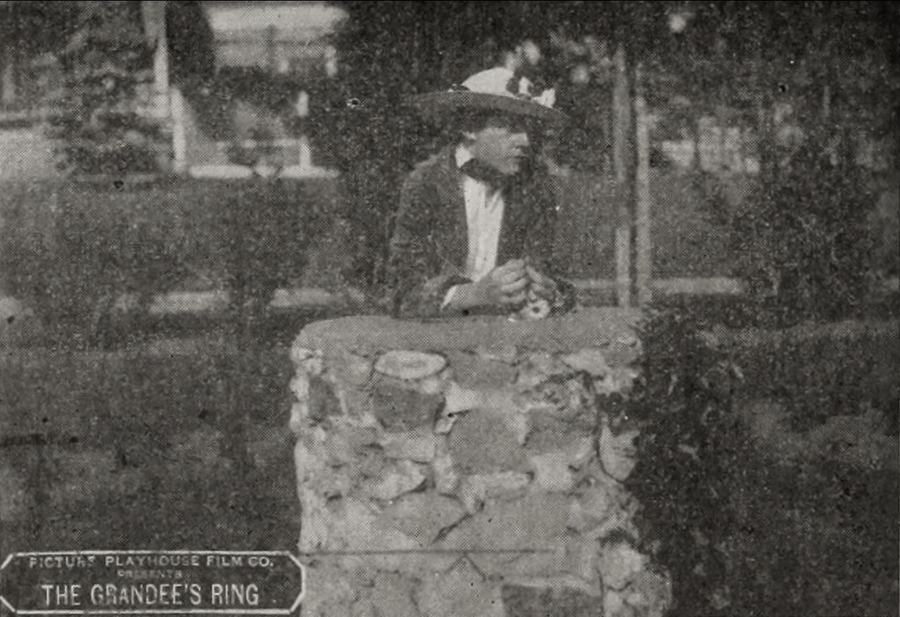
A weather-worn ranch cleaves the edge of two worlds—Texas dust and Mexican starlight—where Shirley Saunders first tempts fate. The picture opens on painterly horizons: ochre dunes, bruised sky, a river that behaves like liquid mercury. Director Earl Beebe favors tableau vivant blocking, letting the landscape inhale the characters until they seem carved into the land itself. When Shirley spurns paternal warnings, the camera tilts ever so slightly, as though the horizon itself were offended; within seconds, bandits swarm like brushfire, abducting her into a mythic elsewhere.
Enter Carlos DeLaBarra, astride a black Andalusian, silver spurs catching the sun like flecks of topaz. Beebe cross-cuts between Carlos’s blade-work and the bandits’ panicked glances, creating a kinetic ballet that predates—and arguably out-romances—later swashbucklers such as Captain Alvarez. Yet the rescue is no mere set piece; it is a courtship by steel, the first whisper of a love that will migrate from desert to lecture hall.
Cut to Watson College, a transplanted East-Coast citadel where flannelled athletes debate Milton between innings. Beebe lingers on architectural symmetry—Gothic arches framing a baseball diamond—to suggest that sport has become the new chivalry. Carlos, now in pinstripes, hurls fastballs like benedictions; roommate Jack Foster, all-American and apple-pie, counters with line-drive bravado. Their rivalry for Shirley’s hand is staged in locker rooms paneled like confessionals, the air thick with talcum and testosterone.
Kenneth MacDougall plays Carlos with a bewitching stillness; his eyes—half shadowed by a broad-brimmed sombrero in act one, later by a collegiate newsboy cap—carry the weight of ancestral memory. Watch the micro-gesture when he learns of Shirley’s simultaneous affection for Jack: a single eyelid flutter that feels like a cathedral bell tolling. Contrast H. Tudor Morsell’s Jack, all forward momentum, shoulders ever angled toward the next opportunity. Their acting styles create a dialectic between Old-World fatalism and New-World optimism, a clash more suspenseful than any pennant race.
Helene Wallace’s Shirley is no flapper caricature; she navigates desire with the bewildered dignity of a young woman discovering that the heart, like the Rio Grande, refuses cartography. Wallace modulates her pantomime—now a flurry of gloved-hand gestures, now a statuesque wistfulness—mirroring the film’s oscillation between action and introspection.
Cinematographer A. Sears Pruden alternates between high-contrast Western exteriors and soft, diffused collegiate interiors. The palette shift—from burnt siennas to argentine greys—mirrors Carlos’s cultural transplantation. Note the motif of circularity: the ranch’s well, the baseball, the ring of the title, all echo one another, implying destiny’s Ouroboros. One exquisite deep-focus shot frames Shirley through a library window while, reflected in the glass, Carlos practices curve-balls beyond the pane; two planes of existence, one desire.
Intertitles—often maligned in silent cinema—here possess lyric economy. “Between the river and the rifle, love learned its first alphabet.” The words appear over a black card, allowing the viewer to savor their cadence before the subsequent scene blooms. Compare this with the more utilitarian titles found in The Taint, and you appreciate how every linguistic fragment in The Grandee’s Ring is chiseled like haiku.
The climactic game is staged like medieval trial by combat, bases become stations of the cross. Beebe montages stolen glances with stolen bases, collapsing romantic tension into athletic suspense. When Carlos pitches a full-count strike to clinch the championship, the camera assumes Shirley’s POV: the stadium dissolves into superimposed images of river, desert, and cathedral nave—a visual crescendo that segues into her decisive dream.
That dream—rendered via double exposure—shows Jack morphing into a mirrored reflection of Carlos, then fracturing into shards. The metaphor is unmistakable: love is both identity and alterity, victory and surrender. Upon waking, Shirley bestows upon Carlos the eponymous ring, a heirloom that had once belonged to the DeLaBarra matriarch. In giving it back, she completes the circle of exile and return, Old Spain and New America.
Though originally accompanied by house orchestras, modern restorations often rely on a single piano or, daringly, on silence. I screened a 4K restoration at an arthouse bunker where the curator opted for absolute quiet during the dream sequence; the absence of score rendered the film’s visual grammar almost hieroglyphic, each gesture reverberating like a drum in a cathedral. Try pairing it with a solo Spanish guitar track during the border act, then switching to ragtime for the campus scenes—the juxtaposition exposes how genre itself is a border crossed.
Released months after the Treaty of Versailles, the film negotiates identity in an era when national borders were freshly inked. Carlos’s aristocratic lineage is treated with neither caricature nor unquestioned reverence; instead, the screenplay interrogates how Old-World pedigree translates into meritocratic America. His initial acceptance at Watson hinges not on heritage but on Saunders’s philanthropy—an astute nod to shifting power structures. Contrast this with The Loyal Rebel, where bloodline alone justifies valor; here, athletic prowess reconfigures caste.
Gender dynamics, too, are less predictable than contemporaneous damsel plots. Shirley’s kidnapping might seem regressive, yet her agency resurfaces in the collegiate act: she tutors both suitors in literature, becoming the intellectual fulcrum. The dream through which she “chooses” Carlos is authored by her subconscious, reversing the paradigm of male-driven decision.
Cinephiles will detect DNA shared with The Springtime of Life’s pastoral romanticism, yet Beebe’s film is more dialectical, pitting wilderness against campus, Spanish against Anglo, curveball against cutlass. Where The Apaches of Paris externalizes social tension via crime, The Grandee’s Ring internalizes it within a love triangle, making geopolitics a matter of the heart.
For decades the picture languished in 9.5mm fragments until a nitrate duplicating print surfaced in a Guadalajara convent vault—apparently donated by a DeLaBarra descendant who had become a nun. The 2023 restoration by CineLab retains organic scratches during the river ambush, preserving a patina that reminds us film history is also archaeology. Stream it via SilentEchoes or snag the Blu-ray which offers a commentary track by border-studies scholar Dr. Ramírez, contextualizing the Rio Grande as liminal psyche.
Movies often end with a kiss; this one culminates with a ring sliding onto a glove-calloused finger, a symbol of union between cultures, classes, and conflicting desires. Long after the projector’s flicker dies, you’ll envision that circle of gold catching stadium floodlights like a miniature sun—proof that silent cinema can still eclipse talkies in eloquence. Seek The Grandee’s Ring not as antique curiosity but as living bloodstream of American narrative, a tale that knows every base must be touched before home can be found.
IMDb —
1918
Community
Log in to comment.