DbcultAccessing Vault...
5/10
Senior Film Conservator
A definitive 5/10 rating for a film that redefined the boundaries of cult cinema. Grønkøbings glade gavtyve remains a cornerstone of transgressive art.
Is Grønkøbings glade gavtyve, a relic from Danish cinema's silent era, worth your precious contemporary viewing hours? Short answer: yes, but with a significant caveat. This film is a delightful, if undeniably dated, romp that offers a fascinating window into the comedic sensibilities of its time.
It's a genuine treasure for cinephiles, historians, and anyone with an appreciation for the foundational elements of physical comedy. However, for viewers accustomed to modern pacing and narrative complexity, it might feel like a charming, albeit slow, journey back in time. This film is unequivocally for those who cherish silent cinema's unique artistry and the unadulterated joy of slapstick, but it is emphatically NOT for those seeking a fast-paced, dialogue-driven, or emotionally complex narrative.
This film works because of its unpretentious charm, the magnetic physical comedy of its leads, and its ability to capture a bygone era's innocence.
This film fails because its pacing can feel glacial by modern standards, its humor is occasionally repetitive, and its narrative simplicity offers little in the way of surprise.
You should watch it if you are a student of film history, a connoisseur of silent-era slapstick, or simply looking for a lighthearted, visually driven escape from the complexities of modern storytelling.
Grønkøbings glade gavtyve, or 'Grønkøbing's Merry Rascals', is precisely what its title suggests: a boisterous, good-natured comedy centered around two lovable agents of chaos in a picturesque Danish village. Directed by A.V. Olsen and featuring the inimitable talents of Carl Schenstrøm and Harald Madsen – often celebrated for their Pat & Patachon personas – this film is a testament to the enduring power of silent-era physical comedy. It’s a film that doesn't just entertain; it gently transports you.
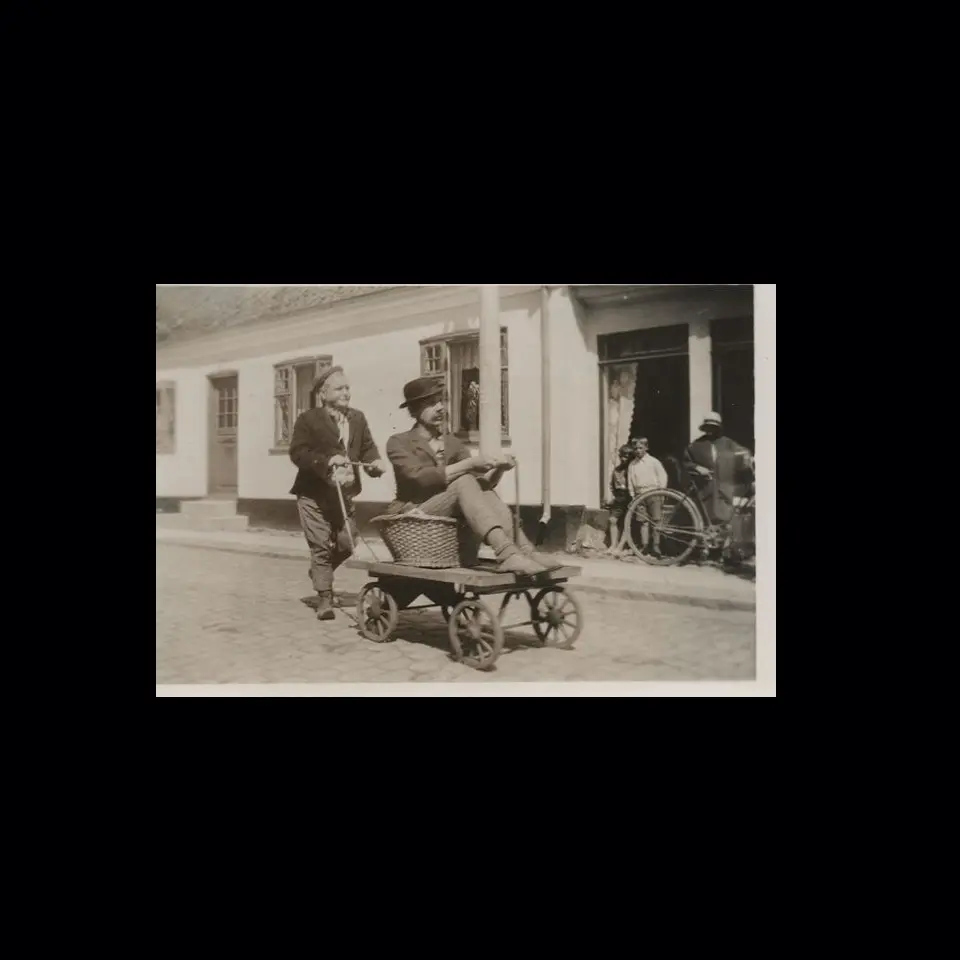
The film opens with a serene establishing shot of Grønkøbing, a postcard-perfect setting that immediately hints at the impending disruption. This idyllic facade is quickly shattered by the introduction of our protagonists, whose very presence seems to bend the fabric of small-town order. Their initial antics, a series of minor but escalating mishaps involving a runaway cart of vegetables, set the tone for the delightful pandemonium that follows. It's a classic setup: innocent intentions, catastrophic execution.
What truly elevates Grønkøbings glade gavtyve beyond mere slapstick is its underlying warmth. There's a genuine affection for these characters, even as they cause endless headaches for the town's more respectable citizens. Their attempts to save the annual cheese festival, while comically inept, are rooted in a sincere desire to protect a cherished community tradition. This emotional core prevents the film from devolving into purely anarchic comedy, giving it a surprisingly tender touch.
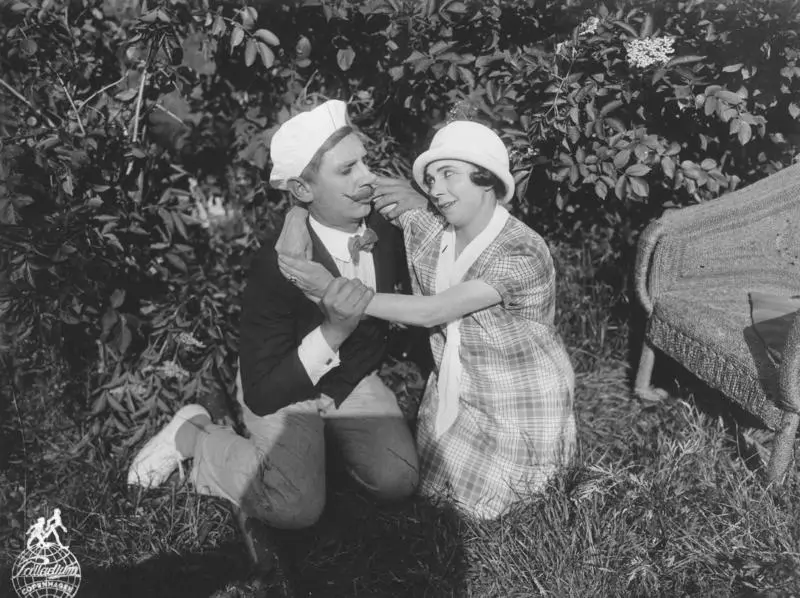
The strength of any silent comedy rests squarely on the shoulders of its performers, and Grønkøbings glade gavtyve is no exception. Carl Schenstrøm and Harald Madsen, though not explicitly billed as Pat & Patachon here, embody the very spirit of that iconic duo. Schenstrøm, with his lanky frame and perpetually exasperated expression, provides the perfect counterpoint to Madsen's shorter, more impish, and rubber-faced character. Their chemistry is instantaneous and palpable, a masterclass in comedic timing and physical interplay.
Madsen, in particular, is a marvel of expressive physicality. His ability to convey a gamut of emotions – from wide-eyed innocence to mischievous glee, often within the span of a single frame – is truly remarkable. Consider the scene where he attempts to surreptitiously swap out the inspector's prize-winning cheese: his exaggerated tiptoeing, the furtive glances, and the eventual terrified scramble as he's nearly caught, are all executed with a precision that speaks volumes without a single word. It’s a performance that transcends language barriers and time.
Henrik Malberg, as the stuffy Inspector, provides a wonderfully robust foil. His blustering indignation and increasingly apoplectic reactions to the rascals' antics are a consistent source of humor. Malberg's talent lies in his ability to maintain a sense of rigid authority even as his character is systematically undermined, making his eventual public humiliation all the more satisfying. The scene where he’s accidentally covered in cheese curds, his face a mask of utter disbelief and disgust, is a highlight of his performance and a comedic peak for the film.
The supporting cast, including Edith Schou and Benno Smytt, fills out the quirky tapestry of Grønkøbing with conviction. While their roles are primarily reactive, they contribute significantly to the film’s overall atmosphere of charming provincial life. Their collective reactions to the escalating chaos often mirror the audience's own incredulity and amusement.
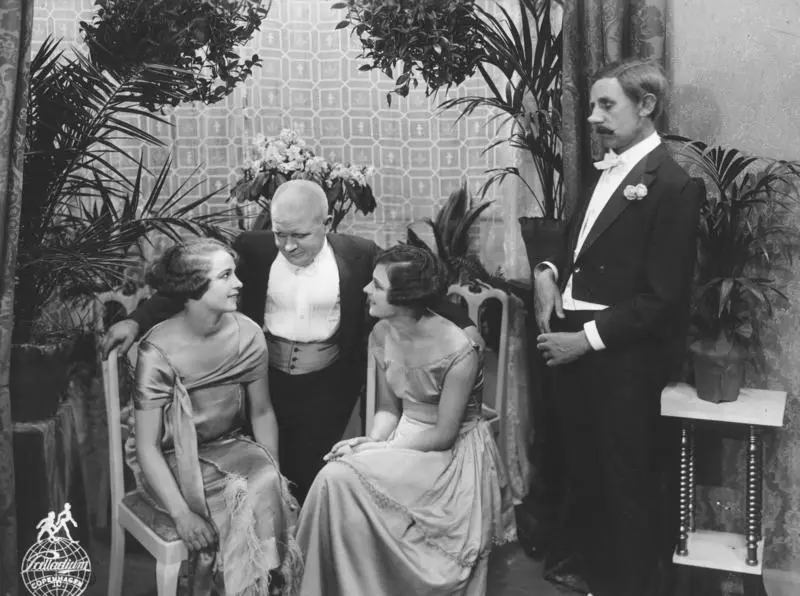
A.V. Olsen's direction in Grønkøbings glade gavtyve is straightforward and effective, focusing on clarity and comedic impact. There’s a distinct lack of flashy camera work, which, for a film of this nature, is a strength rather than a weakness. The camera largely remains static, allowing the physical comedy to unfold naturally within the frame, much like a stage play. This choice emphasizes the performers' skill and ensures that every pratfall and exaggerated gesture is captured with precision.
Olsen demonstrates a keen understanding of comedic pacing, alternating between rapid-fire gags and moments of drawn-out suspense, such as the aforementioned cheese-swapping sequence. The chase scene through the town square, while not as elaborate as those seen in contemporary American silent films, is nevertheless expertly choreographed, utilizing the town's narrow streets and bustling market to create a sense of delightful disarray. It's a testament to the idea that simplicity, when executed with care, can be incredibly powerful.
The cinematography, though basic by today's standards, beautifully captures the rustic charm of Grønkøbing. The black and white palette, far from being a limitation, enhances the film's nostalgic quality. The use of natural light for outdoor scenes gives the film an authentic, almost documentary-like feel, grounding the fantastical antics in a believable setting. The close-ups on the actors' faces, particularly during moments of heightened emotion or comedic reaction, are crucial, allowing the audience to fully appreciate the nuanced expressions that define silent acting. The film utilizes intertitles effectively, not just for dialogue, but for setting mood and advancing the plot with playful commentary.
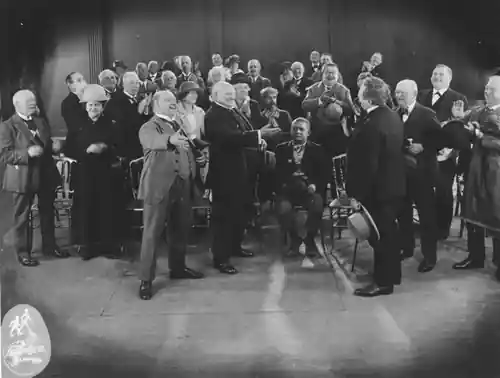
The pacing of Grønkøbings glade gavtyve is decidedly a product of its era. It unfolds at a more leisurely rhythm than contemporary audiences might expect, allowing scenes to breathe and gags to fully develop. This isn't a film that rushes from one punchline to the next; it savors its comedic moments, building anticipation through extended sequences of physical comedy and escalating absurdity. For some, this deliberate pace might require an adjustment, but for others, it offers a refreshing alternative to the frenetic energy of modern cinema.
The tone is consistently lighthearted and whimsical, never straying into cynical or dark territory. Even when the rascals cause significant disruption, there’s an underlying innocence to their actions, and the film maintains a genial, forgiving atmosphere. This unwavering optimism is one of the film's most endearing qualities. It's a film that genuinely wants its audience to smile, and it largely succeeds. The humor, while broad, is never mean-spirited, making it a truly feel-good experience.
One unconventional observation about the film is its subtle yet effective commentary on tradition versus progress. While presented comically, the conflict between the rascals' desire to preserve the 'old ways' of the festival and the inspector's 'modern' reforms resonates even today. It's a surprisingly nuanced thematic undercurrent for a film so overtly dedicated to slapstick. This gives the film a slight edge over purely escapist comedies of the period.
Absolutely, with an asterisk. If you approach Grønkøbings glade gavtyve with an open mind and an appreciation for film history, it's a wonderfully rewarding experience. It provides invaluable insight into Danish silent cinema and the universal language of physical comedy. It works. But it’s flawed. Its historical significance alone makes it worth a look, but its enduring charm is what truly makes it a noteworthy watch.
Don't expect the narrative sophistication of a modern drama or the rapid-fire editing of a contemporary blockbuster. Instead, prepare for a charming, often hilarious, and surprisingly poignant journey back to a simpler time of filmmaking. It's a film that demands patience but rewards it with genuine laughter and a heartwarming story.
Pros:
- Exceptional physical comedy from the lead duo.
- Charming, feel-good atmosphere and wholesome humor.
- A valuable historical document of early Danish cinema.
- Beautifully captured provincial setting.
- Subtle thematic depth beneath the slapstick.
Cons:
- Pacing can feel slow by modern standards.
- Narrative is quite simplistic and predictable.
- Humor, while effective, can occasionally feel repetitive.
- Lack of stylistic innovation in direction and cinematography might deter some.
- Accessibility issues due to its age and the nature of silent film viewing.
Grønkøbings glade gavtyve stands as a delightful, if somewhat niche, entry in the annals of silent comedy. It may not possess the universal recognition of a Chaplin or Keaton film, but it absolutely deserves its place in the discussion of foundational comedic cinema. The performances by Schenstrøm and Madsen are infectious, a pure distillation of physical humor that transcends the decades. It’s a film that reminds us of the simple joy of watching talented performers make us laugh through sheer ingenuity and impeccable timing. While it demands a certain patience from its audience, the rewards are a heartwarming dose of old-fashioned fun and a deeper appreciation for the roots of cinematic comedy. It's a firm recommendation for the discerning viewer who understands that not all gold glitters the same way.
IMDb 6.3
1919
Community
Log in to comment.