DbcultAccessing Vault...
7/10
Senior Film Conservator
A definitive 7/10 rating for a film that redefined the boundaries of cult cinema. Bolla di sapone remains a cornerstone of transgressive art.
In an industry obsessed with capturing moments of triumph and transformation, Charles Krauss has made a career out of documenting life's most delicate, ephemeral states. His latest opus, Bolla di Sapone, is the culmination of this singular vision—a film that treats human relationships with the same reverence and delicacy as a master glassblower handling molten silica. The result is a work that is as intellectually rigorous as it is emotionally devastating, a cinematic object that defies easy categorization.
From its first frame—a slow zoom into a soap bubble suspended between two windows—the film establishes its central metaphor. Krauss and his cinematographer construct a visual language where every surface reflects the protagonist's fractured interiority. The film's Parisian apartment, meticulously designed to appear lived-in yet sterile, becomes a character in its own right. Walls papered with faded botanical prints, half-finished paintings abandoned mid-stroke, and a perpetually half-draped curtain all contribute to an environment where time seems suspended.
Maryse Dauvray's performance is a masterclass in minimalism. Her character, known only as 'Claire' in the credits, exists in a state of perpetual limbo, caught between the echoes of a past relationship and the impossibility of forging new connections. In one particularly harrowing sequence, she stares at a cracked mirror for what feels like an eternity, the camera unmoving as tears slowly trace paths down her face. It's a moment that transcends traditional notions of acting, becoming a meditation on the physicality of grief.
Carlo Reiter's score is a character in its own right, a ghostly presence that haunts each frame while never overpowering it. The use of prepared piano techniques—where foreign objects are placed on or between the strings—creates a soundscape that is both haunting and intimate. In a particularly innovative sequence, the sound of dripping water gradually morphs into the protagonist's heartbeat, a subtle but profound shift that recontextualizes the entire preceding act.
This auditory approach finds fascinating parallels with Mothers of France, another film that uses sound design to reflect psychological states. However, where that film builds tension through dissonant crescendos, Bolla di Sapone employs silence as its most potent weapon. There are entire scenes where background noise is filtered out, leaving only the protagonist's breath and the faint creaking of floorboards—a technique that turns even the most mundane actions into moments of unbearable tension.
What dialogue exists in the film is sparse and elliptical, often carrying multiple meanings depending on context. In one of the most memorable exchanges, Claire and her estranged husband (Charles Krauss in a quietly devastating performance) debate the merits of soap bubbles over tea. Their conversation, apparently about the physical properties of surface tension, becomes a metaphor for their relationship's precarious balance. Krauss's direction here is masterful—he lets the conversation play out in real time, resisting the urge to editorialize or clarify.
This approach to dialogue finds echoes in The Suspect, though that film uses sparse dialogue to build suspense rather than emotional intimacy. In Bolla di Sapone, the silence between words is as significant as the words themselves. One particularly effective scene features Claire watching a soap bubble festival from her apartment window. The camera lingers on her face as the sounds of laughter and music drift in, her expression unreadable. It's a moment that encapsulates the film's central theme: the impossibility of truly connecting with others, even in the most joyous environments.
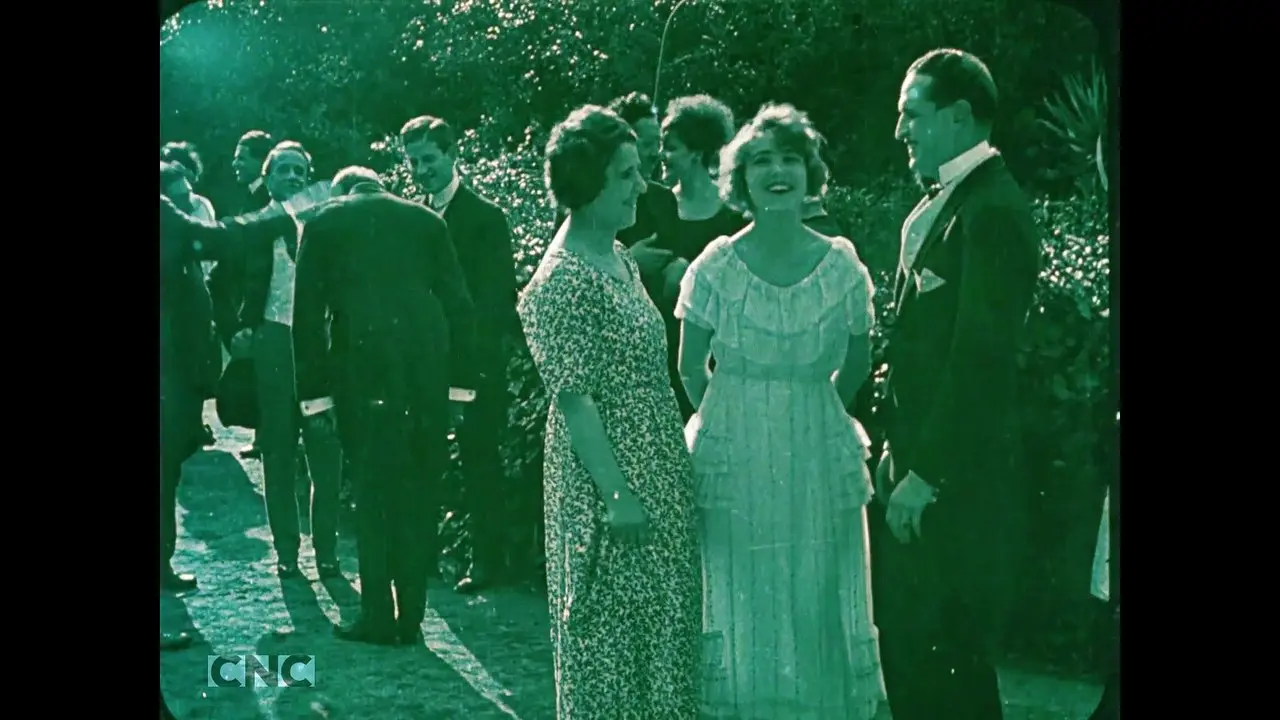
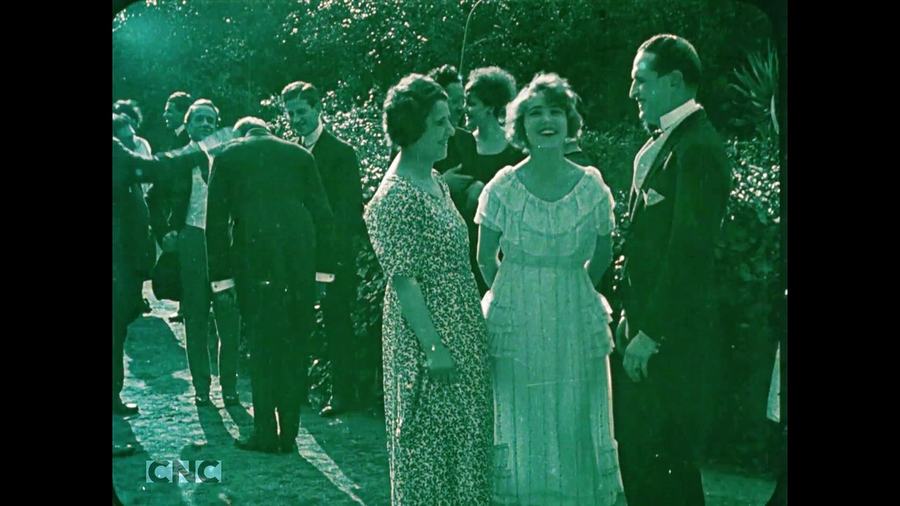
Krauss's visual palette is a masterclass in color theory. The film's color grading—primarily muted greens and grays—creates an atmosphere of quiet decay that contrasts beautifully with the occasional bursts of vibrant color. In one sequence, a single red apple becomes the focal point of an entire scene, its unblemished surface a cruel parody of the characters' emotional states. The use of light is equally sophisticated, with natural light sources often creating harsh contrasts that mirror the characters' internal conflicts.
These visual choices create a fascinating dialogue with The Sultan of Djazz, another film that uses color as a narrative device. However, while that film uses saturated colors to evoke nostalgia, Bolla di Sapone employs a more restrained palette to create an atmosphere of quiet desolation. The effect is cumulative, with each frame contributing to an overall sense of existential unease.
Time in Bolla di Sapone is not linear but cyclical, a theme reinforced by the film's repetitive structures. Certain gestures—pouring water, adjusting a curtain, tracing patterns on glass—recur throughout the film, each iteration subtly different from the last. This treatment of time is particularly evident in the film's structure, which eschews traditional three-act construction in favor of a more organic progression of emotional states.
This approach to timekeeping finds interesting parallels with The Typhoon, which also uses nonlinear time to explore psychological states. However, where that film's structure is dictated by external events (the approaching storm), Bolla di Sapone's pacing is entirely internal, driven by the protagonist's fluctuating emotional state. The result is a film that feels both expansive and claustrophobic, as if time itself has been compressed by the weight of the characters' emotional burdens.
The film's concluding sequence is one of the most audacious in recent cinema. Without revealing specifics, it involves Claire engaging in a ritualistic act of creation and destruction that brings the entire film's themes into sharp focus. The sequence is shot in a single, unbroken take that lasts over seven minutes, a technical feat that is as impressive as it is emotionally exhausting.
This final act, while potentially divisive for audiences seeking traditional resolution, is precisely what makes Bolla di Sapone such an important work. It rejects the comforting illusions of narrative closure in favor of a more honest, if painful, exploration of human condition. Like the soap bubbles that give the film its title, the characters exist in a constant state of formation and dissolution, their identities as transient as the light that refracts through them.
For viewers willing to engage with its challenging rhythms and abstract themes, Bolla di Sapone offers a profoundly moving experience. Its exploration of emotional fragility, through both visual poetry and humanist storytelling, cements Charles Krauss's place among cinema's most important philosophical filmmakers. This is a film that demands patience, but rewards it with a vision of human existence that is as beautiful as it is despairing.

IMDb 6.8
1931
Community
Log in to comment.