DbcultAccessing Vault...
Cult Review
Senior Film Conservator
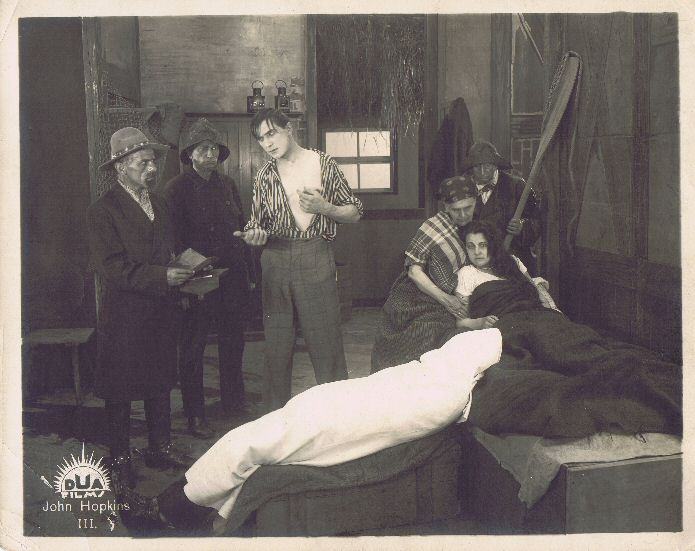
The first time I saw Apachenrache, 3. Teil – Die verschwundene Million it was a 16 mm print spliced with Scotch tape and cigarette burns, projected in a squatted bakery on Dresdner Straße while winter gnawed the rafters. The bulb coughed amber, the pianist played a broken waltz, and yet that phantom million still scorched the retina like a magnesium flare. Ninety-nine years after its blink-and-you-missed-it premiere, the film remains a rumor wearing a tuxedo: part heist, part séance, part indictment of a republic already bargaining with the devil in small denominations.
Director Jane Bess—yes, a woman at the helm in 1923—wields montage like a stiletto. She opens on a close-up of a Reichsbank seal being hammered onto a crate; the ink is still wet when the scene smash-cuts to nightclub chanteuse Sybill de Brée, her garter stuffed with worthless paper, crooning „Ich hab’ das Geld verloren, aber meine Wimpern sind echt.“ The cut is so violent you feel the frame itself hemorrhage. From that moment, the narrative ricochets between three strata of Berlin: the boardroom where inflation is measured in zeroes, the cabaret where flesh is bartered for those zeroes, and the sewer where ex-soldiers called Apachen—scarred, morphine-hollow, monarchists without a crown—plot to steal the future before it devalues further.
Forget the falcon; here the loot is literally air. Ten million in cash evaporates from a vault during a power outage that lasts 206 seconds—Bess counts them with freeze-framed clock faces superimposed over the sweating brows of security guards. The money is never shown again, only implied: a negative space around which every character orbits like moths around a bulb that has already popped. Cinema historians love to trace this absence-forward device to Hitchcock, yet Bess predates him by six years, proving that Weimar paranoia needed no lesson from the Thames.
Preben J. Rist’s anti-hero, credited only as „Karpfen,“ carries the trauma of the Balkans on his cheekbones. He slinks through scenes in a leather trench that squeaks like a confession. When he finally kisses de Brée’s chanteuse—beneath a railway arch while acid rain hisses on steel—their silhouettes merge into one spidery umbra, an image that feels stolen from Otrávené svetlo yet pulses with rawer desperation. The kiss is not erotic; it’s transactional, a swapping of venereal debts.
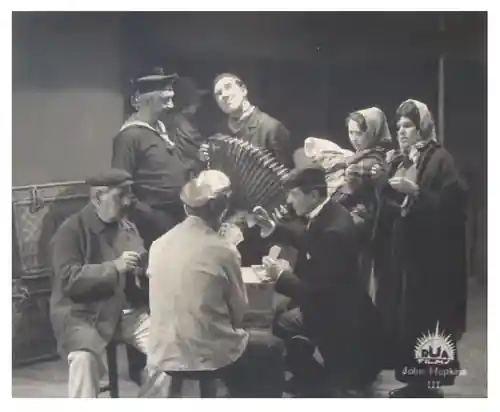
Cinematographer Heinrich von Korff—moonlighting between Ufa assignments—bathes faces in side-light so acute that cheekbones cast shadows sharp enough to slice bread. Note the interrogation scene: Ludwig Rex’s banker sits beneath a chandelier made from confiscated bayonets; every time he lies, Bess cuts to the chandelier trembling, its blades catching the gleam like a shark’s smile. The montage is silent but you swear you hear metal scraping bone. Compare that surgical chill to the tropical fever of The Pool of Flame and you’ll appreciate how German fatalism differs from colonial guilt: the former stares inward until the cornea scars.
And then there is Bela Lugosi. Four minutes, one monologue, eternal. His blind seer fondles the perforated edges of film stock as if reading Braille in the sprocket holes. „The reel is your prison,“ he whispers to Rist, „and the gate is your wound.“ Viewers in 1923 thought it pretentious; today it plays like prophecy of every post-medium meditation from Videodrome to Simone. Lugosi’s eyes are milky yet voracious, a contradiction that makes the moment he turns „toward camera“ feel like a breach in the fourth dimension.
Bess shot on location during the height of hyperinflation, smuggling cameras past striking workers and potato-rioting mothers. The result is a cityscape layered like sediment: baroque facades papered with reparations notices, tramlines that end in rubble, nightclubs erupting inside bankrupt department stores. She intercuts newsreel footage of children playing with bundles of money—literal Notgeld origami—with her fictional characters counting identical bundles to buy escape visas. The ontological collision is so disorienting that when a character burns banknotes to warm coffee, the gesture reads both as documentary record and metaphysical tantrum.
Contrast that verité bruise with the velvet staginess of For the Queen's Honor or the pastoral fatalism of A Pardoned Lifer. Bess’s Berlin is not a backdrop; it’s an infection, a carcinoma of modernity metastasizing in real time. The camera doesn’t glide—it staggers, drunk on schnapps and dread.
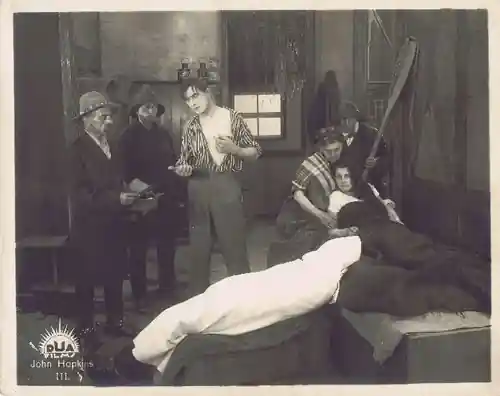
De Brée’s performance is a masterclass in weaponized vulnerability. Her character, Lola Wimmer, is introduced sprawled across a grand piano like a discarded glove, yet within two scenes she’s blackmailing a ministry official with photographs hidden inside a brioche. The film refuses to punish her for ambition; instead, the system implodes around her, leaving her standing amid the embers applying lipstick like war paint. In 1923, critics dismissed her as a Marlene wannabe; hindsight reveals a proto-femme fatale who refuses the moral retribution Hollywood would later demand.
Bess amplifies this subversion by cross-cutting Lola’s triumph with the downfall of Harry Frank’s boxer, a man whose fists were once currency and now can’t even buy bread. The gendered economy of the film posits femininity as liquidity—always adaptable, always circulating—while masculinity is hard specie, clanking, obsolete. When Frank’s boxer dives off the Oberbaumbrücke, the splash is intercut with Lola counting American dollars. Water and paper: two elements that dissolve yet endure.
Officially a silent, the picture was originally released with a live cue score that called for typewriters, police whistles, and a cash register rigged with contact mics. Most cinemas ignored the instructions; the surviving prompt book resides in the Deutsche Kinemathek, coffee-stained and glorious. Modern restorations substitute a hauntological suite by Ali Helnwein—strings sampled from 1923 78 rpm records, bass drones extracted from bunker reverb. The effect is uncanny: you swear you hear heel clicks on Wilhelmstraße even when the screen shows only fog.
Compare that acoustic ghost to the proto-synch sound experiments in Tsar Ivan Vasilevich Groznyy and you’ll see Bess was less interested in verisimilitude than in psychic amplification. Every silence is a vacuum begging to be filled by the viewer’s own fiscal anxiety. Watch this film on a laptop in a debt-saturated decade and the hum of your own overdue bills becomes the soundtrack.
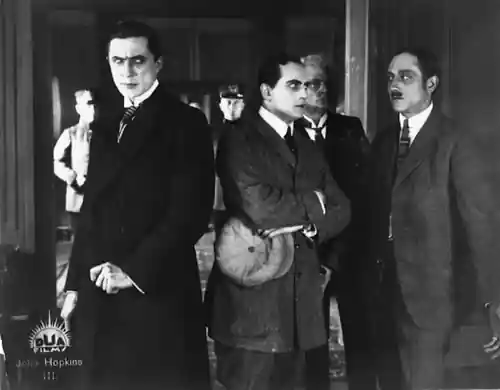
Spoiler, but not really: the last reel reveals the entire caper documented by a newsreel crew who themselves are characters inside the fiction. The camera pans to reveal a projection booth projecting… this very film. The loop is infinite, a Möbius strip of celluloid narcissism. Rist’s Karpfen fires at the beam of light; the bullet hole burns white, expanding until the image eats itself. Audiences in 1923 rioted, convinced the projectionist had botched the finale. Today the whiteout feels like birth: we are expelled from the cave of shadows into a capitalism so absolute it no longer needs representation—it just needs us to keep paying for the memory of money.
In its self-erasure, the film rhymes with the cosmic shrug of Human Driftwood and the domestic ouroboros of The Play House, yet surpasses both in political sting. Bess indicts not just greed but the very grammar of visual narrative that packages greed as entertainment. The disappearing million is never found because it was never there—only the promise, the fiduciary glow, the pixelated mirage of wealth as spectral as the blockchain entries we now trade for lattes.
Let us toast the overlooked: Alfred Schmasow’s turn as a bank clerk whose eyeglasses magnify his pupils to owl-size terror; Heinrich von Korff’s cameo as his own cinematographer, stepping into frame to adjust a lamp mid-scene, a Brechtian rupture decades ahead of its time; Frydel Fredy as a child pickpocket who mimics adult gestures with such surgical mimicry the film seems to x-ray the geneology of crime.
Preben J. Rist moves like a marionette whose strings are cut mid-dance; watch how his shoulders collapse when he learns the money is gone—not stolen, merely absent. It is the body’s recognition of metaphysical bankruptcy, a gesture Kenneth Branagh would copy in Wallander but strip of historical rot. Sybill de Brée counters with feline precision, her eyes half-lidded as if perpetually calculating compound interest on suffering. Their duet of cynicism reaches crescendo in a hotel corridor shot entirely in mirrors, an endless regress of selves clutching at wallets that evaporate like steam.

The current 4K restoration by the Munich Film Museum reinstates two missing minutes—an asylum monologue where Lugosi counts the seconds between lightning flashes, predicting the exact frame rate of the medium itself. The footage was found inside a Romanian medical chest, wrapped around a set of X-ray plates. Watching it is like viewing a scar that remembers the wound.
Color grading returns the tobacco-stained sepias to their original blue-green nocturnes, reminding us that Berlin nights once shimmered like drowned coins. The sea-blue (#0E7490) shadows now pool in the screen’s corners like ink spilled on a ledger, while the yellow (#EAB308) cabaret lamps flare with the urgency of a canary in a gas mine. And the dark orange (#C2410C) of burning money—yes, they struck a tinting plate for that single shot—feels volcanic, a reminder that inflation is merely a slow-motion conflagration of value.
Without this film, there is no Third Man ferris-wheel speech about cuckoo clocks; there is no Reservoir Dogs color-coded anonymity of thieves; there is no Inception spinning top ambiguity of reality. Bess’s disappearing loot prefigures every McGuffin that refuses to materialize, from the mysterious briefcase in Pulp Fiction to the briefcase in Killing Them Softly that contains only the idea of payment.
Critics who relegate silent cinema to mime and melodrama need to witness the brutal modernity of Apachenrache’s finale: a white screen that still projects debt onto our retinas. In an age when NFTs evaporate overnight and crypto exchanges vanish like Weimar banks, the film feels less archival than prophetic—an ur-text of capitalist eschatology.
So seek it out: torrent the restoration, haunt the repertory houses, project it on the brick wall of your start-up’s open-plan office while stock options hemorrhage. Let the clang of that empty safe keep you awake. The million was never there; it was you who disappeared.
Community
Log in to comment.