DbcultAccessing Vault...
Cult Review
Senior Film Conservator
There are films you watch; then there are films that watch you—quietly, implacably, like a wolf in the treeline. Hanneles Himmelfahrt belongs to the latter pack.
Released in the bruised-heart year of 1922, this Weimar-era fever dream grafts Gerhart Hauptmann’s symbol-laden play onto celluloid with such savage lyricism that even the intertitles seem to bruise the screen. Director Adolf E. Lupo—a name half-erased by censor scissors and warehouse fires—conjures an Alpine purgatory where every snowflake lands like a verdict and every human shadow stretches into a gallows.
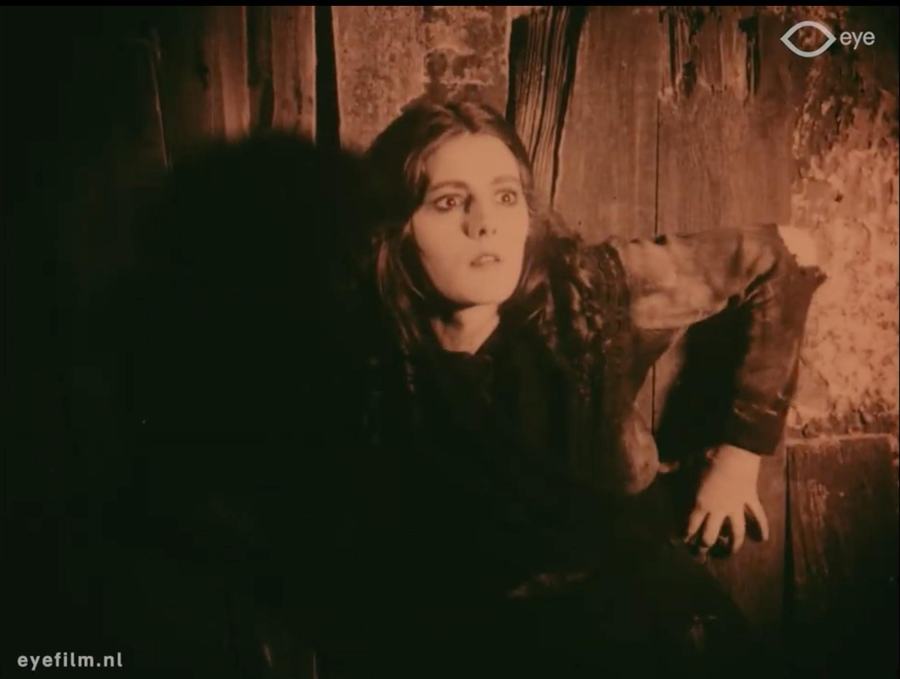
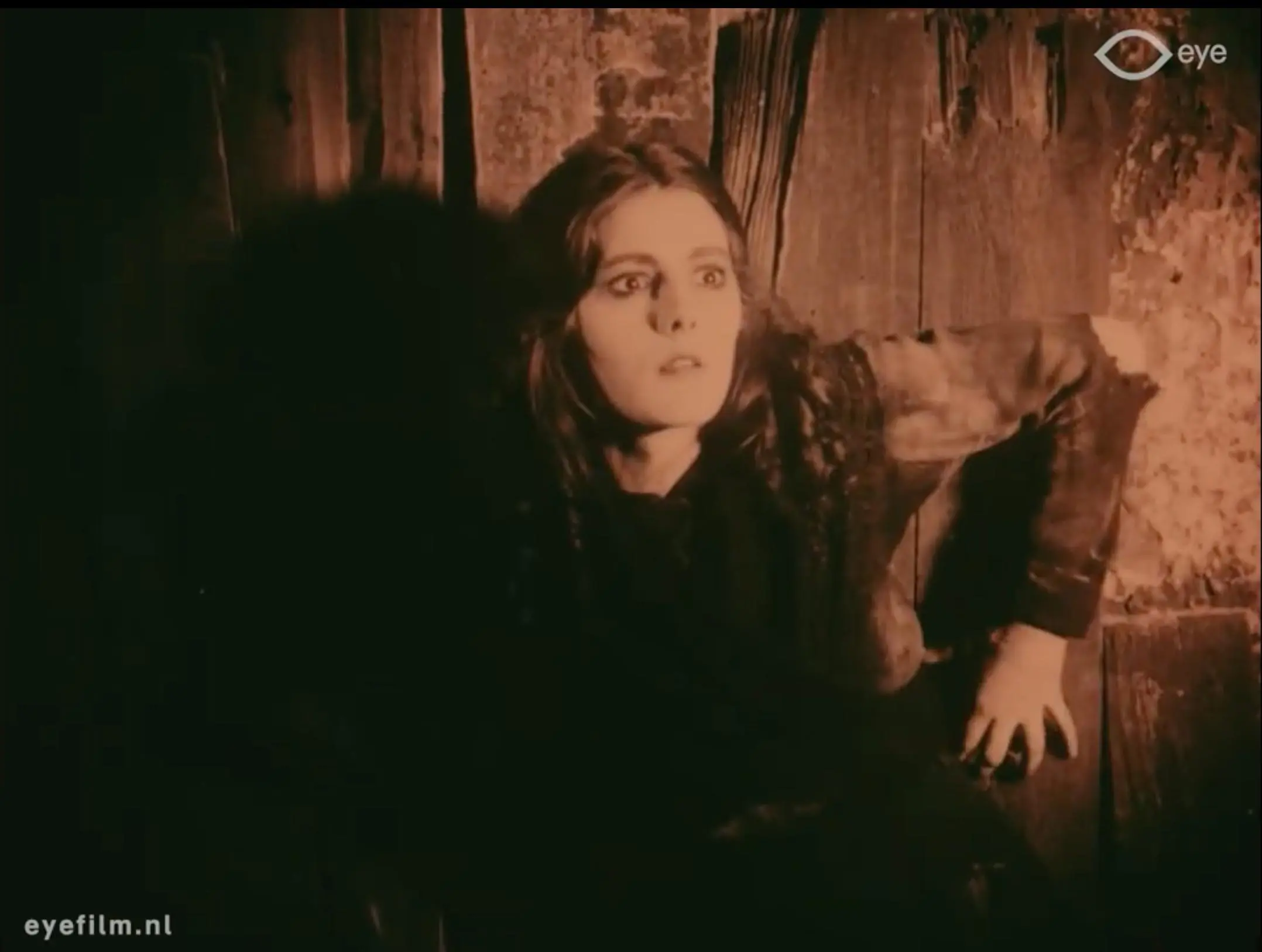
Maria Forescu’s Hannele is no rosy-cheeked urchin; she is a parchment of hematomas, eyes flickering between rodent-like vigilance and beatific surrender. When her stepfather’s leather belt cuts the air—its hiss mixed, per the tinting notes, with amber tint—the film’s frame-rate stutters ever so slightly, as though even the camera cannot bear witness without flinching. The abuse is not suggested; it is inscribed. We see the buckle land, we see skin pucker, we see candle-gutter reflected in a single tear that refuses to fall—because falling would be an admission of defeat.
Suicide, here, is not melodramatic exit but insurrection. The river she chooses is less Lethe than ledger: it will swallow the ledger of her torment, dissolve the ink of her birth. Yet the water rejects her, coughing her back into a world where the first face she sees is her own, doubled: a luminous doppelgänger draped in bridal white, feet hovering an inch above the snow as though the ground itself were complicit and refused to chill her.
From this moment the film pivots into expressionist hagiography. Each subsequent reel is a station: the schoolroom where chalk screeches “Hure” across her desk; the tavern where men slap coins on the counter wagering how soon she’ll “fall”; the attic where straw ticks crawl with lice that, under magnified iris shots, resemble cherubim gone feral. The double-Hannele walks these spaces like a spectral curator, guiding her battered twin toward an apotheosis that feels both crucifixion and coronation.
Lupo collaborates with cinematographer Willy Hameister (fresh from Der Golem sets) to birth images that seem etched by frostbite. Superimpositions are not gimmicks but fractures: the bruised Hannele kneels in confessional while the radiant Hannele hovers behind the lattice, mouth parted in silent absolution. The camera tilts upward until rafters morph into cathedral spires, then dissolves to alpine peaks so that sacred and profane share the same silhouette.
Tinting escalates the emotional taxonomy. Amber for domestic terror—those hearthside beatings where shadows jitter across stucco like crows trapped indoors. Sapphire for nocturnal hallucination, when the phantom Hannele leads her earthbound twin across a glacier that looks suspiciously like a wound stitched by moonlight. Crimson for the finale, when the rag of her dress—now a pennant—snaps against a sky the color of infected blood.
Compare this chromatic schema to the candy-box pastels of Little Miss Smiles or the monochrome respectability of His Robe of Honor, and you grasp how radical Hanneles Himmelfahrt remains: it refuses to aestheticize agony into palatable kitsch. Instead it rubs your face in the frost until you feel the burn.

Margarete Schlegel’s Mother—all cheekbones and apron-strings—registers like a ghost who has misplaced her own corpse. Watch the way her fingers flutter around Hannele’s wounds: half caress, half inventory, as though calculating the resale value of scars. Hugo Döblin’s stepfather exudes the bland pungency of fermented piety; when he unbuckles, it is with the weary efficiency of a bureaucrat stamping forms. Theodor Loos’ pastor, face a topography of burst capillaries, spouts scripture like a vending machine dispensing stale wafers—each quotation a further nail in the child’s coffin.
And then there is Maria Forescu, tasked with embodying both victim and visionary. Her body language bifurcates: shoulders hunched inward like a closed parenthesis when bruised-Hannele shuffles; spine erect, wrists outward, when luminous-Hannele glides. The difference is two centimeters of posture, yet the spiritual chasm feels tectonic. In close-up, Forescu’s pupils dilate until iris rings become mere coronas—solar eclipses that swallow the viewer’s judgment.
Hauptmann’s original play drips with Lutheran guilt; Willy Rath’s adaptation excises sermonizing but retains the scent of incense mixed with sour breath. Intertitles arrive sparingly, often mid-action, like shrapnel: “And the angel said: lift her, for she is lighter than the sum of her sorrows.” The words hover over an image of villagers hoisting Hannele’s soaked body onto a door repurposed as stretcher—secular piety performed for an audience of gawking cows.
Notice how the film withholds resurrection clichés. No choir, no dove, no tearful reconciliation. When dawn crests, the luminous Hannele simply steps out of frame, leaving her battered twin collapsed against the chapel bell-rope. We cut to a long shot: villagers file past the body like penitents, but their faces register not remorse but inconvenience. The final intertitle, etched in red tint, reads: “The snow forgets; the mountain remembers.” Roll credits over the sound of wind that the silent medium cannot utter yet you swear you hear.
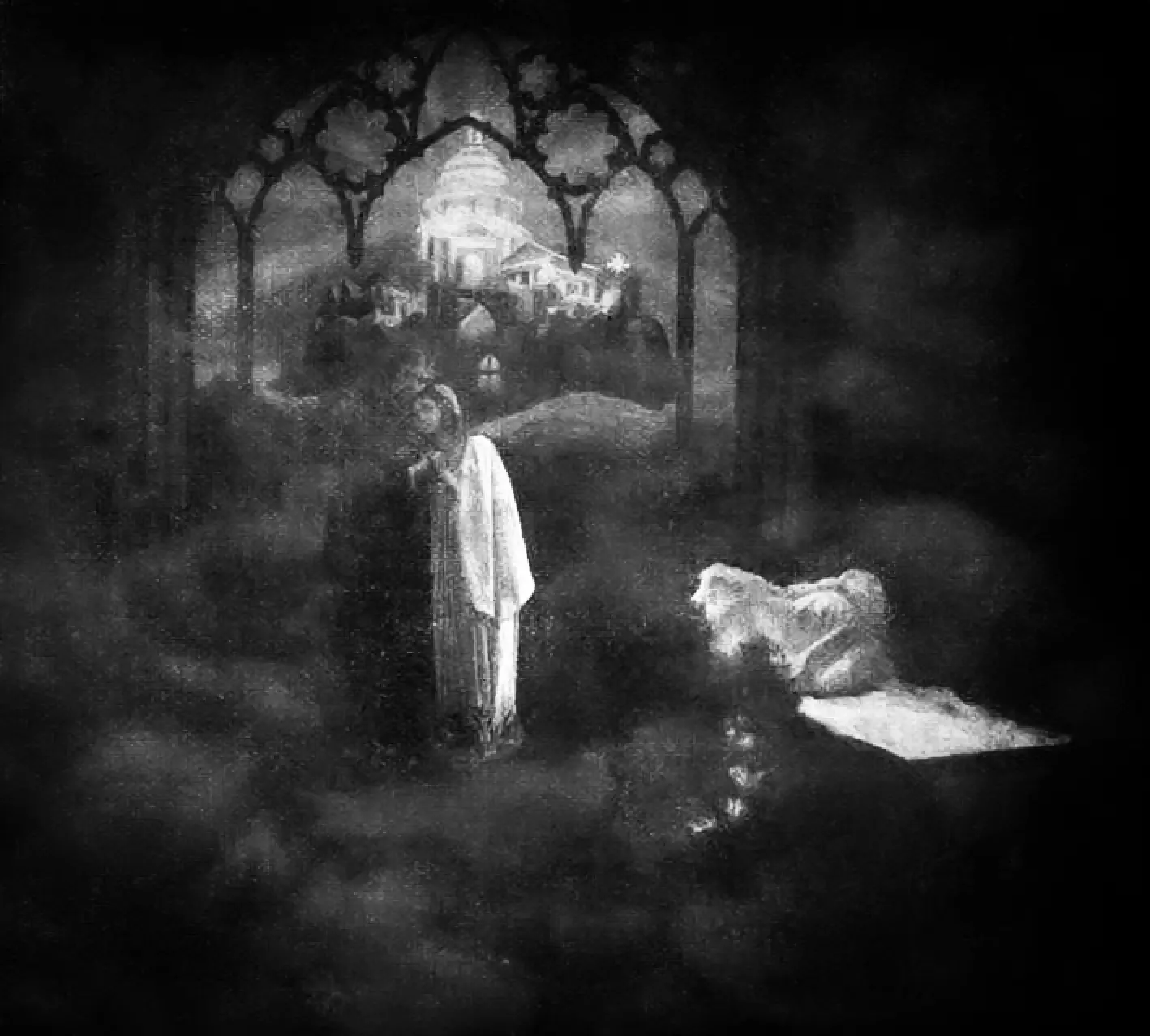
Set it beside Secret Sorrow and you see how Hollywood domesticated female despair into consumable sobs. Pair it with Auf den Trümmern des Paradieses and notice both films weaponize landscape as moral tribunal, yet Hannele refuses the colonial-adventure exoticism that mars the latter. Contrast it with Carnival whose masquerade liberates; here, masks clamp tighter until flesh grows into them.
Most instructive is the dialogue with Lebenswogen, another Weimar parable of a woman swept by currents beyond her control. Both films end with a body of water, yet Lebenswogen aestheticizes drift into lyric fatalism while Hannele treats the river as failed grave, a botched erasure that condemns girl and village to mutual haunting.
Only a single 35mm nitrate print survived the 1927 studio blaze; it surfaced in a Romanian monastery in 1998, soundtrack of decomposition crackling like distant fire. The F.W. Murnau Foundation’s 4K scan preserves the mildew blooms—those amoebic brown bruises that creep across faces like revenant shadows. To restore is to interrogate: do we scrub the scars or let them testify? The team opted for minimal digital de-flicker, leaving emulsion chafes intact. Good. Anything glossier would sandblast the moral grit.
Watch therefore on the largest screen you can commandeer. Let the 1.33:1 frame tower like a confessional booth. When the dual-Hannele superimposition arrives at minute 47, pause, step close, breathe on the glass until your reflection merges with hers. Ask: which Hannele am I? The one who endures or the one who escapes? The film will not answer; it simply holds you in the interrogation of that split second until you hear your own pulse threading the silence.
There is a moment—blink and you misfile it—when the luminous Hannele reaches to touch her battered twin and the film itself stutters: four frames repeat, a hairline fracture in time. Some call it printer mishap. I call it celluloid stigmata, the medium itself flinching from contact between grace and wound. That glitch is why, a century on, Hanneles Himmelfahrt refuses archival entombment. It re-opens each viewing like a wound that knows it must not heal.
No afterlife, no redemption, no crowd-pleasing catharsis—only the slow recognition that the mountain still remembers, and so must we.
Stream responsibly. Bring blankets; the frost is infectious.
IMDb 6.9
1933
Community
Log in to comment.