DbcultAccessing Vault...
Cult Review
Senior Film Conservator
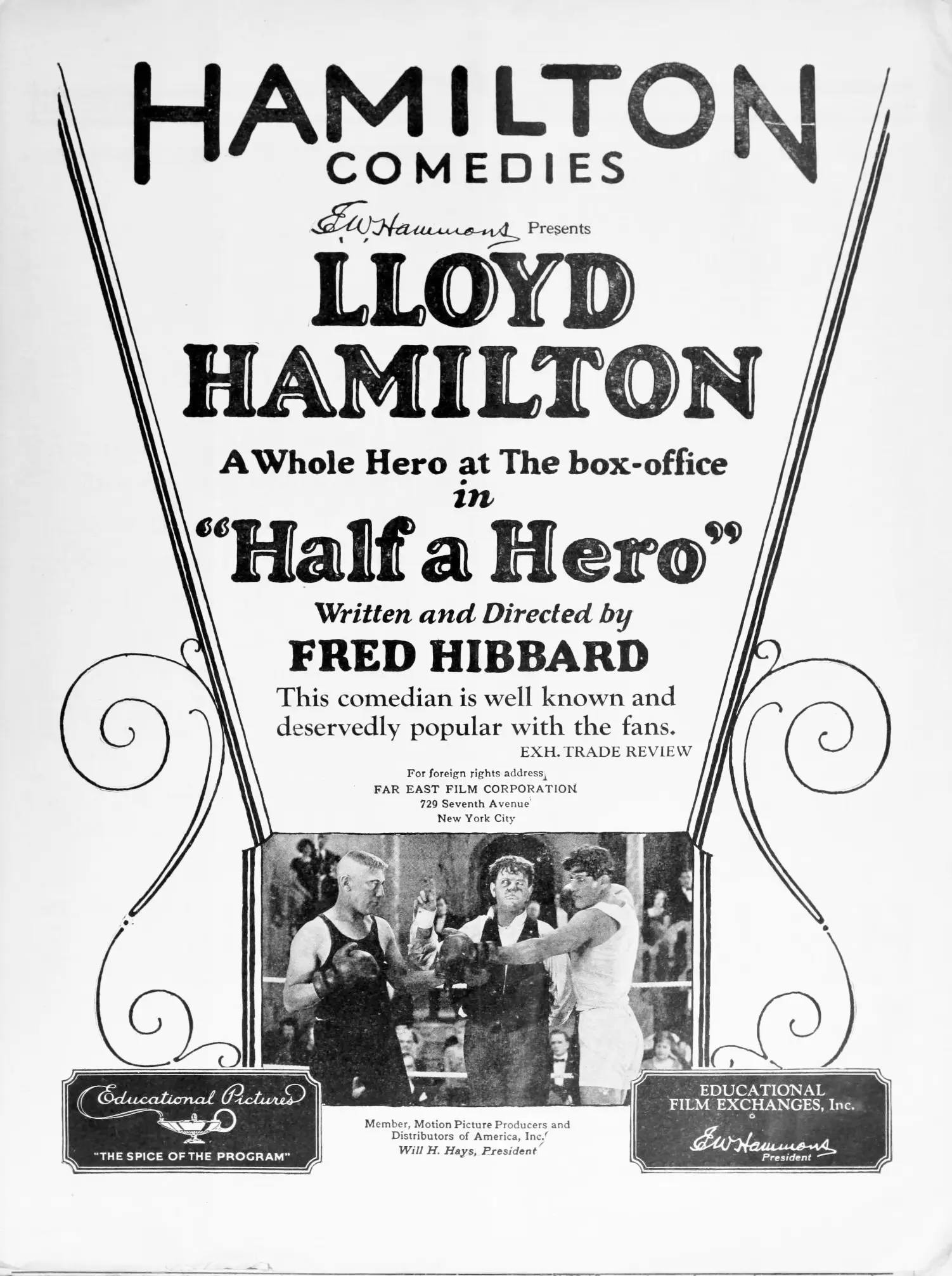
Is Half a Hero a mandatory viewing for silent film buffs today? Short answer: Yes, but only if you appreciate the calculated art of the human punching bag.
This film is for enthusiasts of the 'Educational Pictures' era and those who find beauty in perfectly timed physical failure. It is certainly not for viewers who require a sophisticated plot or a hero who actually wins.
This film works because Lloyd Hamilton’s 'Ham' persona is built on a specific type of middle-class vulnerability that makes his physical abuse feel earned yet tragic.
This film fails because the narrative is essentially a clothesline for gags, lacking the emotional stakes found in the works of Chaplin or Keaton.
You should watch it if you want to see the missing link between the broad slapstick of the 1910s and the sophisticated choreography of the late 1920s.
Lloyd Hamilton is often the forgotten giant of the silent era. In Half a Hero, he demonstrates why he was Charlie Chaplin’s favorite comedian. He doesn't play a clown; he plays a man trying to maintain dignity in an undignified world.
Hamilton’s physicality is unique. He is larger than most silent comics, which makes his clumsiness feel more impactful. When he falls, the world seems to shake. When he gets hit, you feel the weight of the blow.
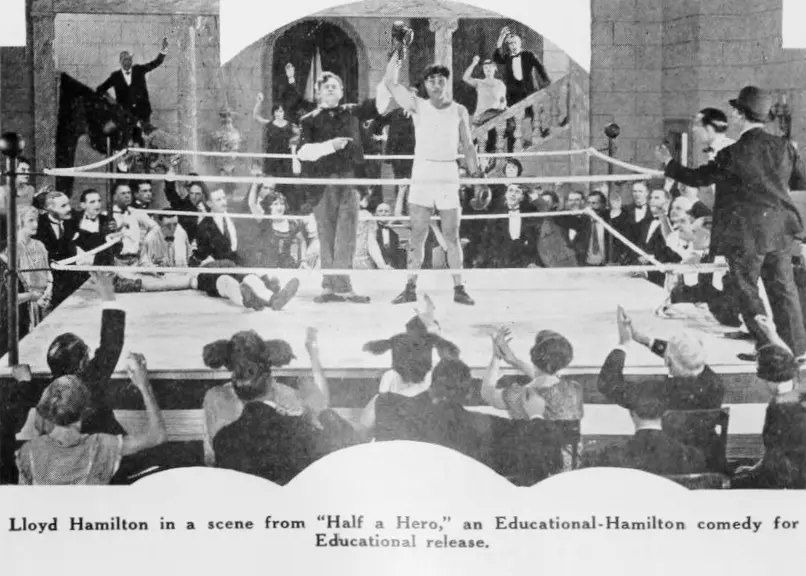
In this 1925 short, the 'Ham' character is at his most agile. Watch the way he enters the ring. He isn't just walking; he is performing a delicate dance of apprehension. He knows he doesn't belong there.
His interactions with Buster Brodie and Babe London provide a wonderful contrast. London, in particular, adds a layer of surrealism to the proceedings that elevates the film beyond a standard boxing parody.
The prize-fight is the heart of the film. Most boxing comedies focus on the underdog fighter, but Fred Hibbard makes the inspired choice to focus on the referee. It is a position of supposed power that Hamilton turns into a position of total victimhood.
There is a specific moment where Lloyd tries to separate the two fighters. He steps between them with a look of stern authority, only to be flattened as they both swing simultaneously. It is a simple gag, but the timing is surgical.
The camera work here is functional but effective. Hibbard uses wide shots to establish the geometry of the ring. This allows the audience to track the movement of all three participants, creating a sense of escalating dread as Lloyd is cornered.
Contrast this with the more melodramatic framing found in films like The Darkening Trail. Where that film uses shadows for drama, Half a Hero uses flat, bright lighting to ensure every grimace on Hamilton’s face is visible.
The title itself is a provocation. Is Lloyd even 'half' a hero? He isn't there to save anyone. He is there because he was likely the only person available or too polite to say no. This 'reluctant participant' trope is handled with more nuance here than in Back to the Woods.
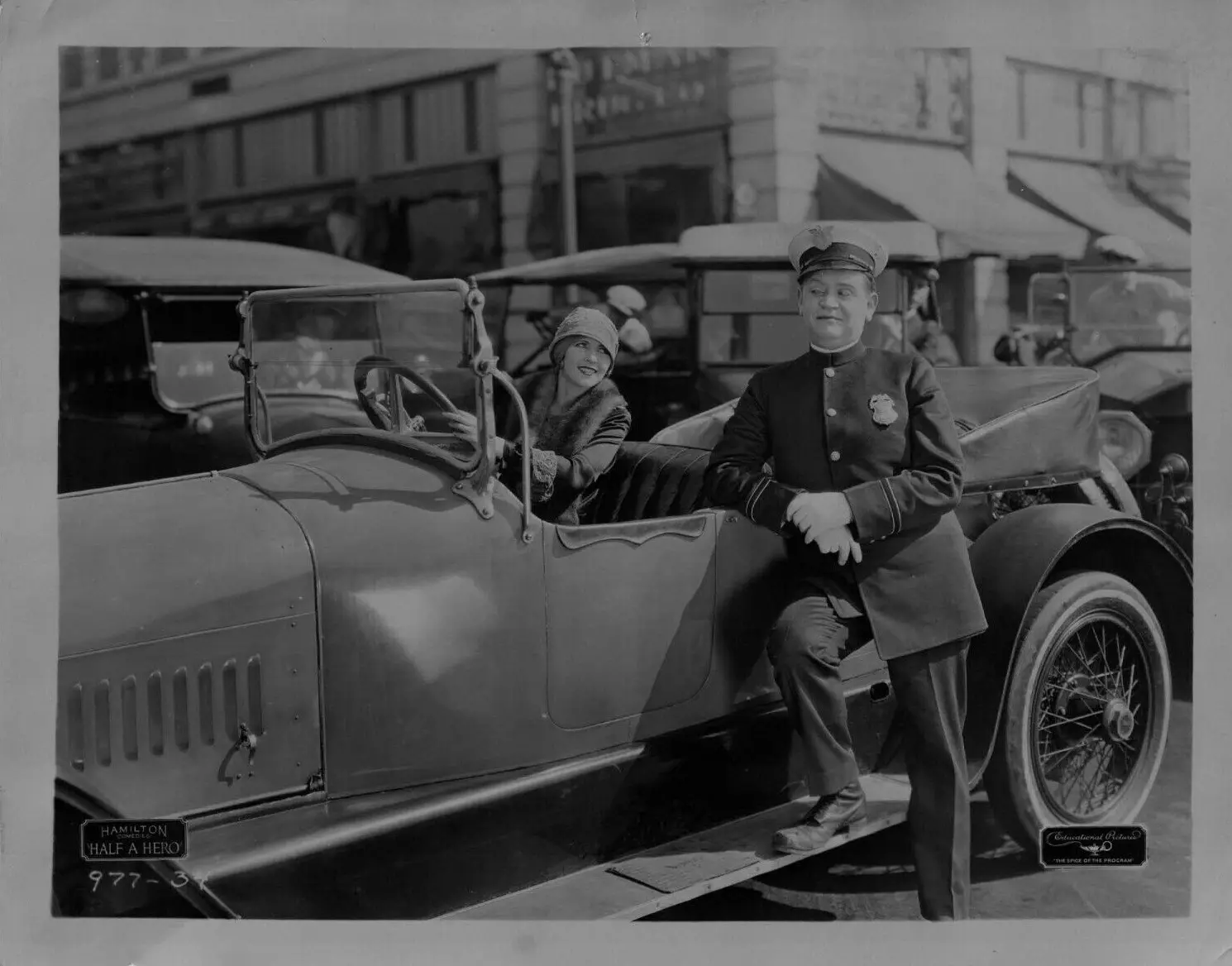
In many ways, Hamilton’s character is more relatable than the superhuman stunts of Harold Lloyd. He is the man who tries his best and still gets punched in the face. It is a brutally honest form of comedy. It works. But it’s flawed.
The pacing of the film is relentless. Once the fight starts, there is very little room for character development. This is a common trait of the Educational Pictures shorts, which prioritized 'gags per minute' over narrative depth.
While films like The Woman He Married focused on social dynamics, Half a Hero is purely about the mechanics of the fall. It is visceral, repetitive, and ultimately rewarding for those who enjoy the craft of the stunt.
Yes, Half a Hero is worth watching for anyone interested in the evolution of visual comedy. It provides a clear example of how Lloyd Hamilton influenced the 'slow burn' style of comedy that would later be perfected by Laurel and Hardy.
The film is a compact 20-minute explosion of energy. It does not overstay its welcome. It delivers exactly what the premise promises: a man getting knocked about for our amusement.
Pros:
Cons:
To understand Half a Hero, one must understand the landscape of 1925. This was a year of transition. The industry was moving toward features, but the 'two-reeler' was still the bread and butter of the movie-going experience.
Hamilton was competing with the likes of The Yankee Consul for audience attention. While other films were leaning into adventure or romance, Hamilton stayed true to the pure, unadulterated gag. He was a specialist in a world of generalists.
The supporting cast, including William T. Horne, provides the necessary 'straight man' energy to allow Hamilton to spiral. Without a grounded world to react against, Hamilton’s antics would feel untethered.
Interestingly, the film avoids the heavy moralizing found in Honor Among Men or the gritty realism of Stolen Honor. It exists in a bubble of pure kineticism where the only law is the law of gravity.
Half a Hero (1925) is a definitive piece of Lloyd Hamilton’s legacy. It isn't a complex film, nor does it try to be. It is a celebration of the 'lummox'—the man who is too big for his own skin and too kind for his own good.
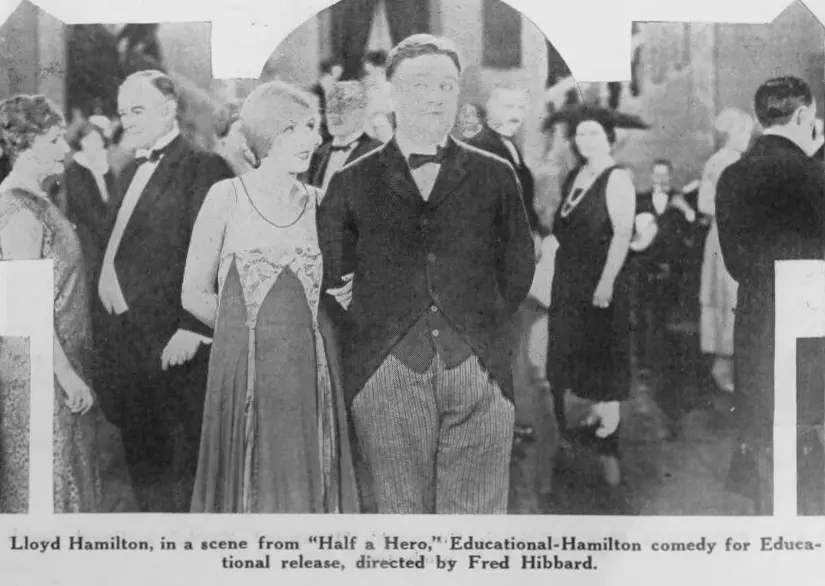
While it may not have the poetic resonance of a Chaplin film, it has a raw, honest hilarity that remains effective nearly a century later. It is a reminder that sometimes, the funniest thing in the world is just a man in a tuxedo trying not to fall down while two giants try to kill him.
'Hamilton doesn't just take a punch; he absorbs it into his very soul, only to bounce back with the confused dignity of a man who forgot why he was there in the first place.'
If you enjoy this, you might also find interest in the tonal shifts of The Spite Bride or the character-driven comedy of The Square Deceiver. But for pure, unfiltered ring-side chaos, Half a Hero is in a class of its own.
IMDb —
1914
Community
Log in to comment.