DbcultAccessing Vault...
Cult Review
Senior Film Conservator
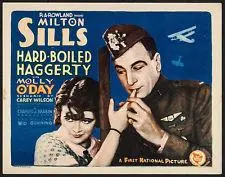
Should you invest your time in this 1927 silent relic? Short answer: Yes, but only if you appreciate the technical evolution of early action cinema and can tolerate the heavy-handed morality of the era.
This film is for aviation buffs and those interested in the 'tough guy' archetype of the 1920s; it is definitely not for viewers who find the slow pacing and exaggerated gestures of silent film to be a barrier to enjoyment.
1) This film works because it leverages the genuine WWI experience of writer Elliott White Springs to create aviation sequences that feel grounded and dangerous rather than purely theatrical.
2) This film fails because the central conflict—the 'scandal' of a woman's past—is handled with a lack of nuance that makes the commanding officer feel more like a caricature than a legitimate antagonist.
3) You should watch it if you want to see Milton Sills at the height of his powers, embodying a rugged masculinity that predates the noir heroes of the 1940s.
Hard-Boiled Haggerty is a fascinating study in the transition of the American hero. In 1927, cinema was moving away from the ethereal, romantic leads of the early 20s and toward something more tactile and bruised. Milton Sills, playing the titular Haggerty, is the perfect vessel for this shift.
Unlike the polished protagonists found in films like The Princess's Dilemma, Sills brings a physical weight to the screen. His Haggerty isn't just a pilot; he's a man who looks like he smells of engine oil and cheap tobacco.
The plot, while simple, serves as a vehicle for a very specific type of wartime tension. When the commanding officer denounces Haggerty’s love interest, it isn't just a personal slight; it is a challenge to the pilot's autonomy. This theme of military hierarchy vs. personal freedom is a recurring motif in the works of Carey Wilson.
The cinematography in Hard-Boiled Haggerty is surprisingly sophisticated for its time. While it may not have the surrealist flair of Vanina, it excels in its use of natural light during the airfield sequences.
The cameras are often mounted in ways that capture the vibration of the biplanes, giving the audience a visceral sense of the fragility of these machines. One particular scene, where Haggerty stares through the propeller arc at the French horizon, is a masterclass in framing.
In contrast, the cabaret scenes are shot with a smoky, claustrophobic intensity. The lighting here is low-key, emphasizing the 'scandalous' nature of the environment. It creates a visual dichotomy between the freedom of the sky and the judgmental shadows of the earth.
Molly O'Day provides a performance that is frequently overlooked. As the French girl caught in the crosshairs of military gossip, she avoids the 'damsel in distress' tropes found in The Apple-Tree Girl.
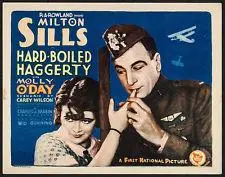
There is a defiance in her eyes when she is confronted by the commanding officer. It’s a subtle piece of acting that suggests her character has a life and a history that exists outside of Haggerty’s perception of her. This depth is what prevents the film from sliding into pure melodrama.
Sills and O'Day have a chemistry that feels earned. Their first meeting isn't a flurry of 'love at first sight' clichés. Instead, it’s a slow-burn attraction built on shared silence and mutual curiosity. It’s a refreshing change from the hyperactive romances of the era.
Hard-Boiled Haggerty is worth watching for anyone interested in the roots of the 'hard-boiled' archetype in American fiction. It provides a rare look at WWI through a lens that is both romantic and cynical, offering a technical showcase of early aviation cinematography that remains impressive nearly a century later.
The film’s pacing is its most significant hurdle. Like many productions from 1927, including Not So Long Ago, there are moments where the narrative stalls in favor of long, lingering close-ups.
However, when the action shifts to the airfield, the rhythm changes. The editing becomes sharper, mimicking the frantic nature of dogfights. This shift in tempo keeps the viewer engaged, even if the middle act feels a bit bloated.
The screenplay by Elliott White Springs is the secret weapon here. As a pilot himself, he avoids the 'Hollywood' version of flight. He understands the boredom of the barracks and the sudden, sharp terror of a mechanical failure. This realism elevates the film above contemporary works like A Young Tenderfoot.
Cons:
One of the most striking things about Hard-Boiled Haggerty is how it handles the concept of 'manhood.' Haggerty is constantly pressured by his peers to remain detached and 'hard-boiled.'
The film suggests that this detachment is a survival mechanism, but one that ultimately poisons the soul. It’s a surprisingly modern critique of toxic stoicism, even if it doesn't quite have the vocabulary to name it as such.
Compare this to the more straightforward moralism of Honesty - The Best Policy, and you see a film that is trying to say something much more complex about the human condition under the pressure of war.
Hard-Boiled Haggerty is a sturdy, well-crafted piece of entertainment that manages to transcend its dated premise through sheer technical competence and a powerhouse lead performance. It isn't a masterpiece on the level of 'Wings,' but it is a vital chapter in the history of the action hero.
It works. But it’s flawed. The film is a reminder that even in the silent era, audiences were hungry for characters who were more than just archetypes. Haggerty is a man of grit, and the film reflects that grit in every frame.
"A fascinating, if occasionally frustrating, look at the high-altitude hero before he became a cardboard cutout."
IMDb —
1927
Community
Log in to comment.