DbcultAccessing Vault...
Cult Review
Senior Film Conservator
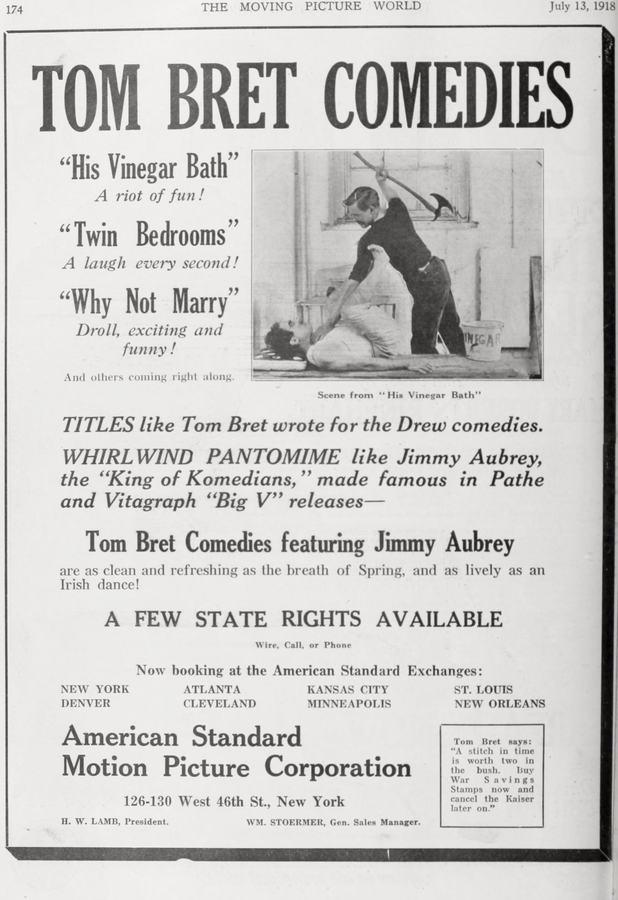
The film opens with a bustling street tableau, the camera panning across a kaleidoscope of vendors, horse‑drawn carriages, and a lone figure—Thomas Whitford—reciting verses to an indifferent crowd. Aubrey's physicality, a blend of slapstick timing and understated melancholy, immediately signals a protagonist who is both entertainer and existential wanderer. The script, penned by Tom Bret, employs a non‑linear structure: flashbacks interlace with present‑day confrontations, creating a mosaic that mirrors the fragmented nature of modern identity.
Eleanor Hartley, introduced in a contrasting domestic setting—a modest drawing‑room illuminated by a single oil lamp—exudes a quiet authority. Clark's performance is marked by precise gestures: a deliberate lift of a teacup, a lingering glance at a family portrait, each movement a visual metaphor for the weight of expectation. Their first encounter, staged at a charity gala, is choreographed like a chess match; dialogue is sparse, relying on intertitles that juxtapose wit with subtext.
Aubrey's comedic pedigree shines through in moments of physical comedy—slipping on a wet cobblestone, a pratfall that elicits laughter yet underscores his character's vulnerability. Yet, beneath the pratfalls lies a simmering disquiet: Thomas's monologues, delivered in close‑up, reveal a man haunted by the specter of permanence. Clark, on the other hand, balances poise with an undercurrent of rebellion. Her eyes, often framed by a single strand of hair, convey a yearning for autonomy that transcends the silent medium.
The chemistry between the leads is palpable without the crutch of spoken dialogue. A scene in which they share a silent dance on a rain‑slicked pier demonstrates an exquisite use of body language; their steps synchronize, then diverge, mirroring the push‑pull of their ideological clash. Supporting characters—Thomas's boisterous uncle (a cameo by a then‑emerging comic actor) and Eleanor's pragmatic sister—serve as narrative foils, amplifying the central tension between individual desire and collective expectation.
The cinematography employs chiaroscuro lighting to delineate emotional states. In scenes where Thomas grapples with his fear of commitment, shadows engulf his visage, while Eleanor's moments of resolve are bathed in a soft, diffused glow. The film's mise‑en‑scene is meticulously curated: period‑accurate costumes, ornate set pieces, and a recurring motif of cracked mirrors that symbolize fractured self‑perception.
Camera movement is deliberately restrained, favoring static compositions that invite the viewer to linger on facial expressions. However, during the climactic soirée—a lavish banquet where the decision of marriage hangs in the balance—the camera adopts a fluid dolly, circling the protagonists as they navigate a sea of revelers. This kinetic shift underscores the turbulence of their internal debate.
When juxtaposed with Il discepolo, which explores mentorship within a rigid hierarchy, 'Why Not Marry' shifts focus to personal agency within the domestic sphere. Both films share Bret's penchant for layering social commentary beneath comedic veneer, yet the latter delves deeper into gender dynamics.
The thematic resonance also echoes the moral ambiguity found in The Destruction of Carthage, where societal collapse serves as a backdrop for individual reckoning. In contrast, 'Why Not Marry' confines its drama to the intimate arena of marriage, making the stakes profoundly personal.
Aesthetic parallels can be drawn with The Masqueraders, particularly in the use of masquerade balls as metaphors for hidden motives. Both films employ the masquerade motif to interrogate authenticity versus performance, though 'Why Not Marry' grounds its inquiry in the everyday rather than the aristocratic.
At its core, the film interrogates the institution of marriage not as a romantic ideal but as a social contract fraught with power dynamics. Thomas's reluctance is not mere fear of commitment; it is a critique of a system that commodifies affection. Eleanor's insistence on partnership, rather than subservient union, challenges patriarchal expectations prevalent in the 1920s.
The recurring visual of cracked mirrors serves as a metaphor for the fragmented identities imposed by societal roles. Each character confronts a reflection that is both familiar and alien, prompting viewers to question the authenticity of their own social masks.
The film also touches upon class disparity. Thomas, a struggling playwright, navigates financial instability, while Eleanor hails from a respectable middle‑class family. Their dialogue—though conveyed through intertitles—hints at the economic calculus often underlying matrimonial decisions.
Although a silent picture, the original score—performed live in theaters—utilizes a blend of piano arpeggios and muted brass to underscore emotional beats. The music swells during moments of revelation, such as when Eleanor declares her desire for an egalitarian partnership, and recedes into a somber minor key during Thomas's solitary wanderings.
The strategic use of silence—pauses where the orchestra drops out—heightens tension, allowing the audience to inhabit the characters' internal vacuums. This auditory restraint mirrors the visual restraint, reinforcing the film's minimalist aesthetic.
'Why Not Marry' occupies a pivotal position in the evolution of early 20th‑century cinema, prefiguring later works that interrogate marital norms, such as Hungry Eyes and Her Great Chance. Its nuanced portrayal of gender politics anticipates the feminist narratives that would emerge in the sound era.
The film's influence extends beyond thematic concerns; its visual language—particularly the use of reflective surfaces as symbolic devices—can be traced in the oeuvre of directors like Carl Theodor Dreyer and later, in the modernist experiments of the French New Wave.
Contemporary reviews praised Aubrey's comedic timing and Clark's commanding presence, yet some critics dismissed the film as “overly didactic.” Modern scholarship, however, lauds its subversive undercurrents, recognizing Bret's script as a sophisticated critique of early 20th‑century marital expectations.
Recent restorations have revealed previously unseen frames, including an extended sequence in which Thomas visits a reform school for wayward youths—a scene that deepens his aversion to institutional control. This addition enriches the character's backstory, providing a more comprehensive understanding of his reluctance to bind himself.
The film refrains from offering a definitive answer to its titular question; instead, it invites perpetual contemplation. By juxtaposing humor with earnest social critique, 'Why Not Marry' transcends its era, resonating with contemporary audiences who continue to negotiate the balance between personal freedom and relational commitment.
In sum, the work stands as a testament to the silent era's capacity for narrative complexity, visual poetry, and thematic daring. Its enduring relevance underscores the timeless nature of its central inquiry: the perpetual human negotiation of love, liberty, and societal expectation.
IMDb 2
1935
Community
Log in to comment.