DbcultAccessing Vault...
Cult Review
Senior Film Conservator
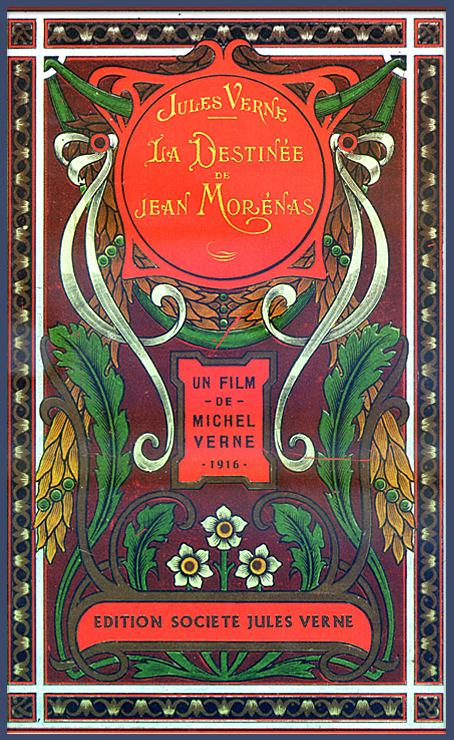
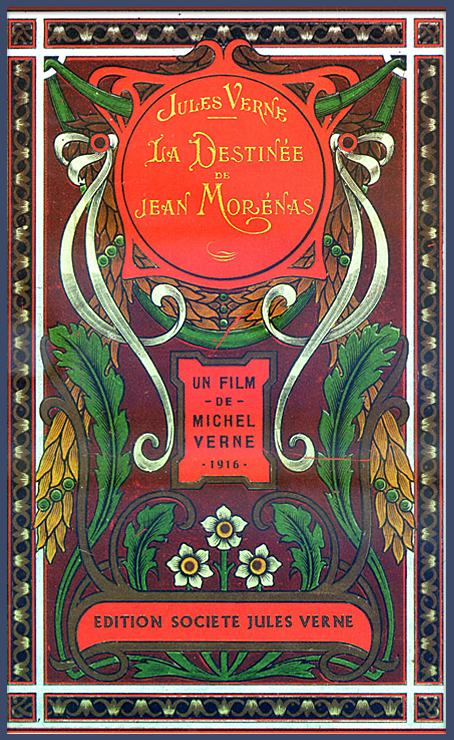
The camera begins inside a stone throat: black rock, iron manacles, the rasp of shackles dragging across Jurassic dust. From this chiaroscuro womb Michel Verne’s La Destinée de Jean Morénas (1913) crawls, a film whose very sprocket holes seem scarred. Viewed today, its 84-minute celluloid fossil feels less like a nickelodeon curiosity than a prophetic blueprint for every later parable of justice miscarried—an ancestor to Dassin’s noirs and Kurosawa’s Dostoevsky adaptations, yet steeped in the specific musk of fin-de-siècle Provence.
One cannot discuss the picture without acknowledging its genealogy. Jules Verne, grand vizier of voyages extraordinaires, co-scripts with nephew Michel; their collaboration births not a sky-bound fantasia but a subterranean crucible. The result is a film that feels exhumed rather than projected, its intertitles etched with the same geological patience that sculpts the quarry walls imprisoning our protagonist.
Verne the younger, doubling as director, shoots the opening penal sequence in tableau style, yet fractures the stasis through occluding devices: foreground boulders eclipse half the frame, while guards’ shadows bisect prisoners like guillotine blades. Depth is weaponized; freedom recedes into a luminous pinprick at the tunnel’s crown, a reverse Piranesi that converts infinity into entrapment. The mise-en-scène anticipates Bernhardt’s 1933 underground epic, yet eschews Germanic expressionism for a sunstruck realism that scalds the retina.
When the earthquake liberates Morénas, daylight detonates. Verne overexposes the Provence noon until marble dust becomes meteor showers. The cut from tenebrous quarry to blanched hillside is so violent it feels like a jump from Feuillade’s serial shadows into the blistered canvases of Van Gogh’s Arles. The tonal whiplash is intentional: liberty, too, can be a carceral glare.
In the eponymous role, Michel Verne himself delivers a physical performance of such granular specificity that close-ups—rare for 1913—become dermatological confessions. Watch the moment he discovers the blood-stained deed that will later damn him: pupils dilate beyond the iris ring, a micro-seizure of innocence bracing for the onslaught of fate. Months later, when his daughter offers a crust of bread through prison bars, his jaw hinges open with the slow inevitability of a gallows trapdoor. Theatrical historians may link such gestural elongation to the melodramatic register, yet the restraint in his trembling fingertips belongs to the incoming grammar of cinematic naturalism.
The film’s triadic structure corresponds to the Stations of Morénas’s Calvary: indictment, anonymity, and reckoning. Each act is heralded by a visual leitmotif—water, fire, fog—elements that refuse biblical redemption. The first act’s courthouse fountain, burbling beneath accusations, foreshadows the torrent that will later flood the quarry and precipitate collapse. Act two’s tannery furnaces glow ochre, transmuting animal hide into gold, capitalism’s alchemy paralleling Morénas’s transformation from martyr to clandestine benefactor. The finale’s nocturnal fog, rendered through double-exposure, erodes the village into a limbo where every lantern is a suspended verdict.
Compare this cyclical fatalism to the upward mobility fables of contemporaneous American silents like the 1911 Cinderella—films predicated on vertical ascension. Verne’s protagonist moves horizontally through strata of soil and class, but every stratum is cursed. Social mobility is lateral damnation.
Silent cinema often externalizes conflict through pursuit—think of In Mizzoura’s locomotive chases. Verne internalizes the chase: Morénas’s three options (flight, murder, confession) are presented not as sequential plot branches but as simultaneous spectral apparitions. Through multiple-exposure, translucent versions of Jean advance toward each horizon, a visual polyphony that predates Kieslowski’s sliding alternate selves by seven decades. The device is not gimmickry; it literalizes the French legal adage le choix du juge est le supplice de l’innocent—the judge’s choice is the innocent’s torment.
Where contemporaries such as Madame X weaponize maternal abnegation, Verne complicates filial piety. Morénas’s daughter, Blanche, is no passively traded chattel; she orchestrates the underground mail network that smuggles wages to villagers, a feminine counter-apparatus beneath patriarchal jurisprudence. Yet her agency intensifies the tragedy: the father’s dilemma is sharpened because the target of his vengeance is simultaneously the suitor who can secure her economic future. The film’s most devastating cut juxtaposes Blanche’s bridal veil—billowing like a cloud of flour—with Morénas’s quarry garb, still dusted with lime. Two whites: one nuptial, one carrerial.
Archival records indicate the film toured with a score for harmonium, timpani, and glass harmonica—an ensemble designed to evoke both ecclesiastical gravitas and tectonic rumble. Modern silent-film festivals often pair it with minimalist drones, but I urge curators to resurrect the original orchestration. The glass harmonica’s tremolo, vibrating at the same Hertz that induces ocular nystagmus, turns the auditorium itself into a penal cavity, spectators shackled by resonance.
The 2022 4K restoration by the Cinémathèque de Marseille reveals textures smothered in earlier dupes: individual chisel marks on quarry walls, the proto-bokeh shimmer of olive orchards, even the glycerin sheen on Verne’s lips designed to mimic prolonged dehydration. Yet the ethics of such resurrection are fraught. The nitrate source bore chemical damage—bubbling that resembled smallpox—erasing portions of a crucial courthouse scene. Restorers faced the Solomonic choice to either graft stills or embrace lacunae. They opted for digital rotoscoping, interpolating missing frames by extrapolating actors’ trajectories. Pinpricks of modern pixels thus glimmer amidst 1913 emulsion, a reminder that every restoration is a dialectic between archaeology and authorship.
Cinephiles will recognize affinities with Judge Not (1916), another parable of wrongful condemnation. Yet where that film dilutes its moral sting through last-minute exoneration, Verne offers no deus-ex-reprieve. Likewise, the structural DNA of Destinée reappears in For the Defense (1922), but the American production converts existential dread into courtroom thrills. Verne’s Gallic pessimism is more kin to Russian spiritual desolation than to Hollywood’s reversible verdicts.
The film’s coda—a lantern dissolving into fog—operates as a Rorschach test. Moralists may read potential redemption: the protagonist refuses both vengeance and cowardice, opting for truth. Existentialists will contend the fog swallows ethical coordinates altogether, leaving Morénas to wander a universe where guilt and innocence are interchangeable. My own viewing, on a rain-lashed night in Lyon, superimposed the city’s contemporary yellow-vest protests onto Verne’s 1913 village squares, suggesting cyclical entrapment across centuries. The film’s genius lies in accommodating every hermeneutic without authorial hand-holding.
Is La Destinée de Jean Morénas a neglected masterpiece? The question itself is bourgeois, presuming art must be excavated to be validated. Perhaps it is more accurate to say the film haunts the periphery of canon, a ghost waiting for each new generation to recognize its own reflection in quarry dust. In an era when algorithmic feeds monetize outrage and exonerations are livestreamed, Verne’s silent meditation on the elasticity of justice feels simultaneously antique and terrifyingly immediate.
Seek it out—whether on a 35mm touring print, a DCP with glass harmonica accompaniment, or a bootleg digitization rippling with gate wobble. Let its images seep under your retinas, and you may find yourself, days later, interrogating every flicker of lamplight on a rain-slick street, wondering whether destiny is merely the sum of choices we refused to believe were choices.
And remember: the quarry is never outside us.
IMDb 6.8
1929
Community
Log in to comment.