DbcultAccessing Vault...
Cult Review
Senior Film Conservator
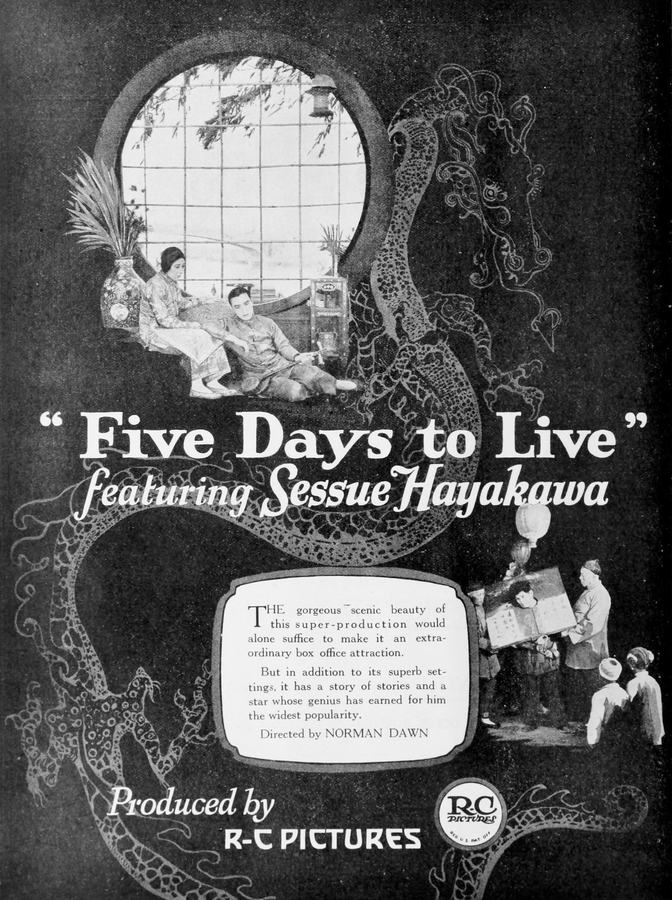
Stepping back into the silent era, one often expects a certain theatricality, a grandiloquence of gesture that speaks volumes where dialogue cannot. Yet, some films from this period transcend mere performance, embedding themselves within the viewer's consciousness through sheer emotional force and narrative ingenuity. 'Five Days to Live', a cinematic endeavor from a bygone epoch, is precisely one such work. It is a story that, despite its age, resonates with an almost primal intensity, exploring the harrowing lengths to which an individual might go for the sake of another's happiness. The film’s narrative, crafted by Dorothy Goodfellow, Garrett Fort, and Eve Unsell, is a testament to the enduring power of love as both a catalyst for profound devotion and a potential harbinger of tragic miscalculation. At its core, this is a tale of desperate measures, where the currency of life itself is offered in exchange for a dream of freedom and affection.
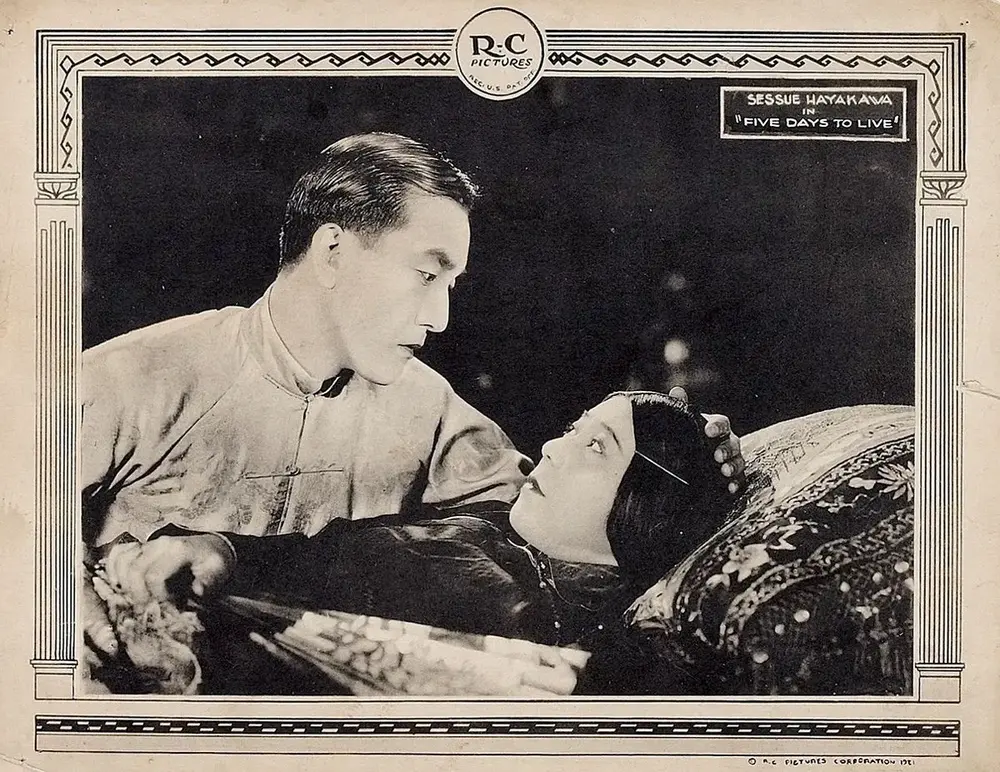
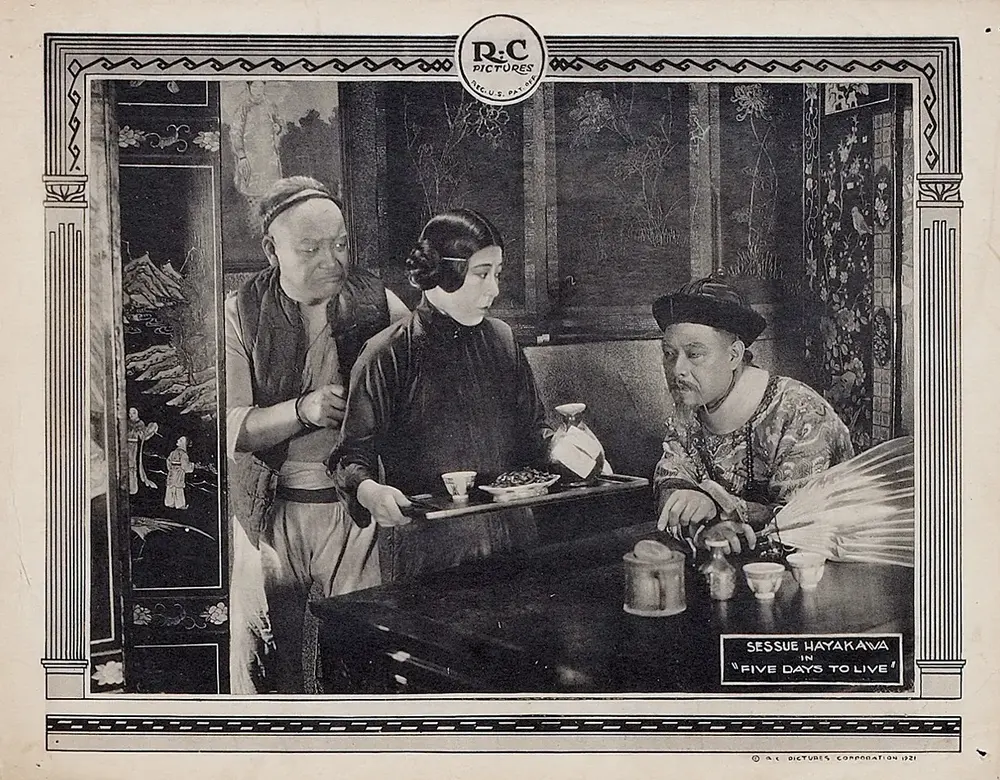
The heart of the narrative beats with the rhythm of Tai Leung, portrayed with an arresting intensity by the legendary Sessue Hayakawa. Tai is not merely a protagonist; he is an embodiment of artistic sensibility and profound romantic idealism. His hands, usually engaged in the meticulous, almost sacred act of carving intricate ivory images, are destined for a far more brutal purpose. Hayakawa, a titan of the silent screen, imbues Tai with a quiet dignity, a soulful earnestness that makes his eventual, drastic decision utterly comprehensible, if not entirely rational. His initial portrayal is one of gentle artistry, a man whose world is defined by beauty and craftsmanship, a stark contrast to the harsh realities that soon engulf him. This juxtaposition is crucial; it elevates Tai from a simple suitor to a figure of tragic nobility, a man whose purity of heart drives him towards an unthinkable act.
Kao Ai, the object of Tai's unwavering devotion, is brought to life by Tsuru Aoki, Hayakawa’s real-life wife and frequent co-star. Her portrayal of Kao Ai is nuanced, depicting a young woman whose spirit, though crushed under the yoke of servitude, possesses an innate resilience and a burgeoning capacity for joy. She toils ceaselessly in her cruel foster father's restaurant, a place that is less a livelihood and more a site of sustained oppression. The film masterfully illustrates her plight, not through overt melodrama, but through the subtle gestures of weariness, the downcast gaze, the subdued demeanor that speaks volumes about her daily suffering. When Tai Leung enters her life, it is as if a ray of sunlight pierces through the perpetual gloom. Aoki conveys Kao Ai's transformation with delicate precision; her initial trepidation gives way to a blossoming confidence, a flicker of hope that ignites a new spark in her eyes. This awakening is not merely romantic; it is a profound liberation of spirit, making Tai's subsequent actions all the more poignant.
The antagonist, if one can call him that, is not a mustache-twirling villain in the traditional sense, but rather a manifestation of societal indifference and avarice. Kao Ai's foster father, portrayed by Misao Seki, is a man driven by mercenary impulses, seeing his ward not as a human being but as an asset, a source of labor and potential profit. His agreement to 'let her go' is not born of compassion, but of a calculated transaction, demanding an exorbitant sum that is utterly beyond Tai's means. This demand sets the central conflict into motion, painting a grim picture of a world where human connections are commodified and freedom is a luxury only the wealthy can afford. The film, through this character, subtly critiques the economic structures that trap individuals in cycles of exploitation, making Tai's struggle not just a personal one, but a broader commentary on social injustice. The tension created by this financial barrier is palpable, pushing Tai to the brink of desperation and ultimately, to a decision of unimaginable consequence.
It is in this crucible of desperation that Tai Leung encounters the ultimate Faustian bargain. Learning of 'The Wolf', a condemned pirate played by George Kuwa, who seeks a substitute for his impending execution, Tai sees a morbid solution to his insurmountable financial quandary. The idea is audacious, horrifying, yet in his love-addled state, it appears as the only viable path to Kao Ai's happiness. The film does not shy away from the moral ambiguity of this choice. Tai is not a fool; he understands the gravity of his decision, yet his devotion transcends self-preservation. This moment is where 'Five Days to Live' truly distinguishes itself, moving beyond a simple romance to a profound exploration of self-sacrifice and the ethical dilemmas inherent in such an extreme act. The concept of a man willingly walking to the gallows in another's stead is a powerful dramatic device, one that immediately elevates the stakes and plunges the narrative into a realm of high tragedy. It's a choice that forces the audience to confront the boundaries of love and the human capacity for ultimate renunciation.
However, as the plot synopsis tantalizingly hints, things do not unfold as Tai meticulously plans. The narrative takes a sharp, unexpected turn, injecting a potent dose of suspense and irony into the already fraught situation. This is where the film truly shines, demonstrating a sophisticated understanding of dramatic structure that belies its age. The audience is kept on tenterhooks, witnessing Tai's desperate gamble spiral into unforeseen complications. The tension builds with each passing frame, as the ticking clock of his 'five days to live' becomes an ever-present, chilling reminder of his impending doom. The film expertly plays with expectations, creating a sense of dread mixed with a glimmer of hope, constantly shifting the emotional landscape. This unpredictable trajectory transforms a straightforward tale of sacrifice into a labyrinthine journey through fate's cruel whims. It's a narrative strategy that keeps viewers utterly engrossed, mirroring the chaotic and often uncontrollable nature of life itself.
The visual storytelling in 'Five Days to Live' is remarkably effective, a testament to the directorial prowess of the era. Cinematography, though constrained by the technical limitations of its time, skillfully captures the emotional nuances of the characters and the stark environments they inhabit. Close-ups of Hayakawa's expressive face, conveying anguish, determination, and profound love without a single spoken word, are particularly impactful. Tsuru Aoki's subtle gestures and the gradual brightening of her eyes as Kao Ai finds hope are equally compelling. The sets and costumes, while perhaps not lavish, are functional and serve to ground the story in a believable reality, highlighting the contrast between Tai's artistic sensibility and the grimy pragmatism of the world around him. The ensemble cast, including Goro Kino and Toyo Fujita, provide solid support, creating a believable world for Tai and Kao Ai's tragic romance to unfold. The visual language is clear, concise, and powerfully communicative, ensuring that the emotional beats land with significant impact even without dialogue.
Beyond the compelling plot, 'Five Days to Live' delves into profound thematic territory. At its core, it is a searing examination of unconditional love and the ultimate sacrifice. Tai Leung's willingness to surrender his life for Kao Ai's freedom transcends mere romantic infatuation; it speaks to a deeper, almost spiritual devotion. The film challenges viewers to consider the boundaries of such commitment. Is such a sacrifice noble or foolish? Does true love demand such an extreme price, or does it seek a different path? This central question reverberates throughout the narrative, prompting introspection long after the credits roll. It’s a theme that echoes in other films depicting desperate choices for love, though few push the concept to such a literal extreme as a voluntary execution.
Furthermore, the film explores the inexorable hand of fate and the futility of human planning in the face of larger forces. Tai's meticulously constructed plan, designed to ensure a specific outcome, is systematically dismantled by unforeseen circumstances. This narrative twist introduces a powerful element of tragic irony, suggesting that even the most selfless acts can be derailed by the unpredictable nature of existence. It's a stark reminder that control is often an illusion, and that life, in its infinite complexity, rarely adheres to a script. This theme of fate's capriciousness can be seen in other silent dramas, where characters are often buffeted by forces beyond their control, but 'Five Days to Live' delivers it with particular poignancy given the extreme nature of Tai's initial choice.
The film also touches upon themes of social class and economic disparity. Kao Ai's enslavement by her foster father is a direct consequence of her vulnerable position in society, highlighting how financial constraints can dictate human destiny. Tai's struggle to earn the required sum underscores the immense chasm between his meager means and the cost of freedom. This societal critique, though subtle, adds a layer of depth to the personal drama, making Tai's sacrifice not just a romantic gesture, but an act of rebellion against an unjust system. The desperation that drives him to such an extreme measure is rooted in the harsh economic realities faced by many during that era, a reflection of the broader societal struggles of the time. This social commentary elevates the film beyond a mere melodrama, grounding it in a tangible, if bleak, reality.
When considering 'Five Days to Live' within the broader landscape of silent cinema, particularly those films dealing with themes of sacrifice and desperate measures, certain parallels and distinctions emerge. One might draw a thematic comparison to films like The Clutch of Circumstance, where characters also find themselves ensnared by forces beyond their control, often leading to agonizing decisions. However, 'Five Days to Live' elevates the stakes significantly by introducing the literal exchange of life for financial freedom, a concept rarely explored with such directness. The sheer audacity of Tai's bargain sets it apart from many contemporary dramas where financial hardship might lead to crime or moral compromise, but seldom to a voluntary death sentence.
In terms of character-driven melodrama and the exploration of intense emotional states, one could look at films like Too Wise Wives or The Love Girl, which often delved into the complexities of relationships and societal expectations. Yet, 'Five Days to Live' possesses a unique gravitas, propelled by the existential threat hanging over Tai Leung. The emotional intensity is not merely about romantic entanglements but about life and death itself. The performances by Sessue Hayakawa and Tsuru Aoki, in particular, convey a depth of feeling that stands alongside the most compelling silent era pairings, reminiscent of the powerful chemistry seen in other Hayakawa films. Their ability to communicate such profound emotion without dialogue is a hallmark of the era's finest actors.
The narrative's central conceit, a man trading his life for another's future, also finds echoes in literary traditions of ultimate sacrifice, making it a timeless story despite its specific period setting. While films like Missing Husbands might explore the consequences of absence, 'Five Days to Live' directly confronts the deliberate creation of absence through self-immolation. It pushes the boundaries of cinematic storytelling for its time, daring to explore themes that remain potent and unsettling even today. The film’s ability to maintain suspense and emotional investment through its intricate plot twists further solidifies its position as a significant work, demonstrating a narrative sophistication that predates many of the more lauded thrillers and dramas of later decades.
'Five Days to Live' is more than just a relic of the silent film era; it is a powerful piece of cinema that continues to captivate with its emotional depth and daring narrative. Sessue Hayakawa's performance as Tai Leung is nothing short of magnetic, anchoring the film with a portrayal that is both nuanced and profoundly moving. His ability to convey such immense internal struggle and unwavering love through gesture and expression alone solidifies his status as one of cinema's earliest international stars. Tsuru Aoki matches him beat for beat, her transformation from a downtrodden servant to a hopeful lover being utterly convincing.
The film's enduring impact lies in its timeless exploration of themes that remain universally resonant: the transformative power of love, the agony of sacrifice, and the often-cruel hand of fate. It serves as a stark reminder that even in the absence of spoken dialogue, cinema possesses an unparalleled ability to communicate profound human experiences. For those interested in the evolution of storytelling, the art of silent acting, or simply a compelling drama that tugs at the heartstrings, 'Five Days to Live' offers a rich and rewarding viewing experience. It is a testament to the fact that genuine emotion and a well-crafted story transcend the limitations of technology and time, leaving an indelible mark on the viewer's soul. Its legacy is not just as a silent film, but as a poignant human drama that speaks volumes without uttering a single word, echoing the silent cries and triumphs of its unforgettable characters.

IMDb 6.5
1935
Community
Log in to comment.