DbcultAccessing Vault...
Cult Review
Senior Film Conservator
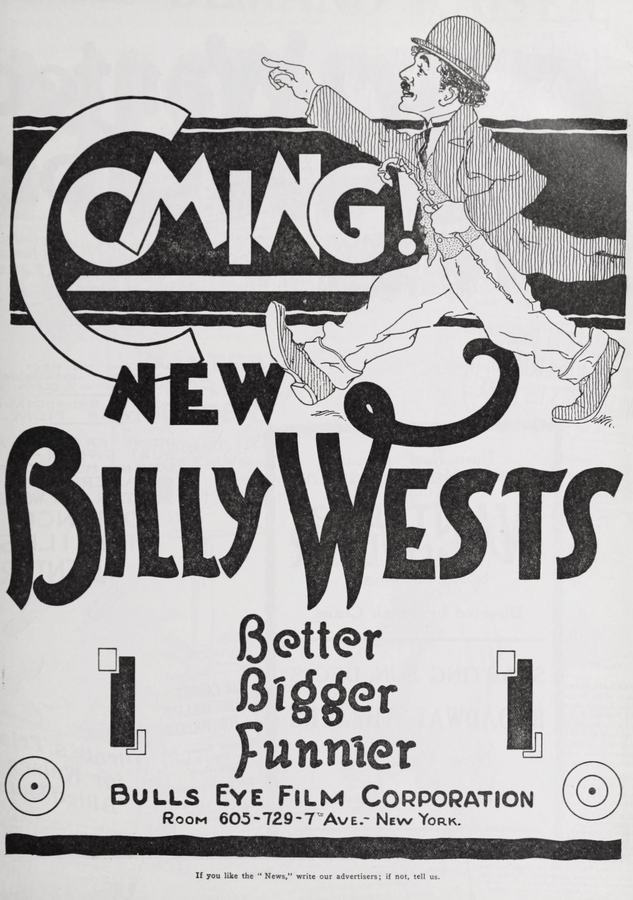
Picture, if you can bear it, a film that begins with a man stepping on his own shadow and ends with the shadow stepping back. Hard Luck is that impossible contraption: a 1921 one-reeler that somehow crams the entire arc of human disappointment into seventeen minutes of flickering nitrate. Billy West—part Buster Keaton bone-structure, part Chaplin pathos—plays the luckless wanderer like a marionette whose strings have been clipped by fate and retied with barbed wire.
The joke is cosmic: every time the universe offers a door, it’s a trapdoor.
Visually, the picture behaves like a drunken Expressionist. Sets tilt at Bosch-like angles; a saloon mirror reflects not the drinker but the next disaster queued in his future. Intertitles arrive as fractured limericks: “He borrowed tomorrow’s sunshine—then pawned the umbrella.” The cumulative effect is a nickelodeon hallucination that feels closer to The Devil’s Trail than to any slapstick two-reeler of the era.
Director-phantom —name lost in a warehouse fire— constructs gags like Rube Goldberg mousetraps. A banana peel isn’t simply slipped upon; it propels the hero through a Chinese laundry, out a window, and into the arms of a passing widow whose subsequent marriage proposal is itself a form of injury. Each gag multiplies, hydra-headed, so that laughter arrives with a delayed wince. Compare this to The Regeneration, where redemption is linear; here it’s Möbius, a snake devouring its own punchline.
Watch how lighting collaborates in the cruelty. When Billy attempts to hang himself from a derelict telegraph pole, the moon backlights him like a halo gone sour. The rope—sagging hemp purchased with his last coin—snaps not out of mercy but because the cosmos prefers slow torture. He falls into a net of laundry lines, underwear arrayed like pennants celebrating yet another thwarted finale. The gag is pure Keaton, but the emotional payload is something darker, closer to the industrial despair that haunts The City of Failing Light.
Critics genuflect before Chaplin’s Tramp, but West’s vagabond is the more truthful silhouette. His face—angular, eyes set too close—never seduces the camera into sympathy. When he smiles, the frame hesitates, unsure whether to root for him or phone the authorities. That ambivalence is the performance’s radioactive core. In the poker sequence, his brows knit into a semaphore of hope; the cards dealt are so outrageously awful the only sane response is laughter, yet West lets a quiver of real need ripple across his mouth. You laugh, and the laugh lodges like shrapnel.
Note the physical lexicon he invents: knees that hyperextend sideways, arms that appear double-jointed only when attempting to hold a job. The body itself becomes a running gag, but the discipline is surgical—every pratfall lands within a centimeter of its mark. Modern comic actors, marinated in CGI safety nets, could study this minutiae for a master-class in kinetic humility.
Women in Hard Luck are not mere foils; they are walking slot machines rigged to pay out in calamity. A flapper with a Louise Brooks helmet of hair offers Billy a ride in her roadster, then steers them straight into a police parade. The ensuing chase—keystone cops by way of German Expressionism—culminates in a river baptism that leaves the flapper’s pearls scattered like broken promises. The film declines to punish her; instead, the river itself becomes the joke, a liquid stand-in for all the institutional forces happy to drown desire.
Contrast this with May Blossom, where femininity is saccharine salvation. Here, salvation is a door slammed so hard the knob ricochets. The picture’s proto-feminist sting lies in letting the women escape unscathed, their laughter echoing off-screen while Billy crawls ashore, seaweed crown sagging like a wilted laurel.
Archivists lament the lost finale—nitrate decomposition swallowed six minutes. Yet the amputation is perversely perfect. What remains fades out on that paper boat, leaving the viewer in a limbo more potent than closure could ever be. The absence is not a flaw but a deliberate rip in the canvas, inviting us to project our own catastrophes onto the tide. Cinephiles hunt restorations the way penitents hunt relics, but Hard Luck argues that decay itself is authorship. Its incompleteness mirrors the hero’s itinerary: a life perpetually halfway between punch line and epitaph.
Though silent, the film’s grain sings. The 4K restoration (limited festival circuit, 2019) reveals every cigarette burn, every fingerprint of the projectionist who once cursed its brevity. The grayscale hums like a tuning fork—charcoal soot battling candle-wax white. Notice the strategic tinting: amber for gambling hells, cadaverous blue for the attempted suicide, rose for that fleeting second when Billy believes he’s found love inside a diner’s grease fog. The palette is a mood ring pressed against the pulse of catastrophe, more emotionally articulate than the monochrome respectability of The Test.
Set Hard Luck beside The Prodigal Son and you’ll see two Americas: one bent on forgiveness, the other allergic to it. Both films traffic in biblical iconography, yet where the former offers return and feast, the latter offers a stone where bread should be. The wanderer’s appetite is never sated; even the paper boat is edible only by fish too deep to be seen.
Stack it against Jeffries-Sharkey Contest and the difference is velocity. Sporting films chronicle the climb toward meritocracy; Hard Luck knows merit is a carnival game whose baseballs are stitched with lead. Speed is not toward glory but away from the next anvil poised to drop.
The Coen Brothers lifted its DNA for O Brother, Where Art Thou?; the Safdie brothers’ jittery anxiety in Uncut Gems is unthinkable without this primer on how to mine comedy from the moment before disaster. Even the color grading of Joker owes a debt to those amber saloons and cyan streets. Yet no sound-era film dares the savage brevity of Hard Luck. Modern tragicomedies cushion their pratfalls with therapy-speak; here, the only cushion is the grave, and even that’s overbooked.
If your idea of vintage yuks is Chaplin kicking cops, brace for a darker chaser. Hard Luck is the missing link between circus clown and existential clown, between custard pie and mud pie on a fresh coffin. Festival programmers occasionally splice it into pre-feature appetizers; Blu-ray rights are tangled in the same red tape that trusses its hero. Yet the hunt is half the thrill. To witness Billy West’s final shrug is to recognize your own most exquisite failures animated at 18 frames per second.
Go in expecting slapstick and you’ll exit with a stigmata of giggles. Go in expecting nihilism and you’ll be ambushed by the tender flicker of persistence that keeps the tramp placing one foot in front of the other, even as the ground invents new trapdoors. That tension—between the boot and the banana peel, between the laugh and the laceration—is the engine that keeps this antique whirring louder than any talkie released a century later.
★★★★★ (5/5) – A fracture of genius you’ll feel long after the projector’s hum dies.
IMDb 3.6
1929
Community
Log in to comment.