DbcultAccessing Vault...
7.8/10
Senior Film Conservator
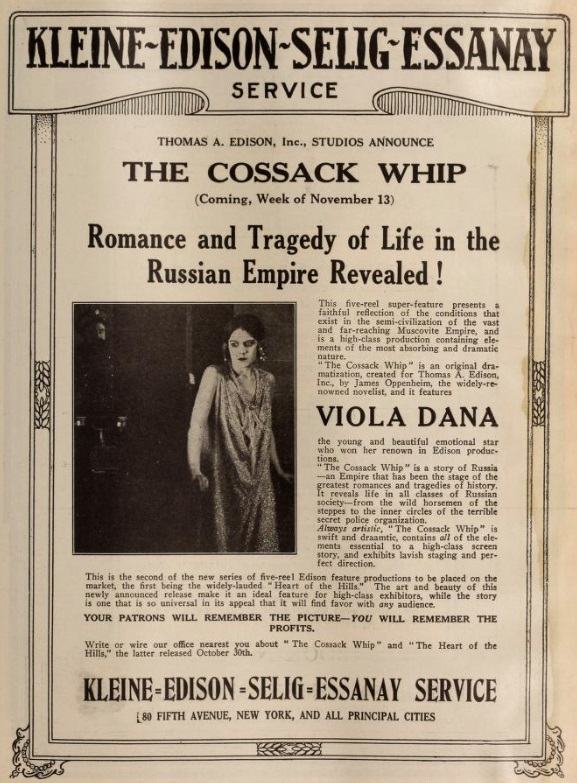
A definitive 7.8/10 rating for a film that redefined the boundaries of cult cinema. The Cossack Whip remains a cornerstone of transgressive art.
In the annals of silent cinema, where grand gestures and intense emoting painted narratives across the silver screen, there emerges a film that, even today, retains a visceral, almost shocking power. The Cossack Whip, a 1917 production, is not merely a historical artifact; it is a raw, unflinching exploration of vengeance, oppression, and the indomitable spirit of a woman pushed to her absolute limit. Directed by Ivan Abramson, and featuring a mesmerizing performance by Viola Dana, this film transcends its era, offering a narrative that is as compelling as it is brutal. It’s a stark reminder of the social and political turmoil that often fueled early 20th-century storytelling, a period when the silent film medium was a potent vehicle for both escapism and profound social commentary.
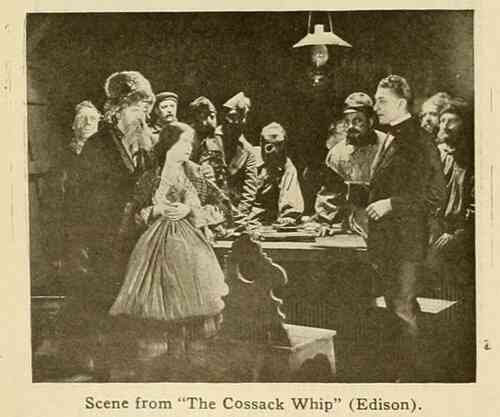
The film plunges us headfirst into a world of Tsarist autocracy, a Russia rife with simmering rebellion and iron-fisted suppression. Our journey begins with a chilling decree from Feodor Turov, the ruthless chief of the Czar's secret police, portrayed with chilling efficacy by Robert Walker. Convinced that a certain village harbors the seeds of insurgency, Turov unleashes his Cossacks, those legendary, fearsome horsemen, upon the unsuspecting populace. What unfolds next is not merely an attack but a massacre, a harrowing spectacle of state-sponsored violence that leaves an indelible mark. This initial sequence, though rendered through the lens of silent-era filmmaking, manages to convey an astonishing level of brutality, setting a grim, unforgiving tone for the entire narrative. The visual language of the period, relying on stark contrasts and exaggerated expressions, amplifies the horror, making the audience acutely aware of the terror inflicted upon the innocent villagers.
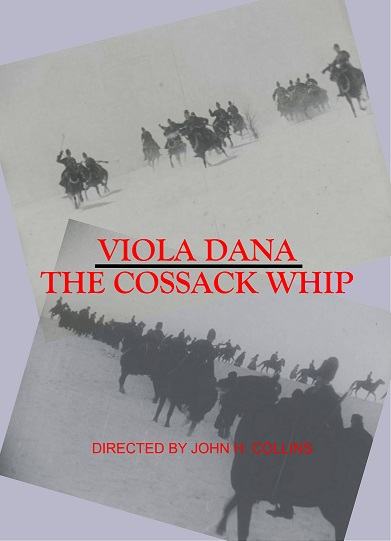
Amidst this chaos, a tragedy unfolds that ignites the very core of the story: the young Katerina, a symbol of innocent victimhood, is whipped to death. It is a scene designed to shock, to evoke a profound sense of injustice. But from this ashes of despair rises the phoenix of vengeance in the form of Darya, Katerina's sister. Witnessing this atrocity, a silent, searing oath is forged in her heart. Darya, played by the extraordinary Viola Dana, embodies a transformation that is central to the film’s power. She escapes the devastation, fleeing to England, carrying with her not just the trauma of loss but a burning, unquenchable desire for retribution. This isn't just a simple promise; it's a destiny she embraces, a path she will meticulously carve over years of exile and personal evolution. Her journey is a testament to the enduring human capacity for resilience, even in the face of unimaginable horror, and the singular focus that can emerge from profound grief.
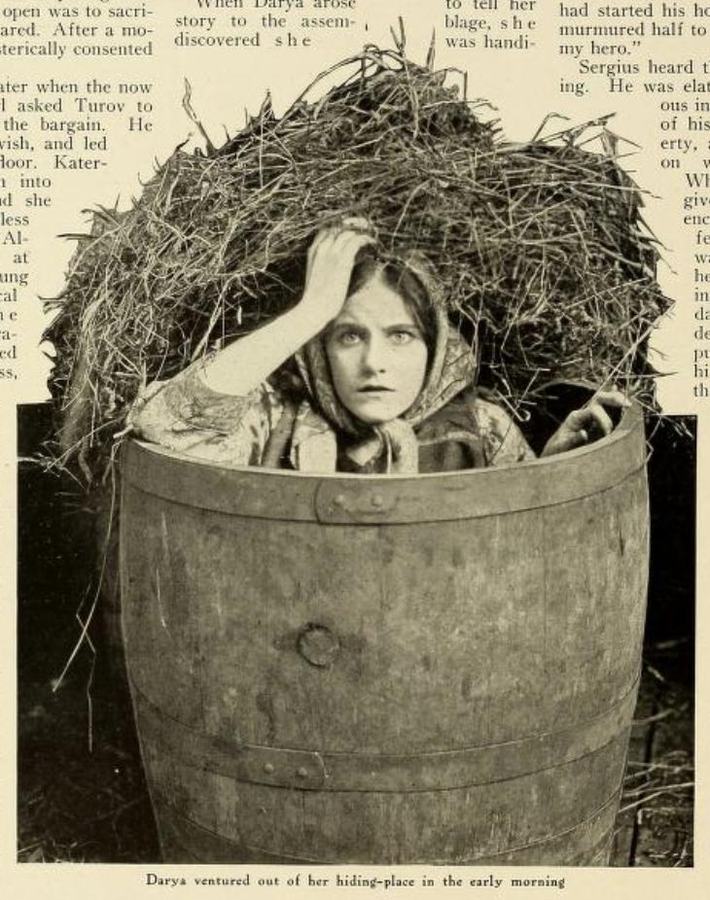
Years later, the narrative elegantly pivots. Darya has not merely survived; she has thrived, transforming herself into one of the world's most celebrated prima ballerinas. This metamorphosis is not just external; it speaks to a deeper, more calculated evolution. Her art becomes her armor, her grace a weapon, her fame a shield. She returns to Russia, a land still haunted by the ghosts of her past, but now, she is no longer the helpless girl. She is a woman of formidable presence, her every movement imbued with a quiet, dangerous power. It is here that her path inevitably crosses with Turov once more. The irony is palpable: the man who orchestrated the destruction of her family is now captivated by her artistry, drawn to her like a moth to a flame. He, oblivious to her true identity and her carefully veiled intentions, seeks her out, securing a meeting, believing he is in control. This intricate dance of deception, where predator becomes prey, is masterfully orchestrated by writers James Oppenheim and Paul Sloane, who craft a narrative arc that is both psychologically astute and dramatically compelling.
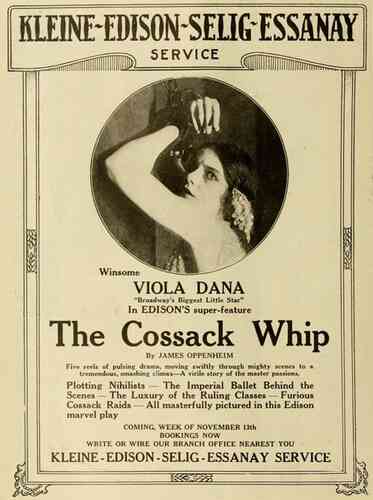
Viola Dana's performance as Darya is, without hyperbole, a tour de force. In an era devoid of spoken dialogue, her ability to convey a complex spectrum of emotions – grief, determination, cunning, and ultimately, cold resolve – through facial expressions, body language, and the subtle nuances of her balletic movements is astonishing. Her Darya is not a caricature of revenge but a deeply human character, one whose pain is palpable, and whose transformation is utterly believable. When she coyly asks Turov to take her to see a prison first, there's a chilling undertone to her seemingly innocent request. It's a moment pregnant with foreshadowing, a quiet declaration of intent that speaks volumes without a single intertitle. This scene perfectly encapsulates the genius of silent film acting, where the unsaid often resonates more powerfully than any spoken word. Dana’s gaze, her posture, the slight tremor in her hands – every detail contributes to building a character whose journey from victim to avenger is utterly captivating. Her portrayal here stands as a benchmark for silent film drama, demonstrating the profound emotional depth that could be achieved through purely visual means. One might even draw parallels to the intense, focused determination seen in characters navigating moral labyrinths in films like The Christian, where personal conviction drives the narrative, albeit in a different thematic register.
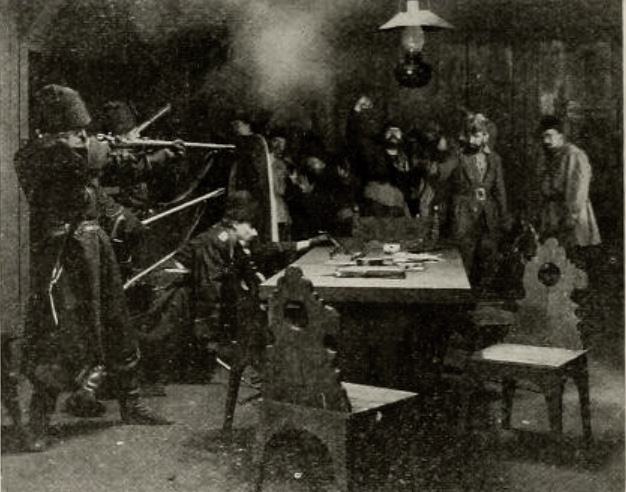
The supporting cast, while perhaps overshadowed by Dana’s brilliance, contributes significantly to the film's immersive atmosphere. Robert Walker's Turov is not a one-dimensional villain; he is a man of power, arrogance, and ultimately, a tragic figure caught in the web of his own making. His initial portrayal of a ruthless official gives way to a man utterly smitten, a vulnerability that Darya expertly exploits. Grace Williams, Richard Tucker, and George Kuwa, among others, fill out the world of Tsarist Russia and the English ballet scene, providing a rich tapestry against which Darya’s story unfolds. The ensemble work, even in its supporting roles, helps to ground the more melodramatic elements of the plot in a believable reality, crucial for a story steeped in such intense emotional stakes. The film's ability to maintain a sense of palpable tension, even during moments of apparent calm, is a testament to the strength of its direction and the compelling performances of its entire cast, reminiscent of the tightly wound suspense found in a film like Detective Craig's Coup, where every character interaction could be a clue or a trap.
From a technical perspective, The Cossack Whip showcases the cinematic craftsmanship of its era. The cinematography, while constrained by the technology of the time, effectively utilizes lighting and composition to enhance the dramatic tension. The scenes of the Cossack attack, for instance, are rendered with a dynamic energy that belies the static nature of early cameras. The use of intertitles, far from being a mere necessity, becomes an integral part of the storytelling, often delivering lines that are poetic, ominous, or profoundly impactful. These textual interventions guide the audience, providing crucial context and amplifying emotional beats, much like the narrative devices employed in other silent dramas seeking to convey complex plots, such as The Invisible Power or In the Prime of Life, where internal struggles and external pressures are carefully elucidated. The production design, though perhaps not as lavish as some contemporary epics, effectively creates distinct environments, from the humble Russian village to the elegant London ballet halls, underscoring Darya's journey across social strata and geographical boundaries.
What truly elevates The Cossack Whip beyond a simple revenge tale is its exploration of justice – or, rather, personal justice in the face of systemic injustice. Darya's quest is not for legal redress, which is clearly unavailable within the corrupt Tsarist system, but for a deeply personal, almost ritualistic form of retribution. Her actions raise complex questions about morality, the limits of endurance, and the nature of true power. Is her vengeance justified? The film, without explicitly endorsing her methods, certainly paints a picture where her actions feel earned, a necessary response to an unspeakable wrong. This moral ambiguity is a hallmark of compelling storytelling and prevents the film from descending into simplistic melodrama. It forces the audience to confront uncomfortable truths about human nature and the societal structures that can drive individuals to extreme measures. This thematic depth sets it apart, allowing it to resonate with audiences even today, despite the passage of over a century. It's a film that, like Loyalty, examines the profound commitments and sacrifices individuals make in the face of adversity, though Darya's loyalty is to a memory and a promise of retribution.
The film also provides a fascinating glimpse into the social and political anxieties of its time. Released in 1917, the year of the Russian Revolutions, it tapped into a collective consciousness deeply concerned with the abuses of power and the burgeoning desire for social change. While not overtly political propaganda, its depiction of the Tsarist secret police as brutal and corrupt undoubtedly resonated with contemporary audiences, who were witnessing the seismic shifts occurring in Russia. This historical context enriches the viewing experience, allowing us to understand the film not just as a piece of entertainment but as a reflection of its tumultuous era. It's a reminder that even seemingly simple narratives can carry profound social and political undertones, much like how films such as The Governor's Boss or A Gentleman from Mississippi often reflected contemporary political landscapes and power dynamics.
The climax of The Cossack Whip is a masterclass in silent film suspense. The tension, meticulously built throughout the narrative, culminates in a confrontation that is both satisfying and chilling. Darya's plan, which unfolds with a cold precision, reveals a mind honed by years of anticipation and strategic thinking. The final act is not merely an explosion of violence but a carefully executed maneuver, a psychological chess match where Darya ultimately outwits her tormentor. The film’s denouement leaves a lasting impression, forcing us to ponder the true cost of vengeance and the complex interplay of justice and retribution. It avoids a simplistic happy ending, opting instead for a resolution that feels earned and impactful, leaving the audience with a sense of catharsis tinged with the lingering shadows of the past. This nuanced conclusion elevates the film from a mere genre piece to a more profound commentary on human nature and the pursuit of ultimate justice.
In conclusion, The Cossack Whip is a powerful and surprisingly modern silent film. It stands as a testament to the artistry of early cinema, particularly the expressive capabilities of its stars like Viola Dana, and the narrative ambition of its creators. It’s a film that refuses to shy away from darkness, instead embracing the grim realities of oppression and the burning fire of human resilience. For those interested in the history of film, the evolution of storytelling, or simply a compelling drama of revenge, this is a cinematic experience that demands attention. It's a visceral journey into the heart of darkness and the enduring, often terrifying, strength of the human spirit when pushed to its breaking point. Its narrative echoes the potent themes of suffering and ultimate triumph found in other historical dramas like Martyrs of the Alamo, where individuals face insurmountable odds and respond with unwavering resolve. This is not just a film to be watched; it is a film to be experienced, a potent reminder of the enduring power of silent storytelling.
IMDb 6.4
1933
Community
Log in to comment.