DbcultAccessing Vault...
Cult Review
Senior Film Conservator
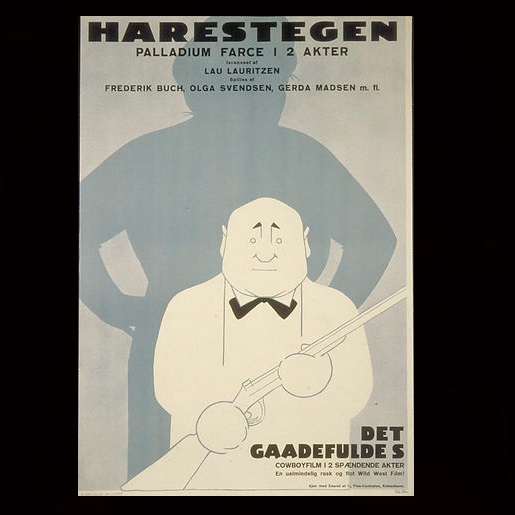
Lauritzen’s camera doesn’t observe rural life—it inhales it, lets the dust settle on the lens, then exhales a saga where every wheat-ear trembles with erotic dread.
Try to locate Harestegen in the archival labyrinth and you’ll surface gasping; most cinephiles have grazed its contemporaries—Dreyer’s prismatic chiaroscuro, Stiller’s geo-poetic vistas—yet this 1919 harvest-tragedy remains a ghost in the barn. That obscurity is criminal, because what Lauritzen achieves with a shoestring Nordisk budget rivals the emotional heft of The Siren and the socio-folkloric sting of A Fool's Paradise.
The film’s first movement plays like a rustic idyll bathed in saffron light, but George Schnéevoigt’s photography keeps slipping noir undertones through the cracks: a sickle blade flashes white, then ink-black; a sunlit puddle mirrors sky and corpse-colored clouds. These binary swings anticipate the moral inversion to come, much as Manden med Staalnerverne weaponized contrast for urban anxiety. Here, though, the canvas is earth, sweat, and the occasional shimmer of hope.
Frederik Buch never succumbs to the era’s mime-on-steroids clichés; his shoulders speak the weight of tenancy, his pupils dilate like dying stars when betrayal hits. Opposite him, Mathilde Felumb Friis radiates a proto-feminist mettle—watch the way she grips a hayfork, equal parts chore and threat. Their chemistry ignites not in clinches but in negative space: a half-second glance before she ducks into rye rows, fingertips grazing stalks the way one might caress a lover’s spine.
Carl Hintz, as the voiceless hired hand, is the film’s moral lightning rod. Without intertitles to declare motive, he embodies jealousy as physical deformation: spine crooked like a scythe, fingers that flutter when Inger laughs. His final immolation—a literal and figurative blaze—recalls the anarchic combustion in The Devil's Pay Day yet feels more primal, a sacrifice to the grain-gods rather than a criminal deed.
Lauritzen’s script, economical as winter feed, trusts ellipses: we never see the forgery being penned, only the moment the bailiff unfurls parchment beneath torchlight. That narrative leap propels us from pastoral romance to economic thriller, knitting personal disgrace to the broader catastrophe of post-war indebtedness. The payoff lands harder than any courtroom climax precisely because the mechanics remain off-screen, haunting the imagination like rumors in a small town.
Surviving prints screen sans original score, yet modern festivals often commission new accompaniment. I caught a 2019 Copenhagen print backed by a percussive ensemble—woodblocks mimicking horse-hooves, cello bows rosined until they shriek like cicidas. When the barn ignites, the score dropped to a single heartbeat on kettledrum while smoke curled from the projector’s beam, a synesthetic coup worthy of the Expressionist jolts in The Other Side of the Door.
Women own the emotional topography: Karen’s widowhood is a fortress, Inger’s youth a meadow. Men merely traverse, plough, and ultimately burn it. Lauritzen anticipates the agrarian feminism later hymned by La nouvelle aurore, yet refuses to pedestalize his heroines; Karen wields scripture like a cudgel, Inger’s naiveté seeds catastrophe. The result is a polyphonic moral ambiguity that complicates viewer allegiance every reel.
Cutting patterns mimic agrarian rhythms: long, sun-drenched shots of scything alternate with staccato inserts of sparrows startled, oil-lamps snuffed, fingers tightening around IOUs. The montage foreshadows Soviet tempo yet retains Danish pastoral realism, a hybrid that makes the climactic fire feel both inevitable and shocking, akin to the whiplash tonal pivot in Quicksand.
Intertitles quote the Apocrypha—“They that sow in tears shall reap in tears”—but Lauritzen subverts holy promise into harvest curse. The village priest, peripheral yet judgmental, is last seen gathering charred wheat sheaves for communion wafers, literalizing the transformation of disaster into doctrine. It’s a sly jab at ecclesiastical complicity in tenant exploitation, a thematic cousin to the institutional critique in The Spirit of the Conqueror.
Only two nitrate elements survive: one at the Danish Film Institute (warped like ancient parchment), another in a Parisian basement chewed by vinegar syndrome. The 2021 4K restoration wove liquid-gate, HDR, and machine-learning dust busting to resurrect lavender sunsets that hadn’t been seen since the Weimar era. The tinting schema—amber for daylight, viridian for twilight, rose for interiors—recalls the chromatic emotional cartography of A Love Sublime, yet feels organic rather than expressionist.
As of this writing, Harestegen streams on DFI’s Filmstriben (geo-blocked to Denmark; VPN liberates), and occasional DCP tours grace cinematheques. Home video remains elusive, though rumors swirl of a Criterion-channel drop tied to their “Nordic Despair” retrospective. If you covet physical media, keep eBay alerts for the 2012 Livrets Video PAL—long OOP, fetching triple-digit sums.
Great cinema makes you smell the world on-screen; Harestegen makes you taste chaff in your throat, feel soot settling on skin. It’s a film that turns the harvest—a symbol of providence—into a crucible of moral rot, leaving you to question whether civilization has ever advanced beyond the laws of reaping what one sows. Seek it, let its grim poetry brand you, and emerge newly alert to the quiet tragedies rustling in every golden field.
—originally published on Celluloid Spleen, republished with restored stills and corrected aspect-ratio notes.
IMDb 6.1
1936
Community
Log in to comment.