DbcultAccessing Vault...
Cult Review
Senior Film Conservator
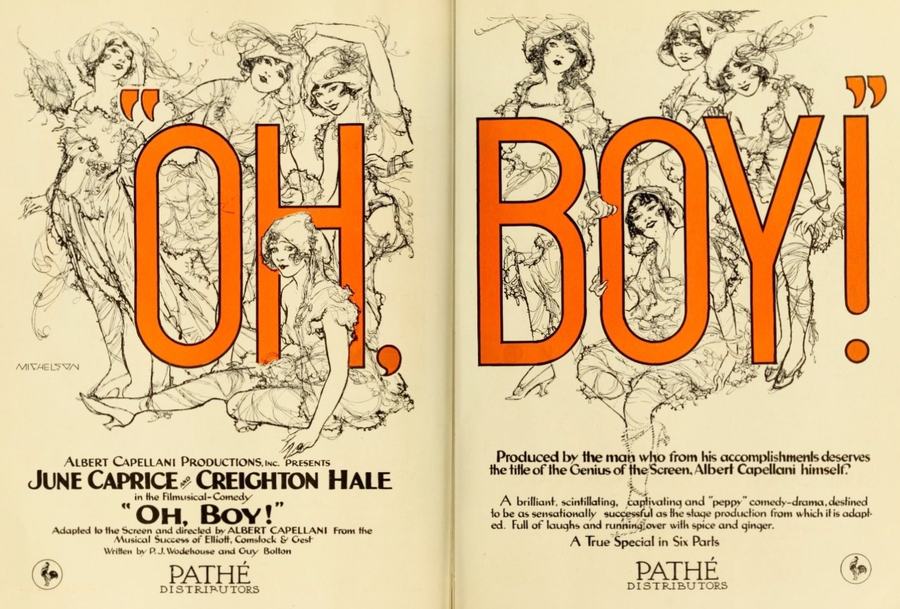
Stepping into the world of Oh Boy! is akin to opening a forgotten treasure chest from the annals of early cinema, a delightful journey back to a time when slapstick, mistaken identities, and a healthy dose of social satire reigned supreme. Directed by the prolific Albert Capellani and penned by the formidable duo of Guy Bolton and the inimitable P.G. Wodehouse, this 1918 silent comedy is more than just a relic; it's a vibrant, often hilarious, snapshot of societal mores on the cusp of America's grand experiment with Prohibition. The film, much like a theatrical overture, begins with the maestro himself, Capellani, conducting an orchestra, setting a meta-narrative stage before the true curtain rises on a collegiate landscape ripe with youthful romance and adult hypocrisy. This ingenious framing device immediately establishes a playful tone, signaling to the audience that what follows is a performance, a carefully orchestrated farce designed to elicit laughter and perhaps a knowing nod of recognition at the human foibles on display.
At its heart, Oh Boy! is a tale of star-crossed lovers, George Budd (Creighton Hale) and Lou Ellen Carter (June Caprice), whose earnest desire for matrimony is thwarted by the formidable, self-righteous figure of Judge Daniel Carter (William H. Thompson), Lou's father and the town's most vocal advocate for prohibition. The judge's moral compass, however, is a hilariously skewed instrument, forever pointing towards the perceived sins of others while conveniently overlooking his own capacity for indulgence. George's candid admission of an occasional tipple is, in the judge's eyes, an unforgivable transgression, an insurmountable barrier to wedded bliss. This immediate conflict establishes the central tension: the collision of genuine affection with rigid, often hypocritical, societal expectations. The performance of Creighton Hale as George is particularly noteworthy; he embodies the earnest, somewhat naive protagonist with a charm that makes his predicaments all the more endearing. June Caprice, a popular figure of the era, brings a spirited innocence to Lou, making her defiance of her father's wishes both understandable and admirable.
Undeterred by paternal disapproval, George and Lou elope, their union shrouded in secrecy. This clandestine marriage is not merely an act of romantic rebellion, but a pragmatic necessity driven by George's precarious financial situation. A telegram from his formidable maiden aunt (Flora Finch, whose comedic timing is a masterclass in silent film acting) threatens to sever his monetary lifeline should he dare to enter wedlock. This introduces a classic Wodehousian dilemma: love versus lucre, a theme that resonates throughout much of the author's oeuvre, where characters frequently navigate the treacherous waters of familial expectations and financial dependency. The aunt's impending visit and her strictures add another layer of farcical anxiety to George's already complex life, setting the stage for inevitable comedic misunderstandings. Flora Finch, with her distinctive appearance and talent for physical comedy, elevates every scene she graces, transforming a potentially flat character into a memorable, scene-stealing presence. Her portrayal here, though brief, leaves a lasting impression, a testament to her comedic prowess.
Meanwhile, the narrative skillfully pivots to Judge Carter's own misadventures. Driven by a moralistic fervor, he embarks on an investigation into rumors of illicit drinking and scandalous liaisons between college boys and actresses at the infamous College Inn. This self-appointed mission, however, quickly devolves into a testament to his own susceptibility to temptation. He becomes utterly captivated by the charms of Jackie Sampson (Zena Keefe), an actress whose wit and allure prove far more potent than any prohibitionist rhetoric. Jackie, a character of delightful mischief and resourcefulness, not only induces the judge to partake in the very spirits he condemns but also deftly pilfers his meticulously prepared prohibition speech. This act of playful larceny is a pivotal moment, exposing the judge's hypocrisy in the most public and humiliating way imaginable. Zena Keefe's portrayal of Jackie is vivacious and cunning, offering a delightful counterpoint to the more earnest performances of the young lovers. Her character is a force of nature, a catalyst for much of the film's comedic chaos, and a brilliant example of the 'flapper' archetype beginning to emerge in popular culture even before the Roaring Twenties fully unfurled.
The ensuing chase, featuring Constable Simms (Charles Hartley), is a masterclass in silent film slapstick. Jackie, with the stolen speech in hand, takes refuge in George's bungalow, setting the stage for a classic comedic misunderstanding. The following morning, the inevitable occurs: Lou and the judge discover Jackie in George's abode. George's frantic, yet utterly futile, explanations are met with incredulity and rejection. This scene brilliantly utilizes the visual language of silent film, relying on exaggerated expressions and physical comedy to convey the characters' shock, anger, and despair. The audience, privy to the full context, delights in the characters' misinterpretations, a hallmark of well-executed farce. The escalating absurdity here, reminiscent of the chaotic yet meticulously choreographed events in films like The Garage, demonstrates Capellani's adept hand at directing comedic sequences, ensuring that each beat lands with maximum impact. The writers, particularly Wodehouse, were masters of constructing such intricate plots where seemingly innocent actions lead to wildly disproportionate consequences, a narrative structure that keeps the audience thoroughly engaged and amused.
The narrative tension, having reached a fever pitch, finds its resolution amidst the exhilarating atmosphere of an important college football game. It is here that Jackie Sampson, perhaps driven by a genuine desire to rectify the chaos she inadvertently caused, or simply enjoying the theatricality of it all, takes it upon herself to convince Lou of George's innocence. Her explanation, presumably a spirited and persuasive one, finally pierces through the veil of misunderstanding that had clouded Lou's judgment. This scene serves as a crucial turning point, allowing the audience to exhale after the prolonged period of comedic agony. The football game setting itself provides a dynamic backdrop, injecting energy and excitement into the narrative, a clever use of popular cultural events to ground the more fantastical elements of the plot. The visual spectacle of the game would have also been a treat for contemporary audiences, adding another layer of entertainment to the film's appeal.
The final act of Oh Boy! is a masterclass in comedic resolution through blackmail, a trope that Wodehouse often employed with delightful effect. George's maiden aunt, initially the source of his financial woes, becomes an unwitting participant in her own undoing. Mistaking a spirited beverage for a genteel cup of tea, she succumbs to a state of ridiculous inebriation, her inhibitions dissolving into a flood of comedic consent for George's marriage. Flora Finch's portrayal of this drunken aunt is a standout moment, a testament to her unique brand of physical comedy and expressive acting. Simultaneously, Judge Carter, his own secret drinking escapades now laid bare, is faced with the threat of public exposure. The choice is clear: either consent to George and Lou's marriage or face the ignominy of having his prohibitionist hypocrisy revealed to the entire town. Both the aunt and the judge, cornered by their own indiscretions, reluctantly give their blessings, their moral high ground having crumbled under the weight of their own farcical missteps. This resolution, while undeniably convenient, is perfectly in keeping with the lighthearted, satirical tone of the film, providing a satisfying conclusion that punishes the pompous and rewards the genuinely affectionate.
The influence of P.G. Wodehouse on the screenplay is unmistakable. The intricate plotting, the reliance on mistaken identities, the gentle satire of societal conventions, and the ultimate triumph of good-natured individuals over the self-important and hypocritical are all hallmarks of his distinctive style. While silent films necessarily relied on visual storytelling, the cleverness of Wodehouse's narrative structures shines through, even without his legendary prose. Guy Bolton, a frequent collaborator with Wodehouse in musical theatre, undoubtedly contributed to the pacing and comedic beats, ensuring the story translated effectively to the screen. Albert Capellani, as director, successfully translates this intricate comedic vision into a compelling visual narrative. His experience in French cinema, particularly with more dramatic fare like Le chemineau, might seem at odds with a zany American comedy, but it speaks to his versatility. Capellani demonstrates a keen understanding of comedic timing, utilizing close-ups for character reactions and wider shots for the more chaotic chase sequences, ensuring that the audience never misses a beat of the unfolding farce. His direction allows the actors to fully inhabit their roles, giving them space for the exaggerated, yet expressive, performances characteristic of the silent era.
While ostensibly a lighthearted comedy, Oh Boy! offers surprisingly sharp social commentary, particularly regarding the nascent temperance movement that would soon culminate in nationwide Prohibition. Judge Carter embodies the moralistic zealot whose public pronouncements stand in stark contrast to his private indulgences. This hypocrisy, played for laughs, subtly critiques the very foundations of such movements, questioning the sincerity and consistency of their proponents. The film, released just before the 18th Amendment was ratified, captures a moment in American history when debates about alcohol consumption were reaching a fever pitch. It's a reminder that even in seemingly innocent entertainment, there can be a reflection of deeper societal anxieties and conflicts. The themes of secret love and defying parental authority also resonate with timeless adolescent struggles, making the film's core emotional beats surprisingly relatable despite its age. The film's charm lies not just in its gags but in its ability to poke fun at human nature, a quality that ensures its enduring relevance.
The cast, a collection of seasoned silent film actors, delivers performances that are both broad enough for the medium and nuanced enough to convey character depth. Creighton Hale's George is the archetypal earnest young man, constantly bewildered by the chaos around him, while June Caprice's Lou is a charming blend of innocence and determination. Flora Finch, as mentioned, is a comedic revelation, and Zena Keefe's Jackie Sampson is a delightful force of nature. Even the supporting cast members, like Joseph Conyers and Grace Reals, contribute to the film's vibrant tapestry, each adding a distinct flavor to the ensemble. The visual aesthetics of the film, though simple by today's standards, are effective. The collegiate setting provides a picturesque backdrop, and the various interior sets, from George's bungalow to the College Inn, are crafted to facilitate the comedic action. The use of intertitles is skillful, providing necessary plot exposition and often delivering witty lines that enhance the Wodehousian feel, a crucial element in silent storytelling, much like in The Secret Man, where titles carry significant narrative weight.
While not as widely remembered as some other silent classics, Oh Boy! deserves a prominent place in the discussion of early American comedies, particularly for its strong literary lineage. The collaboration between Capellani, Bolton, and Wodehouse created a unique blend of theatrical farce and cinematic storytelling that stands the test of time. It's a film that reminds us of the power of well-crafted plots and engaging characters, irrespective of the technological limitations of the era. The intricate dance of secrets, misunderstandings, and ultimate revelations is handled with a deft touch, ensuring that the comedic momentum never wanes. Its exploration of themes like moral hypocrisy and the lengths people go to for love (and money) remains as pertinent today as it was over a century ago. The film serves as an excellent example of how silent cinema, far from being primitive, was capable of sophisticated narrative construction and nuanced comedic performance.
In conclusion, Oh Boy! is a delightful and surprisingly insightful piece of cinematic history. It's a testament to the enduring appeal of P.G. Wodehouse's comedic genius, brought to life by Albert Capellani's skilled direction and a talented ensemble cast. For anyone with an appreciation for silent film, classic farce, or simply a good laugh, this forgotten gem is well worth rediscovering. It’s a vibrant slice of early 20th-century entertainment that proves laughter truly is timeless, and hypocrisy, an eternal source of comedic gold. Much like other films of its period that masterfully blended humor with social commentary, such as Beware of Boarders, Oh Boy! offers more than just fleeting entertainment; it provides a window into a bygone era, reflecting its values, its absurdities, and its enduring human spirit through the lens of pure, unadulterated fun.
IMDb —
1916
Community
Log in to comment.