DbcultAccessing Vault...
6.9/10
Senior Film Conservator
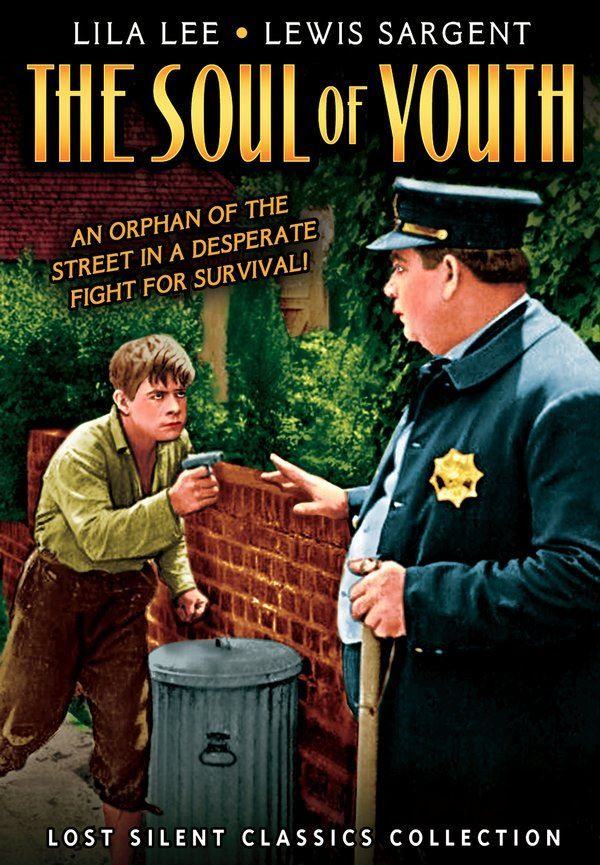
A definitive 6.9/10 rating for a film that redefined the boundaries of cult cinema. The Soul of Youth remains a cornerstone of transgressive art.
In the pantheon of early American cinema, few works capture the existential dread of the disenfranchised child with as much crystalline clarity as The Soul of Youth. Released in 1920, a year defined by its post-war recalibration and social flux, this film stands as a monumental testament to the screenwriting prowess of Julia Crawford Ivers. While many silent dramas of the era leaned heavily into melodramatic artifice, Ivers’ script possesses a grit that feels surprisingly modern, prefiguring the neorealist movements that would emerge decades later. The film does not merely depict poverty; it interrogates the very mechanics of moral erosion. Unlike the more romanticized struggles seen in The Wasted Years, this narrative refuses to look away from the predatory nature of the street.
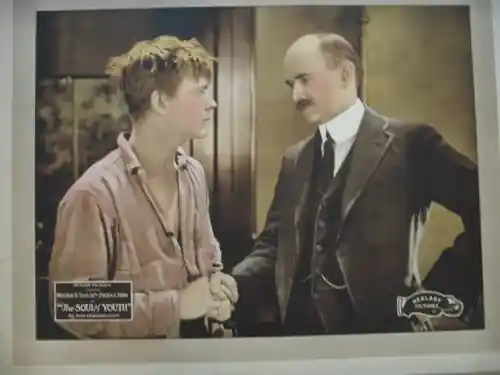
Lewis Sargent delivers a performance of haunting intensity, embodying the orphan boy not as a caricature of suffering, but as a living, breathing casualty of societal indifference. His journey is one of profound isolation, where the absence of a maternal or paternal anchor leaves him adrift in a sea of opportunistic vice. The early sequences of the film are bathed in a cinematic chiaroscuro that highlights the stark contrast between the cold, unyielding architecture of the orphanage and the chaotic, albeit dangerous, vitality of the streets. It is here that we see the first inklings of the 'sin' mentioned in the plot—not as a choice made out of inherent malice, but as a survival mechanism in a world that has already condemned him.

The middle act of the film serves as a descent into the proverbial lion's den. The 'cruelty of others' is not manifested through singular villains, but through a pervasive atmosphere of apathy. We see the boy drawn into a life of petty crime, a trajectory that mirrors the tragic inevitability found in Gatans barn. The cinematography captures the claustrophobia of the urban sprawl, where every alleyway is a potential trap and every encounter is a transaction. The supporting cast, including Grace Morse and Jane Keckley, provide a textured backdrop to this moral decay, portraying characters who are either too broken to care or too comfortable to notice the suffering at their feet.

What distinguishes The Soul of Youth from a mere morality play is its refusal to simplify the boy’s transgressions. There is a palpable sense of loss—a mourning for the childhood that was stolen. The film suggests that 'sin' is a secondary infection, a symptom of a deeper societal malaise. In this regard, it shares a thematic kinship with The Heart of Rachael, where the constraints of social expectations drive individuals toward desperate measures. However, where other films might focus on the romantic or domestic entanglements of adults, Ivers keeps the lens focused squarely on the ontological crisis of the child.
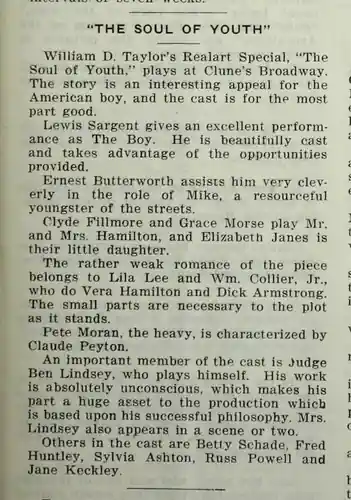
The pivot toward redemption is handled with a delicate touch that avoids the pitfalls of saccharine sentimentality. When the boy is finally introduced to a caring foster family, the film undergoes a visual and emotional metamorphosis. The harsh, jagged edges of the street are replaced by the soft, diffused lighting of a home that actually functions as a sanctuary. This isn't just a change in scenery; it's a recalibration of the boy's internal compass. The foster family, portrayed with understated warmth by Clyde Fillmore and Sylvia Ashton, represents a radical form of empathy that was all too rare in the cinematic landscapes of 1920.

This redemptive arc is far more nuanced than the typical 'happy ending.' It acknowledges the scars left by the boy's previous life, suggesting that while the soul can be healed, the memory of the trauma remains. This complexity is reminiscent of the emotional gravity found in Jeanne Doré, though here the focus is on the beginning of a life rather than its tragic conclusion. The interaction between Sargent and the foster parents is a masterclass in silent acting, relying on subtle shifts in posture and gaze to convey the slow thawing of a frozen heart. It is a cinematic depiction of the 'soul' mentioned in the title—a fragile entity that requires the right environment to truly flourish.
To fully appreciate the significance of The Soul of Youth, one must view it against the broader tapestry of early 20th-century film. While Anna Karenina explored the destruction of the self through social ostracization, Ivers’ film explores the construction of the self through social inclusion. It lacks the adventurous flair of The Masked Rider or the political urgency of Gira política de Madero y Pino Suárez, yet it possesses a quiet power that is arguably more enduring. Even when compared to the lighter fare of A Youthful Affair, this film carries a weight of authenticity that is rare for its time.
The technical aspects of the film, from the art direction to the pacing, reflect a sophisticated understanding of visual storytelling. There is a rhythmic quality to the editing that underscores the boy's internal state—frenetic and jagged during his time on the streets, and rhythmic and calm once he finds safety. This level of intentionality is what elevates the work above the standard studio output of the era, such as The Mating of Marcella or the more theatrical The Gay Lord Quex. It even stands apart from European contemporaries like Der Millionenonkel or Der Lumpenbaron, which often focused more on class spectacle than psychological intimacy.
One cannot discuss The Soul of Youth without acknowledging the formidable intellect of Julia Crawford Ivers. As a woman writing and directing in the early days of Hollywood, her work often centered on the marginalized and the voiceless. Her ability to weave complex social critiques into compelling narratives is evident here. She avoids the heavy-handed moralizing that plagued many 'reform' films of the 1910s, such as Where the Trail Divides or the sensationalism of Venganza de bestia. Instead, she trusts the audience to feel the injustice of the boy’s situation and the necessity of his salvation.
The film’s climax is not an explosion of action, but a quiet moment of recognition—a realization that the cycle of sin can be broken by a single act of kindness. It is a powerful message that resonates even today, in an era where the plight of the displaced and the unwanted remains a pressing global concern. The Soul of Youth is more than just a silent movie; it is a cinematic prayer for the vulnerable, a plea for a more compassionate world. It captures a specific moment in time while speaking to universal truths about the human condition, much like the enduring charm of Hedda Vernon's Bühnensketch, though with a significantly darker and more profound palette.
Ultimately, The Soul of Youth is a film that demands to be rediscovered. Its exploration of the 'sin' inherent in survival and the 'redemption' found in community offers a sophisticated look at the complexities of youth. Lewis Sargent’s performance remains a high-water mark for child acting in the silent era, and Ivers’ direction and writing provide a blueprint for empathetic storytelling. It is a work that challenges the viewer to look beyond the surface of 'delinquency' and see the soul beneath—a soul that, despite the cruelty of the world, remains capable of profound transformation. In the vast landscape of 1920s cinema, this film shines as a beacon of humanity, reminding us that even in the darkest streets, the light of a caring family can guide a lost soul home.

IMDb —
1923
Community
Log in to comment.