DbcultAccessing Vault...
Cult Review
Senior Film Conservator
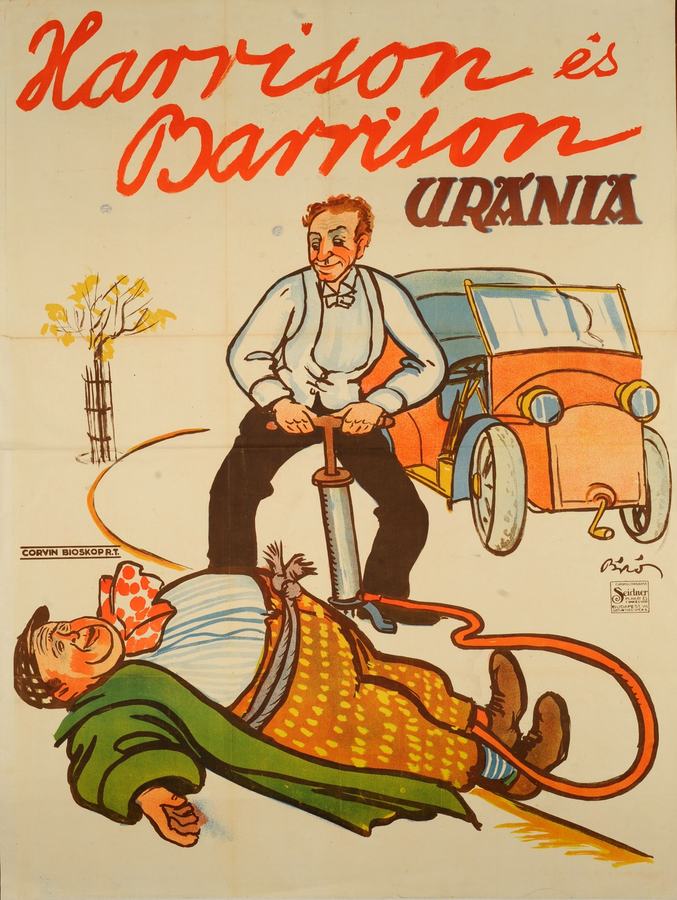
Stepping back into the flickering glow of early 20th-century cinema, one often encounters narratives that, despite their age, resonate with a surprising immediacy. Such is the case with Harrison és Barrison, a Hungarian silent film that, through its intricate dance of mistaken identity and societal critique, offers a window into a bygone era while still speaking volumes to contemporary audiences. This cinematic artifact, a testament to the burgeoning artistry of Hungarian filmmaking, invites us to peel back its layers, revealing not merely a compelling story but also a fascinating glimpse into the cultural and social anxieties of its time.
At its core, the film orchestrates a wonderfully elaborate charade, pitting the meticulous, if somewhat reclusive, genius of Harrison against the audacious, unprincipled charm of Barrison. Harrison, portrayed with a delicate balance of vulnerability and quiet determination by Lajos Szalkai, is the quintessential absent-minded inventor. His world revolves around the intricate gears and springs of his latest creation, a device poised to revolutionize an unnamed industry. Szalkai imbues Harrison with a palpable sense of earnestness, his every gesture conveying a mind perpetually engaged in intellectual pursuit, often at the expense of social grace. This portrayal is crucial, for it lays the groundwork for the audience's immediate empathy, positioning him as an underdog in the grand theatrical play of life.
Enter Barrison, a character brought to life by the equally compelling Károly Lajthay, who also contributed to the film’s screenplay alongside Gyula Köváry. Lajthay’s dual role as actor and writer likely granted him a unique insight into the character’s nuances, and it shows. Barrison is Harrison’s antithesis: smooth, cunning, and utterly devoid of scruples. His striking physical resemblance to Harrison is the linchpin of the plot, a genetic quirk he ruthlessly exploits. Lajthay’s performance is a masterclass in silent film villainy, his expressive face shifting seamlessly from feigned sincerity to predatory glee. He embodies the superficial allure that often captivated society, a stark contrast to Harrison's genuine, if unpolished, brilliance. The dynamic between these two characters, both physically similar yet morally distinct, forms the narrative's central tension, a conflict between authenticity and artifice that feels surprisingly modern.
The stakes are elevated by the introduction of the film’s romantic entanglements. Eszter, the dazzling socialite, played by Jenny Krisztinkovics, is the initial object of Barrison’s manipulative affections. Krisztinkovics portrays Eszter with an alluring blend of sophistication and a hint of world-weariness, a woman accustomed to the trappings of wealth but perhaps yearning for something more profound. Her engagement to a wealthy but distinctly boorish industrialist, a role filled with appropriate bluster by Árpád id. Latabár, further underscores the film's commentary on the transactional nature of high society marriages. Latabár, a patriarch of a renowned theatrical dynasty, brings a weighty presence to the industrialist, making his eventual comeuppance all the more satisfying.
However, the true emotional heart of Harrison és Barrison lies in the quieter, more genuine connection between Harrison and Juli, the artistic seamstress. Manci Dobos delivers a poignant performance as Juli, radiating an innate goodness and an artistic sensibility that allows her to see beyond Harrison’s awkward exterior. Dobos’s portrayal is subtle yet powerful, her expressive eyes conveying a deep understanding and empathy for Harrison’s struggles. Their burgeoning romance, built on mutual respect and shared values rather than societal pressures, serves as a moral compass for the audience, a beacon of hope amidst the comedic chaos. This stark contrast in romantic motivations—Barrison’s pursuit of Eszter for status versus Harrison’s genuine affection for Juli—is a classic trope, yet it is handled with a freshness that prevents it from feeling cliché. It echoes the thematic concerns found in films like The Heart of Jennifer, where true love blossoms against a backdrop of societal expectations.
The screenplay by Gyula Köváry and Károly Lajthay navigates the complexities of the plot with remarkable dexterity. The comedic elements, largely stemming from Barrison’s increasingly outlandish impersonations and the ensuing misunderstandings, are expertly timed. One particularly memorable sequence involves Barrison attempting to present Harrison’s invention to a panel of skeptical investors, his lack of genuine understanding leading to a series of near-catastrophic blunders. The visual gags are enhanced by the physical comedy of Béla Gaál and Jenõ Horváth, who play supporting roles that add layers of bureaucratic absurdity and bumbling assistance, respectively. Their contributions provide moments of levity that punctuate the more dramatic turns of the narrative, reminiscent of the ensemble interplay in Nearly a Lady, where supporting characters often steal scenes with their distinct personalities.
Beyond the surface-level entertainment, Harrison és Barrison offers a trenchant critique of class distinction and the superficiality of status. The film subtly questions the values placed on inherited wealth and social standing, contrasting them with the intrinsic worth of innovation and genuine character. Harrison, despite his genius, is initially overlooked and undervalued by the very society Barrison so desperately craves to infiltrate. This theme of the overlooked genius finding his place, often through the assistance of a loyal companion, is a narrative thread that connects it to the spirit of adventure and discovery seen in films like In Search of the Castaways, albeit in a more urban, social context.
The supporting cast truly rounds out the world of the film. Ilona Bánhidy, Dezsõ Gyárfás, Márton Rátkai, and Nusi Somogyi, though perhaps in smaller roles, contribute significantly to the film’s rich tapestry. Their collective performances create a vibrant backdrop against which the central drama unfolds, each embodying a facet of early 20th-century Hungarian society, from the gossiping socialite to the diligent servant. These characters, often without a single spoken word, manage to convey complex emotions and motivations, a testament to the power of silent acting. The nuanced performances elevate the film beyond a simple farce, grounding it in a believable social milieu.
The direction, while uncredited in the prompt, clearly understood the visual language of the silent era. The use of expressive close-ups, dynamic editing, and a keen sense of spatial geography within the frame ensures that the audience is always aware of the characters' emotional states and the unfolding plot. The pacing is particularly noteworthy; it manages to sustain tension during Barrison's deceptions while allowing moments of tender reflection for Harrison and Juli. The visual storytelling is so compelling that one hardly notices the absence of dialogue, a hallmark of truly effective silent cinema. In this regard, it shares a certain narrative economy with works like Their Compact, where every visual beat is meticulously placed for maximum impact.
One cannot discuss Harrison és Barrison without acknowledging its place within the broader context of Hungarian cinema. At a time when the industry was still finding its voice, this film demonstrates a sophistication in storytelling and character development that rivals its international contemporaries. It bravely tackles themes of identity, social class, and the pursuit of happiness, not shying away from depicting the moral ambiguities of its characters. This commitment to portraying complex human experiences, even within a comedic framework, distinguishes it from more straightforward melodramas like Broken Fetters, which often leaned more heavily on overt sentimentality.
The film's resolution, while satisfyingly conventional in its triumph of good over deceit, is earned through Harrison’s gradual awakening. He doesn't simply stumble into victory; rather, he is propelled by a newfound courage, often inspired by Juli’s unwavering faith in him. This journey of self-discovery, of a timid individual finding their inner strength, is a narrative arc that continues to resonate. It speaks to the universal desire for recognition and the belief that genuine merit will ultimately prevail, even against the most cunning of impostors. The final scenes, where Harrison’s invention is finally recognized and his love for Juli is reciprocated, are imbued with a warmth that is genuinely affecting. It’s a powerful statement about the enduring value of integrity.
Comparing Harrison és Barrison to other films of its era, one can draw parallels in its thematic explorations. The idea of an individual's struggle against a flawed system or deceptive individuals can be seen in the moral quandaries of The Unpardonable Sin, though the tone here is decidedly lighter. The sheer audacity of Barrison’s con might even bring to mind the elaborate schemes in The Long Chance, albeit with a more direct and personal motivation. What truly sets Harrison és Barrison apart is its particular blend of Hungarian cultural nuance with universal comedic and romantic tropes.
The film also provides an interesting lens through which to view the burgeoning star system of the period. The performances of Lajos Szalkai and Manci Dobos, in particular, showcase the kind of magnetic screen presence that would define the era's leading actors. Their ability to convey a wide spectrum of emotions without dialogue, relying solely on facial expressions and body language, is a testament to their craft. This kind of expressive acting was paramount in silent cinema, much like the captivating performances that defined films such as Koroleva ekrana, highlighting the visual storytelling prowess required.
In conclusion, Harrison és Barrison is far more than a mere historical curiosity. It is a vibrant, engaging piece of cinematic art that continues to charm and provoke thought. Its clever plot, memorable characters, and underlying social commentary make it a significant contribution to early Hungarian film history. For those with an appreciation for the silent era, or indeed for anyone interested in the foundational narratives of cinema, this film offers a richly rewarding experience. It reminds us that even without spoken words, the power of storytelling remains profoundly impactful, capable of transcending time and cultural divides. Its legacy is not just in its existence, but in its ability to still entertain and educate, proving that genuine creativity, much like Harrison’s invention, possesses an enduring value.
The film’s exploration of identity, especially through the lens of mistaken identity, resonates deeply. It poses questions about what truly defines a person: their reputation, their appearance, or their intrinsic character. Barrison’s ability to fool society highlights the superficiality of judgments based solely on outward presentation. This theme, while often treated comically, carries a profound philosophical weight, inviting audiences to look beyond the surface, a sentiment that aligns with the introspective journey often found in films like Unto the Darkness, albeit without the same dramatic intensity. The writers, Gyula Köváry and Károly Lajthay, deserve considerable credit for crafting such a nuanced narrative within the constraints of silent film, ensuring that every gesture and every intertitle propelled the story forward with clarity and emotional resonance.
Moreover, the film’s depiction of the clash between old money and new ideas, between established societal norms and the disruptive force of innovation, mirrors broader societal shifts occurring globally during that period. Harrison's invention isn't just a plot device; it's a symbol of progress, a force that challenges the status quo. The resistance he faces, and Barrison's opportunistic exploitation of it, reflect the anxieties and hopes of a society grappling with rapid industrial and social change. This subtle layer of commentary elevates the film from a simple comedic romance to a more insightful piece of social observation, giving it a depth comparable to the more overtly critical The Eternal Grind, though conveyed with a lighter touch.
The visual aesthetic, while perhaps rudimentary by today's standards, possesses a charm and directness that is often lost in modern cinema. The sets, costumes, and overall mise-en-scène effectively transport the viewer to early 20th-century Hungary, capturing the essence of its urban environments and social strata. The attention to detail in the visual storytelling, from Harrison's cluttered workshop to Eszter's elegant drawing-room, enriches the narrative and provides context for the characters' lives. This meticulous world-building is crucial for immersing the audience in the story, a quality shared with other meticulously crafted narratives of the era, such as Dulcie's Adventure, where the setting played an integral role in the character's journey.
The film’s enduring appeal also lies in its universal themes: the quest for love, the pursuit of recognition, and the battle against deception. These are timeless human experiences that transcend the specific historical context of the film. Audiences can still root for Harrison, despise Barrison, and empathize with Juli's quiet strength. This universality is a testament to the power of well-crafted storytelling and strong character development, regardless of the medium or era. It's a quality that allows films like Harrison és Barrison to remain relevant and enjoyable for generations, much like the enduring appeal of a classic adventure narrative such as Ben Blair, which explores personal growth and resilience.
In retrospect, the collaborative effort between the writers and the ensemble cast is palpable. Each actor, from the leading duo of Lajos Szalkai and Károly Lajthay to the nuanced performances of Manci Dobos and Jenny Krisztinkovics, contributes a vital thread to the film’s intricate narrative fabric. The comedic timing of Béla Gaál and Jenõ Horváth, alongside the gravitas of Árpád id. Latabár, ensures that the film maintains a lively, dynamic pace. Even the smaller roles, inhabited by talents like Ilona Bánhidy, Dezsõ Gyárfás, Márton Rátkai, and Nusi Somogyi, are executed with a precision that speaks to a cohesive creative vision. This collective artistry is what elevates Harrison és Barrison beyond a simple period piece, cementing its status as a compelling example of early cinematic achievement. It stands as a vibrant example of how a well-told story, brought to life by dedicated performers and insightful writers, can truly transcend the limitations of its medium and era, echoing the charm and ingenuity often celebrated in films like A Corner in Colleens or the rich cultural tapestry depicted in Un día en Xochimilco.
IMDb 6.1
1929
Community
Log in to comment.