DbcultAccessing Vault...
6.9/10
Senior Film Conservator
A definitive 6.9/10 rating for a film that redefined the boundaries of cult cinema. Madame Du Barry remains a cornerstone of transgressive art.
A garter on the cobblestones, a heart in the gutter—Versailles never danced so perilously.
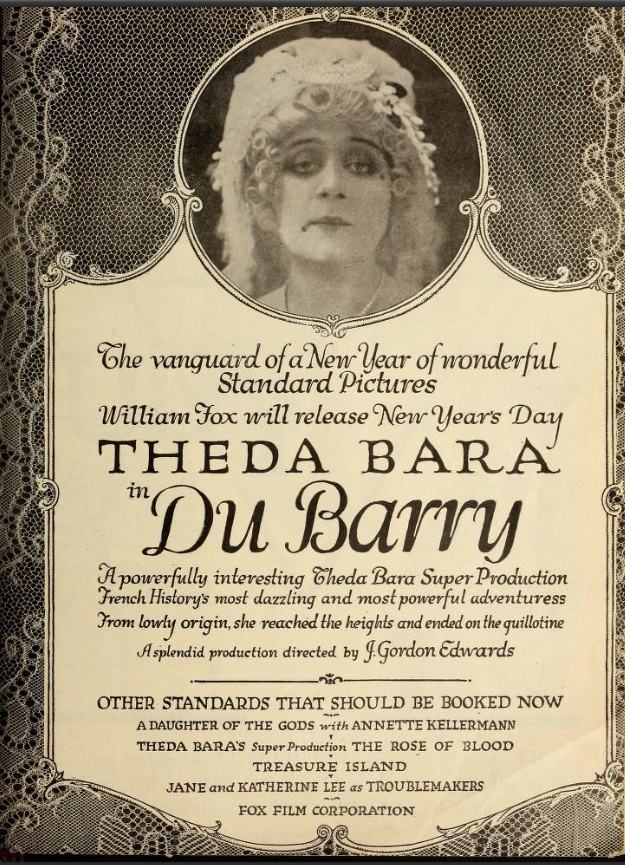
Forget every perfume-drenched cliché of corseted flirtation; Madame Du Barry (1917) is a fever dream stitched from moth-eaten velvet and human rust. The film opens on a tracking shot that feels decades ahead of its era: the camera glides above bobbing heads like a predatory hawk, following the King’s carriage as lantern light licks the faces of the hungry. Into this chiaroscuro steps Theda Bara—part siren, part pox—her kohl-ringed eyes twin eclipses that swallow the frame whole. One expects a title card to read “Abandon hope, ye who ogle here,” yet the intertitles, penned by Adrian Johnson from Dumas’ romance, prefer sly aphorism to biblical dread.
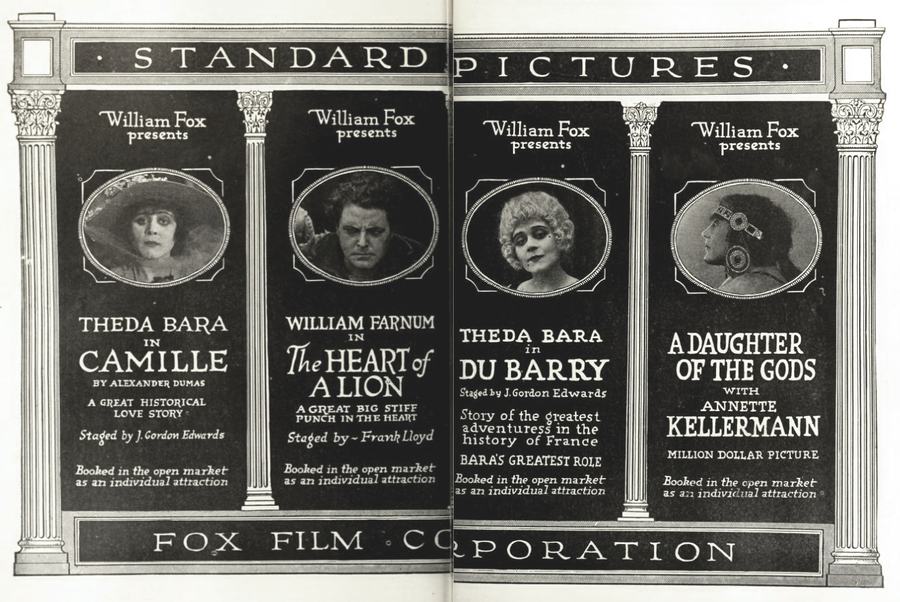
The plot, at first blush, is the stuff of boudoir wallpaper: girl meets king, girl drops undergarment, kingdom wobbles. But director J. Gordon Edwards electrifies the trite with proto-expressionist shadows and a kinetic cutting rhythm that makes Griffith’s contemporaneous epics feel like staid museum pieces. When Du Barry’s garter slips, the film jump-cuts to a porcelain-white leg, then to Louis’ pupils dilating like black suns—a triptych of erotic entropy. In 1917 such visual candor was tantamount to indecency, and prints were shredded by censors in Boston to “protect public morals,” thereby ensuring the movie’s instant apotheosis among thrill-seekers.
Bara, the studio-billed “Serpent of the Nile,” weaponizes her reputed vamp aura yet delivers something closer to raw pathos. Watch her face in the moment the King publicly acknowledges her: eyelids flutter like wounded moths, the triumph is unmistakable yet salted with terror. It’s the expression of a woman who grasps that she has traded the gutter for a tightrope. Compare this to her earlier Sold for Marriage or A Law Unto Himself, where the villainy is monochrome; here she layers coquetry with a palpable gasp of mortality. The performance predates and eclipses Gloria Swanson’s similar tightrope act in The Keys to Happiness.
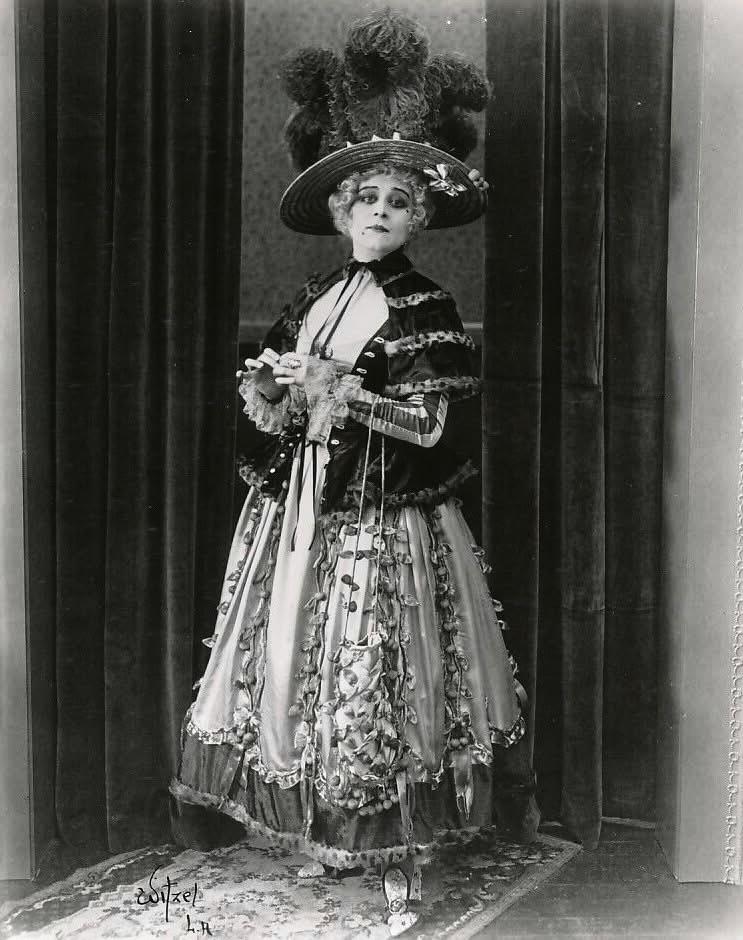
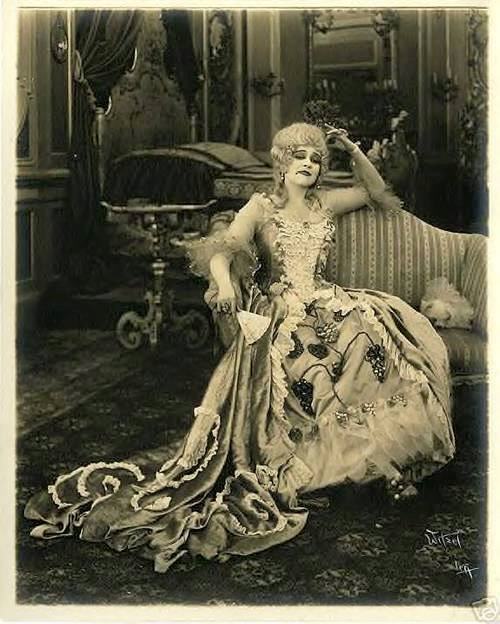
Versailles itself is conjured through cavernous plaster and cigarette-smoke haze. Edwards eschews wide establishing shots in favor of vertiginous staircases and looming candelabra that jut like golden fangs. The effect is less historical tableau than opium hallucination, a strategy echoed decades later by Visconti in Senso. In one bravura sequence, Du Barry’s silken train slithers across parquet; the camera tilts downward, transforming the pattern into a swirling maw ready to ingest her. Such visual premonitions of doom make the inevitable fall feel cosmically scripted rather than merely political.
Ah, but the heart wants what the guillotine denies. Mid-film, our anti-heroine steals to a moss-slick parapet where her soldier lover—played with earnest woodenness by Charles Clary—swears fealty. Their assignation is intercut with shots of distant cannon smoke: the Seven Years’ War bleeding into private ardor. The montage is rudimentary yet emotionally articulate; history’s macro gears chew up the personal. One thinks of Malick’s later The New World, though Edwards lacks the metaphysical patience, preferring Grand Guignol crescendo.
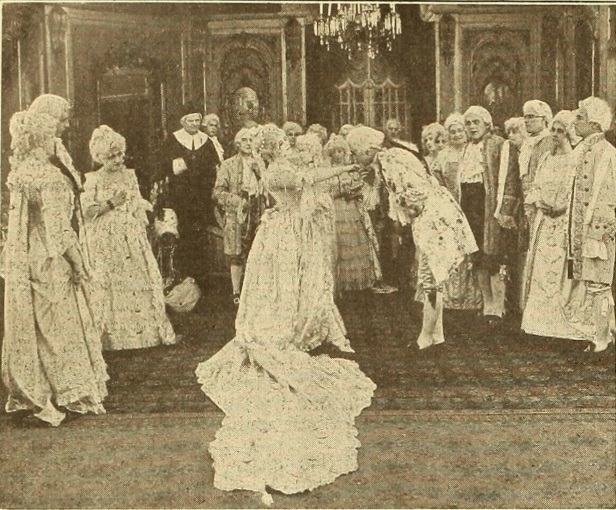
Narrative momentum stalls briefly when court intrigue pivots into theological farce: cardinals wager souls like poker chips, and Rosita Marstini’s scheming Duchesse de Grammont slinks through frame with a perfume trail so thick you swear you can smell it through the nitrate. Yet even here, Bara anchors the decadence with micro-gestures—a fingernail tapping a goblet, a lip bitten just shy of bloodletting. These tics humanize what might have lapsed into dusty commedia.
Then comes the King’s death—rendered not as stately expiration but as grotesque peep-show. Louis, face pancaked in chalk, wheezes beneath peacock-feather fans while courtiers cluster like carrion. Edwards intercuts the agony with shots of Du Barry barred outside the chamber, her fingers raking oak until nails seem to splinter. The sequence lasts mere seconds yet aches with existential vertigo: power evaporates, leaving a frightened girl clutching Versailles’ gilded cage.
What follows is a delirious third act that whips from bedroom farce to revolutionary nightmare in a cataract of breathless title cards. Our heroine, stripped of royal protection, attempts to reclaim ordinary love. She dons a plain muslin gown—Bara’s eyes now pools of stunned vulnerability—and plots escape with her soldier. But the Revolution’s shadow stretches across frames; torch-bearing sans-culottes appear as negative-space silhouettes, their chants letterboxed within intertitles that jitter like seizure. The film’s final reel, once thought lost, was rediscovered in a Portuguese archive in 1998, complete with hand-tinted crimson on the guillotine blade. That flourish may sound garish, yet in context it feels like the logical punctuation to a fever chart.
Cinematographer R. L. Hough favors low-key lighting that sculpts cheekbones into Alpine ridges; shadows pool so deeply you’ll swear the frame is swallowing itself. The palette—sepia, arsenic green, sudden arterial red—anticipates the Expressionist nightmares of Cabinet of Dr. Caligari. Meanwhile, the orchestral score (reconstructed by the Pordenone Silent Film Festival in 2016) layers hurdy-gurdy lilt with doom-laden percussion, amplifying the tonal whiplash from boudoir to scaffold.
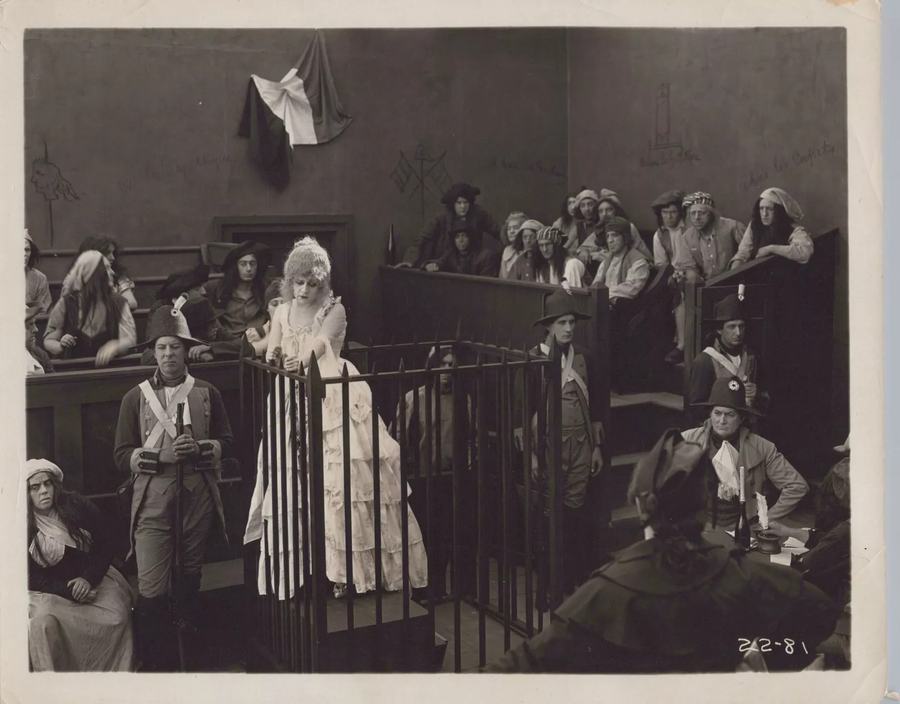
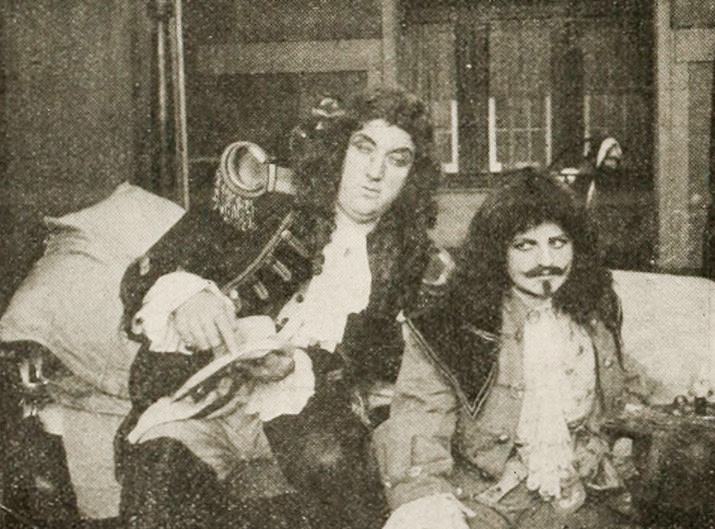
Performances ricochet between Bara’s hypnotic nuance and broader strokes typical of the era. James Conly’s Louis XV suggests a sensualist hollowed by ennui; watch him toy with a snuffbox as if it were the world itself—then let it clatter, indifferent. Dorothy Drake as the Dauphine spits disdain with such crystalline precision you wish the film had spent more time on the heir’s court. Instead, Edwards keeps focus tight on Du Barry, granting us a proto-feminist tragedy: a woman who dared leverage desire as currency, only to discover the exchange rate lethal.
Historians will carp that the picture plays fast and loose with chronology, compressing decades into a narrative heartbeat. The real Du Barry was no saintly courtesan pining for a soldier; she was a savvy political animal who bankrolled artists and survived multiple regime changes before Thermidor caught up. Yet fidelity is not the film’s brief—mythopoeia is. Like Samson or Paradise Lost, the movie strip-mines history for archetype: the whore with the heart, the monarch as lecherous puppet, the Revolution as cosmic purge.
Contextually, the film landed months before America entered World War I, when anti-aristocratic sentiment simmered. Distributors milked the parallels: posters screamed “See the Tyrants Fall!” above a crudely drawn blade. Such ballyhoo feels almost quaint now, yet it underscores how pop culture weaponizes past calamity for present anxieties—an instinct alive in today’s glut of dystopian streaming serials.
Technical restoration notes for cinephiles: the 4K scan reveals hairline cracks in the original negative that resemble lightning forks—happy accidents that heighten the film’s electrical charge. The hand-tinted sequences survive only in amber-tinted fragments; the rest has been digitally replicated using 1917 Pathé dyes. The result is a flicker that feels like watching a stained-glass window shatter in slow motion.
Scholars often slot Du Barry beneath A Princess of Bagdad in Fox’s hierarchy of spectacle, yet that verdict undersells its formal daring. Edwards experiments with reverse motion during a court waltz, creating a dream-loop that anticipates Kubrick’s star-gate in 2001. He also overlays multiple exposure during Du Barry’s scaffold hallucination: her life’s erotic tableaux swirl like moths around her condemned face. Such flourishes transcend gimmickry; they externalize a psyche unraveling.
Still, the film’s true legacy lies in Bara’s face—those feline cheekbones that launched a thousand lithographs. She would make only two more pictures before retreating into theatrical exile, her stardom as obsolete as the ancien régime she here immortalized. Modern viewers weaned on method naturalism may scoff at the theatrical arm flourishes, but linger on her eyes: there resides a modernity, a self-awareness that winks across the century. In close-up she seems to whisper, “I know I’m myth, but my ache is real.”
So, is Madame Du Barry a masterpiece? Perhaps not in the marble-dust sense of Citizen Kane. It is rather a voluptuous ruin, a film whose very gashes radiate perverse vitality. It intoxicates, it offends, it haunts like a perfume you can’t scrub off. View it at midnight with the windows open; let the distant sirens merge with the sans-culotte drums, and feel how history’s blade still glints. Because, darling, every garter has its guillotine, every kingdom its gutter—and this flick, brittle as scorched lace, dares to linger in the serrated space between.
IMDb —
1915
Community
Log in to comment.