DbcultAccessing Vault...
Cult Review
Senior Film Conservator
A kimono hung in a Mission wardrobe
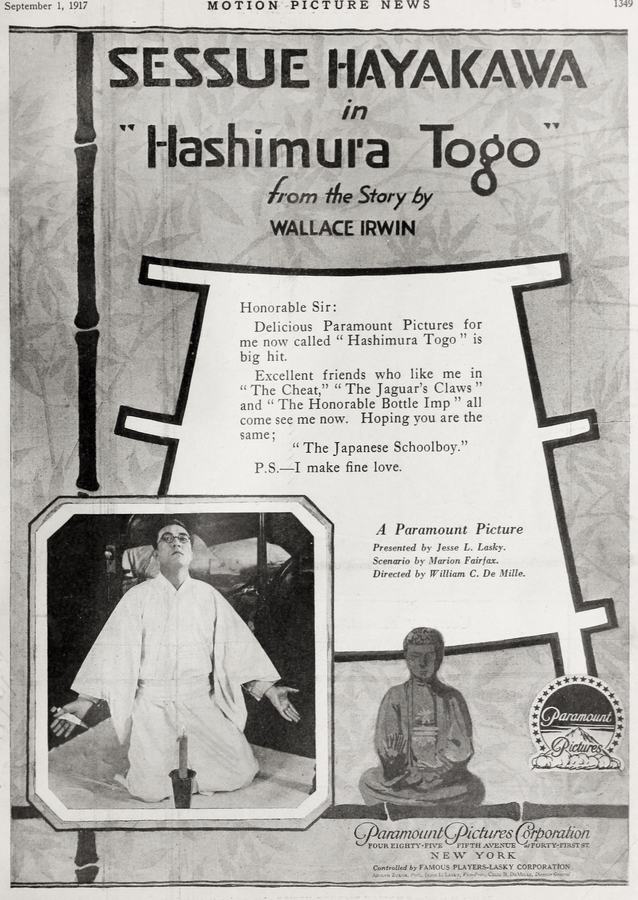
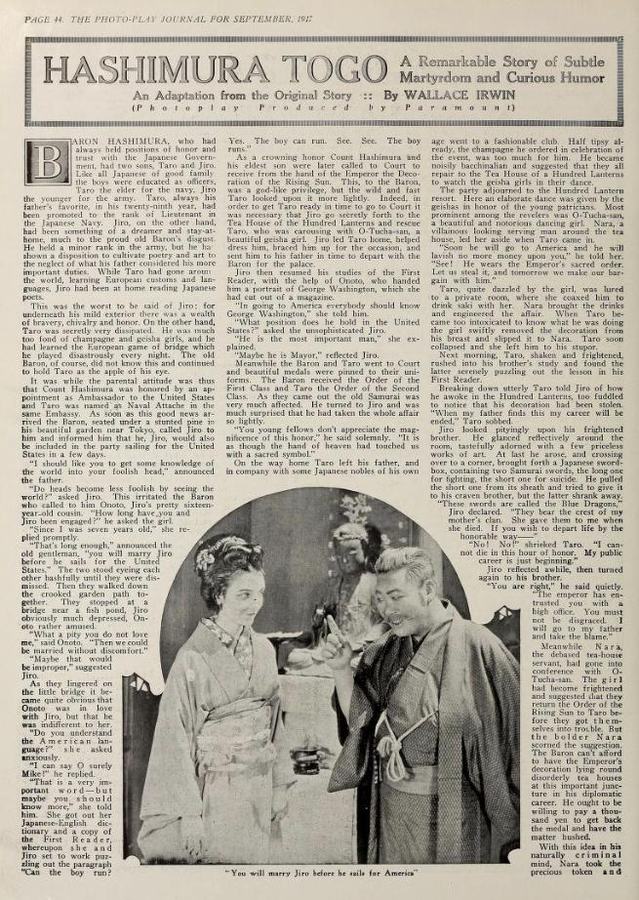
The first miracle of Hashimura Togo is how it weaponizes stillness. In the opening Yokohama sequence, cameraman Frank D. Williams parks his tripod at tatami level: paper doors shiver, shadows bloom like ink in water, and Sessue Hayakawa simply waits. No intertitle howls his shame; the sin is carried in the angle of his collar, the millimetric bow. When the narrative leaps to San Francisco, the visual grammar fractures—Western depth-of-field barges in, chandeliers hog the frame, yet Hayakawa’s posture remains unaltered, a vertical haiku amid baroque clutter. That tension—between Zen minimalism and Victorian excess—becomes the film’s pulse.
Hollywood of 1917 usually fed audiences yellow-peril hysteria; here, the Japanese male is neither opium villain nor servile coolie but a deus ex machina in white gloves. Togo’s butler uniform is voluntary shackles, a social death he dons to resurrect his clan name. The screenplay (Marion Fairfax trimming Wallace Irwin’s sprawling serial into stiletto-sharp incidents) delights in flipping power dynamics: the servant commands secret knowledge, the millionairess flounders in hock, the Anglo predator relies on Oriental probity to survive. It’s a sleight-of-hand so subversive that Variety’s 1917 review choked on its own euphemisms, calling the hero “inscrutably helpful.”
Corinne’s gilded cage
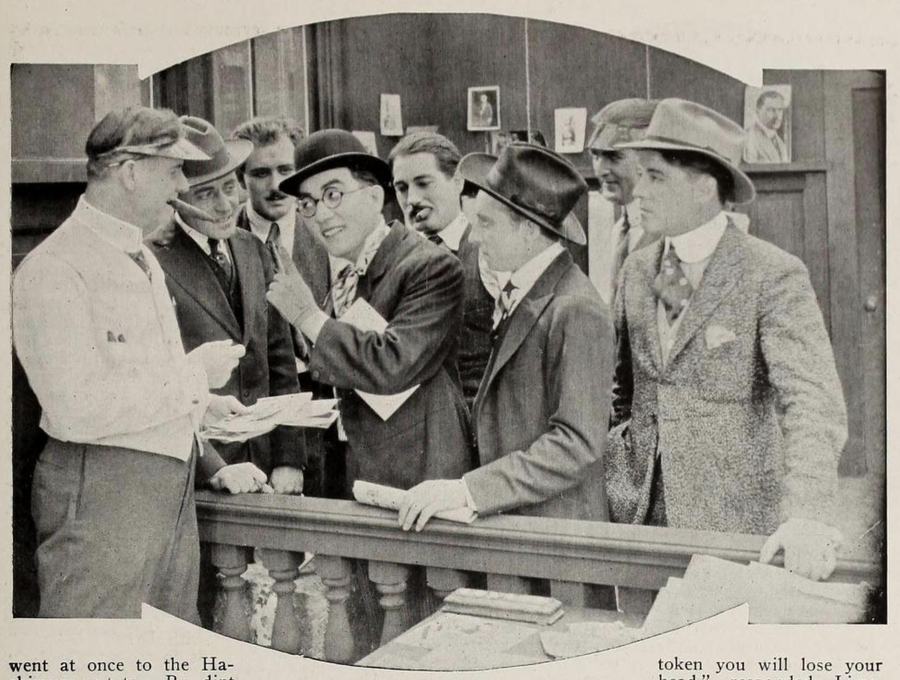
Margaret Loomis plays the heiress as flickering nitrate—at one moment porcelain doll, the next a panic-eyed doe. Her dilemma feels plucked from a Edith Wharton subplot: estate laws masticated by masculine appetite. Enter Carlos Anthony, Walter Long essaying the shark in evening dress with a grin that could strip paint. The film’s best set piece is not a chase but a seating chart: at the rehearsal dinner, Long elongates each syllable of the marital contract while Loomis’s hand trembles above the soup spoon. Hayakawa stands behind her chair, pupils dilated like a ronin counting paces to the draw. No blade flashes, only a silver ladle lifted in polite refusal—Togo has already replaced the soup with evidence of forged stock certificates. The revolution is served lukewarm.
Love in negative space
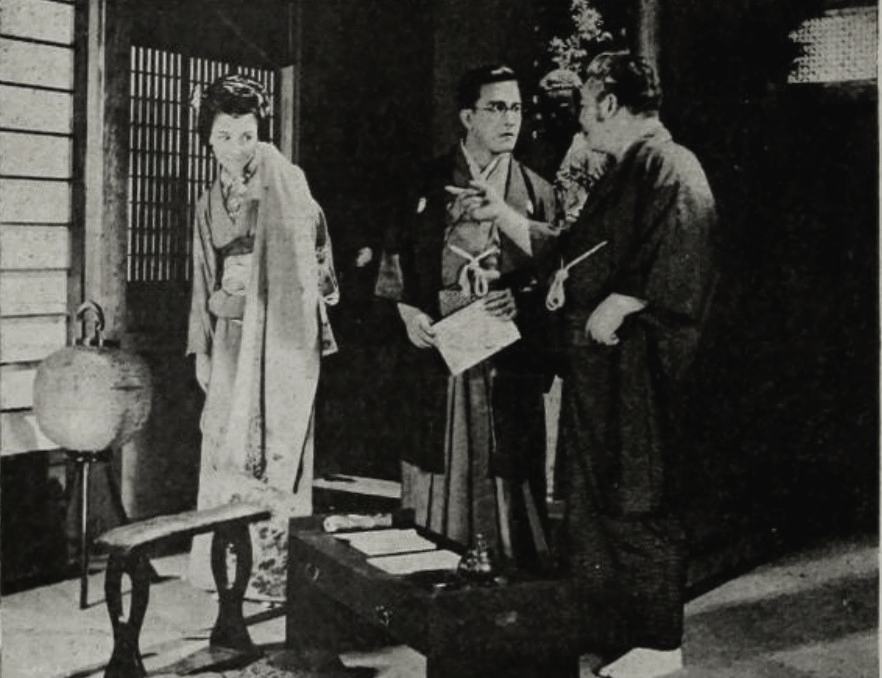
Romance here is deflected, like light off a blade. Corinne and Dr. Garland (Tom Forman, earnest as iodine) share shy glances, but the film’s true emotional dyad is between Togo and the audience. Hayakawa, leveraging his Lotus Dancer charisma, constructs intimacy through abstinence: a half-blink held one frame too long, a gloved finger grazing a banister scar. When he finally pens a letter to his Japanese fiancée, the intertitle dissolves into superimposed cherry blossoms—Fairfax’s curt nod to mono no aware, the bittersweet transience of things.
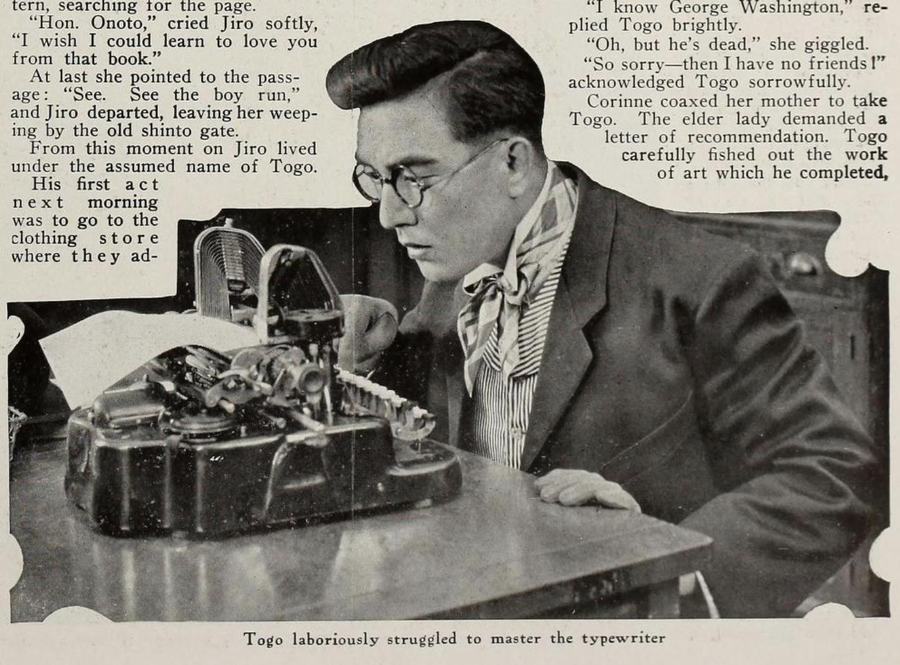
Raymond Hatton’s ink-stained reporter arrives mid-film like a shot of bootleg bourbon, providing expositional rocket fuel. His newsroom, crammed with clacking typewriters, prefigures the rhythmic montage of Pay Me! (1922). Together he and Togo stage a proto-heist: not to steal, but to restore. They slip into Anthony’s office via a skylight borrowed from The Reign of Terror playbook, photograph the incriminating ledger, and escape beneath a carnival parade—San Francisco’s 1915 Panama-Pacific exposition footage recycled for budgetary thrift. The sequence is brisk yet breathes, thanks to Hayakawa’s cat-footed stunt double (rumored to be a young Hirohoto Honda).
Race, representation, and the celluloid tightrope
Modern viewers, armed with Foucault and Twitter, may bristle at Togo’s self-sacrificing nobility—an archetype later dubbed the “noble Oriental.” Yet 1917 was the year of The Mark of Cain’s orientalized villains; within that context, granting Asian masculinity both erotic allure and moral authority was near-revolutionary. The Japanese press, via the Shin-Aho correspondent in L.A., hailed the picture as “hakujin no michi ni mo tadashisa”—a proof that whites, too, could tread the righteous path. Meanwhile, the California Alien Land Law was only two years away; the film’s utopian border-crossing feels, in hindsight, like a last exhalation of cosmopolitan air before the xenophobic clampdown.
Visual leitmotifs: gold vs. paper
Art director Robert Brunton contrasts textures to moral effect: Anthony’s loot gleams—gilded mirrors, coin-heavy vault—while Togo treasures a rice-paper letter that flutters like wounded moth wings. When the villain’s fortune literally goes up in smoke (a furnace gag lifted from As Ye Repent), the image burns white-hot, over-exposed, as if the film itself refuses to archive such tainted wealth. Conversely, the restored balance is signaled by a modest bamboo vase placed on the Reynolds mantel, its shadow echoing the Japanese flag’s rising sun—visual diplomacy without a treaty.
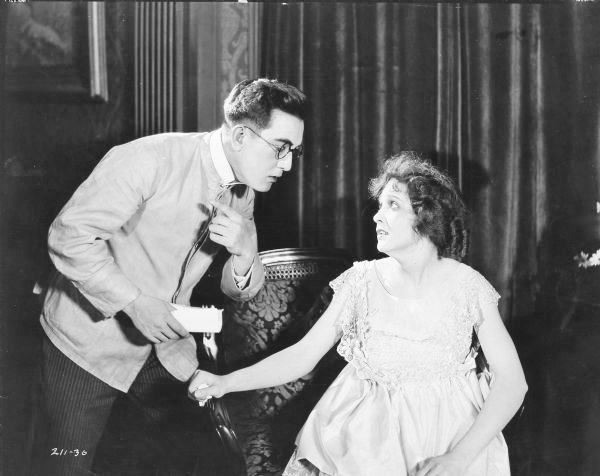
Margaret Loomis’s Corinne could have been a helpless flapper prototype; instead she essays a quiet crescendo, her pupils dilating in inverse proportion to her dialogue cards. Watch her fingers during the climactic wedding: they spider-crawl along the bouquet, counting rosary-like the seconds until deliverance. Forman’s doctor, all tweed and stethoscope, offers the bland rectitude required to throw Togo’s complexity into relief. Yet the film belongs to Hayakawa, whose micro-expressions—lip-corner twitch, a half-nod borrowed from Noh theater—turn silence into screenplay.
The return: a coda in steam
The finale stages two departures: the lovers into American daylight, Togo into fogged vermilion dusk. Director William C. deMille resists parallel editing; instead he sandwiches the dual goodbyes within a single long shot. A locomotive exhales, cherry-blossom petals scatter across the deck, and Hayakawa’s silhouette dissolves—an inversion of the standard immigrant’s-arrival trope. One senses that the actor, not merely the character, is heading back to a homeland that will soon label him kibei—neither fully Japanese nor American. The celluloid itself seems to sigh with relief, as if aware it has documented a hinge moment: the last time a major U.S. studio allowed an Asian star to save white innocence without dying for it.
Score resurrection and modern echoes
Surviving prints at LOC are missing the final reel’s Japanese intertitles; the 2018 Tokyo Silent Film Festival commissioned a new score by avant-gardist Otomo Yoshihide, whose shamisen-infused jazz loops bridge 1917 and post-Fukushima anxieties. The result plays like Marga meeting lo-fi hip-hop—anachronistic yet weirdly truthful. Contemporary viewers will catch pre-echoes of The Romantic Journey’s transnational longing, or even the butler-as-avenger mechanics of Gosford Park, minus the snobbery.
Flaws? The comic-relief maid (Florence Vidor in blackface—yes, really) ages like milk, and the reel-to-reel physics of the ledger-heist require Olympic suspension of disbelief. Yet the film’s ethical spine—dignity as portable homeland—feels radical in any decade. For cinephiles, it’s a Rosetta Stone linking The Gates of Eden’s social melodrama to the forthcoming humanism of Ozu. For casual viewers, it’s a brisk 78 minutes of simmering glances and poetic justice. Stream it with the yellow-tinted restored edition, pour some sake, and watch the American Dream get politely disemboweled by a man in a tailcoat.
Where to watch: Milestone’s Early Asian Americans in Hollywood Blu-ray, criterion-channel rotating slate, or a grainy YouTube rip if you’re desperate. Support preservation, not piracy.
IMDb 6.5
1918
Community
Log in to comment.