DbcultAccessing Vault...
Cult Review
Senior Film Conservator
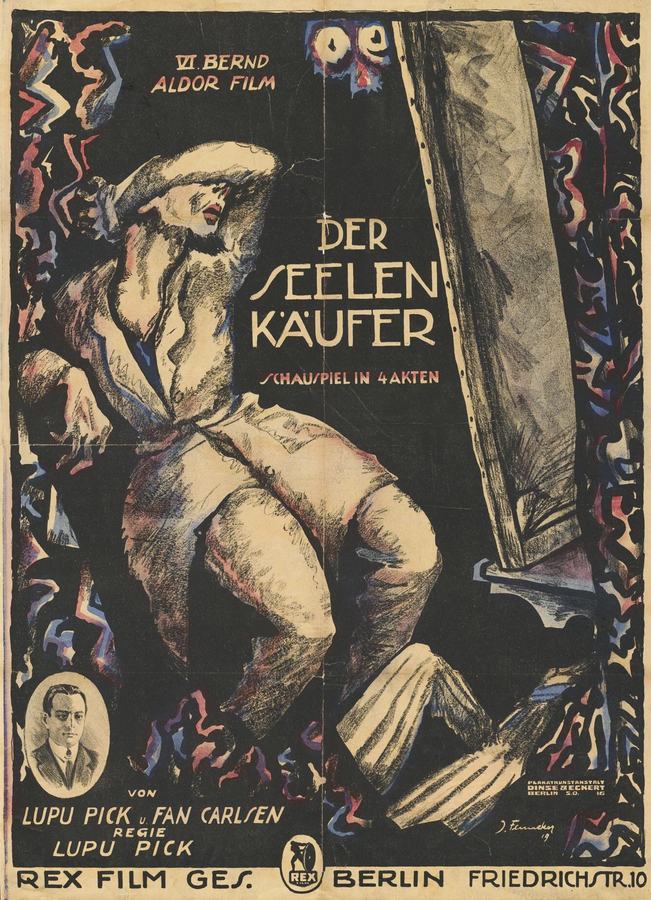
Stepping into the spectral embrace of 'Der Seelenverkäufer' is akin to unearthing a forgotten relic from cinema's nascent years, a cinematic artifact that pulsates with an unsettling prescience. This German silent film, a collaborative brainchild of writers Gerhard Lamprecht, Fanny Carlsen, and Lupu Pick, transcends its temporal confines to deliver a searing indictment of societal pressures and the insidious erosion of the human spirit. It is a profound exploration of Faustian bargains struck not with mythical devils, but with the very real demons of ambition and material desire that lurk within the human heart and the urban labyrinth. The film’s very title, 'The Soul Seller,' immediately establishes its thematic gravity, promising a journey into the moral abyss, and it delivers with an unflinching gaze that remains remarkably potent even a century later.
At its core, 'Der Seelenverkäufer' is a character study, a tragic ballet choreographed around the ill-fated Anna, brought to life with an incandescent, heart-wrenching vulnerability by Ria Jende. Jende’s performance is a masterclass in silent film acting, her expressive eyes and nuanced physicality conveying volumes of unspoken anguish and hope. We first encounter Anna as a beacon of youthful optimism, an aspiring artist whose spirit yearns for expression amidst the suffocating squalor of her existence. Her dreams are not merely of comfort, but of a transcendent beauty she believes the city holds—a poignant aspiration that makes her subsequent descent all the more agonizing. Jende imbues Anna with a delicate strength that makes her initial vulnerability believable, allowing the audience to witness her slow, agonizing transformation into a shadow of her former self. The camera lingers on her face, capturing the subtle shifts from wide-eyed innocence to a haunted weariness, a testament to her profound talent.
The catalyst for Anna’s tragic trajectory is the formidable Herr Kalt, portrayed with chilling charisma by Bernd Aldor. Aldor’s Kalt is not a mustache-twirling villain in the traditional sense, but a more insidious, modern type of antagonist: a suave manipulator, an architect of dreams and nightmares, whose power lies in his ability to identify and exploit the aspirations of others. He is the quintessential 'Seelenverkäufer,' not because he literally sells souls, but because he facilitates their surrender, piece by agonizing piece. Aldor’s performance is a marvel of understated menace; his smiles are rarely genuine, his gestures always calculated. He embodies the seductive allure of power and wealth, a siren song that promises salvation but delivers only bondage. His interactions with Jende are electric, a palpable tension existing between the predator and his prey, making their scenes together the narrative's pulsating heart. Kalt represents the corrupting influence of unchecked capitalism and social climbing, a theme echoed in films like The Payment, but with a particularly German expressionistic edge that emphasizes psychological torment over overt action.
The urban landscape itself functions as a character, a sprawling, indifferent entity that simultaneously offers opportunity and consumes its inhabitants. The cinematography, likely a blend of stark realism and expressionistic shadows, would have played a crucial role in establishing this dichotomy. One can imagine the chiaroscuro lighting, a hallmark of German silent cinema, employed to delineate Anna’s internal struggle: bright, fleeting moments of hope against vast, encroaching darkness. This visual language would have been instrumental in conveying the film's pervasive sense of moral ambiguity and the psychological weight of Anna's choices. The bustling streets, the opulent salons, and the desolate back alleys would all contribute to a rich tapestry, each setting reflecting a different facet of Anna's eroding world.
Friedrich Kühne, as the principled journalist Paul, serves as Anna’s moral compass and potential savior. Kühne brings a quiet intensity to the role, portraying Paul as a man driven by integrity and a genuine affection for Anna. His struggle is not merely to expose Kalt, but to awaken Anna to the true cost of her compromises. Paul's character provides a necessary counterpoint to Kalt's cynicism, representing the possibility of redemption and the enduring power of human connection. His scenes are imbued with a sense of urgency and desperation, as he races against time to pull Anna back from the brink. The dynamic between Paul and Anna is one of tragic romance, a love story thwarted by circumstance and moral decay, reminiscent of the doomed affections in A Midnight Romance, though with far higher stakes.
Dora Hrach’s portrayal of a cynical socialite, perhaps a former protégé of Kalt or simply a product of his decadent world, adds another layer of complexity to the narrative. Her character, initially perhaps an antagonist or a superficial acquaintance, evolves into a reluctant witness to Anna's downfall. Hrach would have likely embodied the disillusioned elegance of the era, her character's initial indifference slowly giving way to a flicker of empathy, highlighting the pervasive nature of Kalt's influence. Her presence underscores the idea that Kalt's victims are not just the naive and ambitious, but also those who have already succumbed to the system, becoming complicit in their own quiet despair. The nuanced depiction of female relationships and rivalries in such a cutthroat environment is a thread that runs through many films of this period, including A Woman's Fight, but 'Der Seelenverkäufer' imbues it with a deeper, more existential dread.
Heinrich Peer, likely cast as a stern, perhaps estranged, patriarchal figure, would have provided a moral anchor or a symbol of traditional values from which Anna has strayed. His presence, whether spectral or physical, would have served as a constant reminder of the choices Anna has made and the path she has abandoned. Peer's gravitas would lend weight to any scene he inhabits, his silent judgment a powerful force in a world where moral lines are increasingly blurred. This kind of stern, guiding (or misguiding) older figure is a common trope in early cinema, often seen in films like Enoch Arden, where the decisions of the younger generation are often weighed against the expectations of their elders.
The collaborative efforts of writers Gerhard Lamprecht, Fanny Carlsen, and Lupu Pick are evident in the film’s taut narrative structure and its rich thematic tapestry. Their screenplay, even without dialogue, would have meticulously built the world of 'Der Seelenverkäufer,' crafting complex character arcs and a compelling moral dilemma. The silent film era demanded a unique mastery of visual storytelling, where every gesture, every set design, and every intertitle had to convey layers of meaning. The writers would have had to envision how emotions and plot points could be communicated non-verbally, relying on the actors' prowess and the director's vision to bring their story to life. This meticulous approach to storytelling is what elevates many silent films, allowing them to transcend linguistic barriers and speak directly to universal human experiences.
Lupu Pick, one of the credited writers, was also a significant director in his own right, known for his Kammerspielfilm (chamber play) style, which focused on intense psychological drama and intimate character studies. If he also directed 'Der Seelenverkäufer,' or heavily influenced its direction, it would explain the film's profound psychological depth and its focus on Anna's internal torment. The Kammerspielfilm approach, with its emphasis on detailed character work and confined settings, would have amplified the claustrophobic feeling of Anna's moral entrapment. This style is often contrasted with the more fantastical elements of German Expressionism, yet both shared a common ground in exploring the darker aspects of the human psyche. The film's likely visual style, blending realism with symbolic imagery, would have served to underscore its themes of spiritual decay and the struggle for authenticity.
The climax of 'Der Seelenverkäufer' is a masterstroke of emotional storytelling, forcing Anna to confront the ultimate price of her choices. Her eventual decision to reclaim her integrity, even at the cost of her newfound status and material comforts, is profoundly moving. It’s a testament to the enduring power of the human spirit, a quiet triumph in the face of overwhelming adversity. This bittersweet redemption, where inner peace is found amidst external ruin, is a far more resonant conclusion than a simple happy ending. It challenges the audience to consider what truly constitutes success and happiness, echoing the moral quandaries found in films such as Troen, der frelser (Faith That Saves), which also delves into profound spiritual and ethical dilemmas.
Beyond its captivating narrative, 'Der Seelenverkäufer' offers a rich commentary on the burgeoning modernity of the early 20th century. It critiques the relentless pursuit of wealth and status, the dehumanizing effects of urban life, and the moral compromises individuals are forced to make in a rapidly changing world. The film's themes—ambition, corruption, redemption, and the search for identity—are timeless, making it remarkably relevant even today. The portrayal of a woman navigating a patriarchal and exploitative society also resonates, drawing parallels with other early cinematic explorations of female agency and subjugation, such as The Neglected Wife or even the more fantastical adventures of Judex, where women often find themselves at the mercy of powerful male figures.
The film's visual style, a probable fusion of German Expressionism's dramatic shadows and Kammerspielfilm's psychological intensity, would have made it a truly unique cinematic experience. Imagine the stark contrasts, the exaggerated angles, and the symbolic use of light and darkness to externalize Anna's internal turmoil. The sets themselves would have been characters, reflecting the opulence of Kalt's world versus the stark reality of Anna's origins. This meticulous attention to visual detail, common in the era, would have allowed the film to communicate complex ideas and emotions without relying on spoken dialogue, creating a visceral and immersive experience for the audience. The influence of such visual storytelling can be seen in later films, demonstrating the lasting impact of these early cinematic innovations.
In retrospect, 'Der Seelenverkäufer' stands as a powerful testament to the artistry and thematic depth of silent cinema. It is a film that demands to be rediscovered, its potent message about the sanctity of the soul and the dangers of moral compromise resonating with startling clarity. The performances, particularly Jende’s heartbreaking portrayal of Anna and Aldor’s magnetic villainy, would have left an indelible mark on contemporary audiences and continue to impress in their raw emotional power. The film's narrative sophistication, its willingness to delve into the darker facets of human nature, and its ultimate message of hope through self-reclamation, firmly establish it as a significant work within the cinematic canon, deserving of a place alongside other rediscovered gems like Das Maskenfest des Lebens. Its exploration of moral ambiguity and the price of ambition offers a timeless reflection on the human condition, making it a masterpiece that speaks across generations.
The enduring power of 'Der Seelenverkäufer' lies not just in its dramatic narrative but in its profound philosophical underpinnings. It asks us to consider what we are willing to sacrifice for success, and whether any external gain can truly compensate for the loss of one's inner light. The film's conclusion, while not overtly joyous, offers a deeply satisfying resolution that prioritizes spiritual integrity over fleeting material triumph. It is a stark reminder that some things, like the soul, are simply not for sale, no matter the price. This profound message, delivered with such visual artistry and emotional depth, ensures that 'Der Seelenverkäufer' remains a vital and compelling work, a poignant echo from cinema's formative years that continues to reverberate with contemporary significance.
The meticulous direction, whether by Lupu Pick or another visionary, would have ensured that every frame contributed to the overarching narrative and emotional impact. Silent films, by their very nature, necessitated a heightened sense of visual storytelling, and 'Der Seelenverkäufer' would have excelled in this regard. The use of symbolic imagery, the deliberate pacing, and the evocative camera work would have combined to create an immersive experience that transcended the absence of spoken dialogue. This film serves as a powerful reminder of the ingenuity and artistic ambition that characterized early cinema, proving that even without sound, stories could be told with breathtaking complexity and emotional resonance. It’s a work that speaks volumes in its silence, a true testament to the power of pure visual narrative.
IMDb —
1926
Community
Log in to comment.