Summary
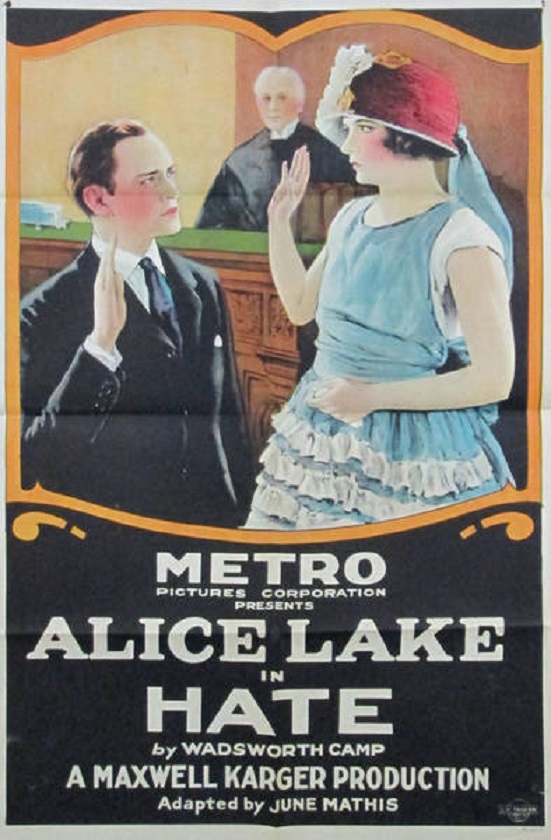
In a labyrinthine dance of obsession and deceit, the silent drama "Hate" (1922) unfurls a tragic tapestry woven around the volatile rivalry between two gamblers, Dave Hume and Ed Felton, both ensnared by the allure of the effervescent chorus girl, Babe Lennox. Hume, consumed by a venomous jealousy and a precarious state of health, orchestrates a malevolent charade: he implicates Felton in a crime, only to watch him released on bail, a temporary reprieve. Undeterred, and with a chilling resolve to inflict ultimate vengeance, Hume concocts a diabolical scheme. He determines to take his own life, meticulously staging his demise to appear as Felton's murderous act, all while concealing the meticulous blueprint of his self-inflicted fate within a seemingly innocuous statuette. A morbid wager is struck between the rivals, a macabre pact concerning Hume's impending 'death.' When the inevitable occurs, and Hume is discovered lifeless, the legal machinery grinds into motion, with the formidable attorney Talbot prosecuting Felton. The narrative hurtles towards a harrowing crescendo as Felton stands poised on the brink of electrocution. In a breathtaking race against time, Babe, who had initially condemned Talbot for his relentless pursuit of Felton, emerges as the unexpected harbinger of truth. She delivers the crucial statuette, its hidden confession shattering the carefully constructed illusion of guilt and unequivocally proving Felton's innocence. This dramatic revelation not only exonerates Felton but also unveils the depth of Babe's affection for Talbot, culminating in a denouement where justice, though precariously balanced, ultimately prevails, and love, unexpectedly, finds its course.
Synopsis
Gamblers Dave Hume and Ed Felton are rivals for the love of Babe Lennox, a chorus girl. Hume informs on Felton, and though the latter is arrested he is released on bail, and Talbot, the attorney, warns Hume to stay clear of him. Hume, who is in ill health, determines to commit suicide, making it appear that Felton killed him; and (concealing a record of his plans on a small statuette) he makes a wager with Felton that he can do so. When Hume is found dead, Talbot prosecutes the case against Felton, and just as Felton is about to be electrocuted Babe delivers the statue by which his innocence is proved. Babe, who had denounced Talbot for having convicted Felton, acknowledges her love for him; and all ends well.
Review Excerpt
"
The Silent Fury of "Hate" (1922): A Timeless Tale of Obsession and Redemption
Stepping back into the hallowed, hushed halls of early 20th-century cinema, one encounters a fascinating tapestry of human emotion, often rendered with a stark, expressive clarity that transcends the absence of spoken dialogue. The year 1922, a vibrant epoch for the burgeoning art form, gifted audiences with a myriad of narratives, from grand historical epics to intimate psychological dramas. Among these, a f..."