DbcultAccessing Vault...
6.2/10
Senior Film Conservator
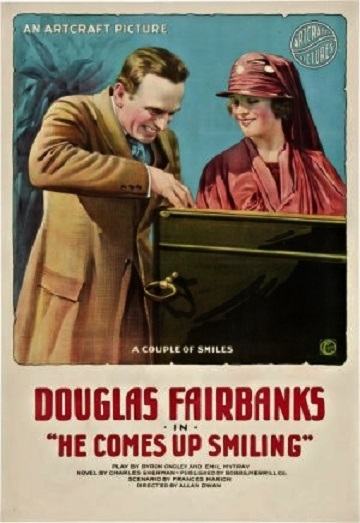
A definitive 6.2/10 rating for a film that redefined the boundaries of cult cinema. He Comes Up Smiling remains a cornerstone of transgressive art.
There’s a certain kinetic joy that emanates from the early work of Douglas Fairbanks, a buoyant energy that transcends the silent screen and continues to captivate audiences even a century later. His films weren't merely entertainment; they were declarations of an optimistic spirit, a call to adventure, and a testament to the power of individual agency. In He Comes Up Smiling, released in 1918, we witness Fairbanks in his prime, embodying a character who dares to defy convention and embrace the unpredictable currents of life. It’s a narrative that, at its core, explores the irresistible allure of escapism and the intoxicating, yet often perilous, dance with assumed identity. Fairbanks, with his characteristic grin and boundless athleticism, effortlessly guides us through a world where a mundane existence can be shed for the open road, where a bank clerk can become a king, and where danger lurks just around the corner, mistaken identity serving as both catalyst and constant threat. This film, directed by Allan Dwan (though not credited in the prompt, common for silent era films to have multiple uncredited hands), with a screenplay crafted by Emil Nyitray, Charles Sherman, Byron Ong, and Frances Marion, captures the essence of a particular American dream – or perhaps, an American fantasy – where self-reinvention is not just possible, but celebrated, even when it leads to unexpected complications.
Our protagonist, Jerry Martin, introduced to us by the brilliant Douglas Fairbanks, is initially ensnared in the drudgery of a bank clerk’s life. Imagine the stifling routine, the endless ledger entries, the suffocating predictability of it all. It’s a stark contrast to the vibrant, dynamic persona Fairbanks typically projected. This initial portrayal of Jerry is crucial; it establishes the psychological impetus for his eventual, radical departure. His soul, clearly too expansive for the confines of a teller's cage, yearns for something more, something authentic, something that resonates with the untamed spirit within him. This isn't merely a young man seeking a change of scenery; it's an existential crisis playing out against the backdrop of an increasingly industrialized and formalized society. The film, even in its comedic flourishes, subtly critiques the dehumanizing aspects of such a life, positioning Jerry’s eventual flight as less an act of recklessness and more a vital act of self-preservation. This kind of yearning for a life beyond the ordinary was a common theme in the era, echoed in films like The Waiting Soul, where characters often found themselves wrestling with societal expectations versus personal freedom. Jerry’s decision to abandon his respectable, albeit soul-crushing, profession is a leap of faith, a dive into the unknown that immediately sets the tone for the adventure to come. It’s a moment of profound liberation, captured by Fairbanks with a mischievous glint in his eye, signaling that the real fun is just about to begin.
Once Jerry sheds the shackles of his bank uniform, he finds himself drawn to the magnetic pull of the hobo lifestyle. This isn't a descent into squalor, but rather an ascent into a different kind of freedom, a community bound by shared experiences and an unwritten code of the road. Fairbanks, ever the master of physical comedy and agile movement, seamlessly integrates into this world. He doesn't just play a hobo; he embodies the spirit of one – resourceful, resilient, and utterly unburdened by material possessions. The film romanticizes this transient existence to a degree, presenting it as an antidote to the very societal strictures Jerry fled. It’s a fascinating portrayal of a subculture that existed on the fringes, yet possessed its own unique hierarchy and mythology. Within this new realm, Jerry's natural charisma and quick wit allow him to thrive, quickly earning the respect of his newfound companions. This segment of the film is rich with visual storytelling, showcasing the camaraderie, the challenges, and the unexpected joys of life on the rails. It's here that the narrative truly begins to unfurl its central conceit: Jerry’s unwitting transformation into 'Bachelor,' the fabled 'king of the market.' This isn't a deliberate act of impersonation on Jerry's part, but rather a confluence of circumstances and a touch of serendipity, a classic comedic setup that Fairbanks executes with impeccable timing. The irony, of course, is that in seeking to escape one identity, he inadvertently slips into another, far more dangerous one. This transition is handled with a light touch, ensuring that the audience is fully aware of the impending complications without losing sight of the film’s adventurous spirit. It's a testament to the writers' ability to weave complex plot points into a seemingly simple narrative, hinting at the intricate dance of fate and identity that defines the entire story. The film's exploration of identity, albeit through a comedic lens, touches upon themes seen in more dramatic fare like The Strange Case of Mary Page, where mistaken identities or assumed personas drive much of the plot.
The true narrative engine of He Comes Up Smiling ignites when Jerry, now mistakenly identified as the legendary Bachelor, finds himself pursued by a cadre of dangerous men. These aren't simply disgruntled rivals; they are individuals with grave intentions, their motives shrouded in mystery but clearly menacing. The film masterfully builds tension around this mistaken identity, creating a thrilling cat-and-mouse game that showcases Fairbanks's unparalleled agility and daring stunts. He leaps, he climbs, he evades with an effortless grace that became his cinematic trademark. The humor in these sequences often derives from Jerry's bewildered reactions to the relentless pursuit, as he struggles to comprehend why he, a simple former bank clerk, has suddenly become the target of such intense hostility. This is where the plot truly thickens, moving beyond simple escapism into a realm of genuine peril and high-stakes adventure. The dramatic irony is palpable: Jerry is being hunted for the actions of a man he's never met, a man whose reputation, both revered and feared, now clings to him like a shadow. The writers, Emil Nyitray, Charles Sherman, Byron Ong, and Frances Marion, construct a scenario where the consequences of identity theft, even accidental, are dire and immediate. The film doesn't shy away from depicting the genuine threat, even as it maintains its lighthearted tone. This delicate balance between comedy and suspense is a hallmark of Fairbanks's best work, allowing audiences to thrill at the danger while still delighting in the hero’s ingenuity and charm. The escalating stakes provide ample opportunity for Fairbanks to demonstrate his physical prowess, transforming every chase scene into a ballet of athletic escapism. Such intricate plots involving mistaken identity and pursuit were popular in the era, finding echoes in films like The Empty Cab or The Midnight Man, where characters often found themselves in extraordinary circumstances due to an accidental involvement in criminal affairs.
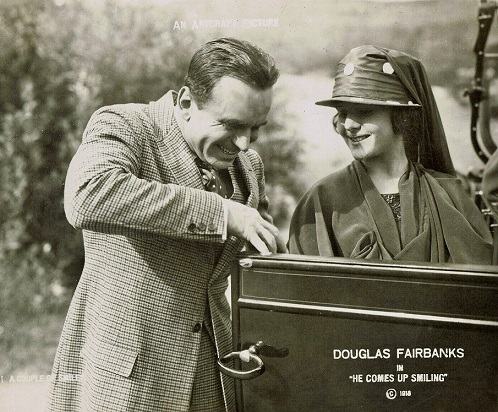
Douglas Fairbanks, as Jerry Martin/Bachelor, is nothing short of spectacular. His performance is a masterclass in silent film acting, where every gesture, every facial expression, and every daring stunt contributes to a fully realized character. Fairbanks wasn't just an actor; he was a phenomenon, an embodiment of American optimism and can-do spirit. His athleticism is legendary, and in He Comes Up Smiling, it’s on full display. He scales walls, leaps across rooftops, and engages in thrilling fisticuffs with an infectious enthusiasm that makes the audience root for him instinctively. But beyond the physical prowess, there’s a genuine warmth and charm that radiates from the screen. He makes Jerry’s plight relatable, his triumphs exhilarating, and his comedic missteps utterly endearing. His smile, as the title suggests, is a weapon in itself, disarming adversaries and winning hearts with equal measure. This film perfectly encapsulates the 'Fairbanks persona' – a blend of the boy-next-door and the swashbuckling hero, capable of both lighthearted romance and intense action. He makes the audience believe in the possibility of breaking free from convention and finding adventure, even if it means dodging dangerous criminals. His energy is so potent that it almost feels as if the film itself is powered by his sheer will. The way he communicates complex emotions without a single spoken word is a testament to his artistry, conveying fear, confusion, determination, and joy with remarkable clarity. One can easily draw parallels between his dynamic screen presence and the vibrant energy found in films like Hitting the High Spots, where the protagonist's sheer force of personality drives the narrative forward. Fairbanks’s ability to infuse every scene with his unique brand of enthusiasm ensures that even the most perilous situations are tinged with an underlying sense of fun, a knowing wink to the audience that everything will, ultimately, be alright.
While Fairbanks undoubtedly anchors the film, the supporting cast adds crucial texture and depth to the narrative. Kathleen Kirkham provides a delightful romantic interest, her presence often serving as a catalyst for Jerry's more heroic actions. Her character isn't just a damsel in distress; she possesses an agency that complements Jerry’s adventurous spirit, creating a believable and charming on-screen chemistry with Fairbanks. Then there’s Bull Montana, whose imposing physical presence and often menacing demeanor provide a tangible threat, perfectly contrasting with Fairbanks’s more agile and nimble fighting style. The ensemble, including Marjorie Daw, Herbert Standing, William Elmer, Charles Stevens, Frank Campeau, Jay Dwiggins, Robert Cain, and Albert MacQuarrie, each contribute to building a believable world, whether they are fellow hobos, exasperated authorities, or the sinister figures pursuing Jerry. The writers, Emil Nyitray, Charles Sherman, Byron Ong, and Frances Marion, craft a plot that is intricate enough to maintain suspense yet clear enough to follow without dialogue. They skillfully weave together threads of mistaken identity, romance, and adventure, ensuring that the pacing remains brisk and engaging. The narrative structure is a testament to the sophisticated storytelling techniques developing in the silent era, relying heavily on visual cues, character actions, and carefully constructed sequences to convey complex plot points. The film avoids unnecessary exposition, instead allowing the audience to piece together the puzzle alongside Jerry, heightening the sense of discovery and involvement. This narrative economy, combined with the visual flair, makes He Comes Up Smiling a remarkably efficient piece of cinema, particularly for its time. It’s a prime example of how compelling stories could be told without the aid of spoken words, relying instead on the universal language of action and emotion. The clarity of the storytelling, even amidst the chaos of mistaken identity, is a hallmark of strong screenwriting, a trait also evident in films like The Failure, which managed to convey intricate moral dilemmas through purely visual means.
Beyond the thrilling chases and comedic antics, He Comes Up Smiling delves into profound themes that resonate even today. At its core, it's a celebration of individual freedom and the human desire to escape the constraints of societal expectations. Jerry’s journey from bank clerk to hobo king, albeit accidental, is a powerful metaphor for self-reinvention. It questions the very nature of identity: are we defined by our birth, our profession, or the choices we make? The film playfully suggests that identity can be fluid, a costume donned and shed, but also highlights the dangers inherent in such fluidity when real-world consequences are involved. The hobo life, romanticized here, represents an alternative societal structure, one that values freedom over material wealth, experience over status. This exploration of alternative lifestyles and the questioning of conventional success can be seen as a precursor to narratives found in later films, reflecting a nascent cultural yearning for authenticity. The film also subtly critiques the rigidity of the established order, presenting Jerry’s initial bank job as sterile and unfulfilling, thus justifying his radical departure. The contrast between the two worlds — the structured, predictable world of finance and the unpredictable, adventurous world of the hobo — serves as a central thematic tension. It asks us to consider what truly constitutes a 'good' life and whether true happiness can be found within the confines of expectation or out on the open road. The notion of escaping one's predetermined path for a life of adventure, even if it leads to peril, is a timeless narrative, seen in countless tales of heroism and self-discovery. This thematic depth elevates the film beyond mere entertainment, inviting reflection on what it means to truly live. The concept of breaking free from a mundane existence for a life of excitement, often with unexpected twists, mirrors the narrative spirit of films like Brewster's Millions, where a sudden change in circumstances leads to an unconventional journey.
Watching He Comes Up Smiling today is more than just viewing a historical artifact; it's an immersive experience into the artistry of silent cinema. The film’s visual language is incredibly sophisticated, relying on expressive acting, dynamic camera work (for its time), and carefully constructed intertitles to convey story and emotion. The pacing, often a point of contention for modern viewers accustomed to rapid cuts, is deliberate and allows for character development and scene setting that is often glossed over in contemporary filmmaking. It reminds us of a time when the power of suggestion and the nuance of physical performance reigned supreme. The film is also a window into the cultural zeitgeist of 1918, reflecting anxieties about social class, the allure of adventure, and the burgeoning American identity. It’s fascinating to observe the fashion, the societal norms, and even the modes of transportation that define the era. The comedic elements, while sometimes broad, are rooted in universal human experiences – mistaken identity, unrequited love, and the triumph of the underdog – making them surprisingly timeless. Comparing it to other films of its period, such as The Clean-Up or The Golden Rosary, one can appreciate how He Comes Up Smiling stands out for its sheer exuberance and the star power of Fairbanks. It’s a vibrant testament to the storytelling capabilities of the silent era, proving that a lack of dialogue did not equate to a lack of depth or entertainment. The film’s lasting appeal lies not just in its historical significance, but in its ability to transport viewers to a simpler, yet equally thrilling, cinematic landscape. The visual storytelling techniques, particularly in conveying complex emotions and plot twists without dialogue, connect it to other masterworks of the era, such as Hoffmanns Erzählungen, which relied heavily on visual metaphors and performance to convey its fantastical narrative. Even films like Pigen fra Palls and Golfo, while perhaps less widely known, contributed to the diverse tapestry of silent film, often exploring similar themes of human nature and societal interaction through unique visual styles.
He Comes Up Smiling is more than just a historical curiosity; it's a vibrant, engaging piece of early cinematic art that showcases Douglas Fairbanks at his most charismatic and athletic. It’s a film that embodies the spirit of adventure, the thrill of self-reinvention, and the timeless appeal of a hero who faces danger with a grin. The enduring quality of this film lies in its ability to transcend its silent format and communicate directly with the audience through its universal themes and the sheer star power of its lead. It reminds us that sometimes, the greatest adventure begins when we dare to step outside our comfort zone, even if it means inadvertently stepping into someone else’s shoes. The film’s legacy is intertwined with Fairbanks’s own, a testament to his unique ability to blend comedy, romance, and action into a cohesive and exhilarating package. It’s a must-see for anyone interested in the evolution of cinema, the magic of silent storytelling, or simply a good old-fashioned adventure. The meticulous writing by Emil Nyitray, Charles Sherman, Byron Ong, and Frances Marion, coupled with the energetic direction (often attributed to Allan Dwan, though not in the provided prompt list), ensures that every twist and turn feels earned and exciting. Much like the pursuit of truth and identity in The Shackles of Truth or the quest for self-discovery in Inspiration, this film resonates with a fundamental human desire for meaning and excitement beyond the mundane. Even a film like Her Shattered Idol, while perhaps more dramatic, shares the theme of characters grappling with external perceptions and internal realities. Fairbanks, with his infectious optimism, ensures that even when Jerry is in the thick of it, dodging blows and outwitting villains, he truly does 'come up smiling.' And so do we, the audience, grateful for the ride. This film is a pure distillation of silent era charm, an exhilarating escape that proves the power of a well-told story, a captivating star, and the timeless allure of a life less ordinary. Its continued relevance is a testament to the fact that some stories, and some smiles, simply never fade.

IMDb 5.4
1928
Community
Log in to comment.