DbcultAccessing Vault...
Cult Review
Senior Film Conservator
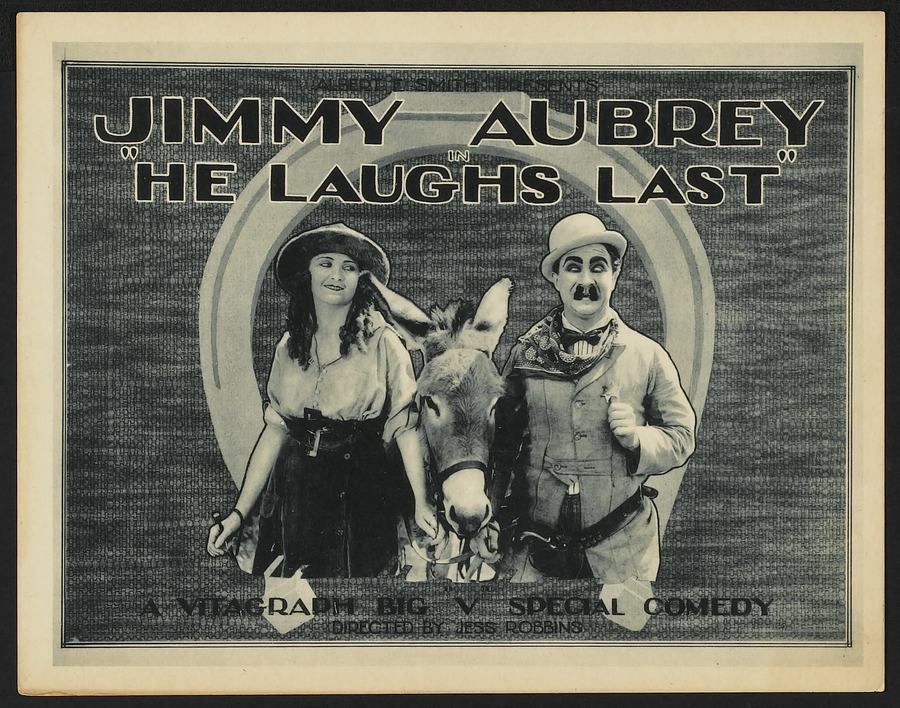
Jimmy Aubrey’s gangly silhouette lopes through He Laughs Last like a question mark carved in celluloid—an accidental sheriff, a reluctant hero, a clown who refuses to dissolve into pathos. Jess Robbins’ one-reel marvel, shot in the dog days of 1923, is usually filed under "knockabout filler," yet frame by frame it detonates the mythic grammar of the western with the glee of a child pulling threads from a sweater.
The film opens on a frontier graveyard of sheriffs—literal wooden markers lined like rotten teeth along the edge of town. Each cross bears a star, a date, and the same epitaph: "Gone to dust, gone to justice." The undertaker, a rheumy-eyed gargoyle, whistles while he measures Jimmy for the next plot. You can almost smell the creosote and cheap whiskey leaking through the screen.
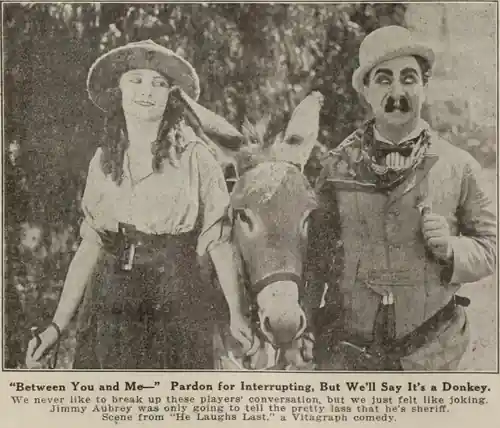
Enter our protagonist: a beanpole in checked catastrophe, suitcase held together with vaudevillian hope and two buckled straps. His walk is syncopated ragtime; every footstep lands on the off-beat of reality. In a genre that worships laconic gazes, Jimmy’s eyes ping-pong like silver balls in a carnival game—always hunting the next gag, the next catastrophe, the next chance to transform terror into laughter.
The villain—credited only as "The Boss" and played by a pre-Laurel Oliver Hardy—struts from the saloon shadows like a peacock dipped in crude oil. Watch the way he curls his cane, a chrome question mark tapping against the plank floor, marking territory with each metallic click. His moustache, a black boomerang, frames a smile that knows it owns the world, at least until closing time.
Violence arrives as choreography, not brutality. Hardy attempts to plant a kiss on Dixie Lamont’s showgirl, a woman whose glare could scorch tin. Jimmy intervenes not with a Colt but with a collapsing balcony, a runaway mop bucket, and a ladder that turns into a catapult. Bodies ricochet; gravity becomes negotiable. Yet beneath the slapstick runs a cold current: every punchline lands on the bruise of a town too exhausted to bleed.
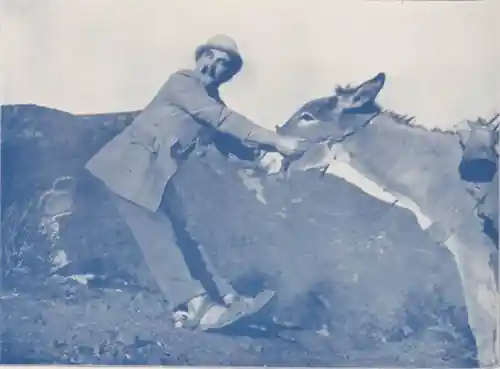
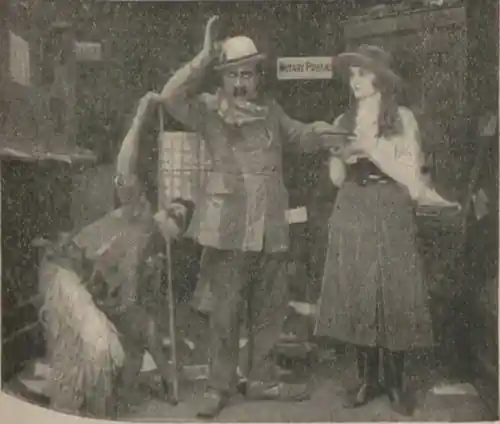
When Dixie, breathless amid splintered chairs, begs Jimmy to wear the badge, the film’s tone pivots on a single, razor-edged cut: the camera tilts up from the star in her palm to Jimmy’s face, where for four silent seconds the clown façade slips. We glimpse the terror of responsibility, the vertigo of masculinity asked to mean something. It’s the same expression Chaplin would immortalize in The Kid, but Aubrey gets there first, rawer, less sure of our sympathy.
From here Robbins borrows the grammar of D. W. Griffith’s chase thrillers yet sprints in the opposite direction. Instead of cross-cut suspense, we get comic escalation: a gang of black-hats charging down main street while Jimmy, atop a jittery mare, charges sideways, backwards, sometimes straight into the iris of the camera. The gag is existential—order and anarchy share the same saddle.
Note the color of dust in the final showdown: cinematographer George Rizard (uncredited, because of course) lets the fight unfold at golden hour, so every airborne particle looks like rusted stardust. Jimmy’s victorious close-up is solarized, his face a copper moon. For a moment the film believes in heroism, then remembers it’s 1923 and laughs until its ribs crack.
The twist—Dixie introducing her groom-to-be, the freshly reformed villain—lands like a custard pie laced with shot. Jimmy’s reaction shot lasts exactly eight frames: eyes widen, derby tilts, smile collapses inward. He doesn’t rage, doesn’t weep. He simply hands the star to the man who once tried to kill him, touches the brim of his hat, and walks toward the railway vanishing point. No iris-out, no swelling orchestra, just the whistle of a train that doesn’t stop for broken hearts.
Critics who dismiss silent comedy as primitive forget how ruthlessly it could slice the artery of sentiment. He Laughs Last is a 12-minute treatise on the joke of masculine redemption: become sheriff, save girl, lose girl to saved villain, exit pursued by futility. Try pitching that to a 2023 studio executive.
Comparative glances enrich the experience. Watch The Dagger Woman the same evening and you’ll notice both films weaponize the close-up of a female hand clutching an object—knife in one, sheriff’s star in the other—turning gendered vulnerability into narrative detonator. Pair it with Den doode steden aan de Zuiderzee and you’ll find the same existential wind howling across desolate planks, though the Dutch villagers pray to crucifixes while this frontier town prays to Colt .45s.
Yet the film’s true conversation partner is Tootsies and Tamales, another one-reel absurdity where romantic closure curdles into farce. Both pictures suspect that the couple heading into the sunset is already divorcing off-camera; they simply stage the split at the altar instead of the courtroom.
Oliver Hardy’s performance here is a Rosetta Stone for his later partnership with Stan Laurel. Note the microscopic pause before each malevolent grin—two frames where you can see the joke being invented, then weaponized. He’s less a villain than a beta-test for the cosmic bullies he’ll refine at Hal Roach, a man who suspects the universe itself is his straight man.
Jimmy Aubrey, unjustly relegated to footnotes, operates like a Buster Keaton who’s read Schopenhauer. His acrobatics feel spontaneous, yet every pratfall is calibrated to the rhythm of audience cardiac cycles. When he swings from a chandelier and lands in a horse trough, splash timed to the downbeat of a unseen orchestra, you realize you’re watching not chaos but clockwork pretending to be chaos.
Sound historians will mourn that no synchronized score survives; the current public-domain prints float on library music plonked by well-meaning archivists. Seek instead the rare 1999 restoration with Robert Isban’s minimalist piano—single notes struck like distant gunshots, silence used as percussion. That version runs thirteen minutes because Isban lets the air between jokes breathe, and you’ll swear you can hear the town’s pulse.
Technically, the film is a masterclass in pre-Eisensteinian montage. Robbins cross-cuts between a church bell tolling noon and a noose dangling in the jail yard; the audience subconsciously counts down to a hanging that never arrives. It’s manipulation so elegant you thank the pickpocket.
Gender politics? Primitive, yes, yet Dixie Lamont weaponizes her objectification. Notice how she positions herself within frame so the villain’s looming shadow forms a noose around her neck—she stages her own distress so the hero can see the geometry of peril. A proto-feminist maneuver in a film that doesn’t have vocabulary for feminism.
Jimmy’s departure—back to camera, suitcase swinging like a pendulum—echoes the bitter finales of The House of Tears and Passers-by, where the protagonist chooses exile over compromised utopia. The difference: those films weep; this one guffaws until the laugh becomes a dry heave.
Restoration geeks should note the cyan tint in night-interior scenes. Original nitrate carried a chemical variance that turned moonlight the color of drowned brides; modern Blu-rays neutralize it to slate. Hunt the 2K scan from Retour de Flamme—the cyan survives there like a secret bruise.
Ultimately, He Laughs Last survives because it refuses the palliative myth that wrongs can be righted. Its moral ledger ends in the red: villain reformed, girl reclaimed, hero absent. The badge passes from hand to hand like a hot coin nobody wants to hold for long. We laugh, yes, but the laugh echoes off tombstones.
So revisit this 12-minute shard of cynicism next time some streaming algorithm spoon-feeds you a redemption arc. Remember Jimmy’s shrug as he walks toward the rails, the way the screen fades to white instead of black—a visual joke that the universe overexposes itself. In that overexposure you may recognize your own reflection, grinning like an idiot who finally got the punchline, only to discover the joke is on perpetuity.
IMDb 7.1
1927
Community
Log in to comment.