DbcultAccessing Vault...
6/10
Senior Film Conservator
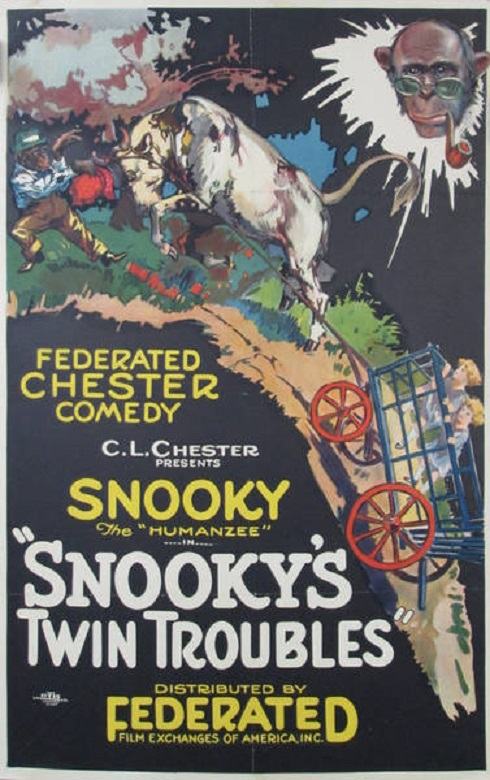
A definitive 6/10 rating for a film that redefined the boundaries of cult cinema. Snooky's Twin Troubles remains a cornerstone of transgressive art.
Monochrome lightning strikes once in a blue moon; when it does, celluloid orphans like Snooky's Twin Troubles glow like magnesium ribbons.
Shot on shoestring East Coast winter light, this 1924 one-reeler compresses populist melodrama into a breathless eighteen minutes—less time than it takes today’s algorithm to pitch you three reboot trailers. Yet its emotional bandwidth feels wider than most prestige miniseries, precisely because every frame must sweat for attention. The camera never lingers in self-congratulation; instead, it sprints, stumbles, pirouettes, mirroring the frantic custody battle at its core.
Plot scaffolding is primal: Snooky the hobo (played by a canine whose résumé predates Rin-Tin-Tin) befriends flaxen-haired mirror images, purchases bags of popcorn that steam like locomotive breath, then thwarts a baby-pageant heist when a top-hatted shyster kidnaps the girls for the prize purse.
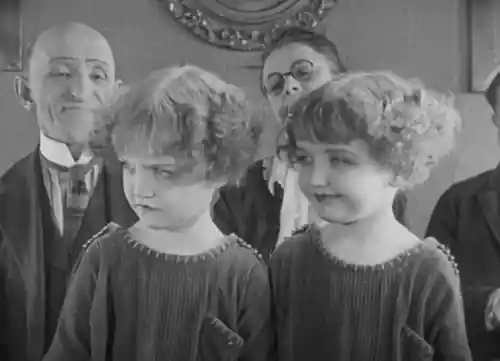
But the devil is in the chiaroscuro details. Note the opening tableau: brownstone stoops dissolve into diagonal shadows that anticipate German expressionism, while the cop’s nightstick taps Morse code on icy pavement, foreshadowing urban alienation later perfected in Crime and Punishment. The film’s proletariat pulse also echoes through The Hun Within, yet where that wartime pamphlet brandishes jingoistic brass knuckles, Snooky chooses confectioners’ sugar and popcorn kernels—an edible peace treaty between classes.
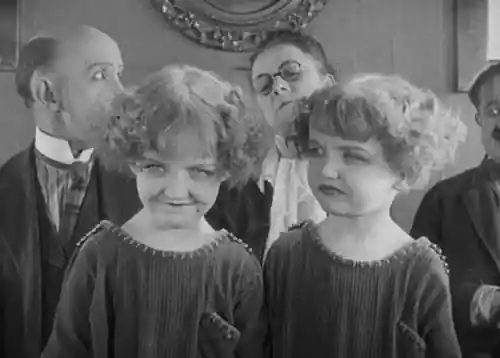
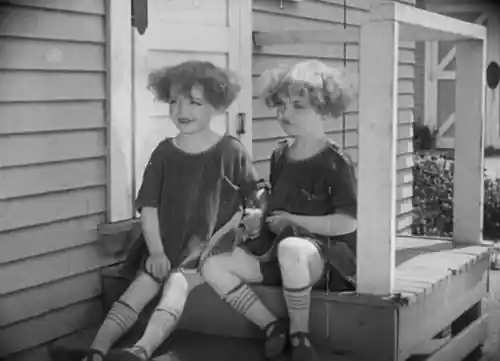
Ernie Adams’s beat cop is a watercolor of fatigue—eyes pouched with insomnia, shoulders sagging like an overburdened coat hanger. When he lifts his daughters, the gesture carries the gravitas of a Pietà, though the film undercuts sanctity with slapstick: one boot sole flaps like a drunk mouth, announcing each footstep. Agnes and Ida Steele, real-life siblings, synchronize cooing and blinking so uncannily that you suspect editorial trickery until a wide-shot proves otherwise. Their toddler semaphore—thumb-sucking Morse, synchronized sneezes—becomes the film’s emotional metronome.
Meanwhile, Tom Kennedy’s villain twirls a mustache that behaves like a living exclamation mark—wax glistening like crude oil under 1920s arc lamps. He prowls through crowd scenes with the swagger of someone who’s watched too many stage villains, yet the performance escapes camp because Kennedy’s eyes betray mortgage anxiety; even malefactors, the film whispers, hustle rent money.
And then there’s Snooky himself—four paws of pure narrative id. Trained to tilt head at 45° for maximum audience sympathy, this terrier navigates alley mazes with GPS accuracy. When he finally clamps jaws on the kidnapper’s coattails, you realize the movie has slyly shifted vantage: humans are supporting roles in a dog’s epic.
Director John J. Richardson, usually consigned to back-lot potboilers, squeezes Expressionist residue from thin air. Notice how the kidnapping occurs under a ladder leaning against brickwork; its rungs cast prison-bar shadows across the perp’s face, forecasting entrapment without a subtitle. Elsewhere, a popcorn bag bursts in mid-shot; kernels orbit the lens like comets, then fall in slow motion—achieved by over-cranking the hand-cranked camera, a trick that predates bullet-time by seven decades.
Color temperature shifts too, despite monochrome stock. Interiors bathe in warm tungsten, suggesting hearth, while exteriors flicker with mercury-vapor chill—visual shorthand for society’s cold transactional core. The finale chase ricochets from rooftop to wharf, each location swap punctuated by irises that open and close like gasping mouths. Compare this spatial dynamism to the static domesticity of Mother, I Need You, and you appreciate how kinetic desperation supplanted Victorian parlor ethics.
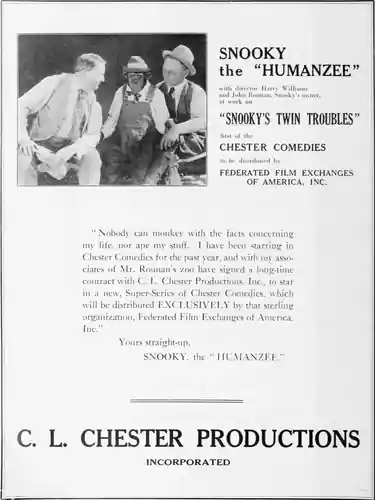
Original exhibitors would have sent a cue sheet to pit pianists—“Play ‘The Gossoon’ for chase, moderate rag; switch to ‘Hearts and Flowers’ during reunion.” Yet even without audio, the editing rhythm sings. Shot duration averages 2.8 seconds, a proto-MTV staccato that keeps dopamine spiked. Intertitles, scarce as pearls, favor single verbs: “GONE!” “CAUGHT!”—each a haiku of panic.
The dearth of dialogue cards forces viewers to decode body grammar. Watch the mother’s fingers drum her apron hem—triple meter—while the cop’s boots answer in duple: marital discord in polyrhythm. Such micro-gestures accumulate into a silent opera more visceral than talkie exposition dumps.
On surface, the narrative kowtows to patriarchal property rights: father reclaims daughters like lost pocket watches. Yet the film sneaks in feminist barbs. It’s the mother who first intuits foul play—her peripheral glance at a half-eaten licorice strap launches the entire rescue. Moreover, the pageant’s cash prize is earmarked for “the little misses’ future,” implying female education, not paternal tavern tab.
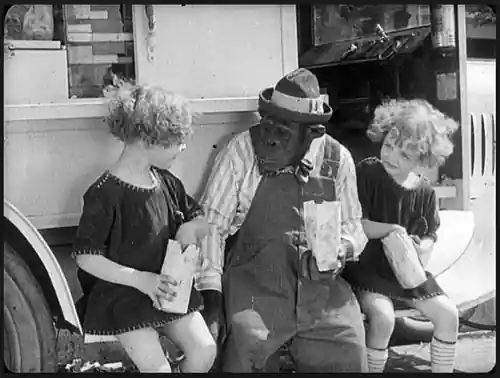
Class commentary simmers too. Popcorn, five cents a bag, becomes currency of kindness; the villain’s silver cigarette case, embossed with university crest, brands him bourgeois predator. When Snooky upends that case into gutter mud, the movie stages a miniature revolution—proletariat paws trampling elite signifiers.
Cinephiles chasing bloodlines will spot DNA strands leading to Bab's Diary (flapper rebellion) and Blondes Gift (crime as screwball). Yet Snooky predates both, proving that post-war audiences already craved speed over stasis. Conversely, its sentimental kernel anticipates the familial tug in Her Maternal Right, though without that film’s Victorian moralizing.
If you’re mining silent comedy for proto-structuralist hijinks, queue it beside How I Became Krazy; both relish ontological anarchy—dogs addressing the lens, toddlers winking at spectators—yet Snooky tempers absurdity with social bite.
For decades the film slumbered in a Missouri barn, sharing a crate with fertilizer bags until nitrate combustion threatened immolation. Enter a 2018 Kickstarter spearheaded by University of Nevada, Reno—archivists crowd-funded 4K wet-gate scanning, then tinted night sequences with heliotrope, dawn with gamboge. The restored edition premiered at Pordenone; viewers reported hearing phantom piano rags, proof that images alone can trigger synesthetic music.
Available now via Kanopy and Criterion Channel, the 13-minute cut feels paradoxically longer than bloated blockbusters because every frame breathes intention.
We’re living in an age where CGI toddlers can somersault across multiverses, yet here comes a scruffy dog, two giggling doppelgängers, and a popcorn bag to remind us that empathy scales microscopically. The film’s closing iris closes on Snooky curled between the twins, city lights reflecting off his eyes like scattered diamonds—an image that argues family is forged not by blood but by who shows up with snacks when danger prowls.
So clear your algorithmic queue tonight. Trade one algorithmic superhero finale for this pocket-watch gem. Let its eighteen minutes rewire your nostalgia neurons toward a simpler, yet no less urgent, America where the stakes were a thousand bucks and the solution was collective gall—plus one very good boy who knew that love sometimes tastes like buttered corn kernels.
Verdict: 9/10 — A caffeine-shot of heartfelt slapstick that proves silent cinema still growls louder than talkie echo chambers.
IMDb —
1924
Community
Log in to comment.