DbcultAccessing Vault...
Cult Review
Senior Film Conservator
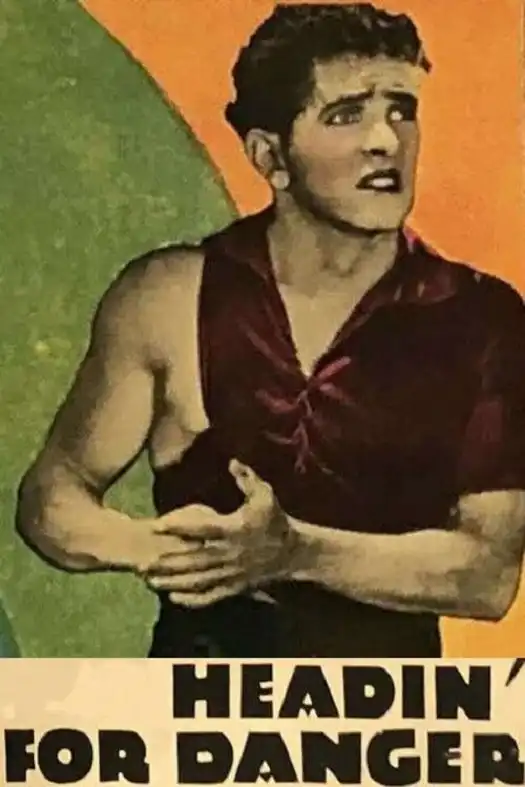
Look, if you’re not already deep into the peculiar, often dusty corners of early sound westerns, Headin’ for Danger probably isn’t going to be your cup of tea. It’s a brisk, cheap little flick from way back when, and honestly, it shows. But for those of us who get a real kick out of seeing how these things were thrown together on a shoestring budget, there are definite moments of interest. Anyone coming in expecting a grand, polished cinematic experience will likely find themselves bored senseless, or maybe just confused.
The premise is simple enough: Bob Steele plays the hero, doing his usual thing, trying to clear his name and help a rancher (Leonard Trainor) whose land is being eyed by some particularly greasy villains, led by Harry DeRoy. Jola Mendez is there as the rancher's daughter, mostly to look worried and occasionally get kidnapped. It's all very by-the-numbers, but sometimes that's part of the fun.
One thing you notice right away is the pacing. The whole thing moves at a frantic clip, then suddenly slams on the brakes for conversations that feel like they were written on the spot, or maybe just improvised. There’s a scene early on where Steele is talking to Trainor about the land dispute, and the camera just... stays there. For a long time. The silence in between their lines stretches, not in an artistic way, but more like someone forgot to yell "cut." It's almost charming in its awkwardness, but it does make you check the runtime.
Harry DeRoy, as the main heavy, has this habit of widening his eyes so much you can almost hear the director yelling "More menace!" from off-camera. It’s a bit much, especially in the close-ups. He’s clearly trying, but it borders on caricature. On the other hand, Bob Steele is, well, Bob Steele. He’s got that stoic, square-jawed thing down. He doesn’t really emote, but you believe he can throw a punch. His best moments are usually when he’s just riding, not talking.
The action sequences are a mixed bag. There’s a horse chase about halfway through that has some genuine energy. For a few minutes, the editing actually feels deliberate, cutting between the riders with a decent rhythm. But then there’s a brawl in a saloon that’s cut so fast you can barely tell who’s hitting who, or what’s supposed to be happening. It feels less like a fight and more like a montage of flailing limbs. You almost wonder if they were trying to hide the fact that no one was really connecting.
Visually, it's pretty standard B-western fare. Lots of dusty exteriors. But there's this one shot where Steele is riding across what looks like the exact same patch of desert for about 45 seconds, just to fill time, I guess. The shadows in that specific shot are all wrong, like they filmed it at high noon when the rest of the scene was clearly later in the day. It’s a tiny detail, but once you see it, you can’t unsee it. And the villain’s hat, bless Al Ferguson, looks a bit too pristine for a guy who’s supposedly out robbing and scheming in the wilderness. It just sits a little too high, too clean.
Jola Mendez, as the love interest, gets saddled with some truly clunky lines, especially when she’s trying to explain the ‘danger’ to Steele. It’s all very on-the-nose, like the script didn't trust the audience to pick up on anything subtle. Her big dramatic moments often feel a little flat, probably not her fault, but the dialogue just doesn't give her much to work with. There’s no real chemistry between her and Steele, either. They feel more like two people reading from separate cue cards.
Despite all its rough edges, there’s a surprisingly effective moment near the end. After the final showdown, there’s a quiet shot of Steele just looking out at the horizon. No dialogue, no dramatic music, just him and the vast, empty landscape. For a fleeting second, you feel the weariness, the solitude of the cowboy life. It’s a genuinely unexpected beat of quiet reflection in a film that mostly just wants to get to the next punch or gallop. It's a moment that feels almost accidental in its effectiveness, like they filmed it and then decided to keep it in.
Headin’ for Danger isn’t going to change your life, or even redefine the western genre. It’s a relic, a snapshot of early studio filmmaking trying to churn out content quickly and cheaply. But if you’ve got a soft spot for these kinds of films – the ones where the seams show and the ambition sometimes outstrips the budget – then you might find a strange, imperfect charm in its hurried pace and earnest performances. It’s certainly more interesting to watch than, say, The Cartoon Factory, but that’s not exactly a high bar.
You find yourself checking the runtime more than once, not out of boredom entirely, but out of a sort of fascinated disbelief at some of the choices made. Then something genuinely silly happens, like a horse suddenly deciding to stop mid-chase, or a henchman tripping over nothing, and you remember why you bother with these old things. It’s the quirks, the imperfections, that make them stick.
IMDb —
1928
Community
Log in to comment.