DbcultAccessing Vault...
Cult Review
Senior Film Conservator
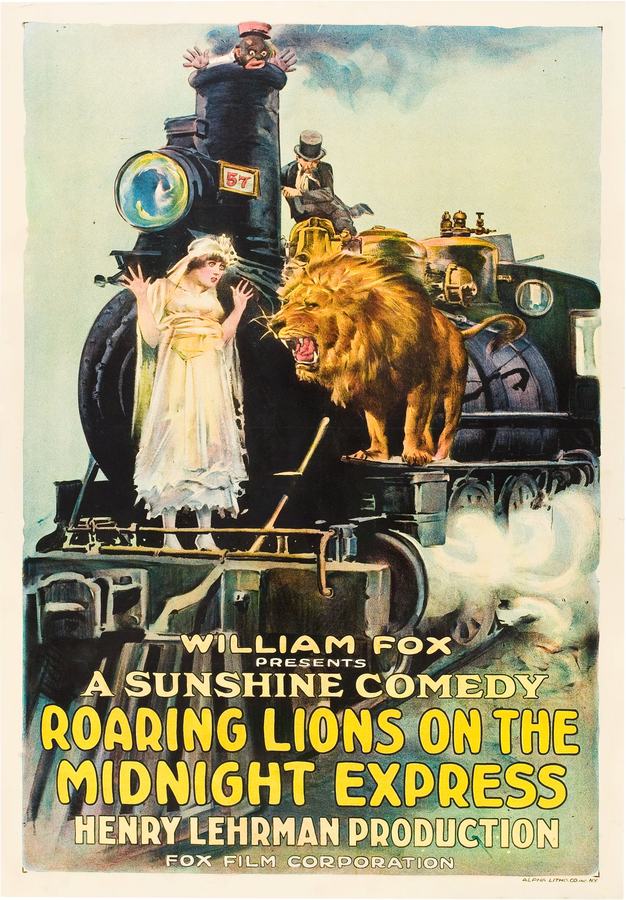
Stepping into the flickering glow of a silent film, particularly one as exuberantly titled as Roaring Lions on the Midnight Express, is akin to unearthing a forgotten treasure chest of pure, unadulterated cinematic joy. This particular gem, a veritable carnival of chaos and comedic brilliance, stands as a testament to the ingenuity and boundless imagination that defined the early era of filmmaking. It’s a pell-mell journey that, despite its lack of spoken dialogue, communicates volumes through exaggerated gestures, expressive visages, and a meticulously orchestrated series of escalating mishaps. The film, a whirlwind of physical comedy and delightful absurdity, invites its audience to suspend disbelief and simply revel in the spectacle of its meticulously crafted pandemonium. Its enduring charm lies not just in its humor, but in its ability to transport us to a simpler time when narrative propulsion was driven by visual wit and the universal language of laughter.
The premise, in its charming simplicity, sets the stage for grand-scale hilarity: a circus troupe, complete with its most formidable and unpredictable star attractions – a pride of lions – embarks on a cross-country train journey. This seemingly straightforward logistical endeavor quickly devolves into a masterclass in comedic escalation. The film deftly introduces us to the various players in this impending drama, from the perpetually exasperated train conductor, a figure of rigid adherence to schedule, to the bumbling, well-meaning but utterly inept animal handlers. The visual storytelling excels in establishing the precariousness of the situation long before the inevitable escape. We see the flimsy locks, the nervous glances exchanged between handlers, the subtle tremors of the train that hint at the fragility of their containment. This build-up is crucial; it allows the audience to anticipate the impending chaos, making its eventual eruption all the more satisfying.
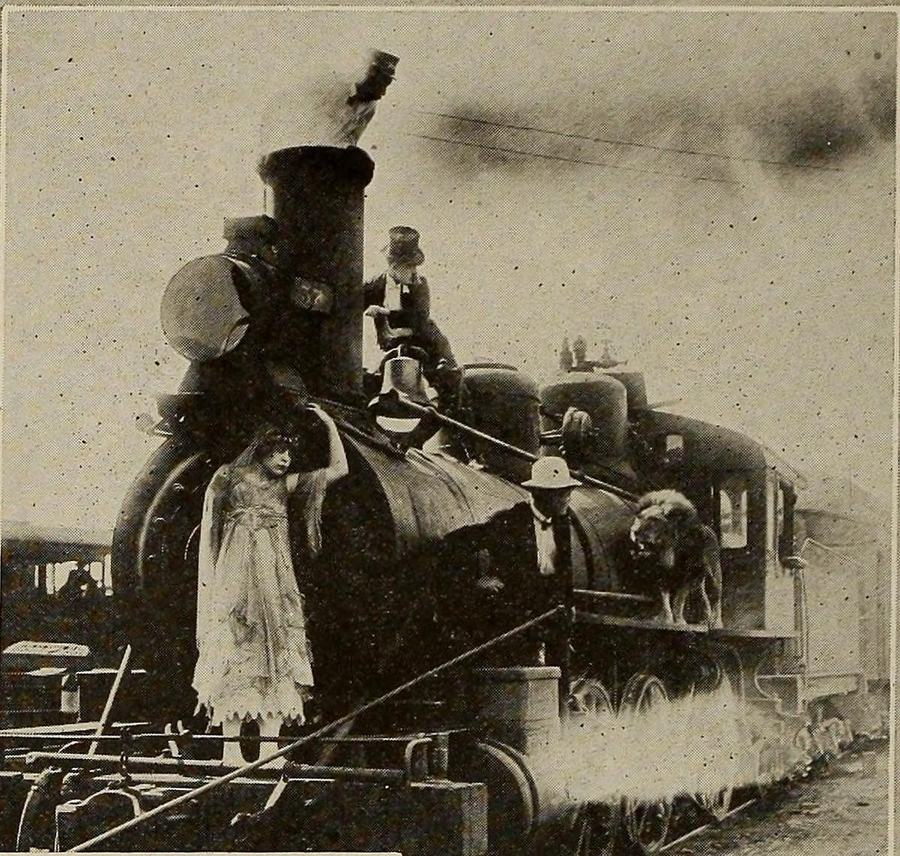
What truly elevates the narrative beyond mere slapstick is its intricate choreography of cause and effect. A seemingly innocuous event – perhaps a dropped sandwich, a sudden jolt, or even the mischievous flick of a lion’s tail – triggers a chain reaction that spirals into full-blown pandemonium. The escape of the lions is not a singular event, but a series of comical near-misses and miscommunications that snowball into a full-scale feline frenzy on board the speeding Midnight Express. The film revels in the absurdity of the situation, pitting human incompetence against animal instinct, all within the confined, rapidly moving space of a train. It’s a narrative structure that, while seemingly simple, demands immense precision in its execution, a testament to the filmmakers’ understanding of comedic timing and visual rhythm.
The success of Roaring Lions on the Midnight Express rests squarely on the shoulders of its remarkable ensemble cast, each performer a master of the expressive art required for silent cinema. Shannon Day, with her often wide-eyed innocence and impeccable comedic timing, provides a delightful anchor amidst the unfolding mayhem. Her reactions, a blend of genuine terror and bewildered amusement, are perfectly pitched, drawing the audience into her predicament. Billie Ritchie, known for his distinctive physicality, likely brings a robust, perhaps even slightly grotesque, humor to his role, creating a memorable character through exaggerated movement and facial contortions.
Hugh Fay and Dave Morris, stalwarts of the era, contribute their seasoned comedic prowess, likely embodying characters that are either comically inept or stoically oblivious, further enhancing the film's farcical tone. Charles Dudley and Mae Eccleston, often relied upon for their ability to convey character through subtle yet effective pantomime, add layers to the passenger list, transforming them from mere background figures into distinct, if fleeting, personalities. Monty Banks, with his agile physicality, would have been instrumental in the chase sequences, executing stunts and physical gags with precision and flair. His presence alone suggests a certain level of acrobatic comedy.
Lloyd Hamilton, a master of the 'sad clown' persona, might have infused his character with a touch of pathos, a bewildered everyman caught in an extraordinary situation. Frank J. Coleman and Jimmie Adams, known for their versatile supporting roles, would have seamlessly blended into the fabric of the film's chaotic world, providing essential reactions and furthering the plot through their interactions. And, of course, the inimitable Slim Summerville, with his gangly frame and endearing awkwardness, would have undoubtedly stolen scenes with his unique brand of physical comedy, perhaps playing a hapless bystander or an overzealous, yet utterly ineffective, hero. Jack Cooper rounds out this impressive roster, each member contributing to the film's kinetic energy and comedic texture. The collaborative effort of these performers, their synchronized reactions and individual quirks, transforms the simple premise into a vibrant, living spectacle, a testament to the power of non-verbal communication in storytelling.
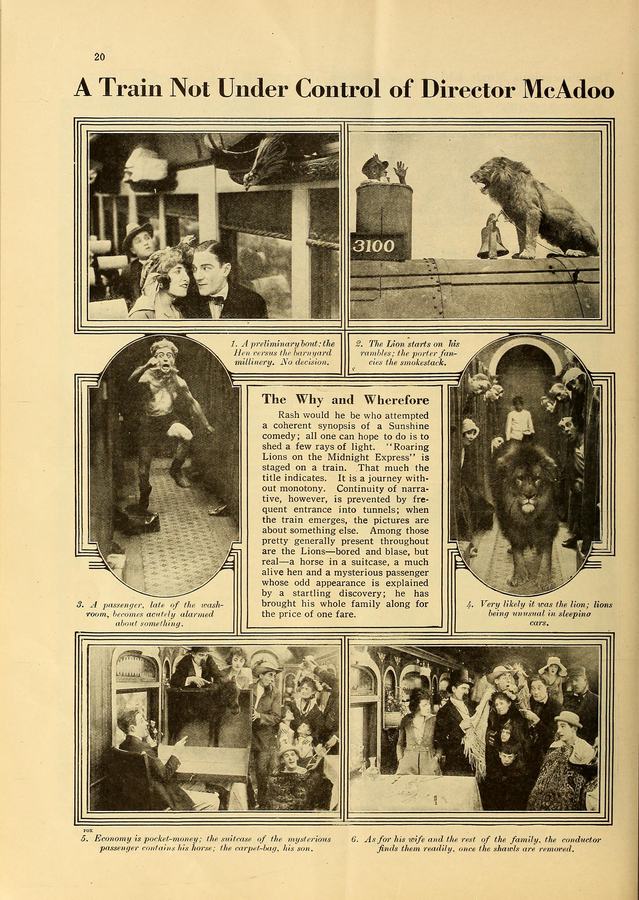
Beyond the performances, the film's directorial vision (even without named writers, the execution speaks volumes about the creative minds behind it) is paramount in orchestrating such intricate pandemonium. The pacing is relentless, a hallmark of effective silent comedy, ensuring that the audience is constantly engaged, moving from one ludicrous scenario to the next without a moment's respite. The use of intertitles is judicious, never bogging down the visual flow but rather enhancing it with pithy observations or crucial plot points. The camera work, while perhaps rudimentary by today's standards, is surprisingly dynamic, following the action with a keen eye for comedic angles and dramatic tension. Close-ups on the terrified faces of passengers or the mischievous glint in a lion's eye serve to heighten both the humor and the underlying sense of peril.
The physical stunts, undoubtedly performed with a blend of bravery and ingenuity, are a spectacle in themselves. Characters dangle precariously from carriage roofs, slide down luggage ramps, and narrowly escape the snapping jaws of the escaped felines. This commitment to practical effects and physical comedy is what gives silent films like Roaring Lions on the Midnight Express their tangible, visceral appeal. It’s a form of entertainment that requires a certain physicality from its performers and a willingness from its audience to be swept away by the sheer energy on screen.
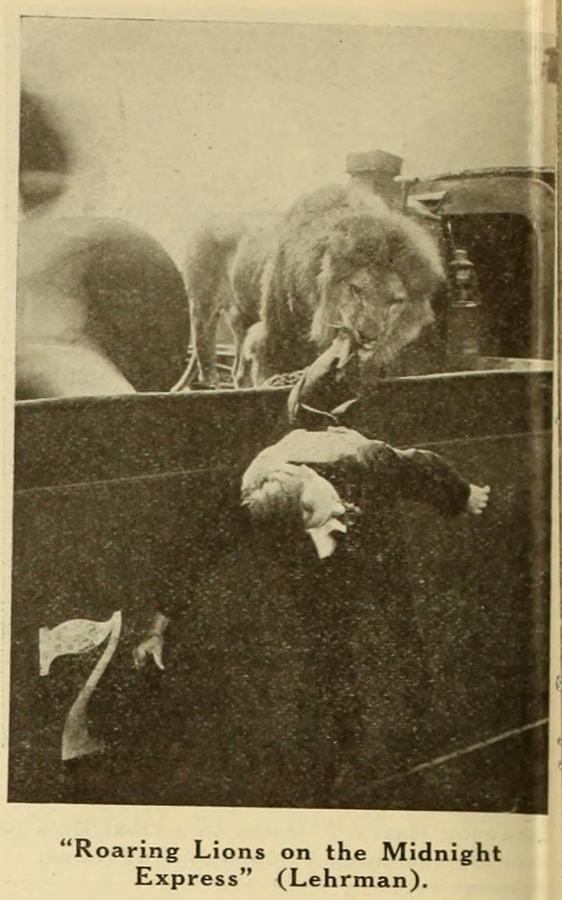
Comparing Roaring Lions on the Midnight Express to other works of its era provides valuable context for its unique strengths. While not a dramatic epic like Alexander den Store, which aimed for grand historical narrative, this film instead focuses its ambition on perfecting the art of the comedic chase. It shares a thematic kinship with other films that explore journeys gone awry or the chaos of unexpected events. One might draw a parallel to the escalating predicaments found in films like The Last of the Carnabys, where a series of unfortunate incidents drives the plot forward, albeit likely with a different tone. The sheer energy and frantic pace could also be seen as a precursor to the more intricate set-piece comedies that would follow, where the environment itself becomes an active participant in the humor.
In terms of sheer comedic ingenuity and the deployment of a chaotic scenario, Roaring Lions on the Midnight Express stands apart from more somber or romantic offerings of the time, such as The Pretty Sister of Jose. Its focus is purely on generating laughter through physical gags and the delightful absurdity of its central premise. While films like Bond of Fear might explore suspense through psychological tension, Roaring Lions generates a different kind of tension – the comedic kind, where the audience is on the edge of their seat, not from dread, but from anticipation of the next laugh. It's a joyful exploration of human folly when confronted with the untamed, a contrast to the more introspective or dramatic narratives found in works like The Devil at His Elbow or Az ördög.
The film's contribution to the evolution of silent comedy is undeniable. It showcases a refined understanding of visual humor, an ability to build suspense through escalating gags, and a cast capable of delivering nuanced performances without uttering a single word. It reminds us that storytelling, at its most fundamental, transcends language, relying instead on universal emotions and expertly crafted visual sequences. The sheer audacity of its concept – lions on a train – combined with its meticulous execution, solidifies its place as a significant, albeit perhaps under-celebrated, piece of early cinematic history. It's a film that, much like the relentless The Strong Way might portray a journey of determination, portrays a journey of delightful disarray, affirming the enduring appeal of well-executed comedic chaos.
In retrospect, Roaring Lions on the Midnight Express is more than just a historical artifact; it's a vibrant, living piece of entertainment that continues to elicit genuine laughter. Its themes of human fallibility, the unpredictability of nature, and the sheer absurdity of life's unexpected turns are timeless. The film serves as a magnificent example of how early filmmakers, with limited technology but boundless creativity, managed to captivate audiences and forge the very grammar of cinematic storytelling. It reminds us of the power of visual spectacle, the infectiousness of physical comedy, and the universal appeal of a good, old-fashioned chase sequence.
For enthusiasts of classic cinema, or even those new to the silent era, this film offers a delightful entry point into a world where expression reigned supreme. It’s a joyous romp that, despite its age, feels remarkably fresh and engaging. The artistry involved in orchestrating such a complex series of comedic events, without the aid of dialogue or sophisticated special effects, is truly commendable. It’s a testament to the skill of its cast and crew, who understood implicitly how to communicate emotion and narrative through gesture, movement, and the sheer force of their collective comedic will. The film’s legacy lies in its unpretentious pursuit of laughter, a goal it achieves with resounding success, leaving an indelible mark on the annals of comedic cinema. It stands as a vibrant, essential piece of the puzzle that is early Hollywood, demonstrating that sometimes, all you need are some lions, a train, and a whole lot of talented people to create a truly unforgettable cinematic experience. Its spirit echoes the adventurous and sometimes precarious journeys depicted in films like The Land Just Over Yonder, but with a decidedly more riotous and uproarious outcome.
IMDb —
1921
Community
Log in to comment.