DbcultAccessing Vault...
Cult Review
Senior Film Conservator
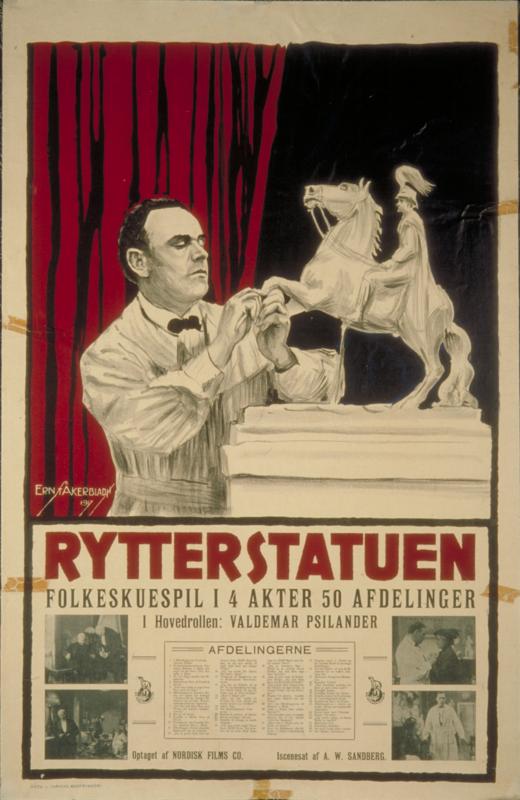
Stepping into the world of early 20th-century cinema, one often finds themselves navigating a landscape of grand gestures, melodramatic narratives, and a visual language that, while nascent, possessed an undeniable power to captivate. Sven Lange's 'Rytterstatuen' (The Equestrian Statue) stands as a monumental testament to this era, a film that, even without the benefit of spoken dialogue, articulates a profound human drama with astonishing clarity and emotional resonance. It is a work that transcends its historical context, offering a timeless exploration of artistic integrity, the complexities of love, and the insidious nature of societal manipulation. This isn't merely a film; it's a meticulously crafted allegory, a visual poem etched onto celluloid, reflecting the societal anxieties and romantic ideals prevalent at the time.

At the heart of 'Rytterstatuen' lies Erik, portrayed with poignant vulnerability and intense conviction by the legendary Valdemar Psilander. Psilander, a titan of the silent screen, imbues Erik with a palpable sense of artistic fervor, a man whose very existence is intertwined with the clay and bronze he sculpts. His performance here is a masterclass in non-verbal communication, his eyes conveying the depth of his passion, his posture the burden of his aspirations. We witness Erik's arduous journey, his hands shaping not just a national hero's likeness, but also the very contours of his own destiny. The film masterfully juxtaposes the grand scale of his artistic undertaking with the intimate, fragile nature of his personal life, particularly his ardent devotion to Ingrid. This struggle between professional ambition and personal happiness is a recurring motif in cinema, but Psilander elevates it beyond mere trope, making Erik's internal conflict resonate with heartbreaking authenticity. One might draw parallels to the tragic figures Psilander often embodied, reminiscent of the doomed romantic in Unsühnbar, where love and circumstance often conspired against him, or the earnest yet beleaguered protagonist in The Clouded Name, battling the shadows of reputation. His expressive face becomes a canvas for the soul's turbulence, a hallmark of his enduring appeal.

Else Frölich, as Ingrid, delivers a performance of nuanced fragility and burgeoning strength. Ingrid is not a passive damsel; she is a woman caught between the raw, untamed passion of an artist and the alluring stability offered by a man of means. Her internal struggle is rendered with compelling clarity, from the initial blush of youthful love to the gnawing doubts sown by external influences. Frölich adeptly conveys the societal pressures bearing down on Ingrid, particularly through the figure of her mother (Augusta Blad), whose pragmatic concerns for her daughter's future are exploited by the manipulative Mr. Holm. This maternal influence, though well-intentioned, becomes a conduit for Holm's machinations, illustrating how even familial love can inadvertently contribute to personal heartbreak. Ingrid's journey reflects a common predicament for women in early 20th-century narratives, where economic security often vied with romantic love. Films like The Bride's Silence often explored similar themes of women's agency, or lack thereof, in matrimonial choices, though 'Rytterstatuen' ultimately grants Ingrid a more empowering, albeit painful, resolution.
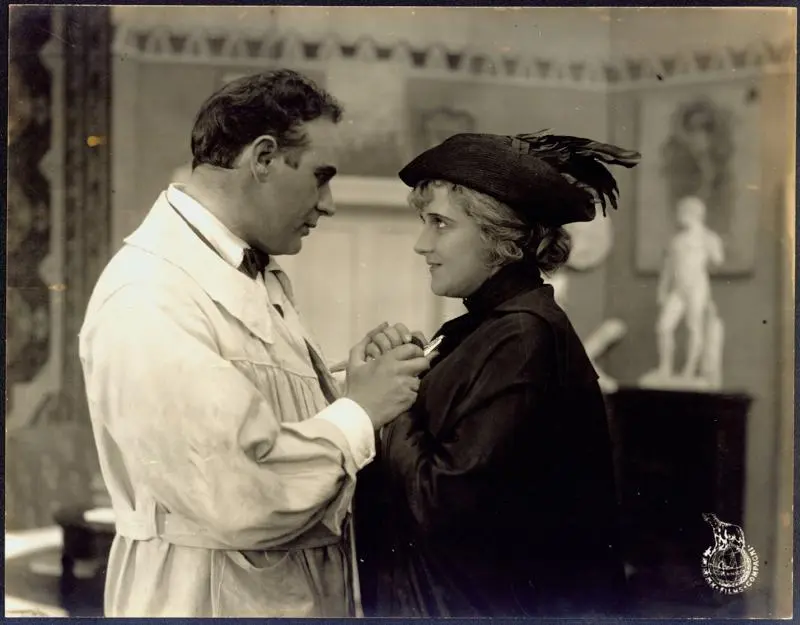
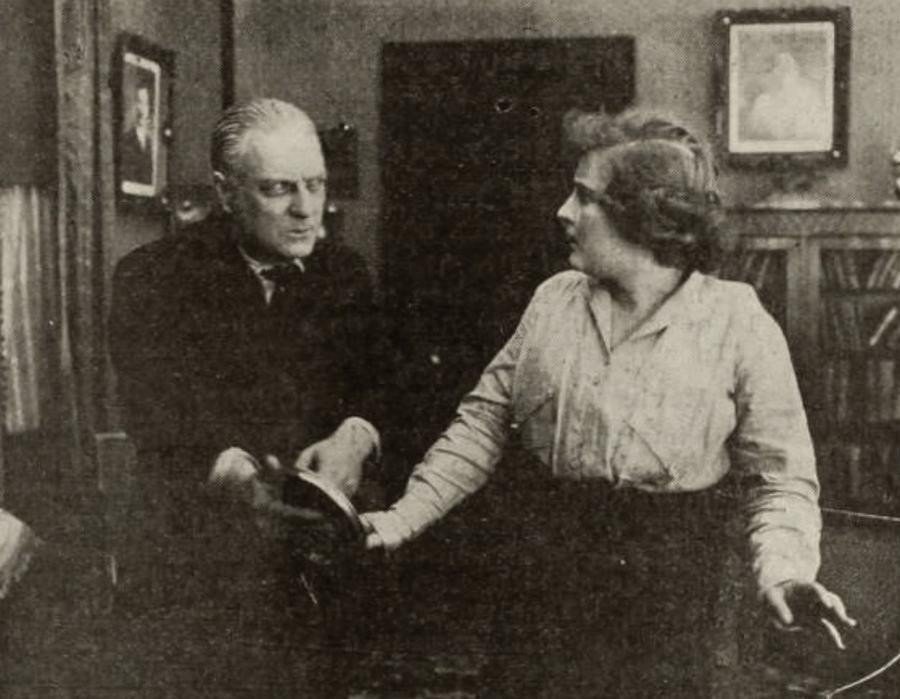
Philip Bech's portrayal of Mr. Holm is a masterclass in understated villainy. Holm is not a mustache-twirling caricature; he is a man whose power emanates from his wealth and his chillingly rational approach to acquiring what he desires. Bech captures the subtle menace of a man who operates within the bounds of social propriety while orchestrating ruin behind a veneer of benevolence. His calculated charm and his ability to sow discord through seemingly innocuous actions make him a far more insidious antagonist than any overt villain. Holm represents the corrupting influence of unchecked power and the ease with which material wealth can be leveraged to manipulate human emotions. His character arc provides a stark contrast to Erik's artistic integrity, highlighting the film's thematic exploration of different forms of value – the ephemeral versus the enduring. The subtle psychological manipulation seen here is a recurring theme in early cinema, often explored in films like The Hand That Rocks the Cradle, where hidden motives drive the plot, or the social climbers depicted in Brass Buttons, where status and wealth dictate the moral compass.

Sven Lange's screenplay for 'Rytterstatuen' is a marvel of concise yet expansive storytelling. Despite the limitations of the silent medium, Lange constructs a narrative rich in psychological depth and symbolic resonance. The equestrian statue itself is not merely a plot device; it is a profound symbol that evolves throughout the film. Initially representing national pride and Erik's artistic ambition, it gradually transmutes into a silent witness to personal tragedy, a monument to broken promises, and ultimately, a testament to enduring truth. Its creation parallels the unraveling and eventual re-stitching of Erik and Ingrid's relationship. The grand unveiling, set against the backdrop of Ingrid's forced wedding, orchestrates a powerful dramatic irony, elevating the film's climax to an almost operatic level. Lange's ability to weave such complex emotional and thematic threads into a compelling visual narrative speaks volumes about his craft. The meticulous pacing, the careful development of character motivations, and the ultimate, cathartic resolution underscore a masterful command of dramatic structure. This narrative sophistication positions 'Rytterstatuen' alongside other early cinematic achievements that explored the human condition with remarkable insight, perhaps echoing the moral dilemmas found in That Sort or the intricate character studies in Virtuous Men.

The visual aesthetics of 'Rytterstatuen' are strikingly sophisticated for its time. The direction, while uncredited beyond Lange's writing, demonstrates a keen understanding of mise-en-scène, utilizing sets, props, and actor positioning to convey meaning and emotion. The sculptor's studio, with its chaotic yet creative energy, contrasts sharply with the opulent, perhaps sterile, interiors of Holm's mansion, visually reinforcing the thematic clash between art and commerce. The outdoor scenes, particularly the grand square where the statue is unveiled, provide a sense of scale and public spectacle, reminiscent of the communal gatherings depicted in films like The Colosseum in Films, albeit on a different historical canvas. The cinematography, though limited by the technology of the era, captures the actors' expressions with remarkable clarity, allowing the audience to fully immerse themselves in the emotional landscape of the story. The subtle use of lighting to highlight dramatic moments or to cast characters in symbolic shadow further enhances the film's visual storytelling prowess. Every frame feels deliberate, contributing to the overarching narrative and emotional impact. This visual eloquence, a hallmark of Nordisk Film's output during this period, allowed for a deeper connection with audiences, proving that silent cinema was far from simplistic.
While Psilander, Frölich, and Bech anchor the film with their powerful performances, the supporting cast provides crucial texture and depth. Frederik Jacobsen and Augusta Blad, as Ingrid's parents, embody the societal pressures and pragmatic concerns that often dictated marital alliances in that era. Blad, in particular, conveys a mother's well-meaning but ultimately misguided attempts to secure her daughter's future, becoming an unwitting pawn in Holm's game. Gunnar Sommerfeldt's presence, though perhaps in a smaller role, contributes to the overall authenticity of the film's world. The ensemble collectively creates a believable social fabric against which the central drama unfolds, their reactions and interactions serving to amplify the stakes for the main characters. This nuanced approach to supporting roles ensures that the film never feels like a mere vehicle for its stars but rather a cohesive narrative populated by credible individuals. The intricate web of relationships, where each character's actions ripple through the lives of others, recalls the interconnectedness explored in The Closing Net, where individual choices have far-reaching social consequences.
'Rytterstatuen' delves deeply into the eternal struggle between truth and deception. Holm's calculated lies and manipulations are contrasted with Erik's unwavering honesty, both in his art and his affections. The delayed letter, a classic dramatic device, serves as the ultimate arbiter of truth, shattering the illusions meticulously constructed by Holm. This moment of revelation is not just a plot twist; it's a thematic pivot, emphasizing the enduring power of sincerity and genuine emotion. The film posits that while material wealth and social standing can temporarily obscure truth, they cannot ultimately extinguish it. Ingrid's eventual decision to reject Holm, despite the societal implications, is a powerful act of self-redemption, a reclamation of her agency and her heart. It's a narrative arc that resonates with the moral clarity often sought in early cinema, where good ultimately triumphs, even if the path to victory is paved with heartache. This exploration of moral fortitude in the face of adversity is a thematic cousin to films like Children of Banishment, where characters often face profound ethical dilemmas and strive for a righteous path despite immense personal cost. The idea of hidden truths coming to light is also central to The Eyes of the World, where perception is often challenged by reality.
As a product of Nordisk Film, a studio that pioneered many cinematic techniques and storytelling conventions, 'Rytterstatuen' holds a significant place in film history. It exemplifies the studio's commitment to producing high-quality dramas with strong narrative arcs and compelling performances. The film's technical prowess, from its set design to its direction of actors, showcases the burgeoning artistry of the silent era. Its enduring appeal lies not just in its historical significance but in its universal themes. The struggle of the artist, the pursuit of genuine love, the corrupting influence of power, and the ultimate triumph of truth are all elements that continue to resonate with contemporary audiences. It serves as a powerful reminder that the foundations of cinematic storytelling were laid with sophisticated narratives and deeply felt emotions, long before the advent of sound or color. To watch 'Rytterstatuen' today is to engage with a piece of living history, a vibrant testament to the ingenuity and artistry of early filmmakers. It stands proudly alongside other foundational works, demonstrating that even in its nascent form, cinema possessed an unparalleled capacity to explore the human condition with profound grace and enduring impact. The film, like Erik's statue, is a monument: not of bronze, but of celluloid, preserving a moment of cultural and artistic brilliance for generations to come. It’s a compelling argument for the preservation and study of early cinema, illustrating how these foundational works continue to inform and inspire, much like a timeless piece of art that speaks across centuries. The subtle nuances of character development and the sophisticated interplay of light and shadow make it a compelling watch, even for those unaccustomed to the silent film format. It is a work that deserves its rightful place in the pantheon of cinematic classics, a quiet masterpiece that continues to speak volumes about the human heart and its eternal quest for authenticity and connection. It’s a profound exploration of what it means to create, to love, and to live with integrity, echoing the dramatic stakes found in The Next in Command where moral choices define destinies, or the symbolic power of setting in Das verwunschene Schloß, where environments reflect inner turmoil.
In conclusion, 'Rytterstatuen' is a film that demands to be seen and appreciated for its artistic merit, its compelling narrative, and its historical significance. It is a powerful example of how silent cinema, through the masterful performances of its cast and the astute vision of its creators, could convey complex emotions and profound ideas without uttering a single word. A truly unforgettable cinematic experience.
IMDb —
1918
Community
Log in to comment.