DbcultAccessing Vault...
Cult Review
Senior Film Conservator
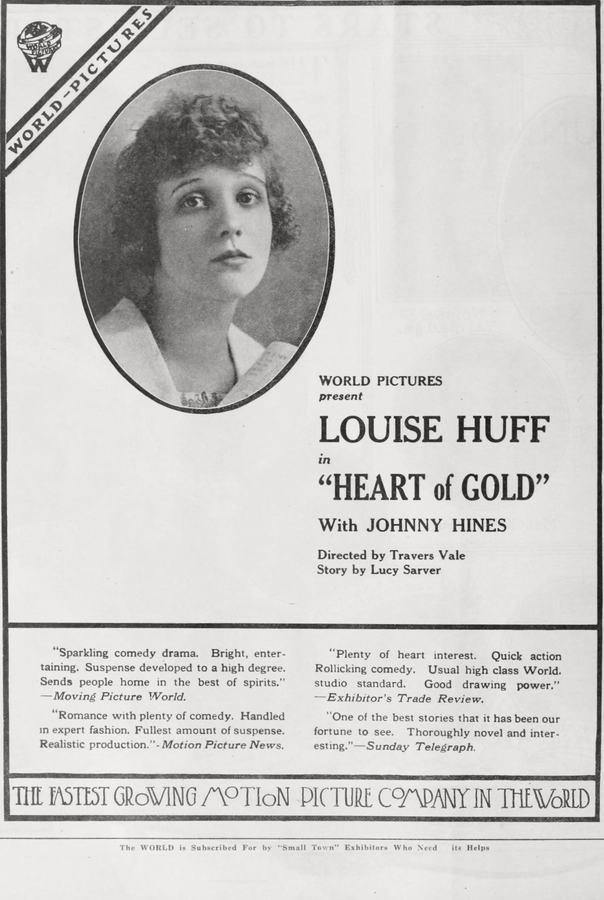
The year 1919 stands as a pivotal monolith in the history of American cinema, a period where the medium transitioned from flickering curiosity to a sophisticated apparatus of social commentary. Within this burgeoning landscape, Heart of Gold emerges not merely as a melodrama of the 'shop girl' variety, but as a poignant exploration of the commodification of the female intellect. Directed with a keen eye for the textures of urban desperation and the shimmering allure of success, the film serves as a canvas for Louise Huff to deliver a performance of remarkable vulnerability and steel.
The narrative architecture of Heart of Gold is built upon the foundational trope of the provincial ingenue entering the metropolitan maw. Annie Wilkes, portrayed by Huff with a luminosity that recalls the best work in Woman, is catalyzed by the ultimate domestic tragedy: the death of her mother. This loss functions as a severance from the safety of the past, propelling her toward the vertical ambitions of New York City. Unlike the pastoral escapism found in The Island of Regeneration, Annie’s journey is one of immediate immersion into the industrial grind.
New York is presented here as a character in its own right—a sprawling, indifferent entity that rewards the ruthless and devours the sincere. The dressmaking establishment of Madame Estelle is the microcosm of this world. It is a place where beauty is manufactured through the exploitation of the invisible. The film’s early scenes masterfully juxtapose the delicate lace and fine fabrics with the harsh, shadows of the workroom, echoing the thematic dissonance found in The Wicked Darling.
The central conflict ignites with the announcement of a design contest aimed at creating a standardized outfit for American women during the war. This plot point is a fascinating historical artifact, reflecting the real-world conservation efforts of the era. Annie’s design, the eponymous 'Heart of Gold', is more than a dress; it is a symbol of the democratization of fashion. It represents a shift away from the opulent excesses of the Gilded Age toward a functional, yet elegant, wartime aesthetic.
When Annie submits her design on the shop’s letterhead, she unwittingly signs away her agency. The subsequent theft of her intellectual property by Madame Estelle is a chilling depiction of institutional gaslighting. The film critiques a system where the laborer’s output is automatically subsumed by the employer's brand, a theme that resonates even more loudly in our contemporary gig economy than it did in 1919. The $5,000 prize—a staggering sum for the time—becomes the catalyst for a betrayal that extends beyond simple greed into the realm of professional erasure.
"In the silent flicker of the screen, the 'Heart of Gold' becomes a metaphor for the untarnished soul of the creator, standing in stark contrast to the tarnished silver of the exploiter."
The introduction of the legal element elevates Heart of Gold from a simple workplace drama to a complex social thriller. Mike Monahan, played with a grounded sincerity by Johnny Hines, acts as the emotional anchor for Annie. However, his attempt to seek justice through the proper channels leads only to further catastrophe. The lawyer he hires—a figure of sycophantic malice—represents the corruption of the professional class. By stealing the original drawings and partnering with Estelle, he completes the enclosure of Annie’s world.
The sequence of Annie’s incarceration is perhaps the film’s most harrowing segment. Going to jail under an assumed name to protect her dignity, she becomes a cipher, a woman erased by the very society she sought to clothe. This narrative beat mirrors the existential dread found in The World, the Flesh and the Devil. The cinematography here shifts, utilizing more claustrophobic framing and starker lighting to emphasize her isolation. Unlike the slapstick energy of Keystone Comedies, the humor is absent, replaced by a somber reflection on the precarity of the working woman's status.
Resolution in Heart of Gold does not come through the court of law, which has already proven itself to be a puppet of the powerful, but through the court of public opinion. Mike’s utilization of the newspapers to prove Annie’s case is a fascinating nod to the burgeoning power of investigative journalism. In an era before television or the internet, the daily broadsheet was the only weapon capable of piercing the veil of corporate deception. This thematic focus on the press as a redemptive force can also be seen in The Fight.
The climax is a whirlwind of vindication. The juxtaposition of Annie’s release from the shadows of the prison with the ubiquitous presence of her design on the streets of New York is masterfully handled. Her 'Heart of Gold' is everywhere, a silent testament to her genius that cannot be silenced by Estelle’s lies. The final reunion with Mike is not merely a romantic trope, but a restoration of her identity. She is no longer the anonymous inmate; she is the celebrated designer, the woman who clothed a nation in its time of need.
The screenwriting by Lucy Sarver and Clara Beranger deserves significant praise. They avoid the easy sentimentality that plagued many films of the late 1910s, such as Parentage or The Busy Inn. Instead, they craft a protagonist with genuine agency, whose downfall is the result of her own trust and whose rise is the result of her own talent. The dialogue (via intertitles) is sharp and devoid of the flowery excess common to the period.
Visually, the film excels in its depiction of the fashion world. The costume design—crucial for a film centered on a dress—is impeccable. One can see the influence of the European avant-garde creeping into the American frame, a stark contrast to the more traditional aesthetics of True Blue or The Honorable Algy. The use of light to differentiate between the sterile, cold offices of the lawyer and the warm, albeit chaotic, energy of the newspaper room helps guide the audience’s emotional response with subtle precision.
When comparing Heart of Gold to other works of the era, such as Sold, one notices a distinct lack of cynicism in the ending. While Sold explores the darker side of artistic compromise, Heart of Gold argues that true talent is an irrepressible force. It shares more DNA with the aspirational spirit of Less Than Kin, yet maintains a groundedness that prevents it from becoming a mere fairy tale.
The film also touches upon the 'fallen woman' narrative, but subverts it. Annie’s time in jail and her use of an assumed name could have led to a tragic ending in a film like A Modern Magdalen. Here, however, the narrative refuses to punish the heroine for the crimes of others. It is a refreshing departure from the moralizing tendencies of the time, providing a blueprint for the more liberated female characters of the 1920s.
In the grand tapestry of silent cinema, Heart of Gold is a thread of pure silk. It manages to be both a product of its time—saturated with the fervor of WWI-era patriotism—and a timeless critique of the struggle for creative recognition. Louise Huff’s performance is a masterclass in silent expression, capturing the transition from grief-stricken daughter to betrayed employee to triumphant icon with effortless grace. While it may not have the cosmic scale of A Trip to Mars, its emotional stakes are infinitely more relatable.
For those interested in the evolution of the female protagonist or the history of the fashion industry on film, Heart of Gold is essential viewing. It reminds us that while designs can be stolen and names can be hidden, the 'heart' of the creator—that innate spark of original genius—remains an untouchable currency. It is a film that rewards the viewer with its sincerity, its visual flair, and its ultimate belief in the power of truth. In a world of Madame Estelles, we must always look for the Annie Wilkes who are brave enough to dream in gold.
Critic's Rating: 8.7/10
A transcendent piece of silent era storytelling that combines social critique with a deeply personal journey of artistic vindication. Louise Huff is a revelation.
IMDb —
1935
Community
Log in to comment.