DbcultAccessing Vault...
Cult Review
Senior Film Conservator
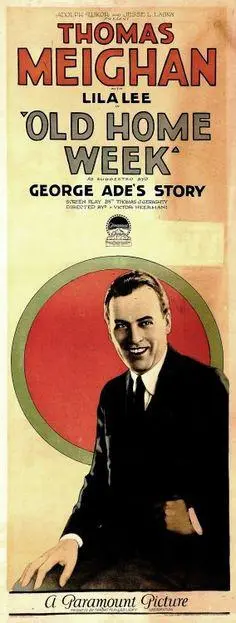
Is “Old Home Week” a film worth watching in the modern era? Short answer: yes, but with a specific lens. This silent-era comedy, starring the immensely charismatic Thomas Meighan, offers a fascinating glimpse into early 20th-century storytelling and humor, even if its pacing occasionally feels quaint by today's standards. It’s a film that speaks to the enduring appeal of a good con and the timeless satisfaction of seeing the clever underdog triumph.
This film is ideally suited for cinephiles, historians of early American cinema, and anyone with an appreciation for silent comedies driven by character and clever plotting. It is decidedly not for those seeking fast-paced action, complex psychological dramas, or films with modern sensibilities regarding moral ambiguity.
“Old Home Week” works because it masterfully blends a classic comedic premise — the charming rogue outsmarting genuine villains — with a heartfelt, if somewhat simplistic, romantic subplot. Its strength lies in its unpretentious delivery and the sheer magnetism of its lead.
This film fails because, like many productions of its era, it occasionally sacrifices nuanced character development for broad comedic strokes and relies on a somewhat predictable narrative arc that modern audiences might find a tad too straightforward. The stakes, while clear, rarely feel truly perilous.
You should watch it if you're curious about the foundations of cinematic comedy, enjoy films where cleverness trumps brute force, and appreciate the unique artistry of silent film acting, particularly the kind exemplified by a star like Thomas Meighan.
At its heart, “Old Home Week” is a story about reinvention and the power of perception. We meet Tom Clark (Thomas Meighan), a man whose current circumstances as a co-owner of a struggling gas station are far from glamorous. His decision to return to his hometown for the eponymous ‘Old Home Week’ isn't merely nostalgic; it's an opportunity, a blank slate upon which he intends to write a far grander narrative for himself. He arrives not as Tom Clark, the humble mechanic, but as the esteemed millionaire president of the 'Amalgamated Oil Co.'
This initial deception sets the stage for a series of increasingly elaborate lies and misunderstandings. The town, eager to celebrate one of its own who has seemingly achieved greatness, embraces him wholeheartedly. This immediate acceptance, almost bordering on veneration, is a crucial element that allows Tom's charade to flourish. It speaks to a communal desire for local success stories, a reflection of small-town pride that, even today, can sometimes cloud judgment.
His elevated status quickly thrusts him into a position of authority regarding a local oil well project. This project, however, is the brainchild of Coleman and Barton, a pair of archetypal cinematic swindlers – all slick smiles and empty promises. Their 'oil well' is, of course, a complete fabrication, designed to fleece the unsuspecting townspeople. Tom, initially an unwitting pawn, soon uncovers their fraudulent scheme. It’s at this juncture that the film truly ignites, transforming Tom from a simple deceiver into a reluctant hero, albeit one who must continue his own deception to expose a greater one.
His solution is audacious: secretly connecting the fake well to the town's reservoir. This act is the film's central comedic and narrative stroke of genius. It’s a moment that exemplifies the kind of clever, almost childlike ingenuity that often defines silent film protagonists. The tension mounts when a telegram from Tom's genuine partner, threatening to expose his true identity, is intercepted. The threat of his entire charade collapsing is palpable, yet the film never lets the audience doubt Tom's ability to wriggle free.
The climax, a staged gusher, is a masterclass in silent film spectacle. It’s a moment of pure theatricality, designed to awe and deceive, and it works beautifully within the film’s established tone. Tom’s ability to sell the now-compromised, water-filled well back to the original swindlers, profiting from their greed, is a satisfying resolution. The townspeople's subsequent realization that Tom, despite his initial lies, acted in their best interests, provides a neat, if somewhat morally convenient, wrap-up. His reward – the embrace of his sweetheart – is the classic Hollywood ending, tying a neat bow on the charmingly convoluted plot.
Thomas Meighan, a considerable star of the silent era, is undoubtedly the gravitational center of “Old Home Week.” His performance as Tom Clark is a masterclass in silent film acting, relying heavily on expressive facial gestures, confident body language, and an inherent, almost effortless charm. Meighan doesn’t just play Tom; he embodies the spirit of a lovable rogue who means well, even when his methods are questionable.
Consider the scene where Tom first addresses the townspeople, posing as the millionaire. Meighan’s posture is upright, his gestures expansive, conveying a sense of authority and confidence that is entirely manufactured. Yet, there’s a flicker in his eyes, a subtle tension in his smile, that hints at the underlying anxiety of his deception. It’s this delicate balance between outward bravado and internal apprehension that makes his performance so compelling and human.
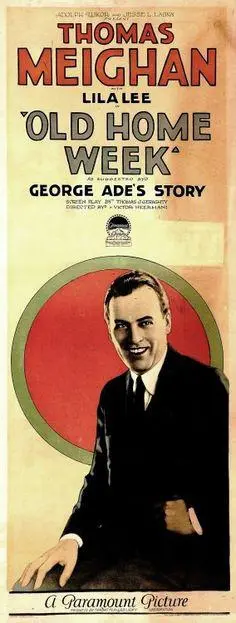
His interactions with Lila Lee, who plays his sweetheart, are equally engaging. Their romance, while not deeply explored, benefits immensely from Meighan’s ability to convey genuine affection and longing through his expressions. He doesn't need dialogue to communicate a connection; a stolen glance or a reassuring hand gesture speaks volumes. This understated romantic chemistry provides a grounding force amidst the comedic chaos of the con.
Meighan’s charm, while undeniable, occasionally feels almost too convenient for the plot. His character slides into and out of difficult situations with a grace that borders on the miraculous, relying perhaps a little too heavily on his inherent likeability. However, this is less a flaw in Meighan’s acting and more a characteristic of the era's storytelling, where star power often dictated the narrative's trajectory. His performance is a prime example of why he was such a beloved figure, drawing audiences in with his relatable everyman appeal, even when playing a millionaire imposter.
“Meighan’s portrayal of Tom Clark is a testament to the power of silent film acting, where a glance or a gesture can convey an entire inner monologue, captivating audiences without a single spoken word.”
Directed by Victor Schertzinger, “Old Home Week” is a competently crafted film that utilizes the visual language of the silent era effectively. Schertzinger, known for his musical background and later for directing numerous musical films, demonstrates a clear understanding of comedic timing and narrative progression through visual cues.
The cinematography, while not groundbreaking by today's standards, is functional and clear. It serves the story, allowing the audience to follow the intricate details of Tom’s deception and the swindlers’ machinations. There are no overly artistic flourishes or experimental camera angles; instead, the focus is on clarity and the efficient conveyance of plot points. This directness is a strength, ensuring the audience remains engaged with the unfolding comedy rather than being distracted by visual theatrics.
The film's sets and costumes, though simple, effectively establish the small-town atmosphere and the contrast between Tom's humble origins and his fabricated millionaire persona. The gas station, the town square, and the interior of the well site all feel authentic to the period, grounding the otherwise fantastical plot in a believable reality. The visual contrast between Tom’s initial plain attire and his later, more refined wardrobe as the 'oil magnate' is a subtle but effective way to visually communicate his changed status.
Schertzinger’s direction shines in the comedic sequences, particularly in the build-up to the fake gusher. The tension, the anticipation, and the eventual payoff are all expertly handled through editing and the reactions of the characters. While it may not possess the visual poetry of a Murnau or the innovative dynamism of a Griffith, Schertzinger's approach is perfectly suited to the film’s lighthearted, character-driven narrative. It’s a film that prioritizes storytelling and performance over stylistic excess, a common and often effective approach in 1920s Hollywood, as seen in other contemporary works like The Conspiracy.
The pacing of “Old Home Week” is characteristic of its era – deliberate, allowing scenes to unfold and emotions to register without the rapid-fire cuts common in modern cinema. This slower pace, while potentially challenging for contemporary viewers accustomed to quicker narratives, allows for a greater appreciation of the actors' performances and the subtle nuances of the comedic setups.
The film builds its comedic tension gradually. The initial setup of Tom's lie, the introduction of the swindlers, and the subsequent discovery of their fraud are all given ample screen time. This methodical approach ensures that when the payoffs arrive, such as Tom’s ingenious reservoir connection or the grand spectacle of the fake gusher, they feel earned and genuinely amusing.
The tone is consistently lighthearted and optimistic, even when Tom faces potential exposure. There's an inherent belief in the film’s world that things will ultimately work out for the good-hearted protagonist. This unwavering optimism is a hallmark of many silent comedies, providing a comforting escapism for audiences of the time. The film never delves into genuine peril or dark drama, preferring to keep its comedic spirit intact throughout.
One could argue that this optimistic tone, while charming, occasionally prevents the film from exploring the deeper implications of Tom’s deception. The moral ambiguity of his actions – lying to an entire town, even for a 'good' cause – is largely brushed aside in favor of a clear-cut hero narrative. However, to critique a 1925 film for not engaging in modern moral complexities would be anachronistic; its goal was entertainment, not ethical debate. In its own context, the film excels at maintaining a cheerful, engaging atmosphere.
Yes, “Old Home Week” is certainly worth watching today, especially for those interested in the history of cinema. It’s a charming, well-acted silent comedy that offers genuine entertainment. It provides valuable insight into the comedic sensibilities and narrative structures prevalent in the 1920s. While it demands a certain patience from modern viewers, its clever plot and charismatic lead make it a rewarding experience.
“Old Home Week” is a charming, if not revolutionary, piece of silent cinema. It stands as a testament to the enduring appeal of a well-crafted con story, elevated significantly by the star power and comedic timing of Thomas Meighan. While it certainly operates within the conventions of its time, its central premise and the sheer ingenuity of its protagonist remain genuinely entertaining. It's a delightful romp. But it’s also a product of its time, requiring a viewer to adjust their expectations for pacing and narrative depth. For those willing to make that adjustment, it offers a rewarding and often amusing journey back to an earlier, simpler form of cinematic storytelling. It reminds us that sometimes, the most effective hero is simply the one who can outsmart the real villains, even if he has to bend a few truths along the way. It's a film that deserves to be rediscovered, not just for its historical value, but for its enduring, uncomplicated joy. Go into it with an open mind, and you might just find yourself charmed by Tom Clark's audacious return to glory.
IMDb 7.7
1936
Community
Log in to comment.