DbcultAccessing Vault...
7/10
Senior Film Conservator
A definitive 7/10 rating for a film that redefined the boundaries of cult cinema. Buster's Frame Up remains a cornerstone of transgressive art.
Short answer: only if you are a film historian or a fan of early comic strip adaptations. For the general viewer, the pacing is too deliberate and the gags too dated to provide modern entertainment value.
This film is for silent era completists who want to see the roots of the 'mischievous kid' trope. It is NOT for anyone looking for the sophisticated visual storytelling of late silent-era masterpieces.
Buster's Frame Up is worth watching primarily as a historical artifact rather than a piece of living entertainment. It provides a window into how early filmmakers struggled to translate the static, panel-based humor of comic strips into a moving medium. While it lacks the polish of later 1920s comedies, it possesses a raw, experimental energy that is academically fascinating.
1) This film works because Pal the Wonder Dog provides a grounding, expressive center that the human actors lack.
2) This film fails because the direction remains too tethered to the static nature of the original comic strips.
3) You should watch it if you want to see the literal birth of the 'mischievous kid' trope.
Richard F. Outcault is a name that resonates through the halls of comic history, but his transition to the screen via Buster's Frame Up is a mixed bag. On the page, Buster Brown was a revolution of color and consumerism. On the screen, especially in this short, that vibrancy is lost in the monochromatic limitations of the time. However, what remains is the spirit of the 'bad boy' who isn't actually bad—just misunderstood or framed.
The film attempts to replicate the narrative structure of a Sunday strip. Each scene feels like a distinct panel. While this helps with clarity, it hurts the film's flow. Unlike the more fluid movement found in The Barnstormers, Buster's Frame Up feels anchored to the floor. The camera rarely moves, forcing the actors to do all the work within a very tight, theatrical frame.
One specific example of this 'panel-itis' occurs during the early kitchen sequence. The action is staged strictly on a 2D plane. Buster enters from the left, performs a gag, and exits. There is no depth, no use of the foreground or background to enhance the joke. It is functional, but it is not cinematic. Compare this to the more ambitious staging in The Sea Tiger, and you see how far behind this production was in terms of visual language.
Arthur Trimble as Buster Brown is... an acquired taste. In the 1920s, child acting was often synonymous with exaggerated mugging for the camera. Trimble follows this trend religiously. Every surprise is met with wide eyes and a gaping mouth. It is not subtle. In fact, it is often grating. But in the context of the era, it was exactly what audiences expected from a living comic book character.
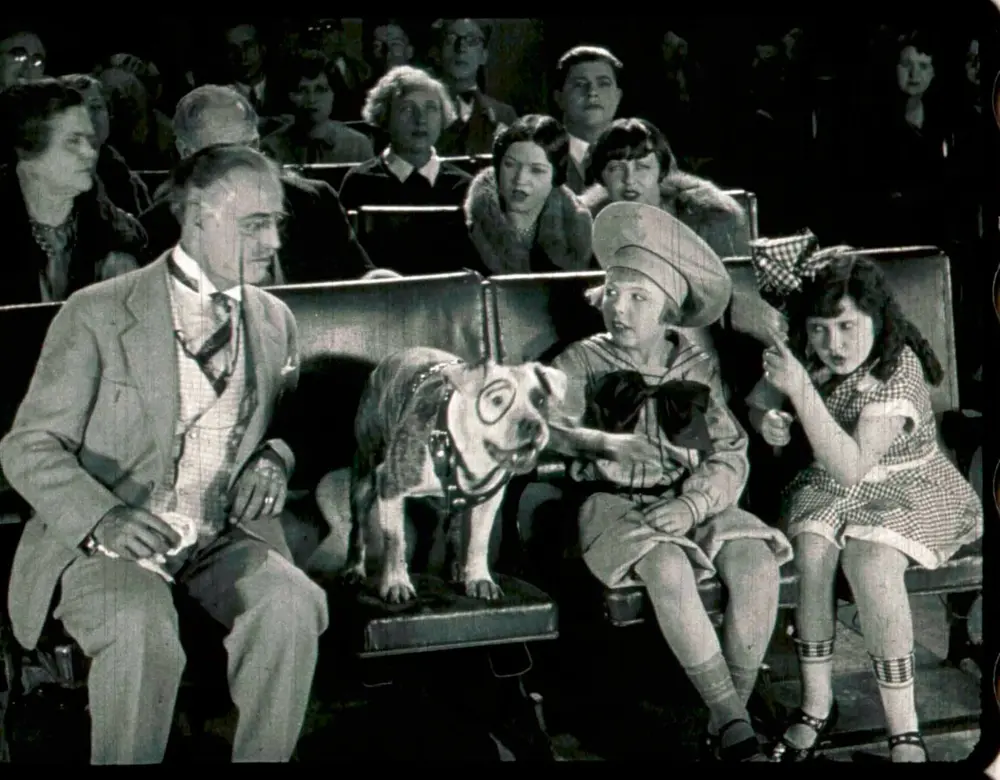
Doreen Turner, playing the female foil, offers a bit more nuance, but she is largely sidelined by the antics of the dog. Let's be honest: Pal the Wonder Dog is the real star here. Pal, who would go on to be the original Pete the Pup in the Our Gang series, has better comedic timing than most of the humans. His ability to look 'guilty' or 'knowingly' at the camera is the film's saving grace.
A standout moment involves Pal hiding under a table while Buster takes the heat for a spilled vase. The dog's eyes dart between the boy and the angry adult, creating a triangle of tension that is actually funny. It works. But it’s flawed. The humans feel like props for the dog to react to. If you compare this to the animal-centric drama in Wild Beauty, you see that Pal was being utilized for pure slapstick rather than narrative weight.
The pacing of Buster's Frame Up is its biggest hurdle for modern viewers. In 1920, audiences were still acclimating to the speed of visual jokes. Today, we process information much faster. Consequently, a gag that should take three seconds is stretched out to ten. This creates a lethargic rhythm that can make a ten-minute short feel like a feature-length ordeal.
The cinematography is purely utilitarian. There is very little use of shadows or creative lighting. Everything is washed out in high-key light, likely to ensure every detail of the costumes was visible. This lack of contrast makes the sets look like the painted backdrops they were. Contrast this with the more atmospheric work seen in God's Law and Man's, and the technical deficiencies of this short become glaring.
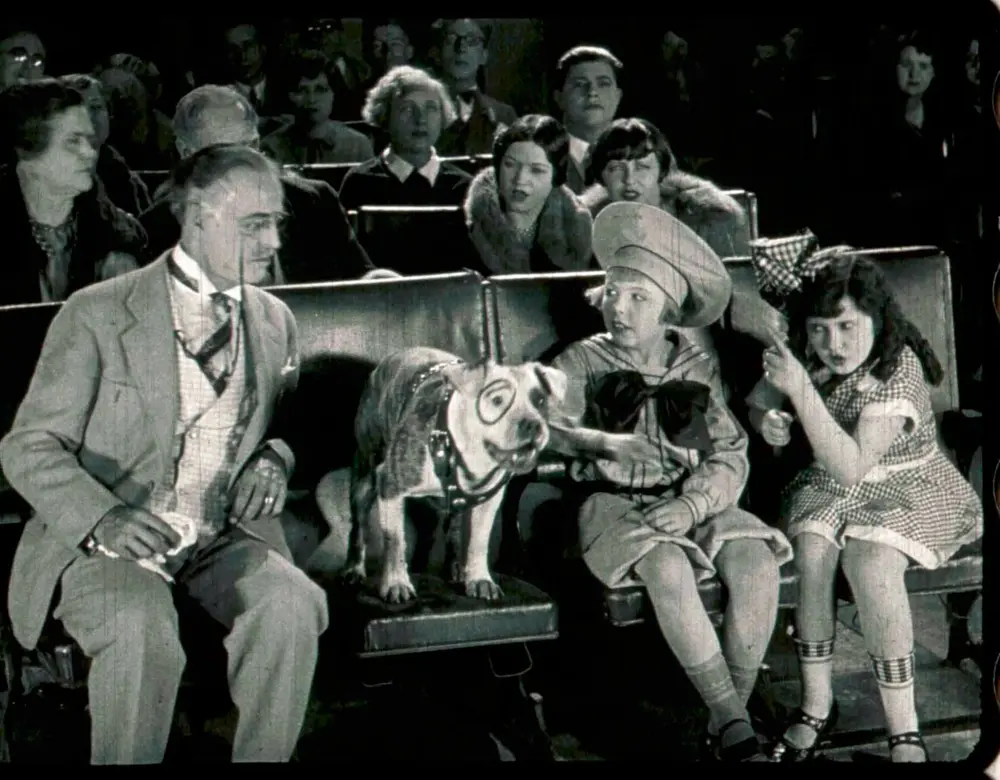
However, there is an unconventional observation to be made about the film's use of space. By keeping the camera static, the director (likely a revolving door of studio hands) allows the audience to scan the frame for hidden details, much like a child scans a comic strip for Easter eggs. It’s an accidental form of engagement that predates the 'Where's Waldo' style of visual consumption.
When placed alongside other films of the period, Buster's Frame Up feels like a middle-of-the-road entry. It doesn't have the social weight of Ashamed of Parents, nor does it have the adventurous spirit of The Pioneers. It exists in its own bubble of domestic comedy.
Interestingly, the film shares a certain DNA with Why Girls Say No in its exploration of social boundaries. While one is about childhood mischief and the other about romantic refusal, both are obsessed with the 'No'—the rules that govern society and the joy of breaking them. Buster is a proto-anarchist in a knickerbocker suit.
We also see a sharp contrast with the grander narratives of the time. While films like The Courtship of Myles Standish or The Cloister and the Hearth were looking back at history and literature, Buster's Frame Up was looking at the contemporary American suburb. It was 'modern' in its setting, even if its techniques were already becoming antique.
The primary 'pro' is the historical significance. Seeing a live-action Tige is a treat for anyone who grew up with the Buster Brown shoe commercials or the original strips. The costumes are also meticulously accurate to Outcault's drawings, providing a strange sense of 'uncanny valley' realism to the cartoons.
Furthermore, the film is mercifully short. It doesn't overstay its welcome, delivering its simple gags and exiting before the repetition becomes unbearable. It is a bite-sized piece of history.
The 'cons' are mostly technical. The film suffers from a lack of narrative ambition. It doesn't try to tell a story so much as it tries to string together three or four unrelated jokes. Compared to the thematic depth of Sex (1920) or the structural complexity of The Hope, Buster's Frame Up feels like a toy rather than a film.
The acting by the adults is also remarkably wooden. They serve as mere obstacles for Buster to navigate, lacking any internal logic or personality. They are caricatures in the worst sense of the word.
Buster's Frame Up is a fascinating failure. It fails as a standalone piece of comedy because it is too slow and too static for modern sensibilities. However, it succeeds as a cultural artifact. It captures the transition of American humor from the newspaper page to the silver screen, and it showcases the early brilliance of Pal the Wonder Dog.
If you are looking for a laugh, you are better off with Up in the Air (1923) or even Taming the West for some kinetic energy. But if you want to see where the DNA of the American sitcom kid began, this 'frame-up' is where the evidence lies. It’s clunky, it’s muggy, and it’s primitive. But it’s also undeniably human in its pursuit of a simple, honest laugh.
Ultimately, Buster's Frame Up is a reminder that cinema had to crawl before it could run. And while Buster and Tige are mostly crawling here, they are doing it with a dog that is much smarter than the humans filming him. That alone makes it worth a ten-minute look.
IMDb 6.1
1921
Community
Log in to comment.