DbcultAccessing Vault...
Cult Review
Senior Film Conservator
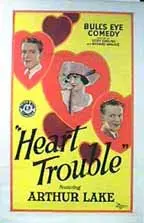
Is 'Heart Trouble' worth watching today? Short answer: yes, but with significant caveats. This 1925 silent farce, starring the effervescent Marceline Day and the physically comedic Arthur Lake, offers a fascinating, albeit uneven, glimpse into the slapstick sensibilities of its era.
It’s a film for those with a genuine appreciation for the mechanics of early screen comedy and a high tolerance for broad, often repetitive, physical gags. If you’re seeking nuanced character development or a sophisticated narrative, this might not be the silent film for you.
This film works because: it commits wholeheartedly to its farcical premise, delivering moments of genuine physical comedy propelled by its energetic lead performances.
This film fails because: its comedic beats, while initially amusing, become predictable and somewhat drawn-out, relying too heavily on a single gag of forced proximity.
You should watch it if: you're a student of silent cinema, particularly early American comedies, or simply curious about the careers of its charming stars.
Richard Wallace’s 'Heart Trouble' unfurls as a quintessential silent-era comedy of errors, centered around the impetuous Arthur, portrayed by Arthur Lake. His initial transgression—a broken vase—sets the stage for his banishment from Marceline’s (Marceline Day) masquerade ball, a social event of paramount importance.
The subsequent narrative is a masterclass in escalating comedic tension. Arthur’s audacious attempt to circumvent the ban via disguise is a classic trope, but it’s the relentless interference of Eddie Clayton’s rival character that truly ignites the film’s chaotic spark. The climax, involving multiple sets of handcuffs and an unexpected 'caveman sweetheart,' demonstrates a commitment to physical absurdity that defines the genre.
The success of any silent comedy hinges almost entirely on the expressiveness and physicality of its performers, and 'Heart Trouble' largely benefits from its spirited cast. Arthur Lake, a name that would later become synonymous with Dagwood Bumstead, showcases an early aptitude for earnest, albeit clumsy, leading man antics.
His Arthur is a whirlwind of youthful determination and physical comedy. From his exaggerated sneaking around the party in disguise to his desperate attempts to escape his shackles, Lake’s performance is a constant, if sometimes overzealous, source of energy. He sells the desperation of a young man in love, even when the situations become utterly preposterous.
Marceline Day, meanwhile, brings a captivating blend of innocence and subtle mischief to Marceline. While her role is less overtly physical than Lake’s, her reactions are priceless. A slight widening of the eyes, a quick turn of the head, or a delicate smile conveys more than pages of dialogue ever could. She anchors the romantic element, providing a charming counterpoint to the male characters' escalating chaos.
The true comedic foil, however, is Eddie Clayton as the rival Eddie. His sneering villainy and relentless pursuit of Arthur’s downfall are surprisingly effective. Clayton’s portrayal, particularly when he dons the 'sheriff' disguise, adds a layer of pantomime villainy that is both amusing and essential to driving the plot’s conflicts. It’s his machinations that lead to the film’s most memorable, and arguably most problematic, gag.
The chemistry between Lake and Day is palpable, even if the narrative keeps them physically apart for much of the film. It's the unspoken understanding conveyed through their gazes and gestures that maintains the film's romantic heart amidst the slapstick.
Richard Wallace, early in his career here as a writer, with direction often attributed to him or a collective effort of the era, orchestrates 'Heart Trouble' with a clear understanding of silent comedy’s demands. The pacing is brisk, particularly in the initial setup and the subsequent masquerade sequence. He wastes little time establishing the core conflict and plunging the characters into a maelstrom of mistaken identities and physical predicaments.
The masquerade ball itself is a masterclass in controlled chaos. Wallace utilizes the crowded setting to maximize opportunities for near-misses and quick sight gags. Consider the scene where Arthur, in his clumsy disguise, navigates through the revelers, constantly just a hair's breadth away from being discovered by Marceline’s parents. This sequence, with its rapid cuts and dynamic movement, keeps the audience engaged, even if the stakes feel relatively low.
However, the film’s reliance on the handcuff gag, while central to the plot, begins to feel protracted. While the initial surprise of Eddie and Arthur being shackled together is amusing, the extended duration of their predicament, particularly the shared bed sequence, pushes the boundaries of comedic payoff. It works. But it’s flawed. This singular focus, while providing consistent visual humor, ultimately limits the comedic range Wallace could have explored.
The tone throughout is consistently light and farcical. There’s never a moment where the audience genuinely fears for the characters, which is appropriate for the genre. Wallace prioritizes laughter over realism, and in that, he largely succeeds, delivering a film that, despite its narrative simplicity, maintains a certain infectious energy.
The cinematography of 'Heart Trouble' is characteristic of its era, functional and straightforward, yet often surprisingly effective in its simplicity. Shot in black and white, the film relies on clear framing and blocking to convey its story and gags. There are no grand sweeping vistas or complex tracking shots; instead, the camera serves as a steady observer, capturing the frantic action.
Lighting plays a crucial role in distinguishing characters and enhancing the masquerade atmosphere. The flickering shadows and bright spotlights within the party scenes effectively communicate the festive, yet potentially deceptive, environment. Close-ups are employed sparingly but effectively, primarily to highlight a character's reaction—a startled glance from Marceline or a mischievous smirk from Eddie—ensuring that the audience connects with their internal states despite the absence of spoken dialogue.
The visual clarity of the physical comedy is paramount. Whether it's Arthur's bumbling attempts to evade capture or the awkwardness of the handcuffed duo, the camera ensures that every gesture, every stumble, and every forced interaction is perfectly visible. This unpretentious approach to visual storytelling allows the raw energy of the performances and the ingenuity of the gags to take center stage, a hallmark of well-executed silent comedies.
Silent cinema, particularly silent comedy, occupies a unique space in film history. 'Heart Trouble' is a prime example of how these films relied on universal visual humor and exaggerated physical performance to transcend language barriers. The premise of forbidden love, mistaken identity, and slapstick misfortune is timeless.
However, for modern audiences accustomed to rapid-fire dialogue and intricate plot twists, the pacing and comedic beats of 'Heart Trouble' can feel somewhat alien. The humor of forced proximity, while a classic trope, feels particularly stretched thin here, relying too heavily on the visual gag rather than genuine character conflict. This is a common challenge for silent films, where the constraints of the medium sometimes led to repetition.
One surprising observation is the unintentional, or perhaps intentionally provocative for its time, undertone of the final handcuff sequence. The image of two male rivals, shackled together and forced to spend the night in the same bed, pushes the boundaries of conventional romantic comedy, albeit for purely farcical reasons. It’s a moment that, viewed through a contemporary lens, adds an unexpected layer of subtext to an otherwise straightforward slapstick premise.
Silent slapstick, while foundational, often struggles to translate its full comedic impact to modern audiences without the benefit of a live orchestra or the communal experience of a packed house. Films like this remind us of the genre’s ingenuity but also its limitations. It serves as a historical document, showing the evolution of comedic timing and narrative structure.
Yes, 'Heart Trouble' is worth watching, especially if you are interested in the early careers of its stars or the mechanics of silent-era comedy. It’s a short, brisk watch.
The film offers a clear window into the comedic tastes of the 1920s. It showcases energetic performances and straightforward slapstick. It's not a profound cinematic experience, but it is an enjoyable historical artifact.
Fans of Marceline Day will appreciate her charm. Enthusiasts of Arthur Lake will see his early physical comedy prowess. Historians of film will find value in its representation of the genre.
'Heart Trouble' is a decent, if not groundbreaking, entry into the annals of silent comedy. It delivers on its promise of lighthearted farce and showcases the talents of its lead actors in their nascent careers. While it won't redefine your understanding of cinema, it offers a pleasant, nostalgic diversion.
Ultimately, this is a film for the dedicated cinephile or the curious casual viewer willing to immerse themselves in a different era of storytelling. It’s a minor film, but one that still possesses a certain charm, even if its comedic heart occasionally skips a beat.
IMDb —
1927
Community
Log in to comment.