DbcultAccessing Vault...
Cult Review
Senior Film Conservator
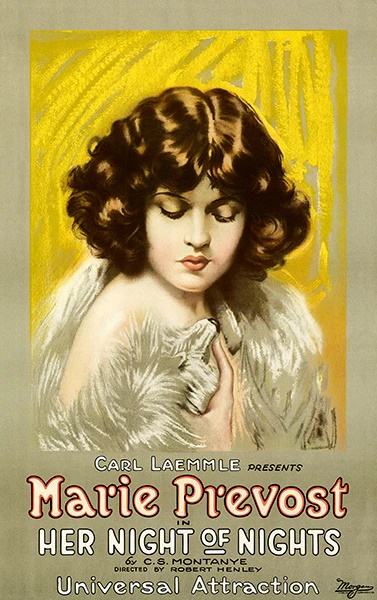
Gotham, 1928: jazz on the gramophone crackles like static electricity, hemlines wage guerrilla war on propriety, and the movies—those opium-den flickers—discover how to make silence scream. Into this neon vacuum glides Her Night of Nights, a Paramount programmer once dismissed as a mere matinee sweetener, now restored by EYE Filmmuseum from a Dutch nitrate print that survived Luftwaffe bombs and a flooded Rotterdam cellar. What resurfaces is no flapper bauble but a chiaroscuro seduction: part Cinderella, part cautionary postcard from capitalism’s altar.
Marie Prevost, a star whose own denouement would curdle into tragedy, inhabits Molly with kinetic vulnerability—eyebrows plucked into startled crescents, mouth a trembling hypothesis. Every close-up is a battlefield where hope skirmishes with self-loathing. When she pivots on a dime—from hauteur to heartbreak—her shoulders seem to shed invisible sequins. Director Montayne (a name lost to footnotes) blocks her against geometric art-deco chrome so that vertical lines bisect her body, imprisoning her within the very modernity she fetishizes.
Opposite her, Edward Hearn’s shipping clerk, Jim, is all Adam’s-apple earnestness; his performance style—half bashful, half ballistic—feels closer to Griffith’s Victorian residue than to Lubitsch’s continental whipcrack. Yet that very anachronism sharpens the class chasm: he’s a nineteenth-century soul stranded in a twentieth-century economy, clutching courtship manuals while competitors trade stock tips.
Doris Schroeder’s scenario, adapted from a Saturday Evening Post novelette, stitches flimsy silk into something almost ironclad. Note the symmetry: Molly’s first entrance is through a revolving door, spinning from street soot into showroom marble; her near-fall from grace later occurs in another revolving door—this one inside a luxury hotel, gilded yet equally mechanized. The device literalizes the revolving opportunities that promise ascent but threaten to fling you back onto pavement.
Dialogue titles sparkle with idiomatic snap: “I’m selling dreams by the yard, mister—cash on delivery.” Compare that to the starchy intertitles in The Case of Lady Camber and you appreciate how American vernacular was beginning to swagger.
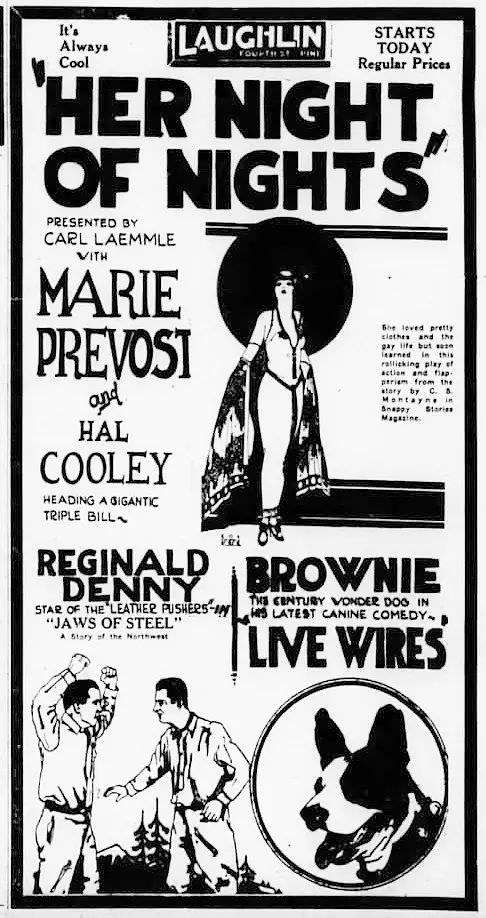
Cinematographer Edward Paul, moonlighting from Universal horrors, drapes night-for-night exteriors in wet asphalt sheens—no small feat when your fastest lens is f/1.9. Inside, he spray-paints shadows across Prevost’s cheekbones using nothing more than venetian blinds and a 2K arc. The result anticipates noir by a decade and a half; think The Ghost Breaker minus the cobwebbed comedy.
Every close-up is a battlefield where hope skirmishes with self-loathing.
The climactic dockside reunion is lit solely by a practical sodium lamp and the reflective surface of the East River. Paul’s gamble—under-exposing two stops—creates pools of obliterating darkness that swallow peripheral detail, forcing our eyes to cling to Prevost’s phosphorescent face as if to a life raft.
Though released mere months before The Jazz Singer, the film was always conceived as mute. Contemporary critics carped about “interminable quiet”; today that hush feels conspiratorial. The absence of city ambience amplifies micro-sounds—ticking bracelets, rustling chiffon—so that when the orchestra swells (in the surviving Dutch print, a 2017 score by Daan van den Hurk) the effect is not of novelty but of oxygen re-entering a vacuum.
Read the plot synoptically and you glimpse reaction: wayward girl schooled back to domesticity. Yet Prevost complicates the ledger. Her Molly doesn’t simply reject riches; she quantifies them, weighs them against the clerk’s intangible securities—loyalty, shared memory of Brooklyn Bridge at sunrise—and finds the balance sheet wanting. The film’s most subversive beat comes when she signs the hotel register under her own surname, refusing the patronymic gift. For a 1928 working-class woman, that flourish is a quiet revolution.
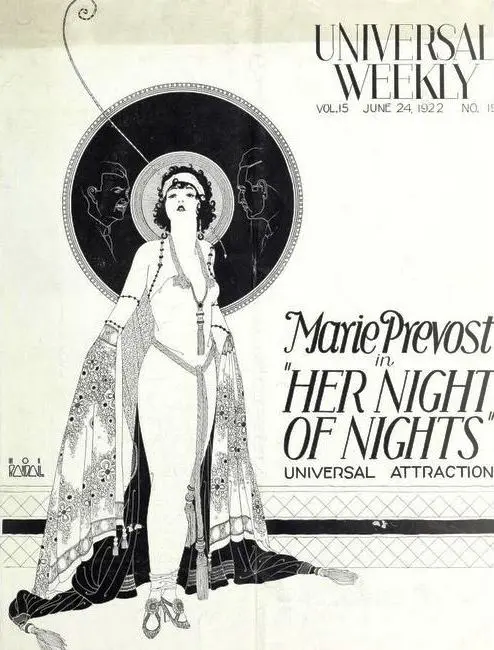
Compare her to the drudges in Ehre or the martyred wives in Blessée au coeur; Prevost’s Molly is mercenary yet autonomous, a flapper Becky Sharp sans Thackeray’s moral scaffolding.
Prevost’s biography haunts the celluloid: Canadian chorus girl, Keystone bathing beauty, Howard Hughes protégé, then Warner’s payroll discard. By 1936 she was dead of alcoholism at 40, her body reduced by diet pills and loneliness, discovered only when neighbors sniffed something off. Knowing this, you watch Her Night of Nights as a palimpsest: every smile seems mortgaged, every caress a down-payment on despair.
Yet the film refuses pity. Its final shot—Molly and Jim framed against a tenement sunrise, sky the color of marmalade—doesn’t promise prosperity; it simply asserts presence. The camera lingers until the couple becomes silhouettes, then dissolves into emulsion grain, as though reminding us that even silhouettes can vanish.
The 2K restoration streams on Criterion Channel (region-locked) and plays festivals via DCP. Seek the Van den Hurk score: pizzicato strings mimic typewriter clatter during office courtship; brass erupts into hot-jazz dissonance when the heir prowls. If you can only access the Alpha Video bargain-bin DVD, beware—its public-domain transfer looks like it was dipped in oatmeal.
Freeze-frame at 42:17: you’ll spot a billboard for Paramount’s Sunday in the background, a sly studio Easter egg. At 57:33, a newspaper headline reads “Wall Street Reaches for the Moon,” dating the action mere weeks before the ’29 crash—a temporal irony the original audience could not yet taste.
Her Night of Nights is neither milestone nor masterpiece; rather, it is a moonlit alleyway between two skyscrapers of history. Step into its shadows and you catch the moment when Victorian melodrama exhales its last virtuous breath and modern cynicism inhales. Prevost, luminous and doomed, gifts the transition a human face—one that stares back at us across a century, asking what we would trade for security, and what we would trade for love.
Grade: B+ | 1928 | 72 min | Silent with music | USA | Directed by: Montayne
IMDb 7.1
1926
Community
Log in to comment.