DbcultAccessing Vault...
Cult Review
Senior Film Conservator

In the vast, often turbulent, tapestry of early 20th-century cinema, where narratives frequently grappled with the burgeoning complexities of urban life and the stringent moral strictures of the era, a film like A Petal on the Current emerges not merely as a historical artifact but as a profoundly resonant human drama. This cinematic offering, crafted from the keen insights of Fannie Hurst and deftly adapted by Waldemar Young, plunges us into the tumultuous journey of Stella Schump, a character whose inherent innocence is relentlessly tested against the unforgiving backdrop of societal judgment and the capricious whims of fate. It’s a narrative that, even a century after its inception, speaks volumes about vulnerability, the insidious nature of social stigma, and the profound, often unexpected, pathways to redemption that can materialize amidst utter despair.
Stella Schump, portrayed with a heart-wrenching authenticity by Mary MacLaren, is introduced as a paragon of quiet devotion and unassuming grace. A modest shop girl, her world revolves almost entirely around her mother, Gertrude Claire’s character, a figure whose aspirations for Stella’s future are firmly rooted in the era’s conventional expectations: a respectable marriage. This maternal desire, though undoubtedly well-intentioned and born of love, subtly weaves a thread of vulnerability into Stella's otherwise unremarkable existence, making her susceptible to influences that promise a shortcut to the very social standing her mother so earnestly craves. MacLaren imbues Stella with a delicate, almost ethereal quality, a wide-eyed naivete that renders her subsequent trials all the more poignant. She is not a rebel, nor is she overtly ambitious; rather, she is a product of her environment, striving to fulfill her perceived duties while navigating the perilous, unseen currents of burgeoning modernity. Her quiet demeanor, however, belies an inner strength, though her inexperience leaves her woefully ill-equipped for the harsher realities lurking just beyond the genteel confines of her sheltered life.
The narrative gains its initial, fateful momentum with the introduction of Cora Kinealy, a coworker whose more worldly charm and seemingly benevolent intentions act as a deceptive siren call. Cora, perhaps portrayed by Beatrice Burnham or Fritzi Ridgeway, embodies the tantalizing allure of a more adventurous, less constrained existence, a stark contrast to Stella’s sheltered and predictable routine. It is Cora who extends the fateful invitation to a party, an event ostensibly designed to introduce Stella to a local hero, a man celebrated for his bravery at a munitions plant fire. This seemingly innocuous social engagement becomes the insidious pivot upon which Stella’s life irrevocably turns. The film masterfully builds this tension, painting a vivid picture of an innocent drawn into a situation she is utterly unprepared for, a lamb led to a subtly disguised slaughter, unaware of the lurking dangers of urban nightlife and casual social pressures.
The party itself transforms into the crucible of Stella's downfall. The absence of the celebrated hero, the very reason for her attendance, leaves a void that is quickly filled by the prevailing atmosphere of forced revelry and pervasive social pressure. Stella, unaccustomed to such boisterous environments and perhaps eager to fit in, finds herself cajoled into over-drinking, a transgression that, in the rigid moral landscape of the time, carried far heavier connotations than it might today. Her subsequent wandering into the street, disoriented and profoundly vulnerable, is not merely a consequence of intoxication but a symbolic drifting, a severance from the safe harbor of her former life. It is here that the impersonal, unforgiving machinery of the urban justice system intercepts her. A detective, perhaps Robert Anderson, an embodiment of the era’s strict moral policing, apprehends her, leading to a swift and brutal judgment in night court. Ten days in jail – a sentence that feels disproportionate to the 'crime' but starkly highlights the era's harsh stance on female propriety and public decorum, particularly for working-class women with limited social standing.
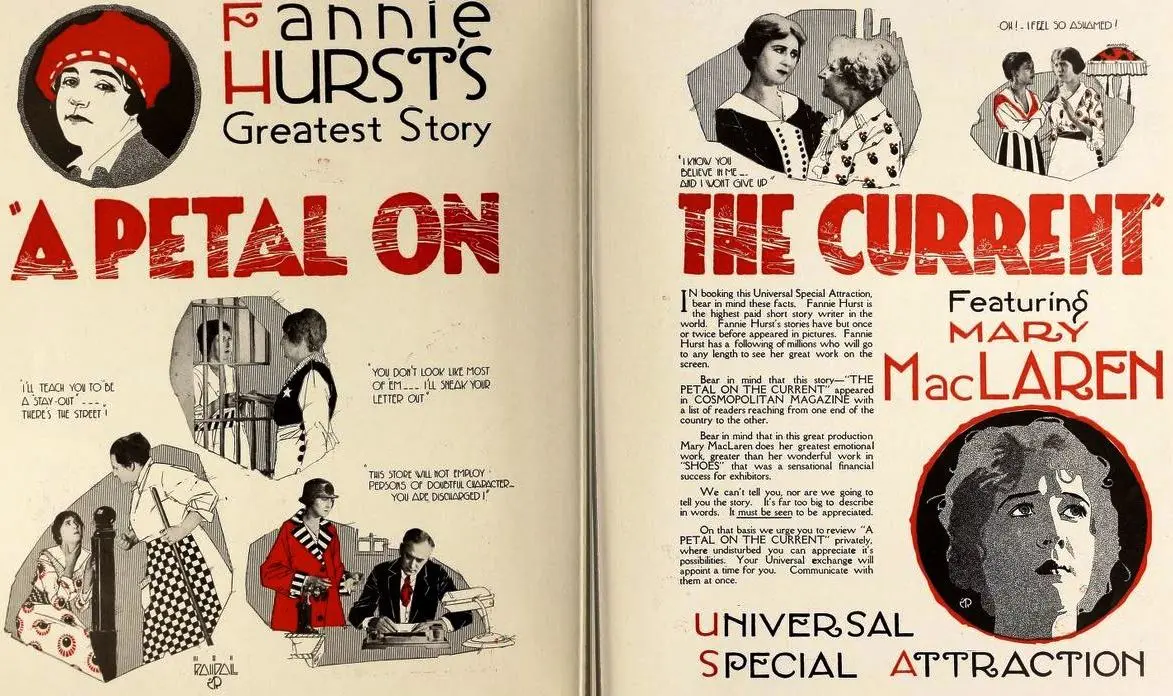
The incarceration itself is a harrowing experience, but its true tragedy unfolds when Stella, from within her cold cell, pens a letter to her mother, detailing her predicament. The shock of this news, so utterly antithetical to the respectable future she envisioned for her daughter, proves too much for the frail woman, leading to her untimely death. This pivotal moment is delivered with an understated yet profound power, amplifying the immense sense of loss and crushing guilt that now burdens Stella. She emerges from jail not only having served her time but having lost her anchor, her home, and her very sense of belonging. The world, once a place of modest certainty, has become a cold, indifferent, and hostile expanse. This narrative arc resonates deeply with the tragic societal judgments explored in films like The Whispering Chorus, where the crushing weight of public perception can utterly destroy an individual, regardless of their true intent or character. The film thus becomes a biting commentary on the arbitrary nature of 'justice' and the unforgiving gaze of society.
Upon her release, Stella finds herself utterly bereft and profoundly alone. Her job, once a crucial lifeline to independence and a semblance of normalcy, is summarily gone, a casualty of her public disgrace. Her home, once a sanctuary of maternal warmth, is no more, having been dissolved by the tragedy. She becomes one of the countless anonymous figures wandering the unforgiving streets of the city, a poignant symbol of the 'fallen woman' trope prevalent in silent cinema, yet handled here with remarkable sensitivity. This period of her journey is particularly moving, as MacLaren conveys a profound sense of isolation, despair, and sheer physical exhaustion without uttering a single word. The film skillfully employs visual language to communicate her desperation, with wide shots of the vast urban landscape dwarfing her solitary figure, emphasizing her utter powerlessness and insignificance in a bustling metropolis that has no room for the outcast. This portrayal of a woman cast out by society, struggling to survive on the margins, powerfully echoes the thematic concerns of films such as The Unpainted Woman or Purity, which similarly explored the precarious social standing of women navigating moral labyrinths and the harsh consequences of deviation from prescribed norms.
Yet, it is in this nadir of her existence, at the very brink of utter collapse, that the narrative introduces its most powerful and redemptive element: the possibility of an unexpected salvation. Picked up by a compassionate man, she is not led further into degradation or exploitation, but to the unexpected refuge of a Salvation Army home. This moment marks a crucial, almost divine, turning point, a dramatic shift from the relentless downward spiral to a glimmer of genuine hope. The choice of the Salvation Army is deeply significant, representing a haven for the destitute and the morally marginalized, a place offering charity without judgment – a stark, necessary contrast to the unforgiving legal system and the judgmental society that had previously condemned Stella. It underscores the film's nuanced understanding of societal failings and the importance of compassionate intervention.
The man who brings Stella to this sanctuary is none other than John Gilley, the very munitions plant hero she was meant to meet at that ill-fated party. Portrayed by David Butler with a quiet strength and genuine, unostentatious compassion, Gilley is not merely a romantic interest; he is a figure of profound moral integrity. His heroism extends far beyond the battlefield of a burning factory; it lies, more significantly, in his capacity for empathy and his unwavering willingness to offer a hand to someone society has deemed utterly unworthy. The irony is palpable and beautifully executed: the man whose initial, albeit accidental, absence triggered her initial downfall now becomes the unexpected architect of her redemption. Their paths, once diverging wildly and tragically, now intertwine in a narrative twist that feels both earned and deeply satisfying, providing a powerful sense of circularity and grace. This serendipitous connection underscores the film's central, optimistic message: that even in the darkest corners of despair, profound human connection and boundless compassion can forge new beginnings and heal the deepest wounds.

Their burgeoning relationship at the Salvation Army home is depicted with a tender authenticity, devoid of saccharine sentimentality. It is not a whirlwind romance born of passion, but a quiet, respectful blossoming of mutual understanding, built on shared vulnerability and the promise of a future free from the crushing shackles of past mistakes. This narrative of a 'fallen woman' finding not further tragedy, but genuine love and respect, was a remarkably progressive stance for the era, offering a far more hopeful and redemptive vision than many contemporary melodramas. It’s a testament to the foresight and empathy of the writers, Fannie Hurst and Waldemar Young, who dared to chart a course for their protagonist that defied conventional moralistic retribution. Their ending suggests that true heroism lies not just in grand, public gestures, but in the quiet, consistent acts of kindness and understanding that restore dignity and rekindle hope, demonstrating a profound belief in the human capacity for change and forgiveness. This gentle yet powerful resolution positions A Petal on the Current as a beacon of hope in a genre often steeped in despair.
The brilliance of A Petal on the Current lies not only in its compelling and emotionally rich narrative but also in its masterful execution as a silent film. The director, whose guiding hand is evident throughout, crafts a visually rich experience where every gesture, every subtle facial expression, and every carefully composed shot speaks volumes, transcending the need for spoken dialogue. The use of intertitles is judicious and effective, serving to advance the plot and convey crucial dialogue without ever interrupting the immersive flow of visual storytelling. The cinematography, a vital component in silent narratives, likely employs stark contrasts of light and shadow, particularly in Stella’s darker, more desperate moments, to powerfully reflect her internal turmoil and the harshness of her external circumstances. Conversely, moments of budding hope and genuine connection, especially those shared with John Gilley, would be bathed in softer, more embracing light, symbolizing the warmth of rekindled human spirit and the promise of a new dawn. The pacing is deliberate, allowing emotional beats to fully resonate, drawing the audience deeper into Stella's harrowing journey.
Mary MacLaren’s performance as Stella Schump is undeniably the emotional anchor of the film. Her extraordinary ability to convey such a wide spectrum of complex emotions – from innocent joy and quiet devotion to abject despair, from quiet resignation to burgeoning hope – all without uttering a single word, is a profound testament to her immense talent and skill as a silent film actress. She masterfully uses her expressive eyes, her subtle posture, and her nuanced gestures to articulate Stella’s rich inner life, making her arduous journey intensely relatable and deeply moving for the audience. David Butler, as John Gilley, provides a strong, reassuring, and empathetic counterpoint to Stella’s vulnerability. His character’s quiet strength and unwavering compassion are effectively conveyed through his steady gaze, his gentle demeanor, and his comforting presence, making him a believable and admirable figure of salvation, far removed from the typical dashing hero. The supporting cast, including Gertrude Claire as Stella’s loving but ultimately tragic mother, Beatrice Burnham, Fritzi Ridgeway, Yvette Mitchell, Janet Sully, Robert Anderson (perhaps as the detective), and Victor Potel, all contribute significantly to the film's rich texture, each embodying their roles with conviction and helping to create a believable, bustling urban world around Stella. Their collective performances elevate the film beyond a simple character study into a vibrant tableau of early 20th-century society.
Fannie Hurst’s profound influence as a writer is unmistakable throughout the narrative. Known for her deeply empathetic and often unflinching portrayals of women facing significant social challenges, Hurst imbues Stella’s story with a raw emotional honesty that transcends the typical melodrama of the period. Her narratives frequently challenged prevailing societal norms, prompting audiences to question the rigid moral codes and double standards that often governed women’s lives. Waldemar Young’s adaptation undoubtedly translates this intricate emotional landscape and social critique into a compelling visual script, ensuring that the film retains the heart, the pathos, and the pointed social commentary of its source material. The film, in its quiet intensity, thus serves as a powerful piece of social realism, reflecting the struggles of the working class and the precarious position of women in a rapidly industrializing and morally conservative society. It subtly, yet effectively, critiques the punitive nature of the legal system and celebrates the redemptive power of charity and individual kindness, making a profound statement on human dignity and resilience.

In its exploration of a woman's fall from grace and subsequent arduous struggle for redemption, A Petal on the Current stands alongside other significant silent era dramas that courageously tackled similar weighty themes. One might draw compelling parallels with films like The Saint's Adventure or Little Miss Grown-Up, if those films similarly delve into the journey of a protagonist navigating moral perils and stringent societal expectations. However, the specific nuances of Stella's ordeal — public disgrace, unjust jail time, and utter homelessness resulting from a single, naive misstep — imbue A Petal on the Current with a particularly sharp and poignant edge. It’s a story that foregrounds the extreme fragility of reputation and the long, devastating shadow cast by even minor infractions in an unforgiving social climate. The film's narrative of a woman's vulnerability in a harsh urban environment also finds echoes in films like The Marriage Ring, which might explore similar themes of female struggle within different societal contexts, or perhaps The Little Samaritan, if it touches upon themes of unexpected kindness and societal support.
The film’s masterful portrayal of the urban environment as both a place of boundless opportunity and a perilous crucible of danger is also a recurring and powerful motif in silent cinema. The bustling streets, the profound anonymity of the teeming crowd, and the hidden dangers lurking within the burgeoning nightlife are all subtly yet effectively conveyed, making the city itself almost a sentient character in Stella’s tragic journey. The Salvation Army, as a contrasting and vital force, represents the counter-current of humanity and compassion that can exist even in the harshest, most indifferent urban landscapes. This dynamic tension between widespread societal condemnation and individual grace is precisely what elevates the film beyond a simple melodrama into a profound work of social commentary. It's a reminder that amidst the grand narratives of industrialization and societal progress, the plight of the individual, particularly the marginalized, remained a pressing concern for artists of the era. The film's careful construction allows these layers to unfold naturally, never feeling didactic, but always deeply affecting.
What truly makes A Petal on the Current resonate so profoundly, even in contemporary times, is its timeless and universal message. It speaks eloquently to the universal human experience of making mistakes, facing dire consequences, and the enduring, fundamental hope for a second chance. Stella’s journey is not merely a historical curiosity; it’s a powerful and accessible allegory for anyone who has ever stumbled, been unjustly judged, or sought to courageously rebuild their life from the ashes of misfortune. The film reminds us of the arbitrary nature of fate, the often-cruel swiftness of hasty judgments, and the profound, transformative impact of genuine empathy. It champions the powerful idea that an individual’s true worth is not irrevocably defined by past errors or societal condemnation, but by their inherent capacity for resilience and their courageous willingness to accept kindness when it is offered. This narrative arc, while specific to its time, taps into a universal human yearning for acceptance and belonging.
In an era when films often relied on overt moralizing and simplistic narratives, A Petal on the Current offers a more nuanced, deeply humanistic, and ultimately hopeful perspective. It doesn't preach; instead, it simply observes Stella's harrowing journey and quietly celebrates her eventual triumph of spirit. It is a quiet masterpiece that, like a delicate petal, drifts through the tumultuous currents of life, enduring the most ferocious storms and ultimately finding a safe harbor, reminding us all of the enduring power of hope and the profound, redemptive potential of human connection. Its lasting legacy is in its gentle yet firm assertion that dignity can be reclaimed, and happiness, however hard-won, is always, miraculously, within reach. This film is a compelling argument for revisiting the silent era, not just for its historical appreciation, but for the profound emotional truths and powerful social statements it continues to deliver with such artistry and grace.

IMDb —
1919
Community
Log in to comment.