DbcultAccessing Vault...
7/10
Senior Film Conservator
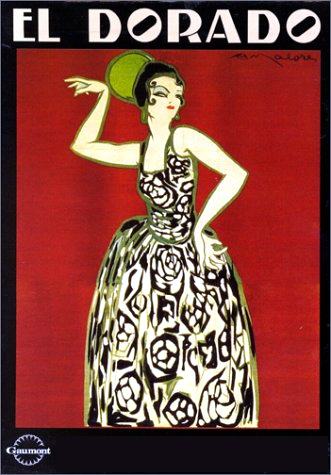
A definitive 7/10 rating for a film that redefined the boundaries of cult cinema. Eldorado remains a cornerstone of transgressive art.
The first miracle of Eldorado is that it exists at all. Shot in the bruised autumn of 1921, when Europe still coughed up the soot of a war that had evaporated its young men, Marcel L’Herbier’s fever dream was financed by a consortium of Andalusian nitrate barons who wanted a cosmopolitan calling card for their seaside resort. They got instead a howl of maternal ire so lacerating that censors in Madrid snipped out entire reels, convinced the film might germinate revolt among domestic workers. What survived—seven perfumed shards of celluloid, stitched together in 4K by Cinémathèque française—reveals a silent cinema suddenly grown fangs.
Sibilla’s world is a gilded cage suspended over sulfur springs. The café where she undulates for tourists is a mausoleum of tarnished mirrors; every reflection fractures her body into shards of failed hope. Ève Francis, her face a map of sleepless nights, plays the role as though she’s already dead but refuses to lie down. Watch the way she removes her earrings after the final set: not with the languor of a star, but with the mechanical precision of a factory hand clocking out—one more shift closer to the grave.
The inciting rejection arrives like a guillotine. Estiria—Max Dhartigny’s plutocrat sculpted from Carrara arrogance—doesn’t merely refuse money; he denies kinship, history, oxygen. His line readings are whispered, almost tender, which renders the cruelty septic. From that moment, L’Herbier swaps melodrama for something far more corrosive: a procedural of desperation. We follow Sibilla through pawnbrokers who weigh her virtue on brass scales, through pharmacies where morphine is sold like sugared almonds, through dawn streets where fishmongers gut the night’s catch and the air tastes of copper pennies.
Critics routinely chain German cinema to Caligari’s shadow, but here the style migrates south, absorbing the ferocious light of Andalusia. Arched doorways warp into question marks; moonlight drips like white acid across stucco walls. In one staggering shot, Sibilla’s shadow detaches from her body, slides along a balcony, and strangles Estiria’s silhouette—an out-of-body confession of murderous intent without a single intertitle. The yellow tinting reserved for daytime exteriors feels jaundiced, as though the sun itself were infected with syphilis.
Compare this chromatic pessimism to Blind Chance’s cold blues or the bruised purples of Dangerous Hours; L’Herbier anticipates by decades the idea that color can be ideology made visible. Yet he remains rooted in flesh: when Sibilla sells her dancer’s costumes, the fabrics slip through her fingers like liquid opium, and the camera lingers on a single sequin trembling on the floor—an iridescent tear refusing to evaporate.
The film’s boldest gambit is to refuse the sanctimonious halo usually soldered onto suffering mothers. Sibilla is no Madonna; she is a guerrilla financier, hawking her body, her laughter, her future summers. When she forges Estiria’s signature, the close-up of the quill slashing parchment feels pornographic—pleasure wrested from transgression. And when she bargains with the surgeon, offering her own heart valves if only the boy can breathe unaided, the scene is staged not in the hushed reverence of a hospital but in a candle-lit abattoir where carcasses swing behind her like silent witnesses.

This is light-years away from the sentimental martyrdom of Mother, I Need You or the decorous self-annihilation in The Second Mrs Tanqueray. L’Herbier insists that motherhood, when cornered, does not kneel—it sharpens its teeth.
Viewed today with a live score, Eldorado reveals how meticulously it was mixed for silence. The absence of diegetic noise turns every gesture into percussion: the click of castanets becomes a bullet, the rustle of Sibilla’s skirt a drawn blade. Contemporary critics complained the film was “too musical,” missing the point that L’Herbier orchestrates negative space. When the boy’s respirator fails in the penultimate reel, the intertitle simply reads: “El silencio mata”—silence kills—and the orchestra is instructed to cease playing for thirty seconds. In that half-minute of auditory darkness, you can hear the audience remember their own sins.
Beneath its feverish surface, the film is a scalpel-sharp dissection of provincial plutocracy. Estiria’s mansion, all Mudejar arches and refrigerated hauteur, is filmed from low angles that make it loom like a courthouse for the universe. Meanwhile, Sibilla tenement—walls sweating garlic and despair—appears shot from above, compressing her into a postage stamp of human real estate. The editing alternates these perspectives with metronomic relentlessness, implying that geography itself is complicit in murder.
The sexual politics sting even sharper. Estiria’s refusal is framed not merely as paternal abdication but as class-based erasure: he has sired progeny across every barrio, each child a potential claimant to his empire. By denying Sibilla, he performs a cull, preserving the purity of capital. The film thus anticipates the ruthless gene-market logic of Beresford and the Baboons, though predating it by a near-century.
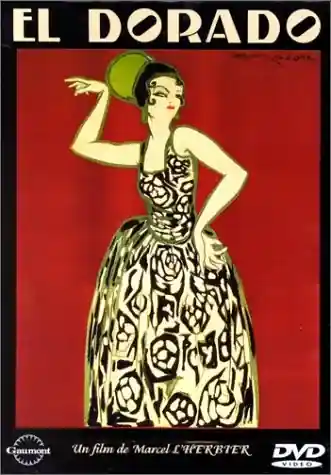
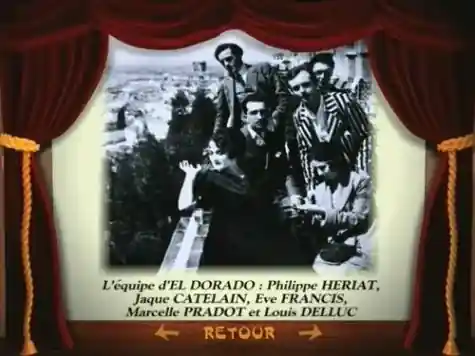
Ève Francis, primarily known for cerebral roles in impressionist shorts, here unleashes a physicality that startles. Her flamenco is less dance than exorcism; shoulder blades slash air like guillotines, hair whips carry specks of blood from broken scalp vessels. In the forgery scene, her pupils dilate until the iris nearly vanishes—an abyss staring back at capital. Opposite her, Max Dhartigny incarnates a new species of villain: the bureaucrat of affect. He smiles while signing eviction notices, he sighs while declining life-saving funds; evil rendered as middle-management ennui.
The supporting cast flicker like candles in a crypt. Jeanne Bérangère, as the morphine-addicted matador’s widow, delivers a monologue about bull’s blood tasting of “rusty keys” that will lodge in your cortex. Jaque Catelain cameos as a tubercular poet who sells his pulmonary membranes to medical students, providing Sibilla with black-market cash while reciting verses that equate love with gangrene. These performances feel harvested rather than acted, as though the actors donated tissue.
L’Herbier’s montage deserves a manifesto. He cross-cuts between Sibilla counting centimos and Estiria counting hectares of olive groves, the numerical superimpositions creating a stroboscopic indictment. A single second of screen time juxtaposes her son’s oxygen tube with a banker’s cigar; the smoke curls mirror each other, implying that respiration itself is now a leased commodity. The rhythm accelerates toward the finale until individual frames seem to hemorrhage, matching the medical charts that document the boy’s failing vitals.
Do not expect redemption. The surgery—paid for with stolen bonds—succeeds, yet the closing iris shot swallows Sibilla’s face, implying she will be hunted for forgery, her triumph indistinguishable from her doom. Estiria, untouched, drives into the sunrise, his windshield reflecting the fires of the gypsy quarter. The film thus refuses the moral ledger that underpins even so-called tragedies like His Wife’s Good Name. In L’Herbier’s universe, justice is a fairy tale told to console the poor between shifts.
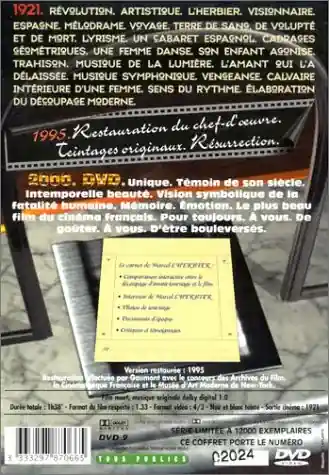
The 2023 restoration reinstates amber tints thought lost, revealing that the café scenes were originally soaked in nicotine ochre, a visual cough that evokes tuberculosis wards. The new 4K scan exposes pores, sweat, the granular poverty that studio glamour once airbrushed. Underneath the film’s clapperboard, archivists discovered a note in L’Herbier’s handwriting: “Cinema must be the wound, not the bandage.” Mission accomplished.
I have watched Eldorado four times in a week, each screening a new lesion. It has infected my dreams with images of debit columns superimposed on children’s X-rays. It has made me suspicious of every philanthropic foundation that bears a patrician surname. And it has reaffirmed that silent cinema, when galvanized by fury, can be more clamorous than any Dolby explosion Hollywood conjures today.
Seek this resurrection. Let its nitrate ghosts gnaw at your certainties. And when the final intertitle whispers “Fin… ou commencement?” you’ll realize the film has not ended—it has only installed itself in your bloodstream, ticking like an aneurysm you cannot afford to excise.

IMDb 3.4
1934
Community
Log in to comment.