DbcultAccessing Vault...
Cult Review
Senior Film Conservator
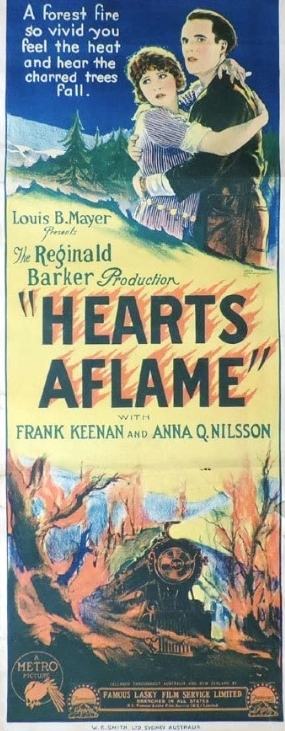
There is a specific, visceral hum that emanates from the silent era—a frequency of raw ambition and unadulterated visual storytelling that contemporary cinema often struggles to replicate. Hearts Aflame, released in 1923, stands as a towering testament to this epoch. It isn't merely a story of wood and water; it is a cinematic combustion of human will. When we look back at the early twenties, films often fell into the trap of stage-bound rigidity, but here, the Michigan wilderness is captured with a kinetic energy that feels startlingly modern. The scent of pine and the spray of the river seem to seep through the celluloid, creating an immersive experience that transcends its age.
The narrative engine is fueled by the classic friction of generational expectation. Richard Tucker’s portrayal of the son—sent into the fray to fix his father’s mess—is a masterclass in evolving masculinity. He arrives not as a hero, but as a functionary of capital, a man whose primary concern is the clearance of a logjam that represents a literal and figurative blockage in his father's empire. This isn't the lighthearted romp one might find in Hard Luck; this is a gritty, sweat-stained confrontation with the elements. The logjam itself is a magnificent set piece, a chaotic architecture of timber that serves as the perfect metaphor for the protagonists' internal states.
Enter Irene Rich. Her character is the soul of the film. In an era where female roles were frequently relegated to the 'damsel' or the 'vamp,' Rich provides a grounded, iron-willed performance that rivals the political grit seen in Your Girl and Mine: A Woman Suffrage Play. She is the steward of the land, a woman who understands that once the soil is stripped, the spirit of the place vanishes. Her refusal to sell isn't a plot convenience; it is a theological stance. The romance that blossoms between her and Tucker is earned through conflict, born from the mutual respect of two adversaries who realize they are both fighting for their version of the truth.
Visually, the film is a feast. The directors and writers—J.G. Hawks, Gordon Rigby, and Harold Titus—utilize the scale of the Michigan woods to dwarf the human actors, emphasizing the hubris of the lumber industry. Unlike the domestic intimacy of Edgar's Country Cousin, Hearts Aflame demands a wide lens. The sequence where the logjam finally breaks is a terrifying display of early practical effects. You can almost feel the vibration of the crashing logs. It’s a sequence that makes the urban intrigues of Arsene Lupin feel quaint by comparison.
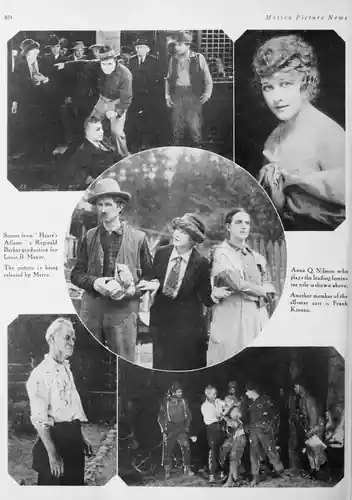
The supporting cast, featuring stalwarts like Anna Q. Nilsson and Frank Keenan, provides a rich tapestry of frontier life. Each face is a map of hardship and hope. There’s a solemnity to the performances that reminds me of the heavy atmosphere in Vyryta zastupom yama glubokaya..., though Hearts Aflame eventually pivots toward a more traditionally American sense of resolution. However, it never feels cheap. The stakes are real, and the cost of progress is weighed heavily against the value of the individual.
At its core, the film explores the 'Turmoil' of the American dream—a theme perhaps more explicitly dissected in The Turmoil, but here it is given a more visceral, outdoorsy spin. The father, the retired lumberman, represents the old guard—those who saw the earth as an infinite resource to be mined, chopped, and sold. His son represents the transition into a more complex moral landscape. This generational shift is a recurring motif in 1920s cinema, echoing the sentiments found in Greater Than Love, where the duty to family often clashes with the duty to one's own conscience.
The writing by Gordon Rigby and Harold Titus avoids the melodramatic pitfalls of many of its contemporaries. While there is certainly a romantic sweep, the dialogue (via intertitles) remains grounded in the vernacular of the woods. It lacks the stylized decadence of Das Mädel von Picadilly, 1. Teil, opting instead for a rugged simplicity that mirrors the landscape. This is a film about people who work with their hands, and the script respects that labor.
As we analyze the film's place in history, it’s impossible not to compare its fervor to Fanatics or the social urgency of The Nation's Dream. Hearts Aflame is a film of big ideas and even bigger visuals. It asks if we can truly own anything, or if we are merely temporary tenants of the land. The title itself suggests a passion that consumes, much like the forest fires that were a constant threat to the very industry the film depicts. It’s a double-edged sword: the same fire that warms the hearth can burn down the forest.
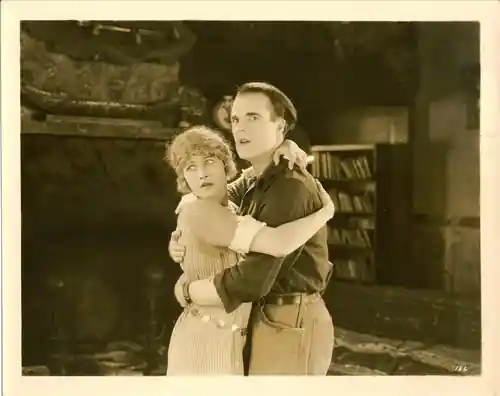
The technical prowess displayed in the river scenes is nothing short of miraculous for 1923. There is no CGI safety net here. Stuntmen and actors alike were operating in a high-stakes environment where the danger was as real as the timber. This authenticity gives the film a weight that modern blockbusters often lack. When you see the logjam break, you aren't just watching a story; you are witnessing a historical document of physical courage. It reminds me of the raw intensity found in The Fighting Brothers, where the physicality of the performance is the primary driver of the plot.
Ultimately, Hearts Aflame succeeds because it doesn't take the easy way out. The resolution of the conflict between the son and the landowner is nuanced. It recognizes that while love can bridge a gap, it doesn't necessarily erase the fundamental differences in how people view the world. It’s a sophisticated take for a silent film, avoiding the binary of 'good vs. evil' in favor of 'tradition vs. progress.' It shares this complexity with Under Kærlighedens Aag, exploring the weight of the 'yoke' we carry for those we love.
For the modern viewer, the film offers a window into a vanished world. The Michigan of 1923 was a place of transition, and Hearts Aflame captures that moment of flux with poetic precision. Whether it's the regal presence of the cast, the daring cinematography, or the timeless story of standing one's ground, the film remains a vital piece of cinematic history. It isn't just a 'wonderful chance' for a viewing (to borrow a phrase from The Wonderful Chance); it is an essential one. If you seek a film that combines the grit of the earth with the fire of human spirit, look no further. This is a flickering flame that refuses to be extinguished, a testament to the enduring power of silent storytelling.
In the pantheon of early 20th-century drama, alongside works like The Mad Woman or the jewel-thief antics of The Sultana, Hearts Aflame carves out its own unique space. It is a film of the soil, of the river, and of the heart. It reminds us that even in the face of industrial giants, the individual—and the land they protect—can still hold the line. It’s a message that resonated in 1923 and, perhaps even more poignantly, continues to resonate today.
IMDb —
1934
Community
Log in to comment.