DbcultAccessing Vault...
6.8/10
Senior Film Conservator
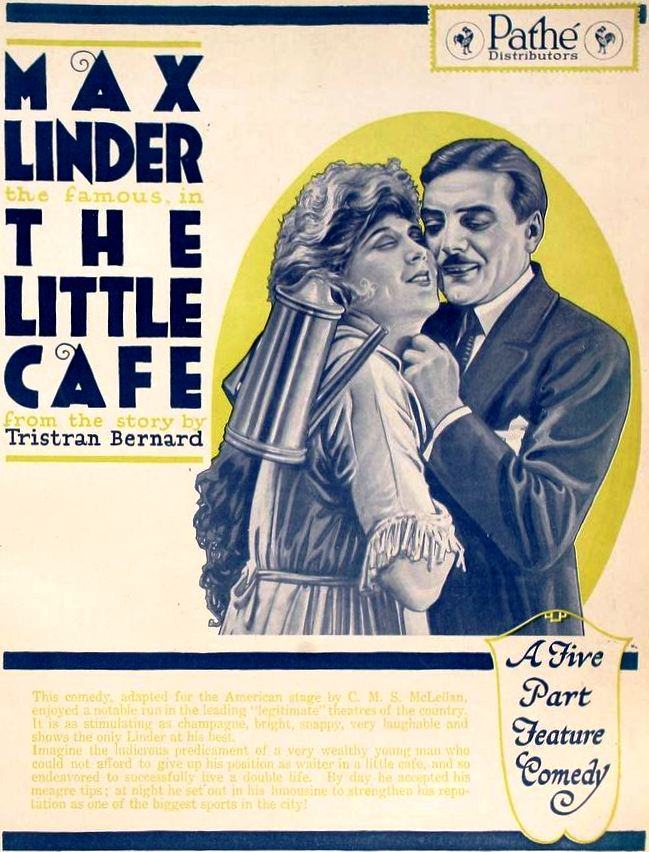
A definitive 6.8/10 rating for a film that redefined the boundaries of cult cinema. The Little Cafe remains a cornerstone of transgressive art.
When the silver screen first captured the capricious dance between wealth and servitude, few films did so with the elegance of The Little Cafe. Max Linder, both director and star, orchestrates a tableau where the gilded veneer of affluence is peeled back, layer by trembling layer, revealing a man forced to scrub tables and pour coffee for strangers whose lives intersect in the most unassuming of settings.
The premise is deceptively simple: a millionaire, buoyed by hubris, accepts a wager that obliges him to assume the role of a café waiter. Yet within that premise lies a labyrinth of thematic resonance. The film interrogates the elasticity of identity—how quickly a title can be shed, how readily society reassigns status based on occupation. Max’s transformation is not merely sartorial; it is psychological, a gradual erosion of aristocratic affect that forces him to confront the humanity of those he once regarded as beneath him.
From a narrative architecture standpoint, the screenplay, a collaborative effort by Henri Diamant‑Berger, Raymond Bernard, Max Linder, and Tristan Bernard, is a masterclass in pacing. The opening act establishes Max’s opulent world with lavish set pieces, then swiftly pivots to the cramped, aromatic interior of the café, where the scent of freshly ground beans mingles with the murmurs of patrons. The contrast is stark, and the audience is invited to experience the dissonance alongside the protagonist.
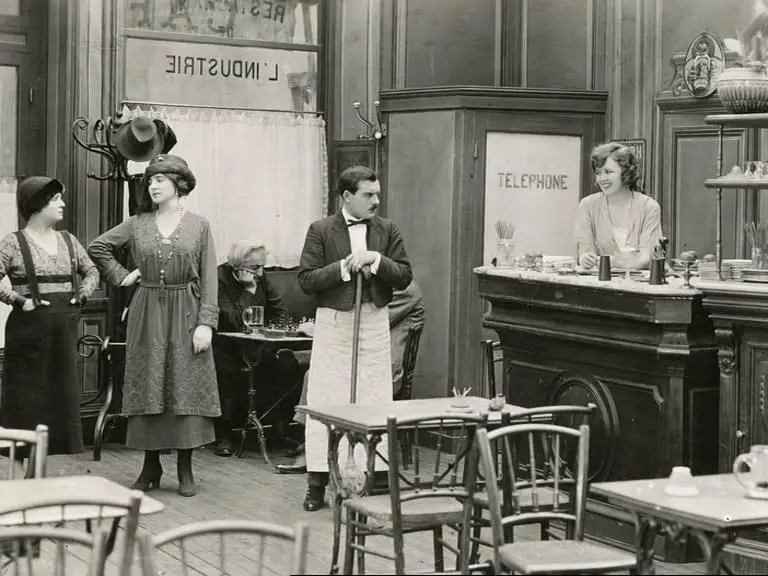
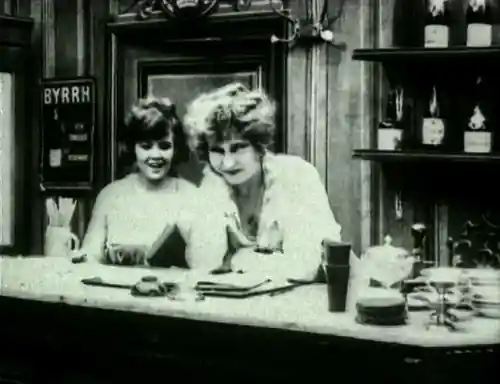
Supporting characters function as both foils and mirrors. Joffre, the seasoned maître d', exudes a weary authority that subtly mentors Max, while Major Heitner, a retired officer turned regular, offers a commentary on the erosion of old‑world hierarchies. Halma, the vivacious barmaid, becomes the conduit through which Max discovers the pleasures of anonymity—her laughter, unburdened by the expectations of high society, is infectious. Andrée Barelly’s portrayal of the café owner adds a layer of entrepreneurial grit, reminding viewers that even in a world of service, power dynamics persist.
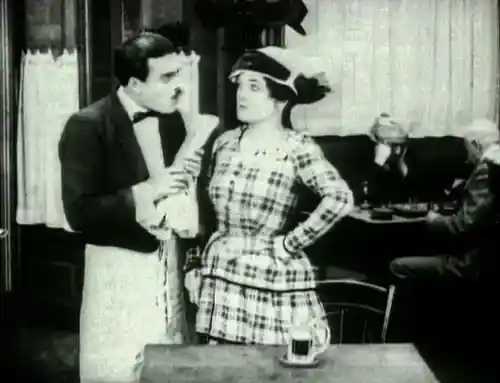
Visually, the film is a study in chiaroscuro. The black‑background aesthetic of the original print is preserved in the digital restoration, allowing the muted palette of the café to glow against the darkness. The cinematographer employs soft focus during intimate exchanges, while employing crisp, high‑contrast lighting for moments of comedic revelation—particularly when Max, in his ill‑fitted apron, attempts to juggle a tray of steaming cups.
One cannot discuss The Little Cafe without acknowledging its place within the broader canon of early twentieth‑century cinema. Its thematic preoccupations echo those of Allan Quatermain, where adventure and self‑discovery intertwine, and For Husbands Only, which also probes the social expectations placed upon men. However, where those films lean heavily on external conflict, Linder’s work turns inward, using the microcosm of the café to explore internal turmoil.
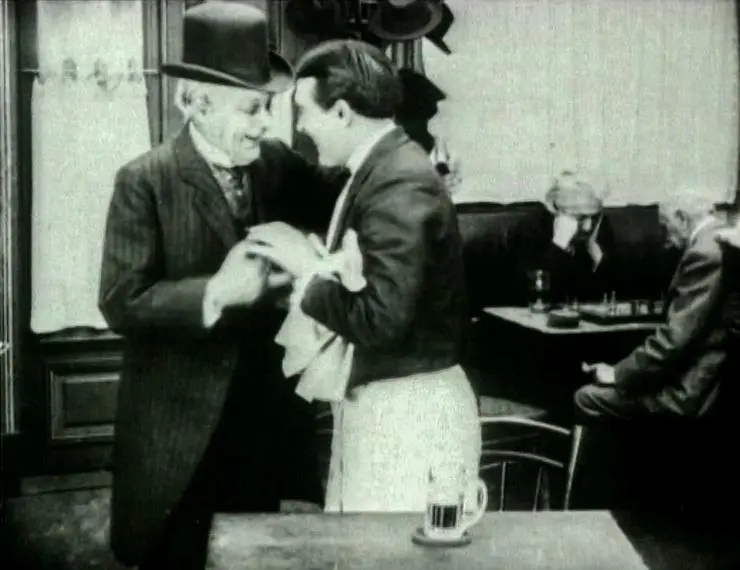
In terms of comedic timing, Linder’s performance is nothing short of virtuoso. He balances slapstick—most memorably when he trips over a misplaced chair—with a subtle, almost melancholic humor that underscores the absurdity of his situation. This duality is reminiscent of the humor found in One Thousand Dollars, yet Linder’s approach feels more intimate, as if the audience is privy to a private joke shared between the character and the viewer.
The film’s sound design, though limited by the era’s technological constraints, utilizes a clever mix of diegetic noises—the clatter of cutlery, the hiss of the espresso machine—to create an immersive soundscape. These auditory cues are punctuated by a jaunty piano score that swells during moments of revelation, reinforcing the emotional beats without overwhelming the visual narrative.
Beyond its comedic veneer, The Little Cafe offers a poignant critique of class fluidity. Max’s initial disdain for manual labor gradually softens as he witnesses the camaraderie among the café staff, the unspoken codes of respect that transcend monetary status. This evolution is captured in a quiet scene where Max, after a long shift, shares a simple meal with the workers—a moment that crystallizes his newfound humility.
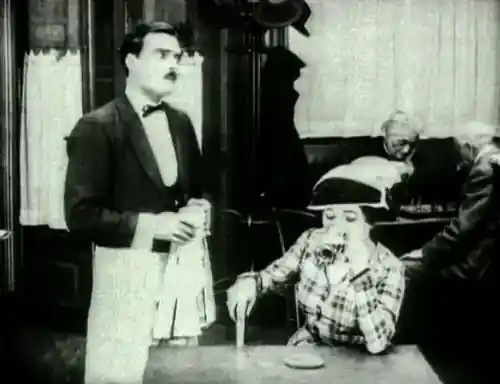
Comparatively, the film shares a thematic kinship with The Strangler's Cord, which also delves into the shadows of societal roles, albeit through a darker lens. While Linder’s narrative remains buoyant, the underlying tension of a man out of his element resonates across both works.
From a production design perspective, the café set is a triumph of period authenticity. The brass fixtures, the patterned tiles, and the modest wooden tables evoke a tangible sense of place. The attention to detail extends to the costumes: Max’s transition from silk tuxedo to a modest, threadbare uniform is rendered with a subtlety that underscores his internal conflict.
One of the film’s most compelling sequences occurs midway, when a wealthy patron—mistaking Max for a regular—offers him a generous tip. Max, caught between his true identity and his assumed role, must decide whether to accept the money or preserve the integrity of his disguise. The tension in this moment is palpable, and Linder’s nuanced facial expressions convey a storm of conflicting loyalties without a single word spoken.
In the realm of narrative resolution, the film eschews a conventional happy ending. Instead, Max’s wager is settled not by a triumphant return to wealth, but by an acceptance of the duality that now defines him. He retains his fortune, yet the experience irrevocably alters his worldview—a subtle, bittersweet conclusion that lingers long after the final frame fades.
Critically, the film has endured as a touchstone for scholars examining early cinematic explorations of class. Its inclusion in retrospectives alongside titles such as Satan Junior and Deuce Duncan underscores its relevance in discussions of genre hybridity, where comedy, drama, and social commentary intersect.
For contemporary audiences, the film offers a mirror to modern debates about privilege, labor, and the performative aspects of identity. In an era where gig economies blur the lines between professional and personal spheres, Max’s forced immersion into service work feels eerily prescient.
In terms of legacy, Max Linder’s influence can be traced through the works of later auteurs who explored similar motifs—Charlie Chaplin’s “The Tramp” being a prime example. Both characters navigate the world as outsiders, using humor to critique societal structures. Yet Linder’s Max is distinct in his aristocratic origins, providing a unique perspective on the reversal of fortune.
When evaluating the film’s technical merits, the editing deserves commendation. The cuts are rhythmic, mirroring the bustling tempo of the café, while longer takes allow the actors to inhabit their roles fully, fostering an organic flow that modern audiences find refreshing amidst today’s rapid‑cut editing styles.
From a thematic standpoint, the film’s exploration of authenticity versus performance resonates with the philosophical musings found in Le Torrent, where characters grapple with the currents of destiny and self‑determination. Both films employ water imagery—coffee steam in Linder’s work, river currents in Bernard’s—to symbolize the fluidity of identity.
In sum, The Little Cafe stands as a richly layered artifact of cinematic history. Its deft blend of humor, social critique, and visual elegance renders it a timeless study of the human condition, inviting repeated viewings and scholarly discourse alike.
For further exploration of related cinematic works, consider the following links: The Egg Crate Wallop, Fools and Their Money, The Racing Strain, Secret Love, She's Everywhere, In the Stretch, and The Redemption of Dave Darcey. Each offers a distinct lens through which to examine the interplay of class, identity, and cinematic storytelling.
IMDb —
1923
Community
Log in to comment.