DbcultAccessing Vault...
Cult Review
Senior Film Conservator
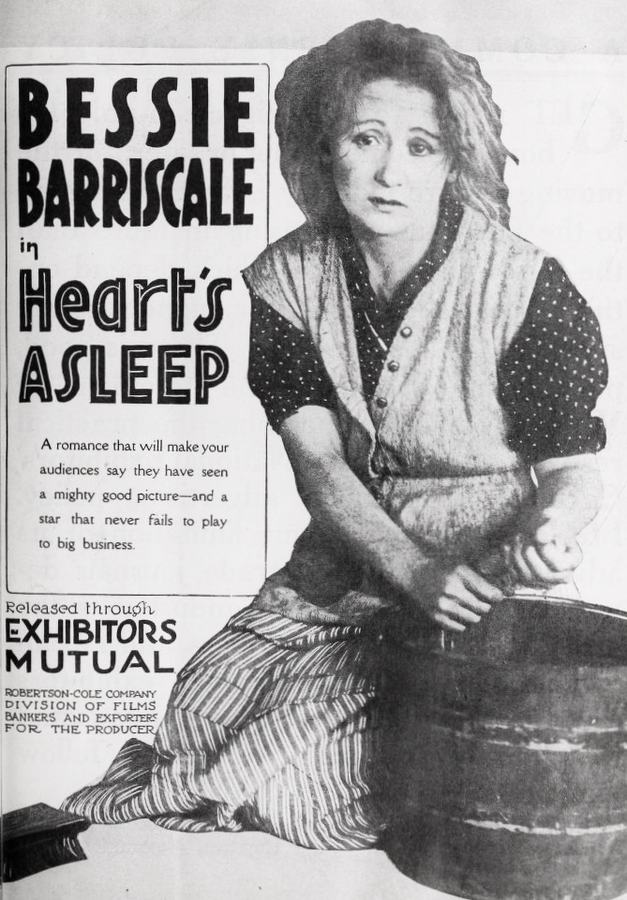
The 1919 cinematic landscape was a crucible for the 'nature versus nurture' debate, and few films distilled this sociological friction as poignantly as Hearts Asleep. Directed with a keen eye for the disparities of the Gilded Age, this feature serves as a fascinating precursor to the more polished social dramas that would follow in the 1920s. At its core, the film is a sophisticated exploration of the 'made lady'—a theme that resonates with the same intellectual curiosity found in Audrey or the identity-shifting narratives of The Great Adventure.
Bessie Barriscale delivers a performance that transcends the often-stilted histrionics of the silent era. As Nancy, she inhabits a character whose very existence is a contradiction. Raised in the shadows of Mother Hawkins’ den of thieves, Nancy is a 'scrub girl' whose physical labor in fashionable residences provides a stark contrast to the illicit commerce of her home life. The cinematography effectively utilizes chiaroscuro to emphasize the grime of the criminal underworld, a visual language that echoes the tension found in The Third Degree. Nancy’s refusal to succumb to the gravitational pull of her environment is not merely a plot point; it is a profound statement on the inherent nobility of the individual.
Mother Hawkins, played with a chilling pragmatism by Anna Dodge, represents the atavistic forces that seek to bind Nancy to a life of crime. When she accepts a bribe from the sinister Gentleman Chi (Frank Whitson) to secure Nancy’s cooperation in a safe-cracking job, the stage is set for a moral reckoning. Nancy’s decision to abandon her post as a lookout is the film’s first major pivot—a rejection of the only family she has ever known in favor of an abstract sense of justice. This internal conflict mirrors the high-stakes moral dilemmas explored in Yankee Pluck.
Enter John Lewis (George Fisher), the wealthy intellectual whose life is defined by a certain detached curiosity about the human condition. His argument with Andrew Calvert (Tom Guise) serves as the philosophical engine of the film. Calvert, the quintessential Southern gentleman, clings to a belief in 'blood'—the idea that grace is an inherited trait. Lewis, conversely, represents the modern American spirit of self-invention. He sees Nancy not as a person, but as a hypothesis to be tested. This dynamic, while potentially dehumanizing, is handled with a delicate touch by the writers Maie B. Havey and Fred Myton.
The five-year ellipsis in the narrative is a bold structural choice. We transition from the soot-stained alleys to a world of opulent parlors and refined social graces. Nancy’s transformation is not merely cosmetic; it is a total overhaul of her linguistic and behavioral patterns. This metamorphosis invites comparison to the class-clashing comedy-dramas like The Man from Home, though Hearts Asleep maintains a more somber, dramatic tone. The visual transition is marked by a shift in lighting—moving from the harsh, flickering shadows of the underworld to the soft, diffused glow of aristocratic interiors.
No silent drama is complete without a catalyst for the protagonist’s past to collide with their present. The re-emergence of Gentleman Chi provides this necessary friction. Chi is the personification of the past that cannot be outrun. His pursuit of Virginia Calvert (Vola Vale) is a calculated strike against the very class that Nancy now inhabits. The tension here is palpable; Chi represents the predatory nature of the underworld, a theme that often surfaces in the darker corners of silent cinema, such as in The Wolf Man or the gritty realism of I bimbi di nessuno.
The climax of the film is a masterclass in subverting audience expectations. When Virginia is manipulated into stealing her own family’s jewels, Nancy must revert to the skills of her youth to save the girl from ruin. This 'righteous theft' creates a fascinating ethical paradox. Nancy uses the tools of a criminal to preserve the sanctity of a family, effectively merging her two identities. The scene where she is caught with the jewels is a gut-wrenching moment of vulnerability. It forces the audience to confront the fragility of her social standing—a theme that echoes the precarious positions of characters in The Usurper.
The technical merits of Hearts Asleep deserve significant academic attention. The use of depth of field during the party scenes allows for a layering of narrative—Nancy’s interactions in the foreground are often shadowed by the watchful, suspicious eyes of those who doubt her lineage. This visual depth is reminiscent of the sophisticated staging found in Memoria dell'altro. Furthermore, the editing pace during the theft sequence is remarkably modern, building a sense of urgency that was often missing from the more theatrical productions of the era.
Henry Woodward, in his supporting role, provides a necessary grounding to the more melodramatic elements of the plot. The chemistry between Barriscale and Fisher is understated, which makes the final proposal feel earned rather than inevitable. Unlike the overtly romanticized endings of films like The Lost Princess, the resolution here is tinged with a sense of relief and mutual respect. Lewis’s realization that his 'experiment' has become his reality is a poignant commentary on the unpredictable nature of human connection.
Viewed through a contemporary lens, Hearts Asleep is more than just a period piece; it is a document of a society in flux. The year 1919 was a time of immense change, and the film’s focus on the fluidity of class reflects a growing American belief in meritocracy. While the 'Pygmalion' trope is well-worn, this iteration adds a layer of moral complexity by highlighting that Nancy’s true value was never her learned manners, but the integrity she possessed while still a 'scrub girl.' It shares this thematic DNA with One Thousand Dollars, where character is tested by circumstance.
The film also touches upon the vulnerability of the female experience in the early 20th century. Both Nancy and Virginia are, in different ways, pawns in the games of men—whether it be Chi’s criminal machinations or Lewis’s intellectual bets. Nancy’s agency in the final act is therefore a radical departure from the 'damsel in distress' archetype. She saves herself, and in doing so, she saves the very people who doubted her worth. This empowerment is a precursor to the more assertive female leads we would see in later silent epics like McVeagh of the South Seas.
In the pantheon of silent cinema, Hearts Asleep occupies a unique space. It lacks the grandiosity of a Griffith epic, but it possesses a psychological depth that is far more enduring. It is a film about the masks we wear and the inherent truths that lie beneath them. The performances are nuanced, the direction is purposeful, and the script avoids the pitfalls of easy sentimentality. For those interested in the evolution of social drama, this film is an essential watch, standing alongside other character-driven pieces like The Four-Flusher or the Australian curiosity A Ticket in Tatts.
Ultimately, the film leaves us with a haunting question: are our 'hearts asleep' until awakened by the gaze of another, or is the capacity for greatness always present, merely waiting for the right conditions to bloom? Nancy’s journey suggests the latter, making this a timeless story of self-actualization. It is a testament to the power of the early feature film to not only entertain but to challenge the rigid structures of the world it depicts.
IMDb —
1920
Community
Log in to comment.