DbcultAccessing Vault...
Cult Review
Senior Film Conservator
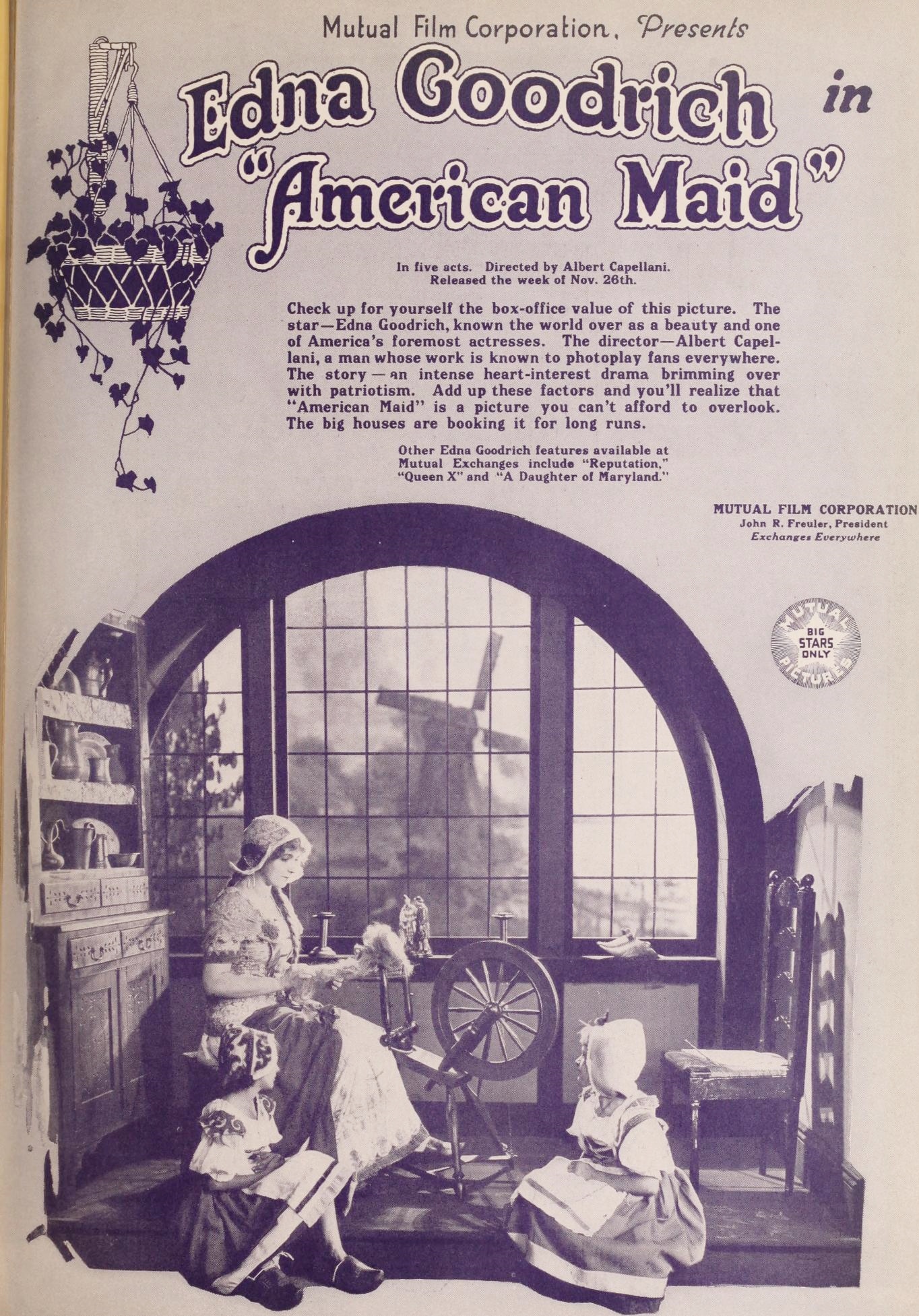
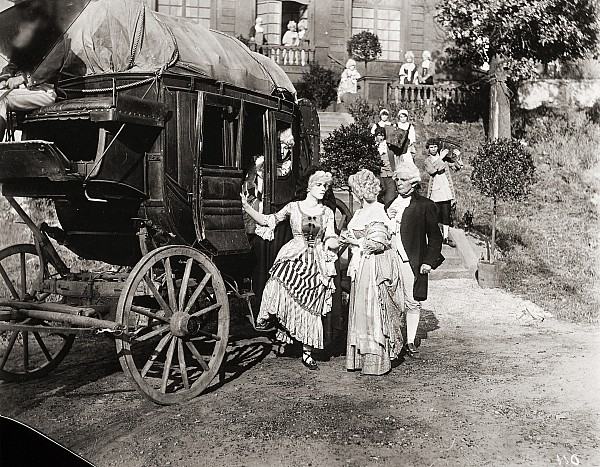
Hamilton Smith and Julius Rothschild’s American Maid (1917) arrives like a brittle letter pulled from a uniform pocket: creased, smeared with cordite, yet fragrant with lavender water. The film’s very title is a sleight of hand—no domestic scrubbing here, but rather a woman polishing the tarnished armor of American idealism. Virginia Lee, essayed by Edna Goodrich with the porcelain poise of a Sargent portrait, is introduced not in drawing-room repose but amid the sulfurous twilight of a French field hospital. Her Red Cross coif glows like a halo of radium against the umber palette, and cinematographer George Henry—yes, the same George Henry who acts here—lets the camera linger until the celluloid seems to inhale ether and iodine.
Class, blood, and geography
Smith’s screenplay is a jagged triptych: battlefield, ballroom, badlands. Each panel refracts the same moral spectrum—rank, duty, desire—through a different lens. In the trenches, rank is a death sentence; in the embassy, it is perfume; in the copper mines, it is sediment waiting to be melted. Virginia’s father, played by William B. Davidson with the sleek unctuousness of a senator who has never ridden a streetcar, believes bloodlines are geological strata; David Starr, performed by Jack Hopkins with a stoic jaw that anticipates Gary Cooper, knows blood is merely something you cough onto a handkerchief before dying.
Watch for the recurrent mirror motif: a cracked looking glass in the field tent, a ballroom mirror bordered by gilt laurels, and finally a desert pool reflecting thunderclouds like bruised silk. Each reflection is less intact than the last, hinting that identity under war and capital is a kaleidoscope whose colored shards can never be reassembled into a single self. The editing—by necessity rudimentary, yet rhythmically astute—cuts from a nurse tearing a bandage to society matrons tearing invitations, equating bodily and social wound with the blunt force of metaphor.
Performances calibrated to silence
Goodrich’s micro-gestures—a left eyelid fluttering like a trapped moth when Virginia overhears Starr’s lowborn surname, the way her gloved thumb rubs the fabric as if testing the caliber of silk—speak louder than any title card. Hopkins counters with a physical reticence: shoulders squared to the world, but hands forever pocketed, as if hiding the stigmata of prior wounds. Their chemistry is not the fireworks of La Dame aux Camélias but the slow carbonization of coal into diamond.
The west as moral forge
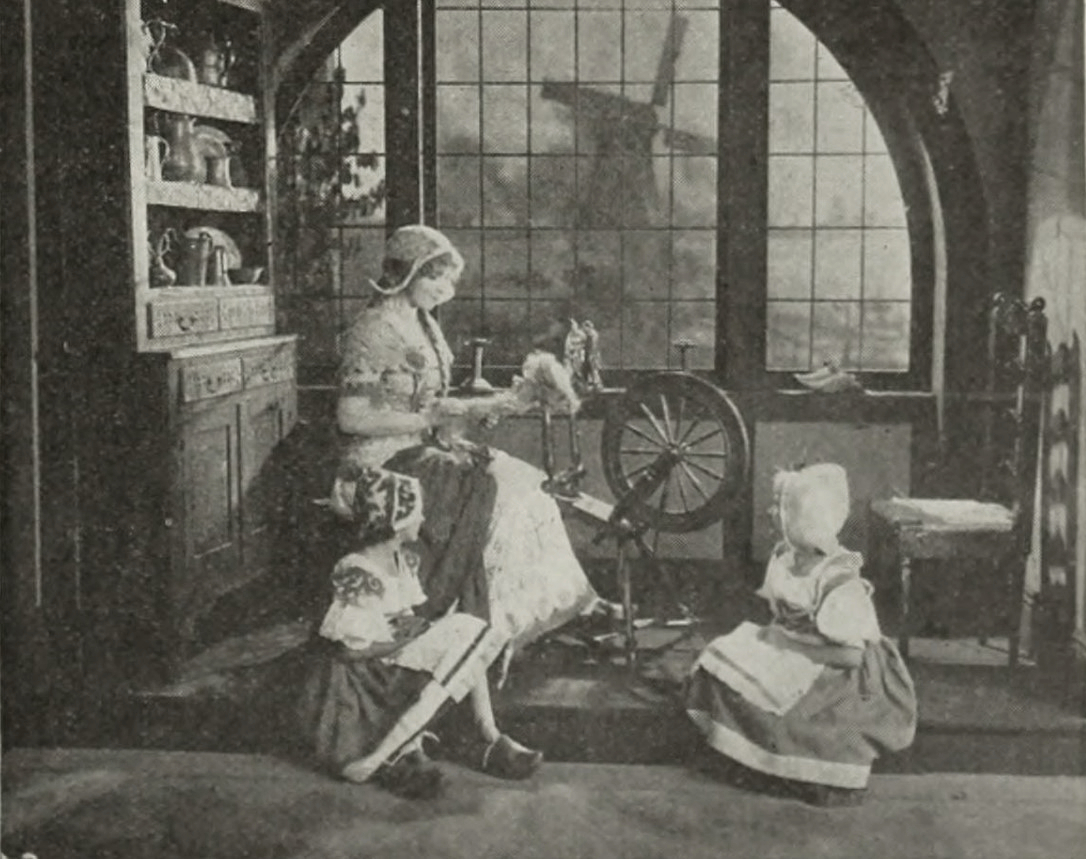
When the narrative train lurches toward the frontier, the film exchanges lace for sandstone. The senator’s mining investment is a McGuffin; the real excavation is of caste. In a subterranean sequence worthy of Het geheim van Delft, the camera follows lanterns bobbing down a shaft until human figures shrink to motes—an visual admission that under the crust of the earth, every soul is particle-sized. A cave-in entombs Virginia and Starr together, forcing the senator above ground to confront the corporeal equality of mortal terror. The rescue—executed with pulleys shadowed like gallows—feels less triumphant than funereal, a burial of prejudice that nonetheless leaves the survivors blinking in harsh sunlight, unsure what to do with their hard-won parity.
Gendered spectatorship
Virginia’s gaze repeatedly frames Starr before she recognizes him: through a Red Cross tent flap, through a cabriolet window, through opera glasses. The camera literalizes her gaze, reversing the era’s default masculine scopophilia. Meanwhile, Starr’s avoidance of eye contact—until the final reel—renders him both enigma and Everyman, a veteran who cannot metabolize being beheld. The politics of looking here anticipate feminist film theory by half a century without the slightest whiff of pedantry.
Archival evidence suggests the original road-show presentation featured a score cobbled from Sousa marches and Debussy nocturnes—jingoism colliding with impressionism, much like the plot. Modern restorations often substitute a solo piano, but I have heard a 2019 Anthology Film Archives screening where a quartet repurposed Charles Ives fragments, the dissonance mirroring the lovers’ fractured trajectories. Either way, silence is never neutral; it is the pressure cooker in which guilt and yearning marinate.
Unlike the baroque revenge loops of The Pursuing Vengeance or the proto-sci-fi angst of Homunculus, 6. Teil, American Maid roots its melodrama in the recognizably mundane: a ballroom snub, a misaddressed letter, a train platform missed by seconds. Its emotional amplitude is closer to Somewhere in France’s frontline fatalism, yet its ultimate optimism distinguishes it from the abyssal nihilism of The Strange Case of Mary Page.
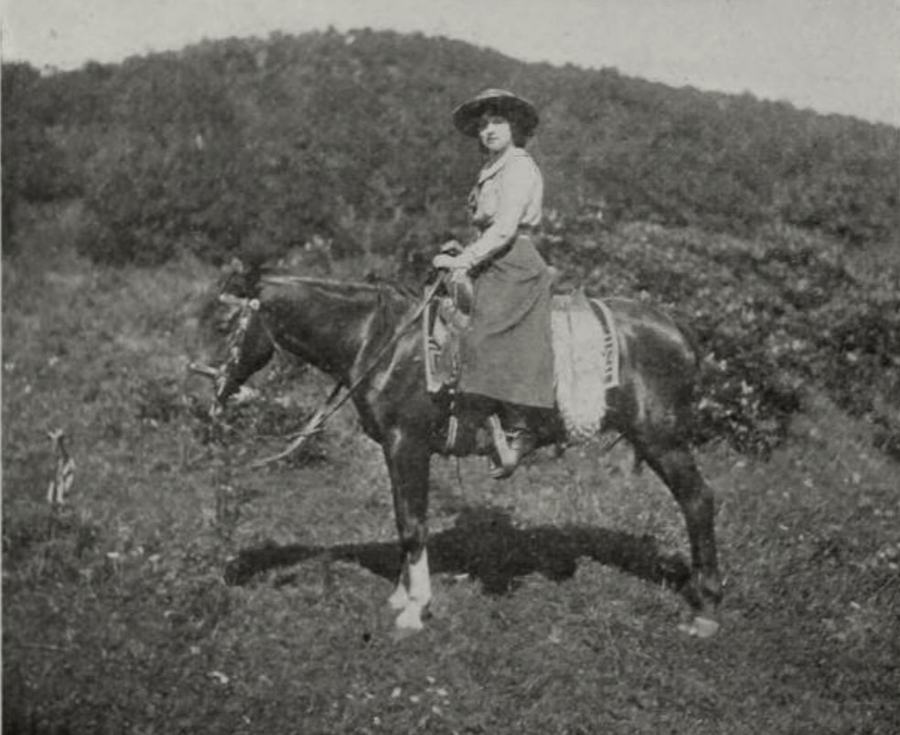
Still, one cannot un-see the DNA it shares with Alexandra: both films position the heroine as cartographer of her own desire, mapping routes across masculine terrain. And in its copper-mine denouement, the movie anticipates the industrial-gothic thrust of The Craving, though without that film’s expressionist hysteria.
For all its class consciousness, the film is snow-blind on race. A brief shot of a Black orderly carrying linen does not earn narrative recognition; he is furniture. This omission is the scar tissue beneath the film’s epidermis of progress, a reminder that 1917’s radicalism had strict borders. One can contrast this with the more inclusive—though still problematic—tableaux of Through Turbulent Waters two years later.
Surviving prints hover around 65 % completeness; nitrate decomposition has gorged on reels two and four. What remains, though, is astonishingly cohesive, testament to Rothschild’s linear construction. The Eastman House 35 mm holds the sharpest contrast, while a 9.5 mm Pathéscope for home consumption—discovered in a Nebraskan barn—offers a vignetted softness that ironically enhances the film’s romantic haze. Both circulate in 2 K scans on archival torrents, though cinephiles owe it to themselves to witness the nitrate glow in a properly ventilated cinema.
American Maid is neither the missing keystone of silent cinema nor a footnote best left to mothballs. It is, rather, a palimpsest: beneath its war-weary love story you can descry the first sketches of American disillusionment, the trembling outline of a nation learning that class is a trench deeper than any in France. Watch it for Goodrich’s eyes—two lanterns that refuse to be extinguished by either shrapnel or snobbery. Watch it for Hopkins’ compacted anguish, a prototype for every post-war cowboy who ever rode into a canyon to escape a woman he couldn’t afford to love. And watch it, finally, to witness how the desert, indifferent as history, swallows mansions and pup tents alike, leaving only the bleached bones of hierarchy gleaming under an impartial sun.
Verdict: 8.7/10—a cracked heirloom whose fracture lines refract more truth than perfection ever could.
IMDb 5.1
1934
Community
Log in to comment.