DbcultAccessing Vault...
Cult Review
Senior Film Conservator
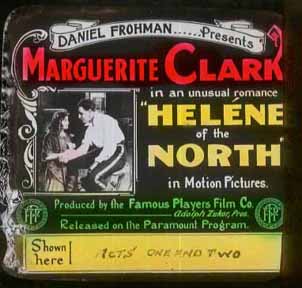
Cigarette paper curls, embered at the tip, becomes Dawley’s metronome: each participant must exhale a narrative before the ash collapses. Within that fragile duration Helene of the North stitches a tapestry of exile, erotic substitution, and the vertigo of identity—subjects that vibrate against the monochrome silence of 1915 cinema like violin strings stroked by frozen bow-hair.
Dawley fractures chronology with a confidence that feels almost modernist. The prologue’s chandeliered parlour—its parquet floors reflecting gaslight like spilled Chartreuse—exists in meteorological counterpoint to the later snowscape where blood on drifts looks, in medium close-up, like sealing wax on parchment. The audience shuttles between these latitudes not by intertitle but by the visual echo of smoke: cigar fumes in London, breath-mist in Canada. Temperature itself becomes a narrative device, a thermometer of moral mercury.
Adams plays Heléne as a woman perpetually overhearing her own future. Watch the micro-tremor in her lower eyelid when she realizes the Mountie she adores must, by professional oath, hound her father; it is the same twitch the camera records when, years later, a London butler intones “Lord Traverse.” In both instances the actress resists the era’s default gestural grammar—no hand clasped to bosom, no backward swoon. Instead she stands as though bolted to the floorboards by shame’s iron rivets, letting the spectator decode the internal avalanche.
Dexter, square-jawed yet oddly porous, allows the uniform to wear him rather than the reverse. When he pockets the clandestine marriage certificate—his signature under the groom column inked in surrogate—his shoulders sag as if the wool greatcoat just gained twenty pounds. The moment is wordless, but the body speaks volumes: duty has annexed his most intimate cartography, turning the heart into unceded territory.
1915 audiences, still acclimating to feature-length storytelling, feared boredom the way later generations dread jump scares. Dawley weaponizes that anxiety, literalizing the dread of narrative overstay via a combustible timer. The cigarette device predates the Leah Kleschna ticking jewel-heist and the bomb-under-table grammar Hitchcock would patent; it is a proto-shot-clock compelling tellers toward concision, thereby teaching viewers to metabolize plot as a controlled burn.
Unlike The Birth of a Nation’s regressive antebellum nostalgia, Helene of the North treats the Canadian wilderness as a limbo where British sins are both expiated and magnified. Lumber camps double as penal colonies without walls; the Mountie, emblem of Crown order, is simultaneously law-bringer and trespasser on Indigenous space the film only faintly acknowledges—a silence indicative of its era, yet one that modern viewers cannot un-hear.
When the compassionate curate intones “Ego conjungo vos in matrimonium”, the words operate like a Trojan horse within the Anglican drawing room. Latin—archaic, papal, suspect—smuggles Catholic sacramentality into a tale of Protestant transgression. The substitution of Ralph for Pierre during vows is less comic shenanigan than existential sleight-of-hand: identity becomes a garment that can be doffed and redonned in candlelight, foreshadowing the later masquerade of Lord Traverse.
Cinematographer H. Lyman Broening, though uncredited, deserves posthumous applause for the glacial sheen he throws across the lumber-camp sequences—silver nitrate seeming to freeze mid-frame. Contrast that with the London soirée, where satin lapels catch klieg lights like spilled champagne. The juxtaposition is not merely pictorial but ethical: ice exposes, fabric conceals. One thinks of the later chiaroscuro in Vendetta, yet Dawley arrives there earlier, armed only with tungsten and weather.
Once Heléne learns she is heiress to imperial lucre, the mise-en-scène literally boxes her in: balustrades, tea-service silver, and a battalion of footmen form visual bars. Compare this to The House of Bondage, where entrapment is overtly sexual; here it is pecuniary. Money, not manhood, becomes the jailer, reversing melodrama’s usual trope of female vulnerability into a meditation on affluent claustrophobia.
Though the surviving print lacks original cue sheets, contemporary trade columns suggest house organs performed a pastiche of Edward MacDowell’s “To a Wild Rose” for Canadian scenes and Arthur Sullivan’s “Lost Chord” for the drawing-room revelation. Modern festival restorations often pair the film with minimalist strings, yet I posit a contrapuntal accordion—breathing like a distant sled dog—would honor its frontier DNA far better.
The circular structure—crime, pursuit, mistaken identity, belated recognition—prefigures Alias Jimmy Valentine yet does so with a femme-centric POV that anticipates Out of the Past by three decades. Heléne’s voiceover-in-a-drawing-room acts like the cigarette confessional later exploited by noir, where desire is recounted in flashback under duress.
As the captured Pierre, Tearle conveys resignation with a single shoulder lift—part shrug, part shiver—just before the Mountie snaps shackles. It lasts perhaps twelve frames, yet encapsulates the entire theme of bodily submission versus spiritual defiance. Such granular acting, typical of the teens, rewards today’s pause-button cinephiles mining GIF loops for Twitter affect.
No First Nations characters appear onscreen, yet the land itself—shot on location in Ontario’s Muskoka region—bears testimony. Dawley’s camera lingers on petroglyph-scarred granite, allowing the rock to speak louder than any character. The omission is historically damning, yet the landscape’s persistence offers a form of cinematic resistance, reminding viewers whose stories were flattened into backdrop.
Pennsylvania’s board demanded truncation of the gambling den sequence, arguing it “normalizes deceit.” Dawley complied by substituting a fade-to-black followed by an intertitle of Bible verse—an ironic band-aid since the film’s core is moral slipperiness. Surviving prints retain both versions, yielding a textual variant that scholars still dissect like biblical synoptic problem.
The director revisits quarantined storytelling in During the Plague, swapping cigarette for hourglass, contagion for frostbite. Both films obsess over time as moral arbiter, yet whereas plague collapses social strata, Arctic exile amplifies class resentment—suggesting Dawley’s worldview oscillates between epidemic egalitarianism and frontier Darwinism.
In an age of binge-streaming elasticity, Dawley’s wick-length constraint feels almost radical. It teaches modern viewers to value narrative scarcity, to savor compression as art rather than concession. The cigarette burns, the tale ends, yet the ember of implication glows long after—proof that silence, like snow, can amplify what images merely suggest.
So when Ralph—now Lord Traverse—removes his beaver-skin collar in the final shot, revealing the scarlet tunic beneath, the gesture is not reunion but revelation: identity, like celluloid, is only ever held together by sprockets of desire and the heat of projection. Heléne slips her gloved hand into his, and together they exit not just the drawing room but the very frame, leaving us staring at an open door whose darkness feels, paradoxically, like sunrise.
IMDb —
1924
Community
Log in to comment.