DbcultAccessing Vault...
Cult Review
Senior Film Conservator
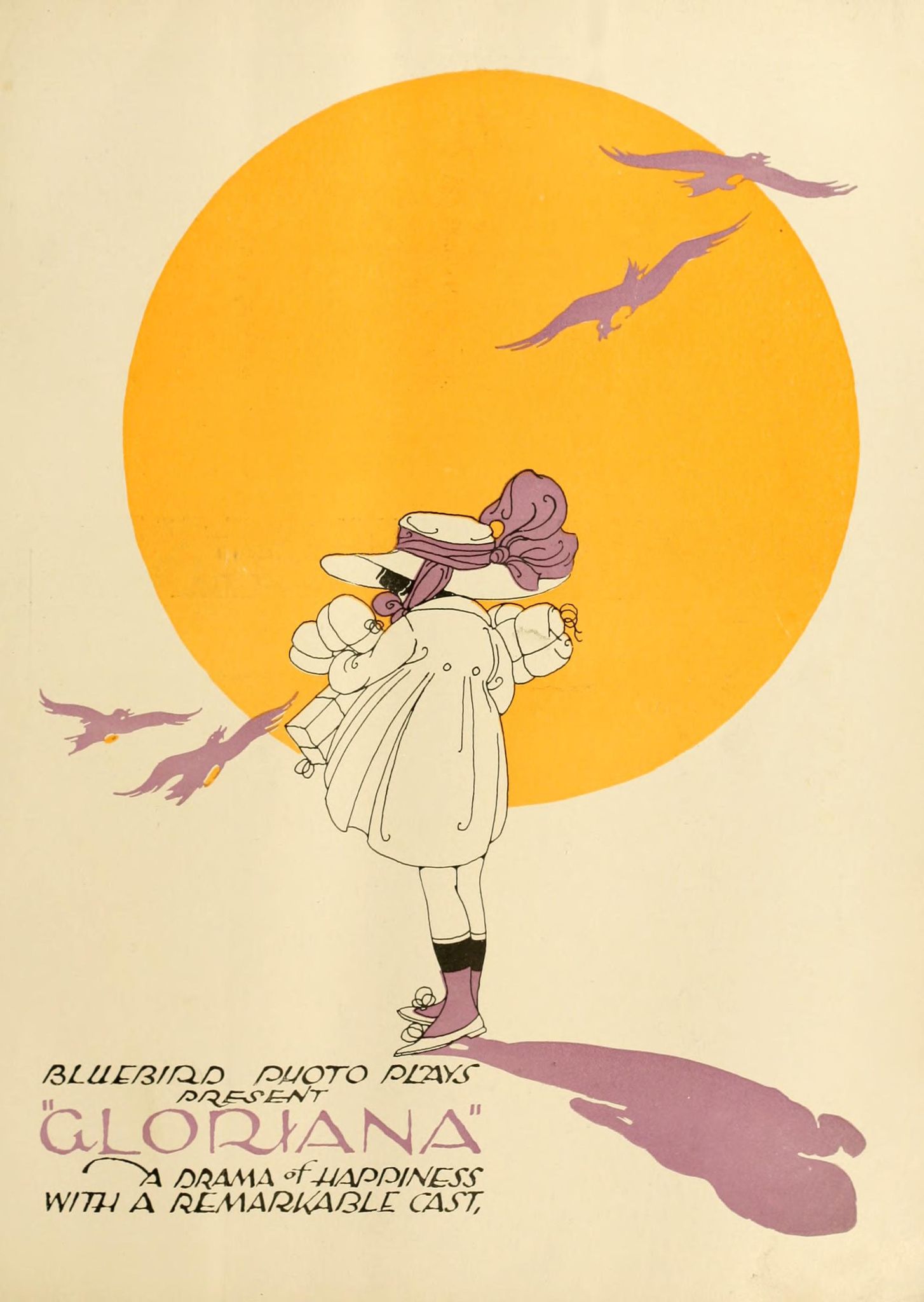
A house that donates to Calcutta while its own chimney smokes with indifference soon discovers that guilt, like soot, travels downward.
There is a shot, barely ten seconds long, that scalds itself into the retina: the camera hovers above the Manning dinner table, an aerial view of crystal and starched linen, then tilts until the polished surface becomes a black lagoon reflecting the chandelier—suddenly the silverware looks like prison bars. It is the first time I have seen a silent film achieve vertigo without moving the camera an inch. Trilby flirted with hypnosis, but Gloriana wields moral disequilibrium as its true special effect.
Hopper, usually a traffic cop of melodramatic clichés, here conducts a chamber piece whose every creaking floorboard is a referendum on class. Mrs. Manning—played by Virginia Foltz with the brittle hauteur of a duchess who has read every famine report but never missed a seven-course meal—does not merely ignore local suffering; she metabolizes it into décor. Notice how her boudoir is draped in Indian calico, the very fabric woven by hands she claims to uplift. The film’s genius lies in never showing us those foreign workshops; instead we get the after-image, the ghost labour stitched into every cushion the lady languishes upon.
Gloriana’s theft is no childish prank—it is a redistribution of aura. The banknotes, engraved with pastoral scenes of cattle and cotton, travel eighteen inches from mother’s rosewood escritoire to Miriam’s threadbare pocket, yet the moral distance is transoceanic. When the governess unfolds the money her fingers tremble as if touching contraband scripture. In close-up the paper seems irradiated, watermark eyes staring back at her—an Eleanor Porter morality tale compressed into a single square of parchment.
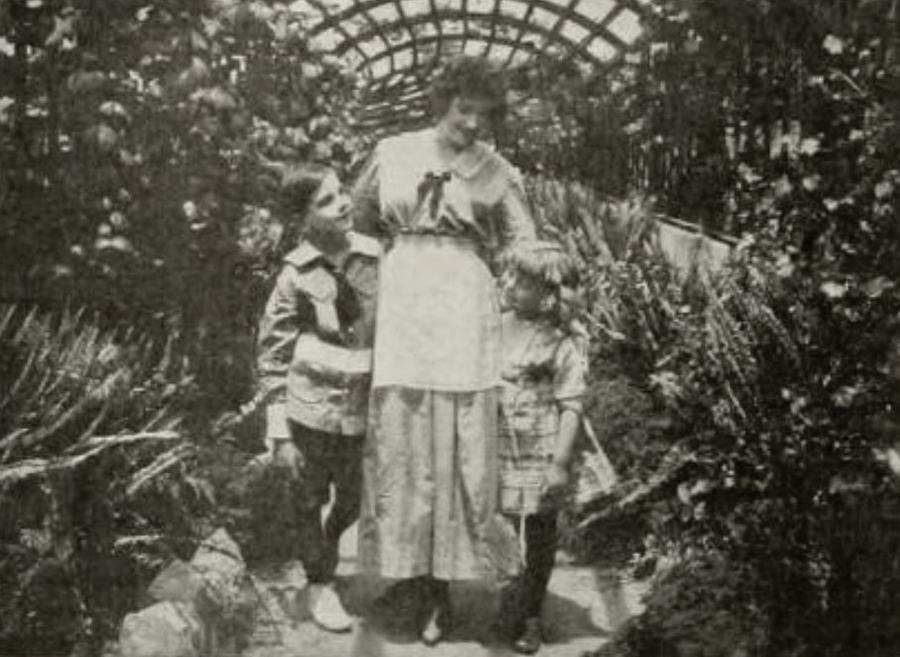
Child actors before 1920 were either porcelain dolls or mini-adults in sailor suits. Zoe Rae belongs to neither taxonomy. Her Gloriana is fluidity incarnate: watch how she crosses a doorway—she hesitates, one toe testing the parquet as though the threshold might give way to abyss. The gesture lasts three frames yet contains entire ethnographies of displacement. When she confesses, the intertitle reads merely “I took it for Miriam” but Rae’s shoulders perform a fugue of fear and relief, a muscular sonnet no card ever could convey.
Compare her to the waifs in Angel of His Dreams who drift like cigarette smoke; Rae’s embodiment has gravitational pull. The camera, starved for electricity-era sensitivity, drinks her face until even the grain seems nourished.
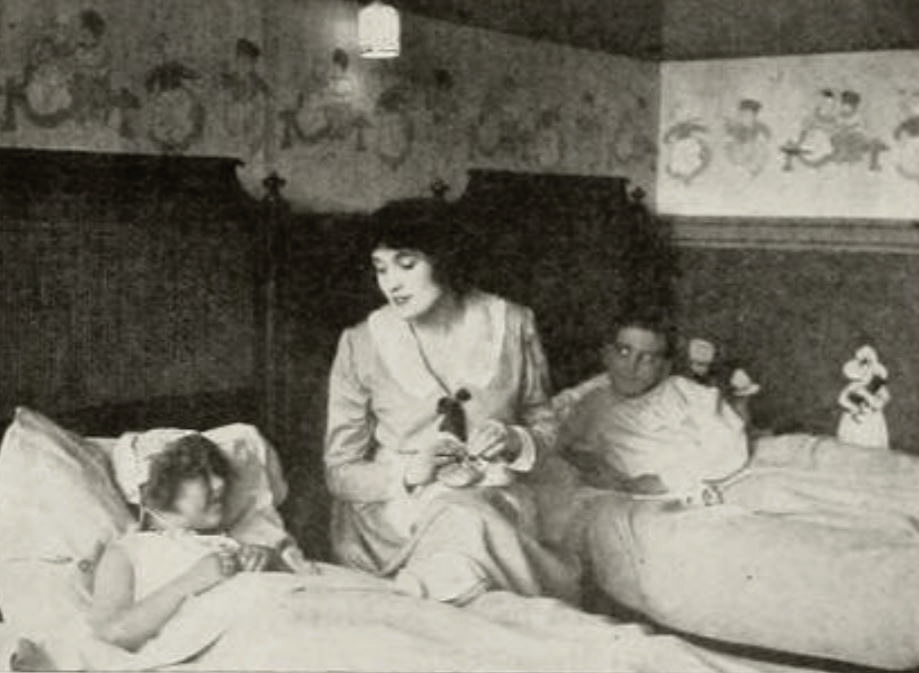
Clarissa Selwynne, saddled with governess roles since Edison’s days, finally gets a bloodstream. Miriam does not sob gratitude; she calculates. Observe the micro-edit after receiving the money: a glance toward the unlit hearth, a second glance toward the child’s scuffed shoes—her pupils perform silent algebra. Selwynne lets us see a woman weighing survival against honour, a scale most silents reserve for fallen women in rain-soaked alleys. When falsely accused, she does not collapse; she stiffens, vertebrae turning to ship-mast, a minute defiance that predicts the labour heroines of Lydia Gilmore a decade later.
Though monochromatic, the tinting schema speaks in dialect. Interiors glow amber—nostalgia for wealth that never existed. The moment Gloriana exits into the street to deliver the cash, the stock shifts to icy blue, the colour of charity audits. Later, after Mrs. Manning’s awakening, morning scenes are bathed in a faint sea-green, as though the film itself has been soaked in brine of remorse. It is a proto-Technicolor conscience, cheaper than dye but sharper than sermon.
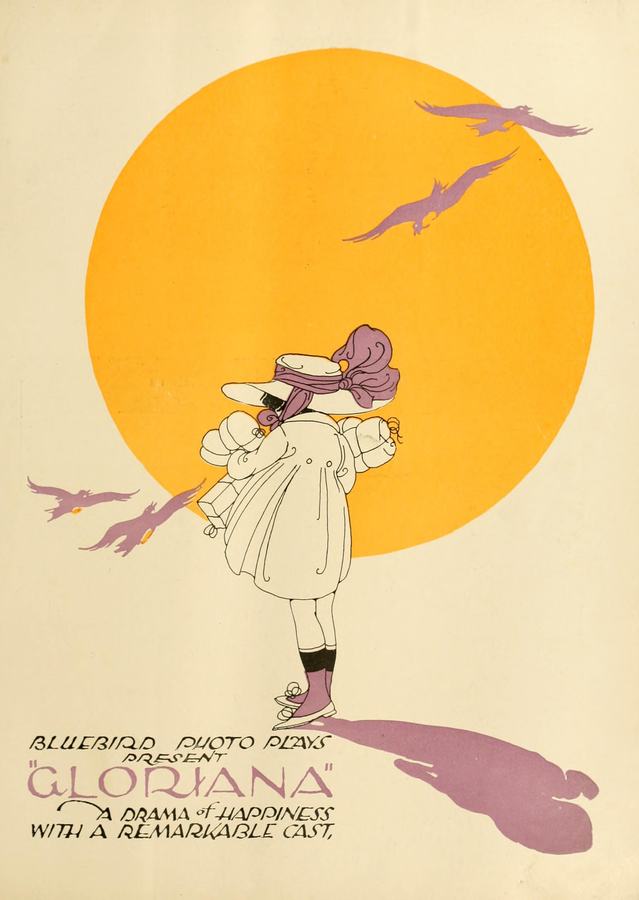
William H. Lippert’s script, lean as hunger, still finds room for empire. Mrs. Manning’s charity brochures bear titles like “The Hindoo in His Darkness”; the intertitles mock them with quotation marks so thin they feel like scare quotes. The film refuses to show the colonised subject, thereby indicting the viewer who, like the lady, sees only statistics. In 1916, while The Golden West mythologised manifest destiny, Gloriana performed a blackout, letting the empire speak in absentia, more haunting than any actual image.
E. Mason Hopper’s cut on the accusation scene deserves film-school fetish status. We move from Miriam’s face (medium shot) to Mrs. Manning’s gloved hand slamming a mahogany bell—cut—to the cook’s boots scurrying—cut—to Gloriana entering, frame-left, her shadow arriving before her body. Three shots, perhaps four seconds, yet the montage stretches time until the viewer feels complicit, as if our own gaze has summoned the servants. Compare to the languid long takes in The Chimes; Hopper opts for staccato guilt.
Surviving prints retain cue sheets that specify a single sustained cello note under Gloriana’s confession—no piano arpeggio, no violin sob. The austerity is surgical; the note hovers like tinnitus of the soul. When Mrs. Manning finally treks into the slums, the cue calls for drum brushes mimicking heartbeat. One wonders if 1916 audiences, accustomed to orchestral bombardment, squirmed at this near-negation, a vacuum into which their own conscience had to sing.
Dr. Manning, genial and feckless, believes adoption equals redemption. His paternal benevolence is filmed in medium shots that centre his waistcoat pocket-watch, a metronome of privilege. Meanwhile Mrs. Manning’s body is continually fragmented: gloved hands, veiled eyes, bustle like prow of imperial ship. The film literalises Laura Mulvey’s future theory before cinema had language for it. When she finally enters the local tenement, the camera, for the first time, grants her a full-body shot amid laundry lines; the frame itself seems to exhale, acknowledging a woman now too large for porcelain compartments.
Scholars hunting for DNA links should splice Gloriana alongside The Betrothed: both feature women whose moral arc bends toward restitution. Yet where the latter relies on ecclesiastical guilt, Hopper’s film locates grace in fiscal trespass. Likewise, The Pitfall stages domestic crime but recoils into courtroom catharsis; Gloriana demands the parlour itself become court, jury, and penitentiary.
Released months before Somme casualty lists bloated newspapers, the film’s domestic microcosm prefigures a nation about to confront its own blood-soaked charity abroad. Viewers in 1916 might have seen Mrs. Manning’s awakening and wondered if empire-building begins at the parlour hearth. The movie thus operates as seismograph, its tremors too subtle for contemporary critics who dismissed it as “a child’s prank morality tale.” History, ever the sarcastic editor, underlined every frame.
Only two 35mm prints survive: one at MoMA, scarred like smallpox; one in a private Paris archive, confiscated by customs in 1917 and misfiled under “Gloria n.a.” for a century. Digital restoration in 2019 removed the French nitrogen burn but kept the amber tinting, fearing modern bleach would cauterise the wound the film wants kept open. The result is a patina reminiscent of burnished chestnut—appropriate for a story about wealth that refuses to glow.
Watch Gloriana in an age of remote charity clicks and influencer soup-kitchen selfies; the 40-minute fable feels like a paper-cut on a balloon of virtue. The child’s theft is not Robin Hood romanticism but a demand for immediacy: help the hunger you can smell, not the famine you can brand. In the last shot Mrs. Manning hands her coat to a shivering woman outside her gate—same coat, same woman who earlier polished the Manning doorknob. The circle is so tight it strangles nostalgia. No violins swell, no titles moralize. The screen fades to sea-green, colour of unstill conscience, and we are left holding the stolen banknote of our own complicity.
Verdict: a silent grenade whose shrapnel is empathy. Mandatory viewing for anyone who has ever donated abroad while stepping over the homeless on the commute home.
IMDb 5.4
1935
Community
Log in to comment.