DbcultAccessing Vault...
Cult Review
Senior Film Conservator

Ah, the silent era! A time when narratives were painted with broad, expressive strokes, and emotions, unburdened by dialogue, resonated purely through gesture and gaze. Among the myriad cinematic offerings of that nascent period, one gem, 'The Secret of Eve', emerges as a profound exploration of identity, societal disillusionment, and the elusive nature of genuine felicity. This isn't merely a plot recounted; it's a tapestry woven with poignant choices, stark contrasts, and a protagonist's arduous journey toward self-actualization. Olga Petrova, a name synonymous with intensity and dramatic prowess in early cinema, imbues Eve with a captivating vulnerability and a formidable inner strength that transcends the limitations of the medium. Her performance alone is a masterclass in conveying complex psychological states without uttering a single word, drawing the audience into Eve's tumultuous spiritual odyssey.
The film opens with a powerful act of maternal sacrifice: Hagar, a Romani woman, leaves her infant daughter, Eve, on the doorstep of a Quaker family. This initial premise immediately establishes a foundational tension—the inherent wildness of Eve's heritage juxtaposed with the rigid, pious upbringing she receives. The Fothergills, well-meaning though they are, inadvertently sow the seeds of future discontent. Their world, characterized by quiet contemplation and an absence of worldly pleasures, inevitably palls upon a young woman whose spirit yearns for something more, something undefined yet undeniably vibrant. This longing is beautifully encapsulated in the pivotal scene where Eve, drawn by the scintillating lights and joyous sounds from the neighboring Brandon estate, peers into a world utterly alien to her own. It's a moment pregnant with symbolic weight, representing the siren call of societal glamor and the inherent human desire for connection and celebration.
The Brandons, a microcosm of the era's burgeoning industrial elite, embody everything the Quakers shun. Their home is a vortex of merrymaking, a stark contrast to Eve's subdued existence. When the gay crowd, noticing the demure Quaker girl, draws her into their revelry and dresses her in finery, it's more than a mere costume change; it's a symbolic shedding of her former life, an embrace of a new, intoxicating identity. Her confession of loneliness to Arthur Brandon is a raw, unguarded moment, a cry from the soul that resonates with anyone who has ever felt like an outsider. Arthur, a figure of worldly charm, represents the gateway to this new life, his descriptions of the 'fascinations of a great city' painting a picture of boundless possibility. Their subsequent marriage, initially a source of immense joy and social ascent for Eve, quickly reveals its superficiality. The 'gaiety' she revels in proves to be a flimsy veneer, incapable of sustaining true happiness. This narrative arc, from quiet longing to superficial fulfillment and subsequent disillusionment, is a classic trope, yet 'The Secret of Eve' executes it with a compelling sincerity.

The film then deftly pivots from personal introspection to broader social commentary. Arthur Brandon is not merely a charming socialite; he is a factory owner, and his 'conscienceless treatment of his workers' becomes the catalyst for Eve's profound awakening. The public denunciations in newspapers, a tangible manifestation of societal disapproval, serve to humiliate Eve, forcing her to confront the moral bankruptcy of her husband's empire. His heavy drinking further underscores the hollowness of their existence. This element of social critique elevates 'The Secret of Eve' beyond a simple melodrama, imbuing it with a prescient awareness of the era's industrial inequities. It draws parallels to other films of the period that sought to highlight social ills, though perhaps with less direct focus on a protagonist's internal struggle. For instance, one might consider films like The Ruling Passion, which often explored the darker sides of human nature and societal pressures, or even The Outcast, which might delve into the plight of those marginalized by society, though 'Eve' focuses more on the awakening of an insider.
The introduction of Richard Blair, a young philanthropist, marks a turning point. Blair is the moral compass, the embodiment of active compassion. His investigation into Brandon's factory is not an abstract endeavor; it leads directly to the tragic blinding of Rosa, an Italian child, by an industrial accident. This incident is not merely a plot device; it's a gut-wrenching illustration of the human cost of unchecked capitalist greed. Brandon's miserly compensation of a 'miserable pittance' for Rosa's life-altering injury further solidifies his villainy. Blair's subsequent actions—finding work for Rosa's father, Beppo, and sending Rosa to an institute for the blind—are acts of profound humanity that stand in stark contrast to Brandon's callousness. Eve's admiration for Blair's 'nobility of nature' is entirely understandable; he represents the antithesis of everything her husband has become, a beacon of ethical fortitude in a world of moral ambiguity.
The escalating tension between Eve, Arthur, and Richard culminates in a dramatic confrontation. Brandon, blinded by jealousy and misinterpreting the innocent friendship between Eve and Blair, hurls insults, prompting Blair to defend Eve's honor with physical force. This act of chivalry, while satisfying, places Eve in an impossible position. Her offer to 'go away with Blair' is a desperate plea for escape, a yearning for a life built on mutual respect and shared values. Blair's response, though painful, is a testament to his unwavering integrity: he loves her, but he 'will not take her unlawfully.' This adherence to principle, even in the face of passionate desire, is a crucial element of his character, distinguishing him from the morally compromised Brandon. It forces Eve to make a difficult, yet ultimately empowering, decision: to refuse to return to her husband and instead 'fight her own way' in the sprawling, indifferent city.
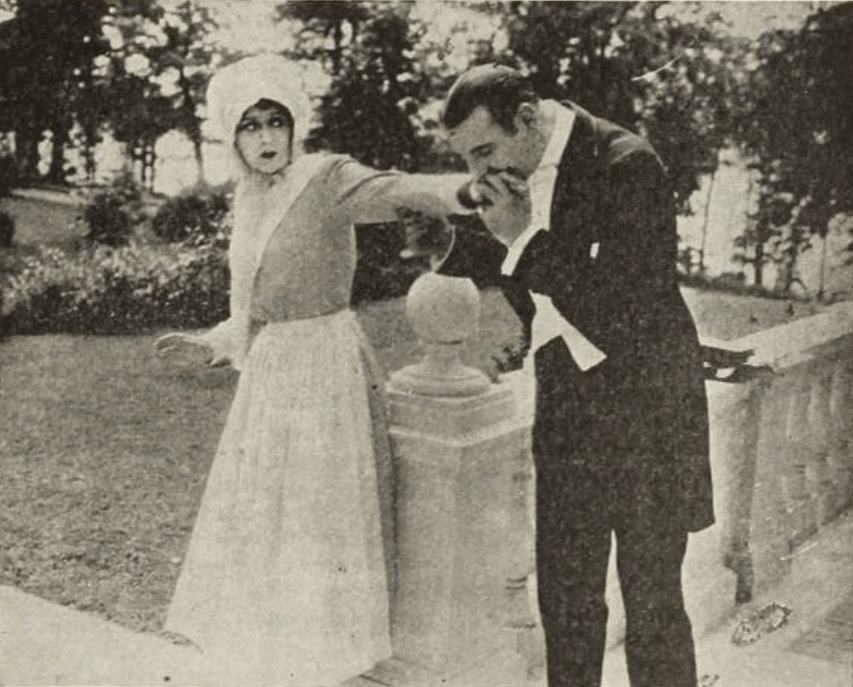
Eve's foray into the urban jungle is a brutal awakening. Stripped of her former luxuries and societal standing, she quickly discovers her 'unfitness for the rough work she undertakes.' This period of struggle is depicted with unflinching realism, highlighting the profound vulnerability of a woman thrust into a harsh, unforgiving environment without adequate preparation or support. The city, once described by Arthur as a place of 'fascinations,' reveals its cruel underbelly, pushing Eve to the precipice of despair. Her decision that 'suicide is her only way out' is a harrowing moment, a testament to the profound psychological toll of her ordeal. This theme of a woman's struggle for survival and dignity in a challenging world resonates with other cinematic narratives of the period, perhaps echoing the spirit of films like Balletdanserinden, where women often navigated complex social landscapes, or even A Yoke of Gold, which might explore the constraints and burdens placed upon individuals by their circumstances.
Yet, just as Eve stands on the brink of self-destruction, fate intervenes with a profound act of grace. Hearing a distressed cry, she encounters Rosa, the blind child, wandering perilously close to the lake. This unexpected reunion is a pivotal moment of catharsis and reorientation. Eve, who was moments away from ending her own life, finds her purpose rekindled in the act of caring for another. Taking Rosa back to the institute is not merely a good deed; it's a symbolic return to a path of selflessness and compassion, a stark contrast to the self-absorbed pursuit of happiness that had previously defined her life. The institute, initially a place of charity, transforms into a sanctuary for Eve's soul, offering her a sense of belonging and meaning she had never truly experienced.
Concurrently, the narrative reaches its dramatic climax with Beppo's relentless pursuit of revenge against Brandon. His act of following Brandon onto his motorboat and the ensuing struggle, culminating in an overturned oil lamp, a fiery inferno, and their shared, agonizing death, serves as a brutal poetic justice. It's a sensational, yet strangely fitting, end for the conscienceless factory owner, clearing the path for Eve's future while simultaneously underscoring the destructive nature of unchecked anger and greed. The visual spectacle of the burning boat and the men locked in a 'death grasp' would have been a powerful, indelible image for audiences of the time.
With Brandon's death, the narrative presents Eve with a new choice. Richard Blair, the steadfast and noble philanthropist, returns, offering her the legitimate marriage and life together they had once contemplated. It is here that the film delivers its most profound message. Eve's heart, once captivated by superficial glamor and then hardened by urban struggle, has undergone a radical transformation. Her connection to the blind children, forged in adversity and nurtured by compassion, has become the bedrock of her existence. She accepts a position as an attendant at the institute, choosing a life of dedicated service over personal romantic fulfillment. This decision is not a rejection of love, but an embrace of a higher form of happiness, one found in altruism and purpose. The 'secret of Eve' is thus unveiled: true happiness does not lie in wealth, social standing, or even romantic love, but in selfless devotion to others, particularly the most vulnerable.
Olga Petrova's portrayal of Eve's journey is nothing short of magnificent. Her ability to convey the character's initial restlessness, her fleeting joy, her profound disillusionment, her desperate despair, and ultimately, her serene acceptance of a life of service, is a testament to her acting prowess. The film, written by Aaron Hoffman, navigates these complex emotional landscapes with a clear moral vision, offering a powerful, enduring message that transcends its silent era origins. While the plot might seem melodramatic by contemporary standards, it is precisely this heightened emotionality that allowed silent films to communicate so effectively. The themes explored—the search for identity, the critique of social injustice, the redemptive power of compassion—remain timeless and universally resonant. 'The Secret of Eve' is more than just a historical artifact; it is a compelling human drama that continues to speak to the enduring quest for meaning in a complex world.

IMDb 7.9
1932
Community
Log in to comment.