DbcultAccessing Vault...
Cult Review
Senior Film Conservator
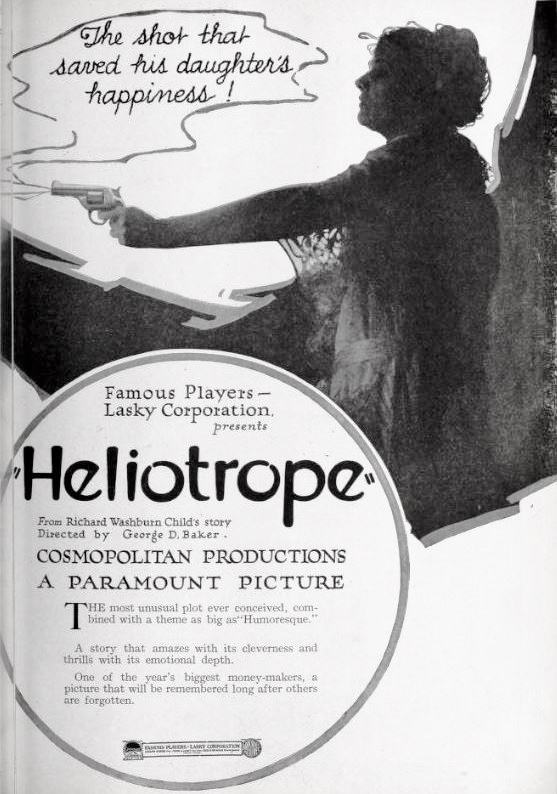
Picture a reel labeled Heliotrope spinning on a 1920 Kinemo projector: violet sprocket-holes flicker like bruised heliotrope petals while nitrate perfume curls into the projectionist’s lungs. That scent—equal parts gunpowder and lilac—perfectly distills the film’s tonal paradox: a sentimental bloodbath, a lullaby sharpened into a shiv.
George D. Baker, a director who once wrung pathos from custard pies in Mack Sennett shorts, here dips his quill into molten obsidian. Collaborating with pulp-savant Richard Washburn Child, he sculpts a narrative that pirouettes on the razor’s edge between Victorian melodrama and proto-noir nihilism. The resulting artifact feels less like a relic and more like a message in a bottle hurled from the deck of a sinking continent—an America still drunk on war victory yet nursing the hangover of Prohibition.
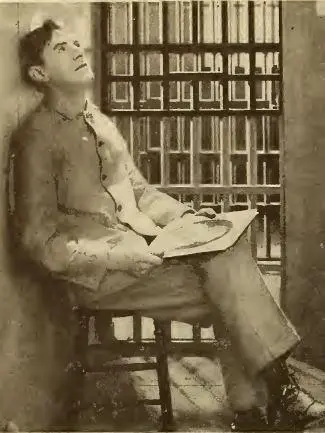
Cinematographer Thomas Findley treats grayscale as if it were an entire rainbow stripped of vanity. Note the sequence where Lytell’s silhouette barges through a corridor of vertical bars—those stripes of shadow aren’t merely compositional; they’re the stripes of a nation incarcerated by its own appetites. Compare the visual grammar to Der Mandarin where ornamental chiaroscuro frames Confucian parables; here the shadows are Calvinist, whipping the viewer with moral fervor.
Wilfred Lytell—often dismissed in fan-mags as a pretty matinee idol—unleashes a performance of such granular anguish that even the intertitles seem to bleed. Watch his pupils dilate when he deciphers the blackmail letter: the whites of his eyes become twin halos of holy terror. Meanwhile, Betty Hilburn, essaying the venomous ex-wife, operates like a Venus flytrap in pearls; every dimpled smile snaps shut on the neck of propriety.
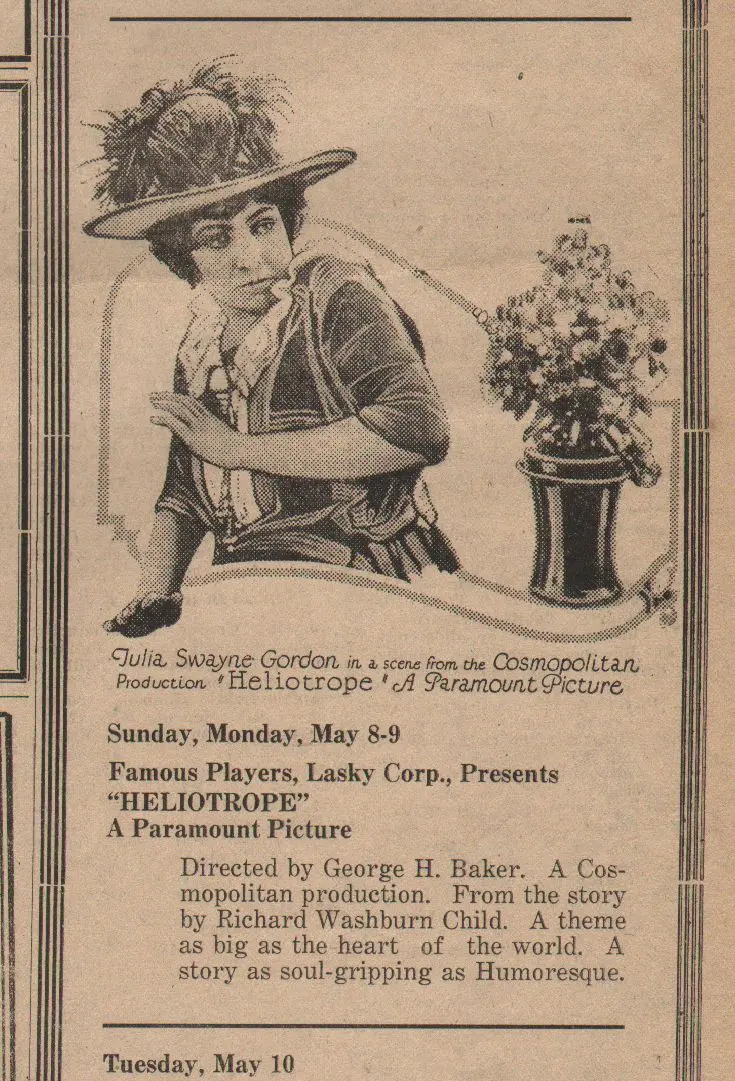
Veteran barnstormer William H. Tooker swaggers through parlors with the oleaginous menace of a preacher who keeps cyanide in the communion wine. And Julia Swayne Gordon—Queen of the 1910s Vitagraph tragedies—here weaponizes maternal piety, turning it into a garrote. Her final close-up, a mascara-streaked kabuki mask, deserves placement alongside Lillian Gish’s wind-whipped hysteria in Broken Blossoms.
Though originally scored for a pit orchestra of nine pieces—violin, cello, trap-set, and a war-worn Wurlitzer—most extant screenings rely on archival improvisation. I recommend pairing the film with Satie’s Gymnopédies pitched down a semitone; the resulting lethargic pulse syncs uncannily with the protagonist’s shackled gait, creating an audio-visual oxymoron: a chase that feels like a funeral march.
Scholars often weaponize the term femme fatale as a blunt cudgel; yet Hilburn’s character complicates the taxonomy. She isn’t seducing for jewels or social mobility—she’s leveraging her daughter as a human promissory note to settle gambling debts accrued in smoky basements where men trade futures like baseball cards. The film inadvertently exposes how patriarchy, when wounded, devours its young. Contrast this with the matriarchal tyranny in The Master of the House where domestic suffocation is played for Bergmanesque laughs; here the joke ends in a morgue.
Production designer Ben Hendricks Sr. recycled tenements from Fox’s backlot, spray-painting them with glycerin to simulate perpetual drizzle. Observe how the graffiti—"Kiss Tomorrow Goodbye"—appears in the periphery of a scene set in 1919, an anachronism that somehow deepens the fatalism. The climactic warehouse, cluttered with headless dress-forms, anticipates the expressionist labyrinths of The Green God yet retains a junkyard Americana that smells of sawdust and gasoline.
Only two incomplete 35 mm prints survive: one in the Cinemateca do Museu de Arte Moderna (São Paulo), missing Reel 3; the other at the Library of Congress, afflicted with vinegar syndrome, its emulsion bubbling like diseased skin. Digital 4K scans were attempted in 2018 but halted when funds evaporated—an ironic echo of the film’s own narrative of aborted ransom. Bootleg rips circulate among silent-film Reddit threads, their intertitles replaced with Comic Sans subtitles—an indignity akin to spray-painting a mustache on the Mona Lisa.
Place it on the shelf between Kidnapped (for its purity of pursuit) and Nancy Comes Home (for its domestic poison). Unlike The Lash where redemption arrives via deus-ex-velvet-glove, Heliotrope offers no such absolution; the father rescues the child only to drag her into a horizon bruised purple by streetlights and shame.
Contemporary viewers will flinch at how the script weaponizes motherhood as original sin, yet the same narrative DNA courses through series like Sharp Objects. Meanwhile, the prison-industrial complex, depicted here as a cogwheel that mints desperate men, prefigures Orange Is the New Black by a full century. The parole board’s rubber-stamp bureaucracy—captured in a 40-second montage of stamping ink and yawning clerks—could slide, unnoticed, into a Ken Burns doc.
Because every scratch on its surface is a scar. Because fathers still sell pieces of themselves to buy back tomorrow. Because the heliotrope flower, source of the title, was once believed to cure incarceration of the soul. And because cinema, at its most skeletal, can still exhale ghosts that rattle our ribcages long after the projector bulb has cooled.
If you uncover a canister stenciled Heliotrope in your grandmother’s attic, don’t auction it to the highest bidder; instead, rent a booth, thread it gently, and let the violet shadows lick your retinas. You will emerge blinking into daylight, unsure whether the sun is rising or setting on the American dream.

IMDb —
1917
Community
Log in to comment.