DbcultAccessing Vault...
Cult Review
Senior Film Conservator
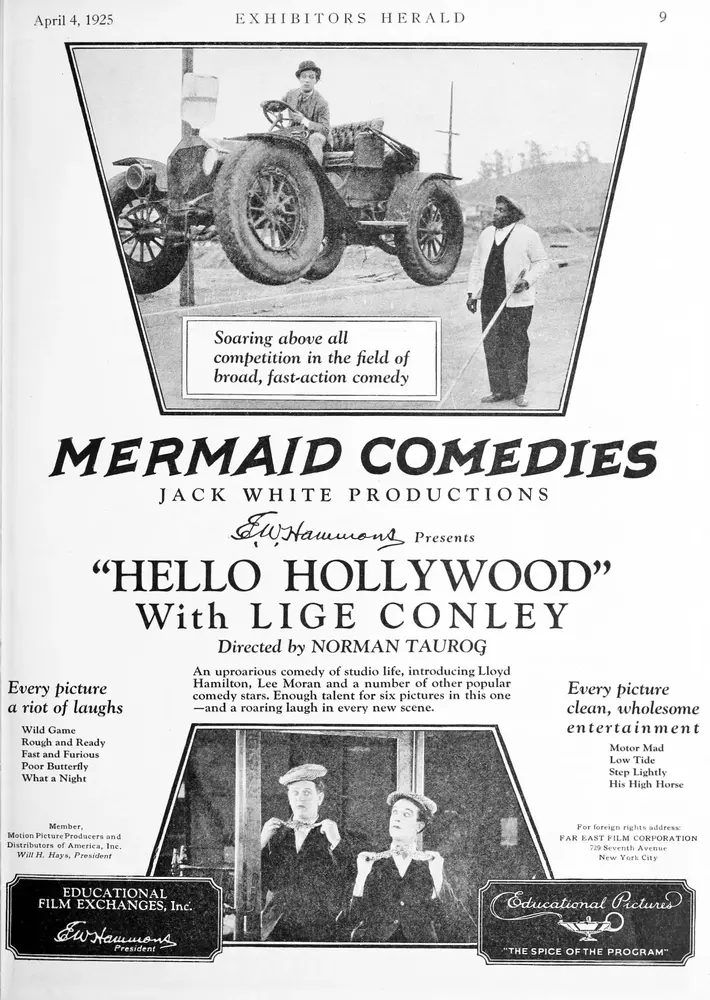
Is Hello, Hollywood worth watching today? Short answer: yes, but with a significant asterisk. This rarely seen silent-era curio offers a fascinating, if sometimes frustrating, glimpse into the nascent days of cinematic comedy.
It’s a film primarily for the dedicated film historian, the ardent silent film enthusiast, or anyone with a deep appreciation for the foundational mechanics of slapstick. It is decidedly not for viewers accustomed to modern pacing, nuanced character development, or sophisticated humor. Those seeking a profound narrative or a polished production will find themselves utterly bewildered by its chaotic energy and seemingly nonsensical plot.
This film works because of its relentless, almost manic, commitment to physical comedy and its surprisingly imaginative, albeit low-budget, set pieces. Its unbridled silliness is a testament to an era where visual gags were king.
This film fails because its narrative coherence is virtually non-existent, its humor is incredibly dated, and its technical execution often feels rudimentary, even for its time. The pacing, while energetic, lacks any real rhythm or build-up.
You should watch it if you are fascinated by the origins of film comedy, enjoy broad physical humor, or simply want to experience a truly unique, if flawed, piece of cinematic history.
From its opening frames, Hello, Hollywood declares its intent with a brazen disregard for realism. Lige, our wide-eyed country protagonist, sets off for the dream factory, only for his journey to be derailed by a flat tire and a comical misconnection to a helium tank. What follows is an unexpectedly surreal sequence where his humble Ford flivver transforms into a haphazard airship, drifting precariously through the clouds.
This initial segment, orchestrated by director Norman Taurog, is a stroke of pure, unadulterated silent-era genius. It's a testament to the period’s inventive spirit, where practical effects and sheer imagination compensated for nascent technology. The visual of a car floating aimlessly, Lige’s bewildered attempts to control it, feels like a precursor to later, more intentional surrealist cinema, an accidental dream sequence born of slapstick necessity.
The pacing here is surprisingly deliberate, allowing the audience to fully absorb the absurdity before Lige ingeniously (and violently) deflates his tires to return to earth. It sets a tone that is both whimsical and slightly unhinged, promising a film that will prioritize gags over any semblance of logical progression. This early sequence is arguably the film’s most memorable, a truly unique hook that distinguishes it from countless other 'country bumpkin goes to the city' narratives.
Upon his terrestrial return, Lige’s pursuit of movie stardom leads him directly to the formidable gates of a Hollywood studio, a literal fortress guarded by a gatekeeper so stern he “even keeps his shadow outside.” This is where Hello, Hollywood shifts from whimsical fantasy to a more grounded, albeit exaggerated, satire of the industry itself.
The repeated visual of Lige being unceremoniously ejected from the studio lot, described as feeling “like a football,” is a potent metaphor for the brutal, often humiliating, reality of breaking into show business. It’s a cynical chuckle at the expense of aspiring actors, a notion that resonates even today. The film, in its simple way, highlights the chasm between the glamorous illusion of the silver screen and the gritty, impenetrable reality of its production.
The direction here, while still focused on physical comedy, uses repetition to build a sense of futility and frustration. Lige’s persistent attempts, despite constant failure, paint him as an archetypal underdog. It's a somewhat brutal truth delivered with a light, comedic touch, offering a brief, sharp commentary on aspiration versus access in the dream factory. This section, in my opinion, is surprisingly sharp for a film so dedicated to broad humor.
Lige’s eventual, accidental entry into the studio — trading places with an actor only to be immediately beaten up in a mob scene — throws him into the heart of cinematic chaos. This is where Hello, Hollywood truly embraces its identity as a gag-driven silent comedy, utilizing the sprawling, often bewildering environment of a film studio as its playground.
His interactions with the celebrated silent comedian Lloyd Hamilton are a highlight. Hamilton, known for his distinctive brand of amiable befuddlement and subtle reactions, provides a counterpoint to Lige Conley’s more boisterous antics. While the specific gags involving Hamilton aren't detailed in the plot, one can easily imagine the kind of delightful confusion and escalating mishaps that would ensue when two masters of physical comedy collide on a busy set.
The cinematography throughout these studio sequences is functional, prioritizing the clear presentation of the gags. There’s a dynamic energy as Lige wanders through various sets, each offering a new opportunity for comedic mishap. The film manages to convey the bustling, almost industrial atmosphere of early Hollywood filmmaking, a world of organized chaos where anything could, and often did, go wrong.
Lige Conley, as the central figure, embodies the classic silent film 'rube' or 'country bumpkin' archetype, a character type familiar from performers like Roscoe 'Fatty' Arbuckle in films like My Hero! or even Buster Keaton’s early shorts. Conley’s performance is defined by his wide-eyed naiveté and his remarkable resilience in the face of escalating absurdity. He’s a character to whom things happen, rather than one who instigates, a reactive force in a world gone mad.
His acting relies heavily on physical comedy and exaggerated facial expressions, a necessity in the silent era. He doesn't deliver a nuanced performance, nor is he meant to. Instead, he serves as a conduit for the film’s relentless stream of gags. His earnestness, even when covered in soot or being thrown across a set, makes him oddly endearing.
Conley’s portrayal is a fascinating study in the mechanics of silent-era comedic acting. He consistently maintains a level of bewildered innocence that makes his predicaments all the more amusing. He’s not a hero; he’s a human pinball, ricocheting through the absurdities of Hollywood with a kind of bewildered charm that is uniquely his own. This character work, while simple, is effective and anchors the film's wild narrative.
Directed by Norman Taurog, Hello, Hollywood showcases the raw, unrefined energy of early cinema. The direction is straightforward, focusing on setting up gags and ensuring their visual clarity. There are no grand directorial flourishes here, but rather a workmanlike efficiency that serves the comedic premise.
The editing is brisk, perhaps even chaotic, mirroring the film's plot. Scenes transition rapidly, sometimes jarringly, pushing the narrative forward through sheer momentum. This approach, while contributing to the film’s frenetic pace, can occasionally feel disjointed, preventing any sustained emotional connection or narrative depth.
The production design, particularly within the studio setting, is surprisingly rich, offering glimpses of various film sets and backlot activity. The final explosive climax, where Lige’s trail of prop powder ignites a chain reaction, is a wonderfully destructive set piece, showcasing a playful disregard for property that was common in slapstick comedies. It's a chaotic ballet of destruction, culminating in Lige’s desperate escape in a stunt plane, which itself becomes a prop for yet more physical comedy as it gets 'riddled' by anti-aircraft fire.
Yes, for specific audiences. If you're a silent film aficionado or a historian of early Hollywood, it's a must-see for its unique gags and historical context. It offers a rare look at foundational slapstick. However, casual viewers might find its humor dated and its narrative confusing. Its value lies in its historical significance and its sheer, unadulterated silliness.
Hello, Hollywood is a joyous, bewildering mess. It’s a relic, a time capsule of an era when cinematic rules were still being written, and pure, unadulterated slapstick reigned supreme. It works. But it’s flawed. Its narrative is flimsy, and its humor, at times, is a hard sell for modern sensibilities. Yet, there’s an undeniable charm in its audacious, almost childlike embrace of absurdity.
It’s not a film I would recommend to just anyone, but for those willing to meet it on its own terms, to appreciate its historical context and its raw, unpolished comedic spirit, it offers a surprisingly rewarding, if utterly baffling, experience. It’s a testament to the fact that sometimes, the most peculiar films are the ones that linger in your mind, much like Lige Conley’s flivver lingering in the clouds.
IMDb —
1922
Community
Log in to comment.