DbcultAccessing Vault...
Cult Review
Senior Film Conservator
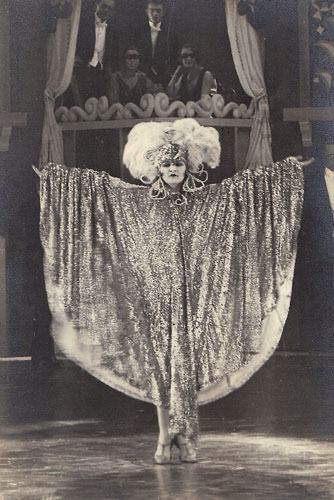
There are films that merely tell a story, and then there are those that conjure an entire epoch, a distinct sensibility, a palpable atmosphere. Irrlichter der Tiefe, or "Lights of the Abyss," definitively falls into the latter category, standing as a shimmering, yet unsettling, artifact from the Weimar Republic's cinematic output. It's a film less concerned with conventional narrative arcs and more invested in exploring the intoxicating, often destructive, power of charisma, personified in the unforgettable figure of Astarte, brought to life with an almost supernatural intensity by the legendary Anita Berber. This isn't just a motion picture; it's a séance, a conjuring of the era's anxieties and its profound fascination with the transgressive. From its very inception, the film signals a departure from the mundane, promising a journey into the shadowed corners of human desire and the siren call of a truly magnetic personality.
To speak of Irrlichter der Tiefe without immediately addressing Anita Berber's central performance is akin to discussing a tempest without mentioning the storm's eye. Berber, an icon of Weimar-era decadence, dancer, and provocateur, doesn't merely play Astarte; she becomes her, blurring the lines between actress and character with an audacious grace that remains startling even today. Astarte is presented not as a mere woman, but as a mythical entity, a goddess of love and war, of fertility and destruction, whose influence transcends gender and societal expectation. Berber's portrayal is a masterclass in silent film acting – every movement, every piercing gaze, every subtle tilt of the head is imbued with a potent, almost hypnotic, power. She communicates an otherworldly sensuality, a dangerous allure that is both fascinating and terrifying. The film understands that Astarte's charm isn't about traditional beauty, but about an uncontainable force, a raw, primal energy that disarms and enthralls. This is a performance that resonates with the raw, untamed spirit one might glimpse in Camille (1915), where a woman's captivating presence drives the entire dramatic thrust, though Berber's Astarte pushes the boundaries of societal acceptance far further, embodying a more explicit, dangerous brand of emancipation.
Berber’s Astarte is the ultimate femme fatale, but with a crucial distinction: her seduction is not merely a tool for manipulation, but an intrinsic aspect of her being. She is a force that simply exists, and in existing, she disrupts. Men and women alike fall under her spell, their lives irrevocably altered, sometimes for a fleeting moment of ecstatic abandon, more often for a prolonged descent into obsession and despair. This indiscriminate nature of her enchantment is particularly noteworthy, reflecting a certain fluidity and questioning of conventional morality that was characteristic of the Weimar period. It's a portrayal that makes one ponder the true nature of attraction, moving beyond superficial aesthetics to something far deeper, more instinctual, and ultimately, more perilous. One might draw parallels to the mysterious, magnetic pull of characters in films like The Mystery Girl, where an enigmatic woman becomes the focal point of an entire narrative's intrigue, though Berber’s intensity here feels less about solving a puzzle and more about succumbing to an overwhelming force.
Paul Fink's screenplay for Irrlichter der Tiefe, while perhaps spare in dialogue (as was the style for silent films), is rich in thematic resonance. It taps directly into the zeitgeist of post-World War I Germany, a nation grappling with monumental societal shifts, economic instability, and a profound sense of disillusionment. The film's atmosphere is steeped in a certain melancholic decadence, a feeling that pleasure, however fleeting, is the only balm for a wounded soul. The 'lights of the abyss' can be interpreted not just as Astarte's seductive glow, but also as the fleeting, deceptive beacons of hope and pleasure in a society adrift. This echoes the moral ambiguity and societal introspection found in films like Hygiene der Ehe, which dared to examine contemporary social issues, albeit with a different focus. Here, the 'hygiene' of society is decidedly absent; instead, we witness a deliberate plunge into the impure, the unconventional, the unbridled.
The supporting cast, including Nora Gregor, Josef Peterhans, Ilse Lorm, and Julius Strobl, provide excellent foils to Berber's central performance. They represent the various facets of humanity drawn into Astarte's orbit – the innocent, the obsessed, the desperate, the morally compromised. Each character's journey, however brief, serves to underscore the profound impact of Astarte's presence, painting a canvas of human vulnerability. Their struggles, often manifesting as a psychological unraveling, resonate with the internal turmoil seen in the character studies of films like The Road Through the Dark, where characters navigate treacherous emotional landscapes, or even the intricate power plays in House of Cards, where individual fates are irrevocably intertwined by a central, manipulative force. The film subtly critiques the societal structures that create such vulnerabilities, suggesting that Astarte is not merely an anomaly, but a symptom of a deeper malaise.
While not overtly a German Expressionist film in the vein of Caligari, Irrlichter der Tiefe certainly draws from that wellspring of visual innovation. The cinematography, even in its surviving forms, suggests a deliberate use of light and shadow, not just for dramatic effect, but to evoke psychological states. The 'abyss' of the title isn't merely a metaphorical one; it feels tangible, reflected in the often stark, high-contrast imagery that emphasizes the isolation and internal struggles of the characters. The sets, costumes, and overall mise-en-scène create a dreamlike, almost hallucinatory quality, perfectly complementing the ethereal nature of Astarte herself. The visual language speaks volumes where words are absent, conveying the intoxicating atmosphere of a world teetering on the edge. This visual storytelling, where every frame contributes to a pervasive sense of impending doom or heightened emotion, finds a distant cousin in the atmospheric tension of a film like The Hand of Peril, where danger is often conveyed through subtle visual cues and the ominous use of setting.
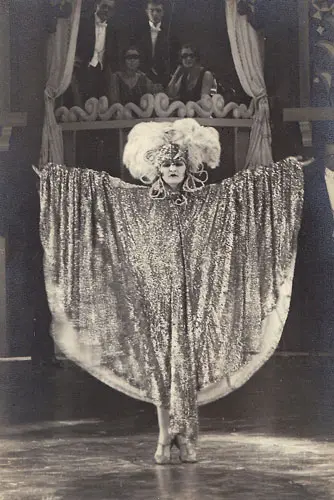
The film's pacing, characteristic of silent cinema, allows for prolonged gazes and lingering shots that build an almost unbearable tension. It forces the viewer to confront the raw emotions on screen, to immerse themselves in the psychological drama unfolding. There's a certain theatricality to the performances, particularly Berber's, which transcends mere acting and becomes a form of living sculpture. This deliberate pacing and intense focus on character psychology can be seen as a precursor to more introspective dramas, perhaps even touching on the sense of being trapped within one's own desires, akin to the societal pressures explored in The Narrow Valley, where characters find themselves confined by circumstance and internal conflict. The film’s aesthetic choices are not merely stylistic; they are integral to its philosophical statement about the human condition and the seductive power of the unknown.
At its core, Irrlichter der Tiefe is a profound meditation on obsession. Astarte doesn't just attract; she consumes. The individuals who fall under her spell are not merely smitten; they are utterly captivated, losing their sense of self, their moral compass, and often, their very lives in pursuit of her ephemeral favor. This theme of all-consuming passion, where the object of desire becomes an almost unattainable ideal, resonates deeply with the relentless pursuit depicted in The Suitor, though the consequences here are far more dire and existential. The film explores the fine line between adoration and self-destruction, suggesting that some forms of love, or rather, infatuation, are inherently destructive, akin to the dangerous secrets and hidden desires at the heart of My Lady's Garter, where veiled truths lead to perilous outcomes.
The film also fearlessly delves into themes of transgression. Astarte, as a character, challenges the very foundations of conventional morality. Her allure is amoral, existing beyond good and evil, and those who succumb to it often find themselves pushed into acts they would never have contemplated. This exploration of moral boundaries, and their ultimate dissolution, aligns with the darker, more cynical perspectives found in films like Godless Men, which grappled with a world devoid of traditional moral anchors. Here, Astarte herself becomes a kind of secular deity, demanding devotion and sacrifice, but offering no salvation, only the fleeting, dangerous thrill of the moment. Her character embodies an 'impossible Catherine' in the sense of being an unattainable, perhaps even self-destructive, ideal, much like the challenging female figures in Impossible Catherine, who defy easy categorization and societal expectations.
While Irrlichter der Tiefe may not be as widely known as some of its Expressionist contemporaries, its impact, particularly through Berber's performance, is undeniable. It stands as a testament to the daring and experimental spirit of Weimar cinema, a period when filmmakers were unafraid to explore the darker recesses of the human psyche and to challenge prevailing social norms. The film's enduring power lies in its ability to evoke a profound sense of both fascination and unease, much like the elusive nature of the titular object in The Mysterious Pearl, which promises beauty but hides a deeper, perhaps dangerous, secret. It forces the audience to confront the uncomfortable truth that sometimes, the most beautiful things are also the most destructive, and that the 'lights' that draw us in can just as easily lead us astray into an 'abyss.'
The film's exploration of urban alienation and the search for meaning in a tumultuous world also connects it to narratives like Lost in a Big City, where individuals often find themselves adrift amidst the impersonal grandeur of metropolitan life. Astarte, in a way, offers a fleeting, dangerous anchor in this sea of uncertainty, a desperate embrace of passion against the backdrop of societal decay. Her character, in her unapologetic embrace of desire, can be seen as a precursor to the archetypal 'love thief' – someone who takes hearts and souls with brazen disregard for the consequences, a theme explored with different nuances in The Love Thief. But Astarte's thievery is more profound; it is a theft of agency, a willing surrender to a force that is both magnificent and terrifying.
For those interested in the history of cinema, particularly the rich and complex tapestry of German silent film, Irrlichter der Tiefe is an essential viewing experience. It's a film that demands engagement, not just passive observation. It asks its audience to grapple with uncomfortable truths about desire, power, and the human capacity for both enchantment and self-destruction. It is a work that continues to glow with a dark, captivating luminescence, much like the will-o'-the-wisps it so evocatively depicts, forever drawing curious viewers into its enigmatic depths. Its audacity, its visual flair, and above all, Anita Berber's incandescent performance, ensure its place as a fascinating, if unsettling, gem in the annals of film history. It's not a film that offers easy answers or comfortable resolutions; rather, it poses profound questions, leaving a lingering sense of awe and a chilling understanding of the human heart's susceptibility to the most dangerous of lights.

IMDb —
1917
Community
Log in to comment.