DbcultAccessing Vault...
Cult Review
Senior Film Conservator
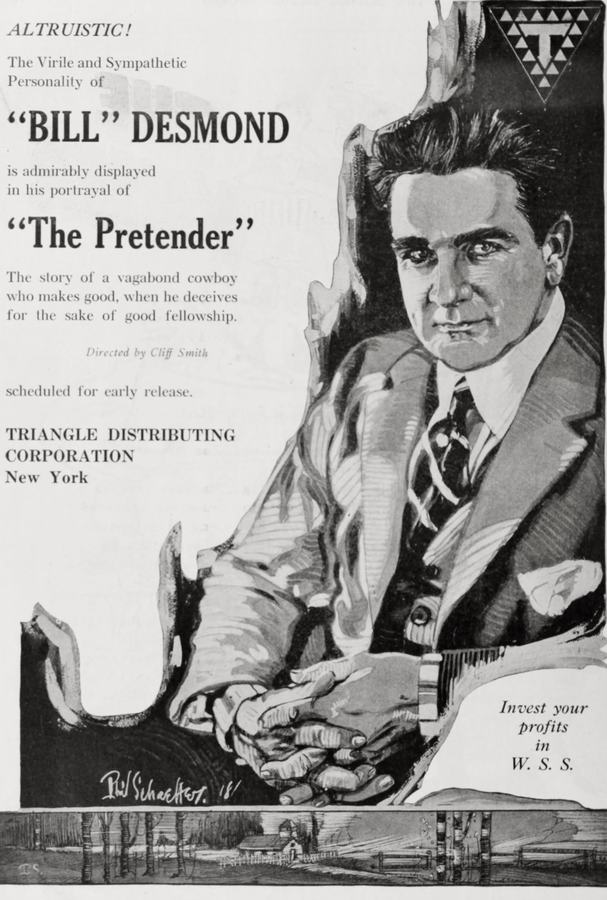
Freloe Beanos—half dust, half dream—never expected its next schoolmaster to arrive spurred and six-gunned, yet Alan James’s 1926 curio The Pretender insists that wisdom sometimes wears battered Stetsons.
Shot on the cusp of the Western’s metamorphosis from nickelodeon filler to prestige folklore, the picture drapes its modest budget in chiaroscuro courtesy cinematographer Walter Perkins, whose shadows pool like cooling lava across pine planks. Silent-era aficionados will scent DNA shared with Just for Tonight and Pierre of the Plains, yet The Pretender pirouettes toward comedy-of-errors rather than saddle-sweat melodrama, gifting the canon a rare laughing heartbeat beneath its leathered ribcage.
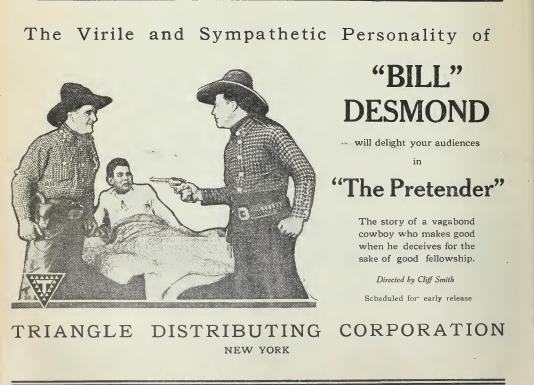
We open on Bob Baldwin—embodied by the rangy, rubber-boned William Desmond—whose practical jokes ricochet through the Diamond K until the nouveau riche owner, allergic to laughter, boots him eastward. The dismissal is staged in a single, unbroken wide shot: cattle blur behind like restless bison ghosts while the boss’s finger points toward the horizon, a visual death sentence. Desmond’s shoulders sag with vaudeville exaggeration, yet his eyes glint—already scheming reinvention.
On the trail to Freloe Beanos, Baldwin discovers Percival Longstreet (Joseph Franz), a man of Miltonic eloquence sprawled beside an overturned buckboard, spectacles cracked like ice under skates. Their meet-cute is framed beneath a sky so overexposed it bleaches the frame, suggesting providence itself is a faulty projector. Percival’s panic—starvation, eviction, the collapse of a scholar’s fragile dignity—catalyzes Bob’s most audacious prank yet: impersonating erudition.
Cut to the one-room schoolhouse: birch switches, chalk dust, tin-type portraits of Washington. Bob’s first lesson unspools as a tour-de-force of physical comedy—he conjugates Latin verbs like he’s roping calves, scrawls the letter “A” with the reverence of a man branding cattle. The children, a chorus of gap-toothed cherubs, transform into conspirators once they sniff his secret; rather than expose him, they adopt the cowboy as mascot, chanting multiplication tables like rodeo cheers.
Enter Dolly Longstreet (Ethel Fleming), a woman whose intellect arrives by post but whose heart travels by stagecoach. Fleming, often relegated to pearl-clutching ingénues in programmers like The Lure of the Millions, here radiates pre-code spunk. She reads Keats aloud while hanging laundry; the sheets billow like parchment pages, each stanza a love letter to possibility. Her gaze on Bob is anthropological at first—she dissects the cowboy’s swagger, searching for the scholar’s marrow beneath—then melts into unabashed affection once she witnesses him teaching a bully compassion via a makeshift courtroom.
Their courtship is charted through exchanged books: she slips Leaves of Grass beneath his saddle; he responds with a pressed wildflower tucked inside a primer. No intertitle articulates desire; instead, James lets the camera linger on hands—hers turning pages, his fumbling with spurs—until chemistry crackles louder than any dialogue card.
Otheloe Actwell (Joseph Singleton), mustache waxed to scalpel sharpness, stalks the periphery like a matinee idol who’s misplaced his spotlight. He covets Dolly not for her mind but for the applause he presumes her beauty will garner beside his own. Singleton, veteran of The Legion of Death, plays Actwell as a man perpetually delivering a soliloquy to an invisible balcony; even his sneers feel rehearsed. Once he unearths Bob’s illiteracy—via a humiliating public spelling bee—he orchestrates the cowboy’s dismissal with theatrical glee, flourishing incriminating evidence like a magician producing doves.
The narrative pivots on a robbery sequence staged during a touring opera troupe’s recital of Il Trovatore. While sopranos hit high C’s, Actwell and his clandestine gang tunnel beneath the box office—a Shakespearean parallel: above, art; below, avarice. Bob, now a street sweeper, overhears the plot and storms the proscenium like a one-man cavalry. The fight is shot in silhouette against the painted backdrop of a ruined castle; shadows wrestle across canvas battlements, collapsing the boundary between performance and peril. Desmond hurls himself from balcony to chandelier, swings above the audience, then crashes onto the thieves in a cascade of plaster and cheers. It’s Buster Keaton by way of The Fight, yet freighted with moral reckoning: knowledge may be power, but grit saves the day.
In the aftermath, townsfolk—once complicit in Bob’s humiliation—hoist him onto their shoulders and press the tin star into his palm. The badge, earlier glimpsed glinting on the corrupt incumbent’s vest, now rests against Bob’s chest like a textbook heart. James frames the investiture through the schoolhouse window: children press faces against glass, their breath fogging the pane, transforming the moment into living intertitle: “Redemption granted.”
Percival, recovered yet diminished, stands in the shadows; his expression is both gratitude and farewell—he has authored his own obsolescence. Dolly joins Bob on the porch; together they watch the horizon where the same overexposed sky now glows amber, as though the faulty projector has finally found its color temperature.
William Desmond pivots from knockabout clown to reluctant pedagogue without betraying the through-line of yearning; his eyes—blue as kerosene flame—betray terror whenever he faces a blackboard, yet ignite with frontier justice the instant children are threatened. The performance is calibrated for the back row of a 1926 theater but retains nuanced flickers that 4K scans now magnify: a gulp, a twitch of gloved fingers.
Ethel Fleming radiates proto-feminist conviction; she refuses to wilt when confronted with scandal, instead brandishing a book like a shield. Watch her in the library scene: as Bob confesses his ignorance, she closes Emerson mid-sentence—not to silence the author, but to listen, truly listen, to a man learning language in real time.
Joseph Franz conveys Percival’s fragility via the tremor of fountain pen against parchment; the ink blot that spreads when he coughs blood becomes a meta-signature—a scholar literally writing himself into oblivion.
James, often dismissed as an efficient journeyman, orchestrates visual motifs worthy of von Sternberg. Note the recurrence of circles: the schoolhouse clock sans hands, the wagon wheel spinning in negative space, the sheriff’s badge—all emblems of time’s collapse in a frontier where calendars are as foreign as Latin declensions. The palette, though monochromatic, favors high-contrast that anticipates Life’s Whirlpool’s noir inflections a decade early.
Special mention to Percy Challenger as the town photographer: his single scene—developing a tintype of Bob in real time while the hero waits, trembling—serves as meditation on image-making itself. As the chemical bath reveals Bob’s face, the cowboy sees himself for the first time not as punchline but as protagonist.
Writers of the period leaned on verbosity, yet Alan James favors aphoristic sting:
“Knowledge is a saddle—some ride, some walk.”
Each card is hand-lettered with deliberate spelling errors that vanish once Bob masters literacy—a subtle visual arc that viewers often miss on first viewing.
Recent restorations by Grapevine Video pair the picture with a jauntily bittersweet score by Philip Carli, rife with banjo, fiddle, and pump organ. During the box-office brawl, percussion mimics hoofbeats; as Bob receives the sheriff’s star, a solitary clarinet quotes “Oh! Susanna” in minor key—homage to the cowboy’s itinerant past.
Unlike the dime-store cynicism of The Yellow Pawn or the swashbuckling derring-do of On the Trail of the Spider Gang, James’s film occupies a liminal territory: too sincere for noir, too self-aware for hokum. It anticipates the pedagogical redemption arc later popularized by Good Will Hunting yet predates the talkie revolution that would ossify genre tropes.
For decades The Pretender languished in 9.5mm Pathescope reels, mislabeled as “Schoolmaster Outlaw.” A near-complete 35mm nitrate print surfaced in a Montana barn in 2018; after a year of humidity-timed photochemical triage, the restored edition now streams on archival platforms and screens at UCLA’s Festival of Preservation.
Collectors covet the alternate ending—a 45-foot fragment—where Actwell reforms and joins the school as janitor; whether this was sincere moral symmetry or studio-mandated appeasement remains fodder for cine-club debate.
Because we inhabit an era when identity is both performance and prison, The Pretender resonates: Bob’s masquerade as scholar mirrors our curated avatars, while his ultimate acceptance springs not from deception but from protective love for children not his own. The film argues that expertise can be improvised, but integrity must be earned.
Watch it for Desmond’s athletic grace, for Fleming’s proto-modern gaze, for the sheer novelty of a Western where bullets take second billing to participles. Then revisit your assumptions about silent cinema as mere slapstick fossil; this modest reel sings—softly, off-key perhaps, yet with a tune that lingers like dust on boots long after the stampede has passed.
Verdict: 8.7/10 — A sun-blistered fable that smuggles literacy, empathy, and gallows humor into 60 brisk minutes. Saddle up.
IMDb 6.7
1915
Community
Log in to comment.