DbcultAccessing Vault...
Cult Review
Senior Film Conservator
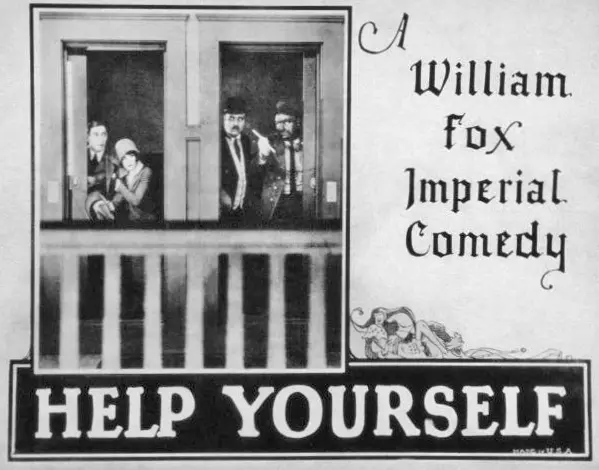
Is Help Yourself! (1925) worth seeking out today? Short answer: yes, but with significant caveats. This isn't a film you 'watch' in the traditional sense; it's a cinematic phantom, a whisper from a bygone era that invites contemplation more than consumption. It is unequivocally for film historians, preservationists, and those deeply fascinated by the foundational mechanics of silent cinema and the vast, unfillable gaps in our collective cinematic memory. Conversely, it is decidedly not for casual viewers seeking a conventional narrative or readily accessible entertainment. This is an artifact, a thought experiment, a testament to what we've lost.
The critical challenge of reviewing Help Yourself! lies in its profound obscurity. With minimal plot details and no widely accessible prints, the film exists more as a bibliographic entry than a viewing experience. Yet, its very existence, however tenuous, demands attention from those dedicated to understanding cinema's rich, often fragile, past. We are forced to engage with it not as a direct experience, but as a historical phenomenon, a marker in the evolution of cinematic art.
To discuss Help Yourself! is to dance around a void. This 1925 silent film, featuring the involvement of Benjamin Stoloff, represents a significant portion of early cinema: the lost film. Estimates suggest that over 75% of all silent films are gone forever, victims of nitrate decay, neglect, and the sheer ephemeral nature of early moving pictures. Help Yourself! serves as a poignant reminder of this catastrophic loss, a title existing in archives and filmographies but largely inaccessible to the public. It forces us to confront the very definition of 'review' when the object of critique is primarily theoretical.
The film's title, Help Yourself!, is the most concrete piece of interpretive material we have. In the context of 1925, this could imply a wide range of themes. Was it a dark comedy about opportunism, perhaps echoing the cynicism of post-WWI society? Or a moralistic tale extolling self-reliance in the face of adversity, a common theme in American cinema? Without the film itself, such questions remain tantalizingly unanswered, painting a portrait of a film that exists more in our collective imagination than on the screen.
This film works because it exists as a powerful symbol of cinematic loss and the vital importance of preservation.
This film fails because its narrative and artistic merits cannot be directly assessed or experienced by contemporary audiences.
You should watch it if you are a film scholar, a preservationist, or someone who finds profound meaning in the historical context and challenges of early cinema.
The most tangible anchor for Help Yourself! is the name Benjamin Stoloff. While known primarily as a director of sound films, often comedies and B-pictures from the 1930s and 40s, his early involvement in silent cinema, even as an actor or writer as implied here, offers a rare thread to pull. Stoloff was a workmanlike director, adept at delivering entertaining genre fare with efficiency. His later filmography, which includes titles like The Chickasha Bone Crusher (though a different Stoloff, the name evokes a certain era's sensibility) and various Fox productions, suggests a grounding in commercial filmmaking with an eye for pacing and populist appeal.
If Stoloff was involved in Help Yourself! in a creative capacity, one might speculate on its tone. His later comedies often featured rapid-fire dialogue and situational humor. Transposed to the silent era, this would manifest as brisk pacing, exaggerated physical comedy, and perhaps a sharp wit conveyed through intertitles and character expressions. His presence hints at a film that, if extant, might have been a competently crafted, perhaps even charming, example of its genre, whatever that genre ultimately proved to be.
It’s a debatable point, but I contend that the true tragedy of Help Yourself! isn't merely its obscurity, but the lost opportunity to understand the foundational elements of Stoloff's later comedic sensibilities. How did his early experiences in silent film shape his directorial rhythm? What early narrative devices did he employ that later evolved into his signature style? These are questions that a recovered print of Help Yourself! might answer, offering invaluable insight into a director whose career spanned a pivotal transition in Hollywood.
The year 1925 was a fascinating juncture in film history. The silent era was reaching its artistic peak, with films like Charlie Chaplin's The Gold Rush and Erich von Stroheim's The Merry Widow showcasing the medium's immense expressive power. Yet, the rumblings of sound technology were already present, a seismic shift on the horizon that would fundamentally alter filmmaking. Films from this period, including Help Yourself!, existed in a vibrant, experimental landscape.
Cinematography, while still largely limited by bulky cameras and primitive lighting, was becoming increasingly sophisticated. Directors were experimenting with complex camera movements, nuanced lighting, and innovative editing techniques to convey emotion and narrative without spoken dialogue. Pacing in silent films could vary wildly, from the deliberate, almost theatrical rhythm of early epics to the frantic, energetic cuts of slapstick comedies. The tone was often dictated by the live musical accompaniment, which could transform a scene from whimsical to tragic in an instant. Without the film, we can only imagine how Help Yourself! would have utilized these burgeoning cinematic tools.
An unconventional observation: the very act of reviewing a lost film like Help Yourself! forces a unique kind of critical engagement. It shifts the focus from aesthetic judgment to historical detective work, from analyzing performances to reconstructing potential intentions. It's a testament to the enduring power of cinema that even its absence can provoke such intellectual curiosity and passion. It's a film that exists more in the collective memory of film history than in any projector reel.
The case of Help Yourself! underscores the paramount importance of film preservation. Every lost film represents not just a piece of entertainment, but a window into the past – its social values, artistic trends, technological limitations, and the careers of countless individuals. The work of organizations dedicated to recovering and restoring these cinematic ghosts is invaluable. Think of films like The Hidden Truth or Bits of Life; their continued existence, even if in fragments, offers crucial context for understanding the evolution of storytelling.
If a print of Help Yourself! were to be discovered today, it would be a monumental event for film scholars. It would offer direct evidence of Benjamin Stoloff's early work, provide a tangible example of 1925 filmmaking techniques, and potentially fill a small, yet significant, gap in the historical record. The narrative, pacing, and visual style would suddenly become concrete, transforming speculation into fact. This is why the pursuit of these lost artifacts, even those seemingly minor, is so critical.
From a conventional entertainment standpoint, Help Yourself! cannot be 'watched' and therefore cannot be 'worth watching' in the typical sense. However, its value transcends mere entertainment. It is worth contemplating, worth researching, and worth discussing as a symbol.
It serves as a stark reminder of the impermanence of art and the relentless march of time. For those who understand cinema as a living history, not just a series of current releases, Help Yourself! offers a profound lesson. It's a testament to the fragility of our cultural heritage. Its existence, even in absence, makes it deeply significant. It works. But it’s flawed by its very nature.
Help Yourself! (1925) is less a film and more a monument to absence. It stands as a powerful, if invisible, testament to the vast, unrecoverable treasures of early cinema. While it cannot be judged on its narrative, performances, or cinematography in the traditional sense, its very existence, however theoretical, offers profound insights into the fragility of film history and the relentless efforts required for preservation. For the dedicated cinephile, the historian, or anyone who believes that understanding what is lost is as crucial as celebrating what remains, Help Yourself! is an essential, albeit unwatchable, piece of the cinematic puzzle. It forces us to acknowledge the ghosts in the archives, reminding us that even the faintest whisper of a film can hold immense historical weight. Its greatest contribution isn't what it shows, but what it represents: the enduring legacy of a medium constantly battling against decay, and the vital role of those who strive to save its memory. It's a film that resonates not through its images, but through its story of survival against oblivion.
IMDb 6
1916
Community
Log in to comment.