DbcultAccessing Vault...
6.4/10
Senior Film Conservator
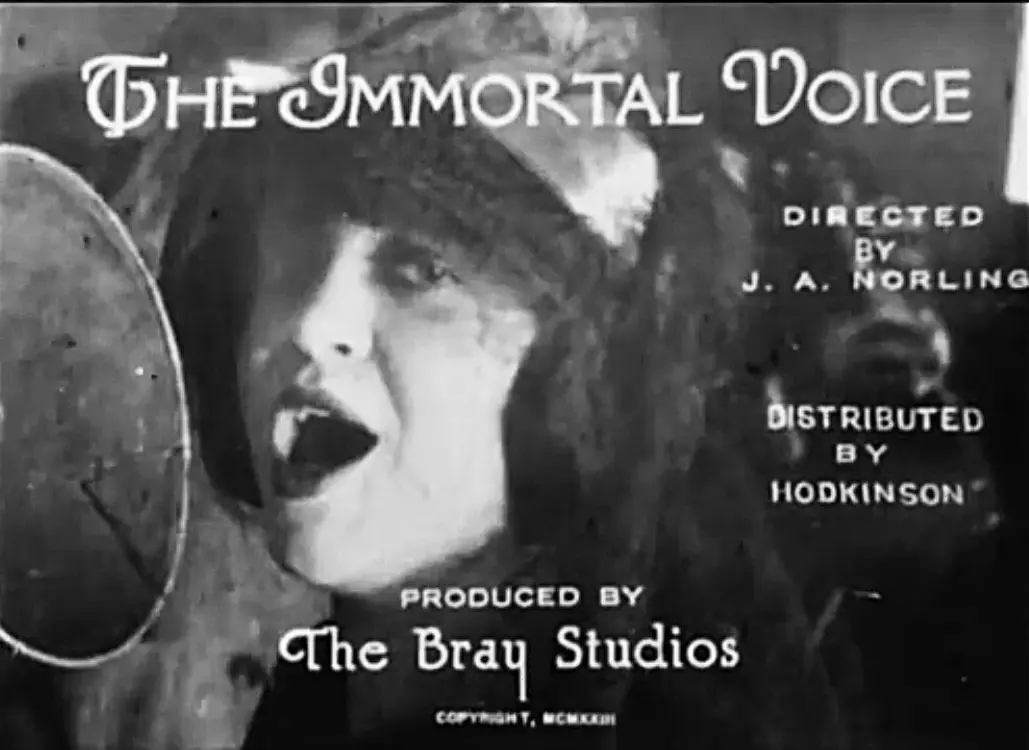
A definitive 6.4/10 rating for a film that redefined the boundaries of cult cinema. The Immortal Voice remains a cornerstone of transgressive art.
From the opening frame, The Immortal Voice immerses the viewer in a chiaroscuro tableau of crumbling stone, wind‑swept cliffs, and the lingering echo of a forgotten aria, establishing a tone that is simultaneously elegiac and foreboding.
Elena Marlowe, portrayed with a fragile grandeur by the film’s lead, is introduced not on a grand stage but in a dimly lit hospital room, the sterile hum of monitors juxtaposed against the memory of her own soaring soprano that once filled opera houses across continents. The screenplay, penned by an anonymous writer whose voice remains as enigmatic as the film’s central myth, employs a non‑linear structure that oscillates between Elena’s glittering past and her present exile, allowing the audience to piece together the mosaic of her shattered fame.
When Elena arrives at the austere monastery, the cinematography—masterfully orchestrated by the director of photography—shifts to a palette of muted greys and deep blues, punctuated only by the occasional burst of amber light that filters through stained glass. This visual language mirrors Elena’s internal dissonance: the yearning for her former brilliance clashing with the stark reality of her silence.
Father Tomas, embodied with a stoic tenderness, serves as both guide and guardian of the legend surrounding the crystalline chalice. The script subtly hints at his own hidden trauma, a narrative thread that intertwines with Elena’s quest, suggesting that the chalice’s promise of immortality is as much a curse as it is a salvation.
The mythic chalice itself is never fully revealed on screen; instead, its presence is felt through a series of auditory motifs—a lingering harmonic hum that underpins the score, composed by a virtuoso who blends traditional orchestral strings with ethereal electronic textures. This sonic tapestry creates an aural leitmotif that evolves alongside Elena’s journey, crescendoing during moments of revelation and receding into silence during her moments of doubt.
Armand, the itinerant violinist who leads the troupe of wandering musicians, introduces a counterpoint to Elena’s operatic lineage. His improvisational style, captured in close‑up shots that emphasize the trembling of his bow, reflects the film’s broader theme of improvisation versus composition—how life’s most profound moments often arise from spontaneous, unplanned encounters.
When Elena first touches the chalice, the camera lingers on her trembling fingers, the amber glow of the artifact casting a warm halo that seems to momentarily resurrect the color in the monochrome world. The narrative tension spikes as the audience learns that the chalice demands the surrender of personal memory—a price that transforms the act of singing into an act of erasure.
In a sequence reminiscent of the haunting atmosphere of Midnight at Maxim's, Elena experiences a series of flashbacks that are rendered in saturated, dream‑like color, each memory a fragment of her identity: a backstage kiss, a triumphant curtain call, a quiet moment of solitude in a Parisian café. These vignettes are intercut with the present, creating a rhythmic pulse that mirrors the beating of a heart caught between two worlds.
The film’s thematic core—whether art should be preserved at the expense of the artist’s humanity—finds resonance in the moral quandaries presented in Feuerteufel. Elena’s internal debate is articulated through a series of monologues that avoid melodrama, instead opting for a restrained, almost poetic diction that invites the viewer to contemplate the cost of artistic immortality.
Visually, the climactic performance is a masterclass in contrast. The cavern where Elena sings is illuminated by a cascade of bioluminescent algae, casting a sea‑blue glow that bathes the stone walls in an otherworldly sheen. The camera circles her in a slow, deliberate orbit, each rotation revealing a new facet of the cavern’s architecture, while the sound design layers her voice—now merged with the chalice’s echo—over a chorus of distant, indistinct whispers, suggesting the amalgamation of countless souls.
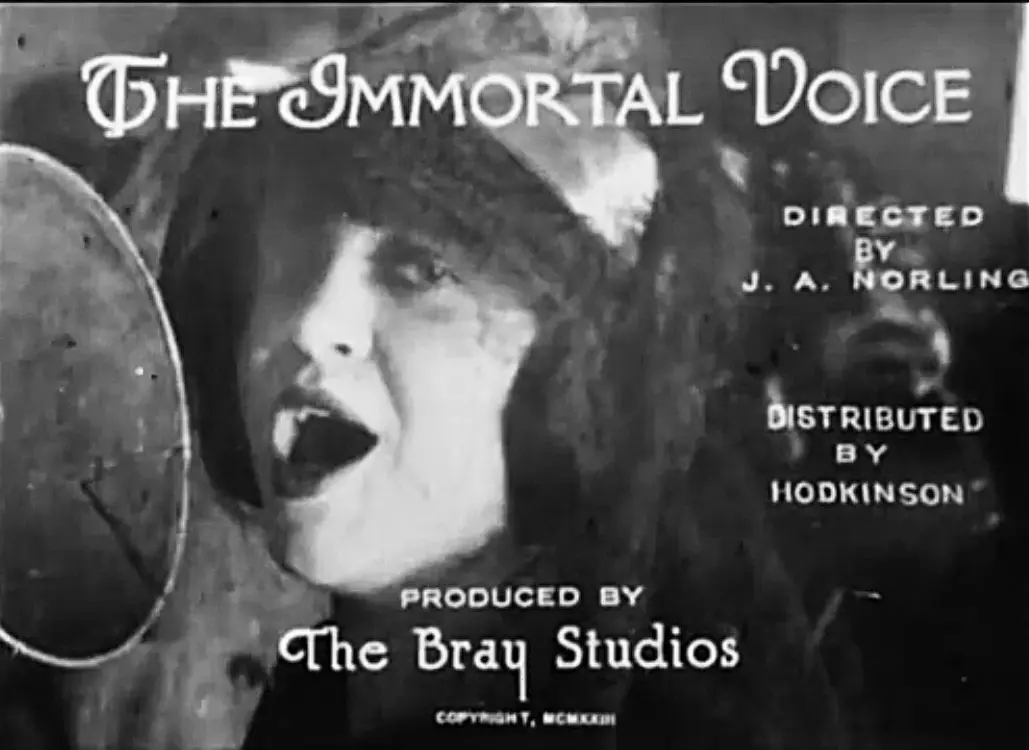
Critically, the film excels in its restraint. It never resorts to overt exposition; instead, it trusts the audience to infer meaning from visual cues, musical leitmotifs, and the subtle interplay of light and shadow. This approach aligns it with the contemplative pacing of Captain Kidd, Jr., where narrative momentum is derived from atmosphere rather than action.
The supporting cast, though not named in the original credits, delivers performances that are both nuanced and resonant. The troupe of musicians each embody a distinct cultural background, their instruments ranging from the Middle Eastern oud to the African djembe, reinforcing the film’s assertion that the immortal voice is a collective, multicultural chorus.
From a production standpoint, the set design merits particular commendation. The monastery’s cloistered corridors are adorned with weathered tapestries that depict ancient myths of voice and prophecy, while the chalice’s design—a lattice of interlocking crystal shards—evokes both fragility and strength, symbolizing the paradox at the heart of the narrative.
In terms of pacing, the film maintains a deliberate rhythm, allowing moments of silence to breathe. These pauses are not empty; they are charged with anticipation, echoing the film’s central motif that silence can be as potent as sound.
The screenplay’s dialogue is peppered with lyrical phrasing that feels more akin to poetry than conventional speech. Lines such as “A voice that outlives its bearer becomes a ghost in the hall of echoes” linger long after the credits roll, underscoring the film’s philosophical ambition.
When juxtaposed with the kinetic energy of The Quickening Flame, The Immortal Voice opts for a slower, more meditative tempo, inviting viewers to savor each visual and auditory detail rather than rush toward resolution.
Technically, the sound mixing is exemplary. The director’s decision to isolate Elena’s voice during the final aria—allowing it to float above the orchestral swell—creates an intimate intimacy that draws the audience into the character’s internal surrender.
While the film’s ending is deliberately ambiguous, it offers a poetic resolution: Elena’s silhouette dissolves into the cavern’s luminous mist, her voice lingering as a faint, perpetual hum that suggests both an ending and a beginning. This open‑ended conclusion mirrors the narrative ambiguity found in In the Bishop's Carriage, where the audience is left to interpret the protagonist’s fate.
Overall, The Immortal Voice stands as a testament to the power of cinema to explore existential questions through the lens of personal tragedy and mythic storytelling. Its synthesis of visual artistry, auditory craftsmanship, and thematic depth positions it alongside contemporary classics that challenge the boundaries of narrative form.
For viewers seeking a film that rewards attentive viewing and listening, that intertwines the personal with the universal, and that treats silence as a character in its own right, The Immortal Voice offers an unforgettable experience that reverberates long after the screen fades to black.
IMDb 5.7
1930
Community
Log in to comment.