DbcultAccessing Vault...
Cult Review
Senior Film Conservator
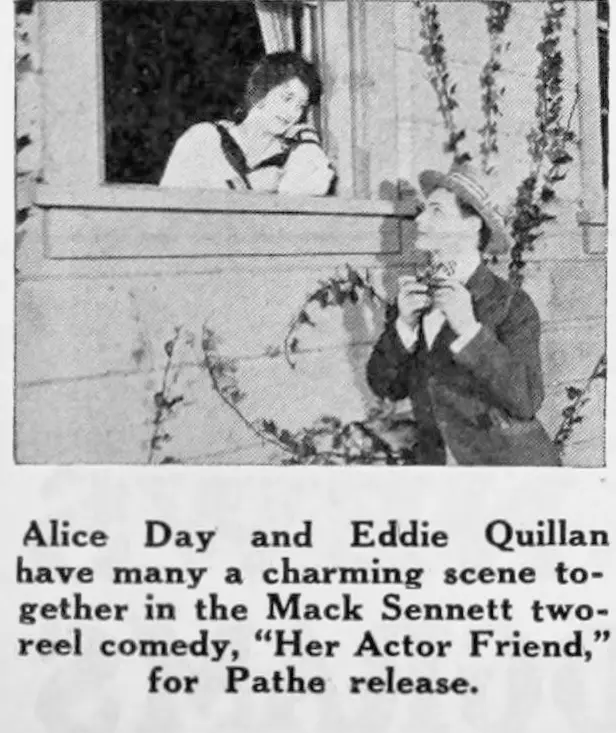
Should you invest your time in Her Actor Friend? Short answer: yes, but only if you have a high tolerance for protagonists who are fundamentally unlikable. It is a fascinating, if slightly mean-spirited, relic of the mid-twenties that subverts the 'charming rogue' trope. This film is for silent comedy completists and those who enjoy seeing the 'stage door' lifestyle parodied; it is absolutely not for viewers who need a moral compass in their lead characters.
Her Actor Friend is worth watching for its sharp, albeit brief, commentary on the hollow glamour of the 1920s theater scene. While many comedies of this era rely on pure slapstick, this one leans into the awkward social dynamics of a 'friendship' based on financial exploitation. It captures a specific moment in cinematic history where the line between melodrama and comedy was being aggressively blurred.
1) This film works because it accurately skewers the pomposity of the 'leading man' archetype, portraying the actor not as a hero, but as a penniless grifter.
2) This film fails because Eddie, our supposed protagonist, is a snitch who sells out his friends the moment his own theft is threatened with exposure.
3) You should watch it if you want to see a pre-Code era comedy that doesn't feel the need to make its characters particularly 'nice' or redeemable.
Eddie Quillan brings a nervous, high-strung energy to the role of Eddie that feels remarkably modern. He isn't the stoic hero of a film like The Unblazed Trail. Instead, he is a man constantly on the verge of a breakdown. When he realizes he has to pay for the actor's meal with money he already stole from Joe, his facial contortions are a masterclass in silent anxiety.
There is a specific moment in the restaurant where Eddie checks his pockets, his eyes darting toward the exit while the actor grandiosely orders more food. It’s a painful scene to watch, bordering on cringe comedy. Quillan doesn't play for sympathy; he plays for the frantic reality of a man who knows he’s about to be caught. It works. But it’s flawed.
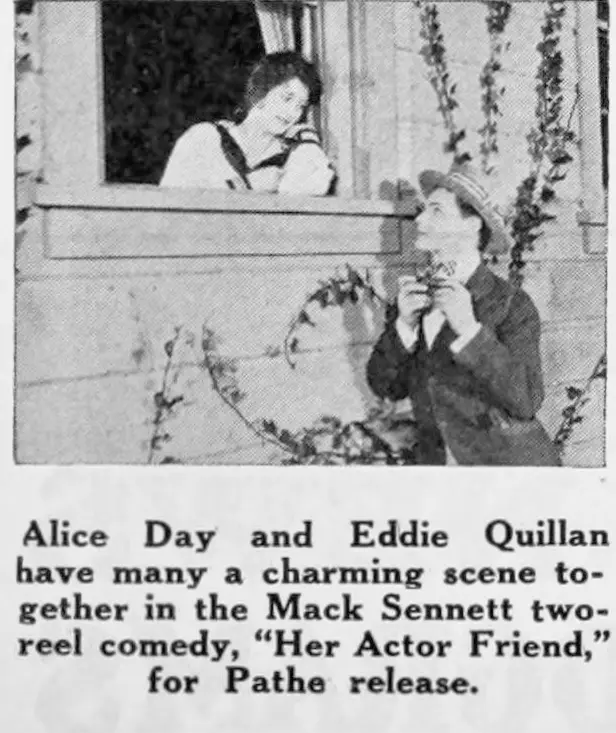
The decision to have Eddie call Joe—the man he stole from—to 'tattle' on the girls is a narrative choice that would likely be rejected in a modern screenplay. It makes the lead character a coward. Yet, in the context of 1926, it serves as a pivot into the final chase sequence, proving that the film prioritizes kinetic energy over character growth.
The titular actor is perhaps the most interesting element of the film. Played with a wonderfully staged arrogance, he represents the 'thespian' as a social predator. The film spends the first act showing us a 'typical melodrama,' which allows director Gilbert Pratt to parody the very genre that films like Enemies of Women took seriously.
When the actor 'misplaces' his money, the film takes a sharp turn into social satire. The girls, Alice Day and Ruth Taylor, are blinded by the footlights. They see a star; the audience sees a bum. This disconnect is where the film finds its teeth. The scene in the actor's room, where the girls realize they are in over their heads, is shot with a claustrophobia that contrasts heavily with the wide-open theater scenes earlier in the film.
The set design of the actor's apartment is telling. It’s cluttered with theatrical posters and mirrors, emphasizing his vanity, yet it feels small and cheap. This visual storytelling tells us more about the character's failing career than any intertitle ever could. It’s a subtle touch in a film that is otherwise quite loud with its physical comedy.
The final act of Her Actor Friend is a vertical scramble. The girls escaping through the window is a classic silent film trope, but it’s executed here with a sense of genuine peril. Unlike the more polished stunts found in Sherlock's Home, the movement here feels desperate and uncoordinated, which fits the tone of the story perfectly.
The camera work is functional, favoring wide shots that allow the physical comedy of the chase to breathe. However, there is a specific shot of Joe and Eddie approaching the building from the street level while the girls are mid-descent that creates a genuine sense of 'ticking clock' tension. It’s a simple split-level narrative device, but it’s effective.
The pacing of this sequence is relentless. Once the girls hit the pavement, the film doesn't stop to let them—or the audience—breathe. The chase through the city streets utilizes the urban environment of the 1920s as an obstacle course. It’s not as inventive as something from a Buster Keaton feature, but it’s a solid example of the 'Sennett style' of comedy that was dominating the era.
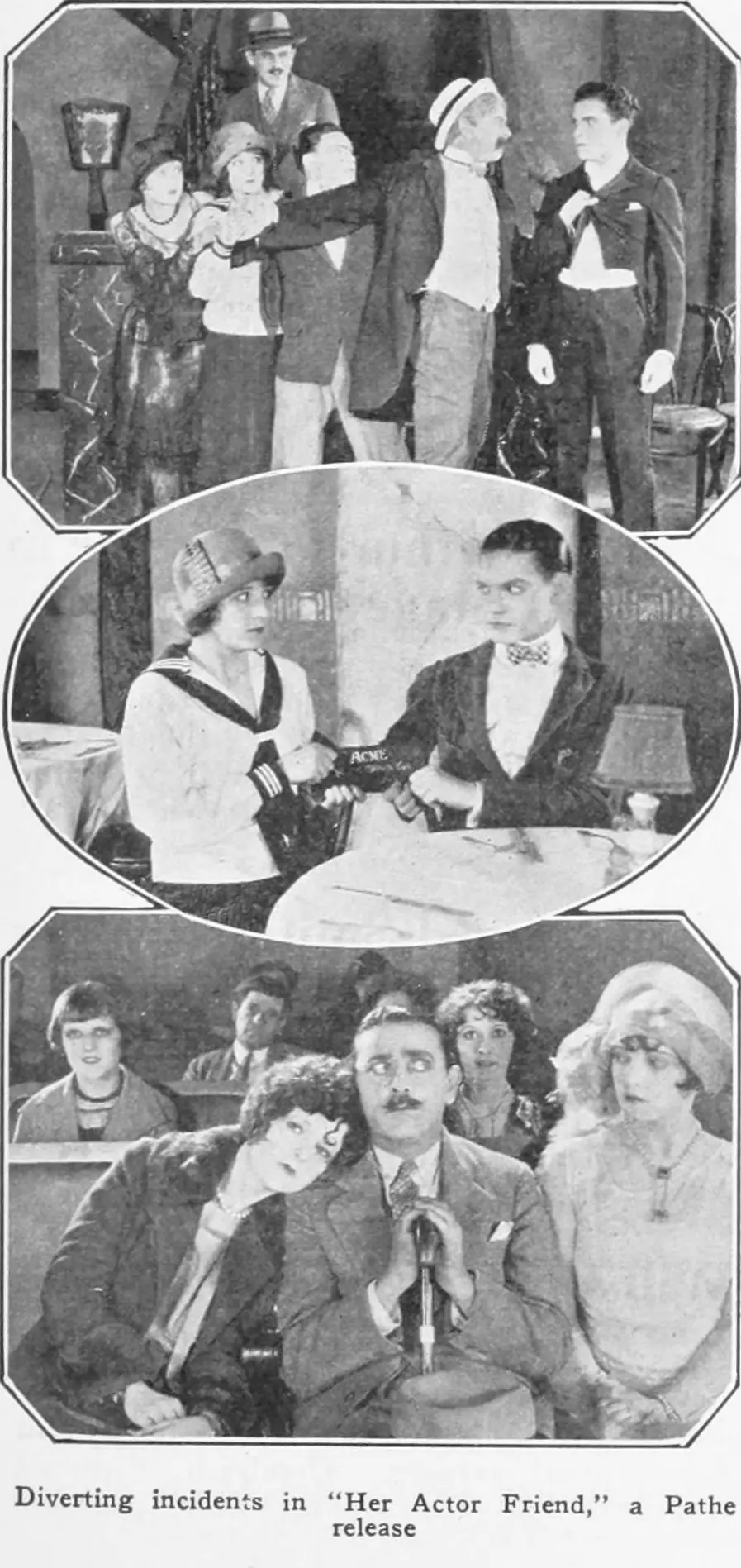
Yes, Her Actor Friend is worth watching if you want to understand the transition of silent comedy from pure slapstick into social observation. It offers a unique look at the 'gold digger' and 'stage parasite' tropes of the 1920s. While the protagonist's actions are questionable, the film's energy and satirical edge make it a compelling 20-minute investment for any cinephile.
Pros:
Cons:
When we look back at the 1920s, we often see a filtered version of the 'Jazz Age.' Her Actor Friend peels back a layer of that filter. It shows the desperation beneath the glitter. It shows that even in 1926, people were worried about being 'used' by those with more social capital. The film doesn't offer a moral lesson; it offers a frantic shrug.
The chemistry between the cast is palpable. They function as a unit of chaos. Even smaller roles, like those played by Vernon Dent and Andy Clyde, add to the sense of a world populated by people who are all just trying to get one over on each other. It’s a cynical worldview, but in the context of a comedy, it’s refreshing.
Comparing this to The Pitfall, we see a much more lighthearted approach to the theme of social deception. While other films of the time tried to be grand and sweeping, Her Actor Friend is content to be small, fast, and a little bit dirty. That is its greatest strength.
Her Actor Friend is a biting, fast-paced comedy that trades sentimentality for speed. It’s a film where everyone is a bit of a villain, and that’s exactly why it remains interesting nearly a century later. It’s not a masterpiece of technical innovation, but it is a masterclass in the comedy of desperation. Watch it for the window escape; stay for the cynical subversion of the Hollywood dream. It’s mean. It’s fast. It works.
IMDb 5.7
1934
Community
Log in to comment.